
Quick Answer: Choosing Between a Full Set and Individual Pieces
Deciding whether to buy a bundled fishing rod full set or to assemble a custom setup from individual pieces depends on your budget, available time, and long-term commitment to the sport. A typical fishing rod full set includes a rod, a reel (often pre-spooled with line), a small tackle box, and a selection of basic lures, hooks, and sinkers. This all-in-one package provides an immediate, low-cost entry point for casual hobbyists.
If your primary goal is to test the waters with occasional weekend trips to local spots like Bedok Jetty, a bundled set offers unmatched convenience and upfront savings. However, if you are committed to mastering angling techniques, targeting specific species in local reservoirs, or fishing in demanding saltwater environments, investing in individual pieces is the superior path. While a custom setup requires more research and a higher initial investment, it delivers significantly better performance, durability, and long-term value.
Signs a Fishing Rod Full Set Matches Your Needs
A bundled fishing rod full set is highly practical for beginners operating under strict budget constraints. Purchasing a rod, reel, line, and terminal tackle separately can quickly accumulate high costs, whereas a bundle consolidates these expenses into a single, affordable transaction. Furthermore, buying a pre-matched bundle eliminates the risk of purchasing incompatible components, such as pairing an excessively heavy offshore reel with a delicate ultra-light rod, which can lead to equipment damage or poor casting performance.
Products mentioned in this guide
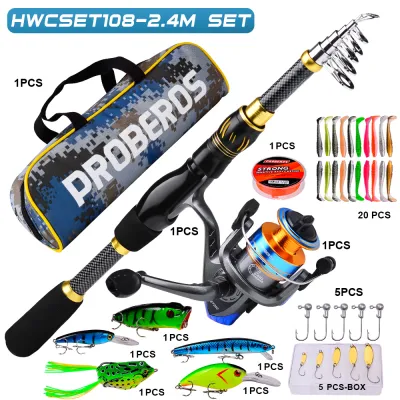
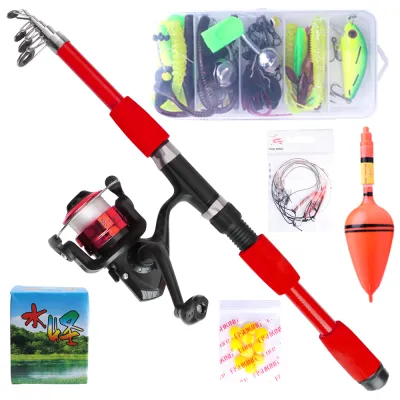
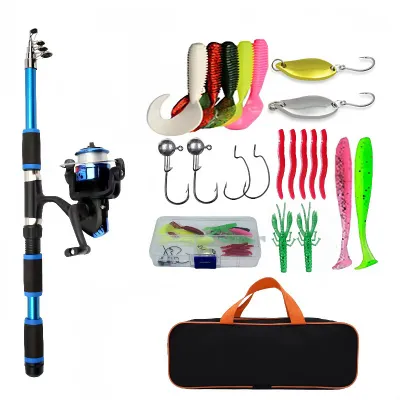
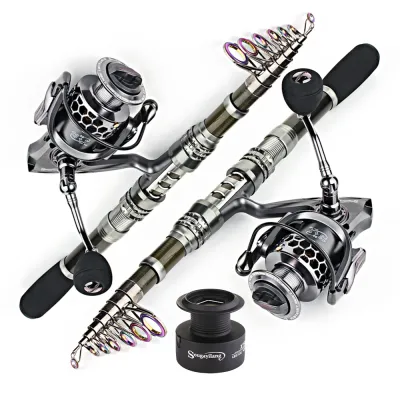
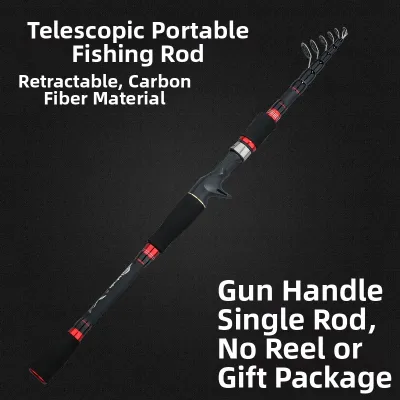
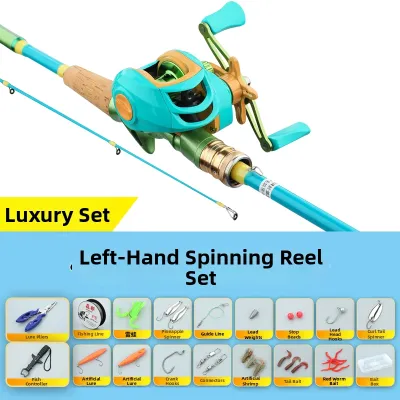
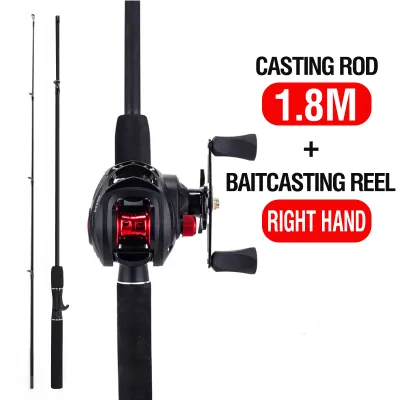
Prices are valid at publication and may change. Please refer to the product page for the latest price.

For those with limited free time, a full set bypasses the steep learning curve of gear selection. You do not need to spend hours researching gear ratios, drag capacities, or line test weights before your first trip. Because these kits are designed to be ready to fish straight out of the box, you can head directly to a commercial paypond or jetty without delay. This makes them an excellent option for family outings or spontaneous weekend activities.
If you are unsure whether you will stick with angling as a long-term hobby, a bundled set minimizes your financial risk. Sinking hundreds of dollars into premium specialized gear that might end up gathering dust in a closet is a common beginner pitfall. A budget-friendly bundle lets you experience the basic mechanics of casting and retrieving without a significant financial commitment.
Urban storage and transport constraints also make bundled sets highly attractive. Many beginner kits include a compact, dedicated carry case or bag. In a high-density living environment where storage space is limited, an all-in-one case tucks away neatly in a small closet. Additionally, if you rely on public transport to reach your fishing destinations, a neatly packed carry case complies with local transit guidelines and prevents exposed rod tips or hooks from snagging other passengers on busy trains or buses.
When to Build a Custom Setup with Individual Pieces
Building a custom setup becomes necessary when you have specific fishing goals that generic gear cannot accommodate. Local fishing environments vary widely, from freshwater reservoirs containing fast-striking Peacock Bass to deep saltwater payponds stocked with hard-fighting Barramundi. A generic bundled set is typically a medium-power compromise that performs poorly in these specialized scenarios. Casting light lures in designated reservoir zones requires a sensitive, fast-action rod and a high-speed reel, while bait fishing in deep saltwater requires robust drag systems and heavy-duty components.
Customizing your gear also allows you to select components that match your physical needs and ergonomics. Standard bundles utilize a one-size-fits-all approach, often featuring heavy fiberglass rods with thick, uncomfortable grips. By selecting individual pieces, you can choose a rod length, weight, and grip material (such as high-density EVA foam or premium cork) that fits your hand size and casting style. This ergonomic fit drastically reduces physical fatigue during long casting sessions in hot, humid tropical weather.
Investing in individual pieces yields superior long-term value, particularly regarding the reel. The cheap reels included in budget bundles often feature low-grade plastic internal gears and lack adequate sealing against moisture. In marine environments, salt spray can quickly corrode these reels, rendering them useless after only a few trips. Buying a high-quality individual reel with sealed stainless steel bearings ensures it will survive saltwater exposure and can be paired with upgraded rods as your skills progress.
Assembling your own gear also prevents you from wasting money on the “filler” tackle commonly packed into full sets. Bundles often include low-grade plastic lures, oversized hooks, and weak swivels that local, highly pressured fish will easily ignore. When you buy individual pieces, you can allocate your budget specifically toward high-quality fluorocarbon leader lines, sharp hooks, and proven local lures that actually increase your chances of landing a catch.
How to Evaluate the Quality of a Bundled Full Set
If you decide that a bundled fishing rod full set is the right choice for your current situation, you must evaluate its components carefully to avoid purchasing poor-quality gear that quickly breaks. Start by checking the balance between the rod and the reel. Hold the assembled setup at the reel seat; it should feel relatively balanced in your hand, rather than tipping heavily toward the rod tip or the butt. For a versatile, general-purpose setup, a 2000 to 3000 size spinning reel should be paired with a medium-light or medium-power rod.
Examine the rod’s construction materials and guides closely. Look for composite blanks made from a blend of fiberglass and graphite, which offer a practical balance of durability and sensitivity for beginners. Avoid rods with cheap plastic guides, as these will quickly crack or groove under the friction of the fishing line. Ensure the guides feature smooth ceramic or metal inserts, as any rough edges will fray your line and lead to sudden breakages when fighting a fish.
Inspect the quality of the included line and terminal tackle. Pull a few meters of line off the spool; if it retains a stiff, tightly coiled shape like a spring, it is low-grade monofilament with high memory. This type of line is prone to severe tangles and wind knots, so you should plan to replace it with a fresh spool of quality line before your first outing. Additionally, test the sharpness of the included hooks by gently running the point across your fingernail; if it slides off without catching, the hooks are dull and should be replaced for safety and effectiveness.
Finally, verify whether the manufacturer offers basic customer support and a warranty. Reliable outdoor brands stand behind their entry-level bundles with warranties covering manufacturing defects in the reel’s internal gears. Choosing a bundle from an established brand with local distributor support ensures you can easily source replacement parts, such as spare spools or handle screws, instead of having to discard the entire set if a single component fails.
How to Allocate Your Budget for Individual Pieces
When building a custom setup, allocating your budget strategically ensures you get the most reliable and versatile rig possible. Prioritize the spinning reel, dedicating roughly 40% to 50% of your total budget to this component. The reel is the most mechanically complex part of your gear, responsible for managing line twist, casting distance, and fighting fish via the drag system. A smooth, reliable reel with a high-quality drag prevents line breakage and ensures a frustration-free learning experience.
Allocate approximately 30% of your budget to a versatile, multi-purpose rod. For beginners, a 6.5-foot to 7-foot, two-piece spinning rod with a medium power rating and fast action is highly recommended. This configuration is long enough to cast decent distances from jetties and shorelines, yet compact enough to transport easily on public transit. It is versatile enough to handle bait fishing, light jigging, and lure casting across both freshwater and saltwater environments.
Spend about 15% of your budget on high-quality line and essential terminal tackle. Instead of buying a massive variety pack of cheap accessories, purchase one spool of 10-to-15 lb braided line, a spool of 15-to-20 lb fluorocarbon leader line to protect against sharp rocks and fish teeth, a small pack of sharp circle hooks, and a few inline sinkers. This streamlined, high-quality selection is highly effective for most local shore-based bait fishing scenarios.
Save money on the remaining 5% to 10% of your budget by skipping expensive specialized accessories. You do not need a premium tackle bag or high-end fishing apparel to start. A simple plastic utility box from a hardware store can hold your tackle, and any durable backpack can serve as your gear bag. Use standard household scissors or cheap nail clippers to cut your line, and buy a basic pair of long-nose pliers for hook removal. You can upgrade to specialized gear once you establish your specific fishing preferences.
Always prioritize safety when fishing near water or during inclement weather. Because carbon fiber and graphite rods are excellent conductors of electricity, you must monitor local weather forecasts and stop fishing immediately if a thunderstorm approaches. Ensure you check the manufacturer’s specified line and lure weight limits printed on the rod blank before casting, as exceeding these limits can cause the rod to snap under tension.
Frequently Asked Questions (FAQ)
Is a telescopic fishing rod full set good for beginners?
Telescopic rod sets offer unmatched portability, collapsing down to fit inside a standard backpack or under a car seat. This makes them highly popular for urban anglers who commute via public transport or have limited storage space at home. However, they come with significant performance trade-offs. The multiple joints required for a telescopic design reduce overall rod sensitivity, making it harder to feel subtle fish bites. These joints are also common failure points, easily cracking under heavy loads or seizing up if sand and saltwater are not meticulously cleaned out after every session. If portability is your absolute highest priority, a telescopic set is a viable choice, but a standard two-piece rod remains the more durable and sensitive option for learning proper technique.
Can I upgrade parts of a fishing rod full set later?
Yes, you can easily upgrade specific components of a bundled set to improve its performance without buying a completely new rig. The most cost-effective upgrades are replacing the cheap pre-spooled line with high-quality braided line and swapping out the included low-grade hooks and lures for premium options. These simple changes can drastically increase your catch rate. However, upgrading the rod or reel individually can be less cost-effective. If you find that the bundled reel’s gears are grinding or the rod lacks the sensitivity you need, the components of budget sets are rarely high enough quality to justify partial upgrades. In those cases, it is usually more practical to transition the entire set to a backup role and invest in a completely new, mid-tier custom setup.
Community discussion
Share your experience or ask a question. Comments are reviewed before publication.