
Selecting the right knee support men need depends entirely on your specific symptoms, activity level, and joint condition. Choosing the wrong type of support can lead to wasted money, continued discomfort, or an increased risk of injury during physical activity. In Singapore’s active lifestyle scene—whether you are running trails at MacRitchie, lifting weights at an ActiveSG gym, or playing social football—protecting your joints requires the correct gear. By understanding the functional differences between a sleeve, a brace, and a strap, you can make an informed decision that protects your knee while maintaining your active lifestyle.
Quick Diagnostic: Match Your Symptoms to the Right Support
This diagnostic mapping serves as a general guide to help you match your physical sensations to the most appropriate category of sports support. It is designed to assist with selecting gear for sports, running, or gym workouts, and does not constitute clinical medical advice. If you are experiencing severe, undiagnosed pain, you should consult a healthcare professional before starting any new exercise regimen or using structural orthotics.
| Symptom / Activity Need | Recommended Support Type | Primary Function |
|---|---|---|
| Mild stiffness, general swelling, joint warmth during squats or runs | Knee Sleeve | Compression, heat retention, and joint awareness |
| Ligament instability, post-injury recovery, knee "giving way" | Knee Brace | Structural stability, range-of-motion restriction |
| Sharp, localized pain just below the kneecap during jumps or runs | Knee Strap | Focused pressure on the patellar tendon, shock absorption |
Knee Sleeves: Compression and Warmth for Mild Stiffness
Knee sleeves are typically made from flexible materials like neoprene, nylon, or knit fabric. They slide directly over the joint to provide continuous, uniform compression around the entire knee area. This compression helps to retain local body heat, which increases blood flow and keeps the joint lubricated during movement. In Singapore’s humid climate, lightweight knit sleeves are often preferred for outdoor activities to manage sweat while still retaining the necessary warmth around the joint. In Singapore, quality knee sleeves typically range from S$15 to S$40 depending on the material and brand, making them a cost-effective choice for daily workouts.
Products mentioned in this guide
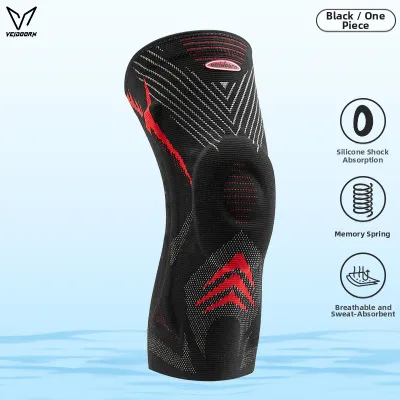
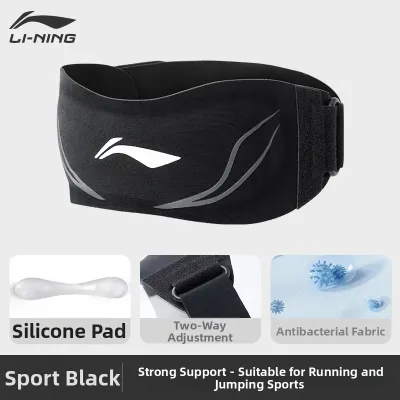
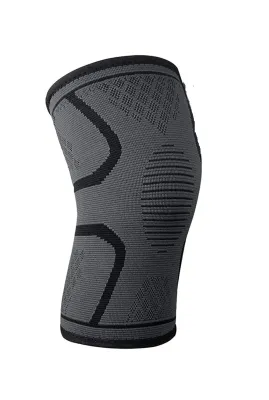
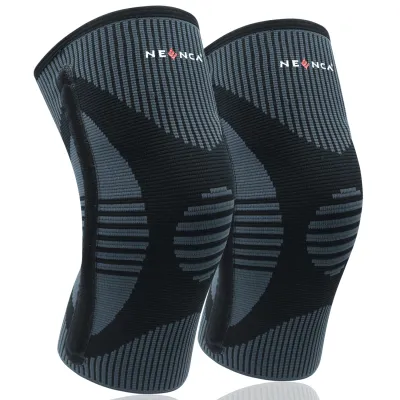
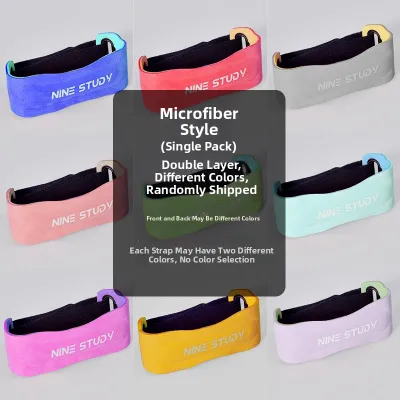
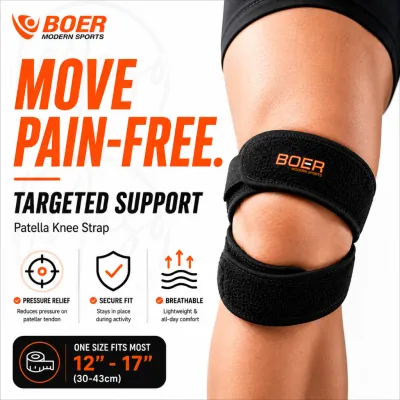
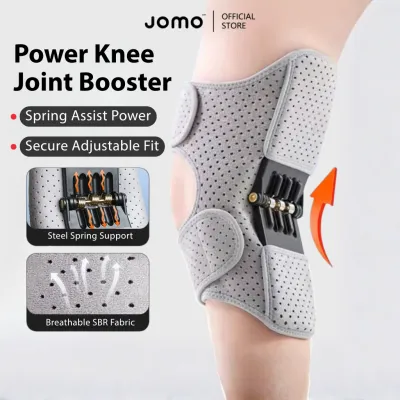
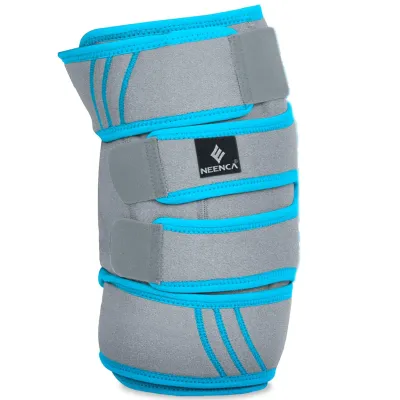
Prices are valid at publication and may change. Please refer to the product page for the latest price.

A primary benefit of a knee sleeve is proprioception, which is the sensory feedback your brain receives regarding the position and movement of your joint. The constant pressure of the sleeve on your skin enhances this awareness, helping you maintain better form during repetitive movements like running or cycling. For weightlifters performing heavy squats, this sensory feedback can improve alignment and confidence under load.
However, it is vital to recognize the limitations of a knee sleeve. Because they are flexible and lack rigid components, sleeves do not provide structural stability to the ligaments. They cannot prevent the knee from twisting unnaturally, nor can they support a joint with structural damage, such as a torn anterior cruciate ligament (ACL) or meniscus. Relying on a sleeve for structural support during high-impact or pivoting sports can lead to further joint damage.
To check if a sleeve is right for you, evaluate how your knee behaves under stress. If you primarily experience mild morning stiffness, minor swelling after a long run, or a general desire for extra warmth and reassurance during exercise, a sleeve is an excellent fit. If your knee feels physically loose, feels as though it might buckle or “give way” when you change directions, or exhibits sharp, localized pain, a sleeve is insufficient. In those scenarios, you require the structural reinforcement of a brace or the targeted pressure of a strap.
Knee Braces: Structural Stability for Instability and Recovery
Knee braces are engineered to provide mechanical reinforcement to a joint that cannot support itself safely. Unlike flexible sleeves, structural braces incorporate rigid or semi-rigid components, such as plastic or metal side stays, hinges, and heavy-duty adjustable straps. These elements work together to physically restrict lateral movement, prevent hyperextension, and absorb external forces that would otherwise strain your ligaments. Structural braces generally represent a higher investment, with prices ranging from S$50 to over S$150 for advanced hinged models, reflecting their complex engineering and materials.
These supports are essential for individuals returning to sports after a significant ligament injury, such as an ACL, MCL, or LCL sprain. They are also highly beneficial for those managing chronic joint instability or moderate osteoarthritis, where the physical structure of the joint has degraded. By mechanically limiting abnormal lateral or twisting movements, a brace allows you to engage in controlled physical activity without risking further damage.
When choosing a structural brace, you will generally encounter two main designs: wrap-around braces and pull-on hinged braces. Wrap-around models feature open designs with adjustable hook-and-loop straps, making them easier to put on without bending the knee excessively or removing your shoes. They are highly adjustable, making them ideal for managing fluctuating swelling or accommodating unique leg shapes. Pull-on hinged braces, on the other hand, slide up the leg and offer a more contoured, secure fit. They typically provide maximum stability because the rigid hinges remain perfectly aligned with the joint’s natural pivot points during movement.
Before purchasing a brace, perform a self-assessment of your symptoms. If you feel a physical “clunking” sensation when walking, experience sharp pain when twisting your leg, or find that your knee physically buckles under your body weight, structural support is necessary. Always check the manufacturer’s instructions for proper hinge alignment, as an incorrectly positioned hinge can alter your gait and cause secondary hip or ankle pain. If your symptoms persist or if you are recovering from surgery, consult a physiotherapist to ensure the brace’s mechanical limits match your rehabilitation stage.
Knee Straps: Targeted Relief for Patellar Tendon Pain
Knee straps, often referred to as patellar tendon straps or bands, are minimalist supports designed for a highly specific purpose. They consist of a narrow band worn directly below the kneecap, featuring a small, firm pad that presses against the patellar tendon. This focused pressure slightly alters the angle at which the tendon sits over the kneecap, which redistributes the mechanical load and reduces the strain placed on the tendon during repetitive movements. Patellar straps are generally the most affordable option, typically priced between S$10 and S$30, making them an accessible solution for targeted tendon relief.
This targeted mechanism makes knee straps highly effective for athletes suffering from patellar tendinopathy, commonly known as “jumper’s knee” or “runner’s knee.” If you engage in activities that involve repetitive jumping, running, or heavy cycling, the constant stress on the patellar tendon can cause localized inflammation and micro-tears. A strap helps absorb a portion of the shock traveling up the leg, allowing the tendon to heal while preventing further irritation during mild exercise.
It is crucial to understand what a knee strap cannot do. Because of its narrow, low-profile design, a strap offers absolutely no compression to the main knee joint and provides zero lateral or medial stability. It will not protect your ligaments from twisting forces, nor will it help manage general joint swelling or arthritis. Using a strap when you actually require a sleeve or a brace will leave your joint vulnerable to structural injuries.
To determine if a strap is the correct tool for your condition, conduct a simple localized pressure check. Press your fingers firmly into the soft tissue directly below your kneecap. If this action triggers a sharp, localized ache, and if your pain primarily occurs during high-impact activities like jumping or running downhill, a patellar strap is likely the most efficient, low-profile solution. If the pain is diffuse, felt deep inside the joint, or located on the sides of the knee, you should look toward other support options.
Sizing and Fit: How to Measure for a Secure, Non-Slip Fit
An improperly fitted knee support can cause more harm than good. If a sleeve or brace is too tight, it can restrict blood flow, cause skin irritation, and create a painful “tourniquet effect” that worsens swelling. Conversely, if the support is too loose, it will constantly slip down during movement, failing to provide the intended compression or structural stability. Because men typically have distinct thigh-to-calf ratios, relying on generic sizing charts without taking physical measurements often leads to a poor fit.
To find your correct size, you will need a soft, flexible measuring tape. Stand upright with your leg slightly bent at approximately a thirty-degree angle, keeping your muscles relaxed. For knee sleeves and braces, measure the circumference of your leg at three key points: the center of your kneecap (mid-patella), approximately ten to fifteen centimeters above the kneecap (lower thigh), and ten to fifteen centimeters below the kneecap (upper calf). For a patellar knee strap, simply measure the circumference of your leg directly below the kneecap, where the band will sit. Write down these measurements in centimeters and compare them to the specific manufacturer’s sizing chart, as sizing standards vary widely between brands.
Once your support arrives, you must verify the fit dynamically before using it during a full workout. Put the support on and perform a few slow bodyweight squats or lunges. Pay close attention to how the material behaves behind your knee; it should not pinch or bunch up painfully. Check that the support remains firmly in place without sliding down your leg. Most importantly, monitor your lower leg for any signs of restricted circulation, such as tingling, numbness, cold toes, or deep skin indentations. If you experience any of these symptoms, remove the support immediately and exchange it for a larger size.
Red Flags: When to See a Doctor Instead of Buying a Support
While knee supports are highly effective tools for managing mild discomfort and protecting your joints during exercise, they are not a cure-all. Wearing a sleeve or brace cannot heal structurally damaged tissue or replace a proper rehabilitation program. Relying on a support to mask severe pain can lead to chronic joint instability and long-term damage that may eventually require surgical intervention.
You must be able to recognize the warning signs that indicate a serious injury requiring immediate medical attention. If you experience a sudden, sharp pain accompanied by an audible “pop” or “crack” inside the joint, followed by rapid swelling within a few hours, do not attempt to use a support. Other critical red flags include a complete inability to bear weight on the affected leg, a visible deformity in the joint’s shape, or a feeling that the knee is completely locked in place and cannot bend or straighten.
If you notice any of these severe symptoms, do not purchase a retail support. Instead, seek a professional clinical assessment from an orthopedic doctor or a registered physiotherapist in Singapore. They can perform diagnostic imaging, such as an MRI or X-ray, to identify the exact cause of your symptoms. A professional can also provide a prescription-grade brace if necessary, ensuring that your recovery is built on a foundation of targeted rehabilitation exercises rather than a temporary retail fix.
Frequently Asked Questions (FAQ)
Can I wear a knee sleeve all day at work or while resting?
You should avoid wearing a compressive knee sleeve continuously throughout the day or while resting. Compressive sleeves are designed to support active joints by increasing blood flow and providing sensory feedback during physical movement. Wearing them for prolonged periods of inactivity can restrict blood circulation, lead to localized skin irritation from trapped sweat, and cause your muscles to rely on external support. For optimal joint health, wear your sleeve primarily during workouts, sports, or periods of active movement, and remove it during long stretches of sitting or sleeping.
Will wearing a knee brace weaken my leg muscles over time?
Using a structural knee brace will not automatically weaken your leg muscles, provided it is used correctly as part of an active recovery plan. Muscle weakness, or atrophy, typically occurs when an individual relies on a brace as a permanent substitute for natural joint function, avoiding all active movement and strengthening exercises. When used properly, a brace should actually facilitate recovery by stabilizing the joint, allowing you to perform targeted rehabilitation exercises with less pain. To prevent muscle reliance, focus on progressive strengthening exercises for your quadriceps, hamstrings, and glutes alongside your brace use.
Community discussion
Share your experience or ask a question. Comments are reviewed before publication.