
Selecting the right knee support requires balancing your need for physical stability against your demand for joint mobility. Knee sleeves and hinged knee guards serve entirely different purposes on the spectrum of joint care. While one offers flexible compression to keep your joints warm and responsive, the other provides a rigid mechanical framework to protect compromised ligaments from painful twisting or hyperextension. Choosing the wrong type can either restrict your athletic performance unnecessarily or leave your joint vulnerable to severe injury.
Understanding how these supports interact with your anatomy is the first step toward making an informed decision. Your choice should align with the specific demands of your sport, the intensity of your movements, and any existing joint conditions. By matching the mechanical properties of the guard to your physical needs, you can maintain an active lifestyle while keeping your knees properly protected.
Core Functional Differences: Compression vs. Rigid Stabilization
The primary distinction between a knee sleeve and a hinged knee guard lies in how they manage forces acting on the joint. A knee sleeve is a pull-on elastic or neoprene garment that fits snugly around the entire knee area. It does not contain rigid structural elements. Instead, it relies on compression to increase local blood circulation, retain therapeutic warmth, and stimulate proprioception. Proprioception is the sensory feedback mechanism that helps your brain monitor joint position and movement, which can improve coordination and muscle activation during exercise.
Products mentioned in this guide
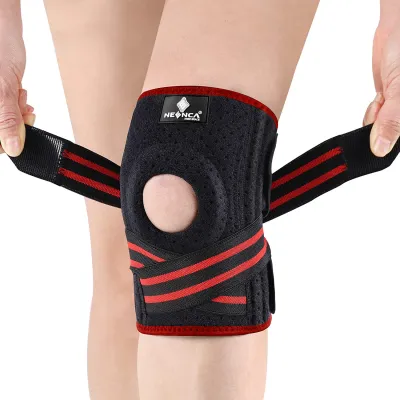
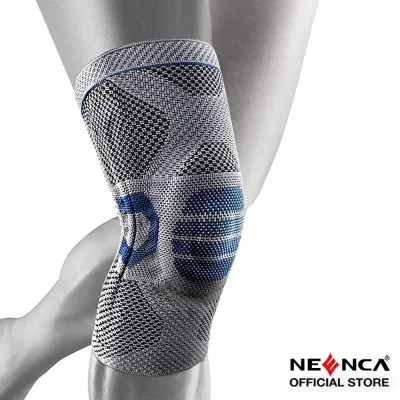
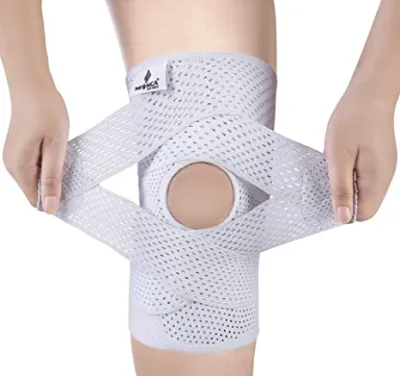
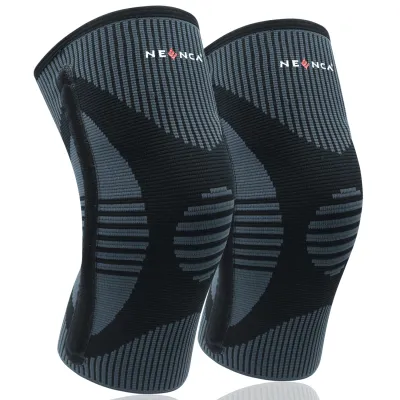
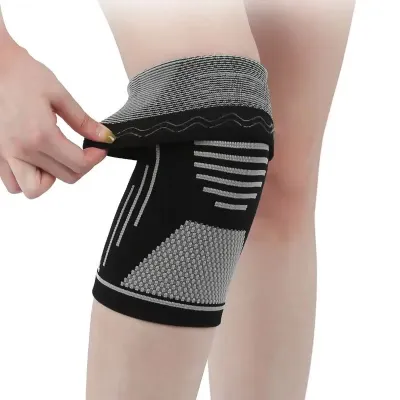
![[$61 Buy] EBENE Bio-Ray Compression Knee Guard - Best for Active Support](https://img.lazcdn.com/g/p/18c4ecd447b81334b7d42d3631fcfe0a.jpg_400x400q80.jpg_.webp)
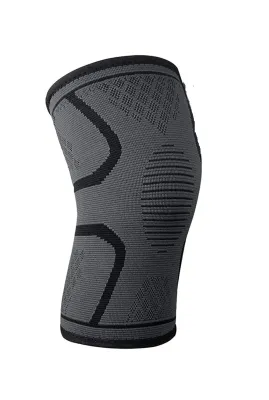
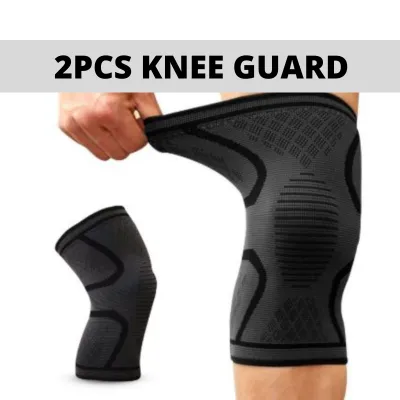
Prices are valid at publication and may change. Please refer to the product page for the latest price.
In contrast, a hinged knee guard is a structured orthotic device featuring rigid or semi-rigid side stays, usually made of lightweight metals or advanced composites. These stays are connected by mechanical hinges aligned with the natural bending axis of your knee. The primary function of a hinged guard is to provide structural resistance against lateral (side-to-side) forces and to physically block hyperextension. This mechanical barrier protects the ligaments, such as the anterior cruciate ligament (ACL) or medial collateral ligament (MCL), from stretching or tearing under load.
To help visualize these differences, the table below summarizes the key characteristics of each option:
| Feature | Knee Sleeve | Hinged Knee Guard |
|---|---|---|
| Support Level | Mild to moderate compression | High mechanical stabilization |
| Mobility | Unrestricted natural movement | Restricted lateral and hyperextension movement |
| Bulkiness | Low profile, fits under most clothing | Bulky, typically worn over clothing or loose pants |
| Primary Function | Warmth, swelling control, joint awareness | Structural alignment, ligament protection |
| Typical Sports | Running, cycling, weightlifting, fitness | Skiing, rugby, basketball, post-injury recovery |
When a Knee Sleeve Is the Right Choice
A knee sleeve is highly effective when your primary goals are comfort, mild support, and unrestricted movement. It is the go-to option for endurance athletes, such as runners and cyclists, who perform repetitive, straight-line movements. In these sports, the joint does not face sudden lateral impacts or sharp pivoting forces, making rigid stabilization unnecessary. Instead, the continuous compression of a sleeve helps manage minor joint stiffness and muscle fatigue over long distances.

The thermal retention properties of neoprene or thick knit sleeves are particularly beneficial for keeping the joint lubricated. Warm joints are more pliable and less prone to the minor aches associated with repetitive strain. Additionally, the constant pressure of the sleeve acts as a sensory reminder, encouraging better alignment and movement patterns during high-repetition activities like squatting or jump rope training.
However, it is crucial to recognize the physical limitations of a sleeve. Because it lacks rigid structural components, a sleeve cannot prevent the knee from buckling, twisting, or hyperextending under sudden, heavy loads. If you have a structurally compromised joint—such as a torn ligament or severe meniscus damage—a sleeve will not provide the mechanical safety net required to prevent further injury during high-impact activities.
When a Hinged Knee Guard Is Necessary
A hinged knee guard becomes necessary when your knee joint lacks the internal structural integrity to support itself safely under load. This level of support is typically required during rehabilitation from moderate to severe ligament sprains or tears, always under the guidance of a qualified healthcare professional. The rigid side stays act as an external skeleton, absorbing lateral forces that your healing ligaments are not yet strong enough to handle.
These guards are also highly recommended for high-impact contact sports or activities that demand sudden, aggressive pivoting and directional changes. Sports like basketball, football, and skiing place immense lateral stress on the knee joint. A hinged guard physically limits extreme ranges of motion, preventing the joint from shifting into positions that could cause acute ligament failure.
The trade-off for this high level of protection is a noticeable increase in weight and bulk. Hinged guards are significantly heavier than sleeves and can restrict your natural range of motion, particularly during deep knee bends. They can also feel cumbersome during prolonged cardiovascular exercise, requiring more energy to move. However, for athletes returning to play after a major injury, this physical restriction is a necessary compromise to ensure joint safety.
The Decision Framework: Matching Protection to Your Activity
To determine which knee support best fits your current situation, evaluate your physical condition and the specific demands of your sport using this structured framework.
Choose a knee sleeve if:
- You have no history of major ligament tears or joint instability.
- Your primary sport involves linear movements like running, cycling, or straight-line walking.
- You want to manage mild, chronic stiffness, minor swelling, or general muscle fatigue.
- You require a full, unrestricted range of motion for your activity.
Choose a hinged knee guard if:
- You are recovering from a diagnosed ligament sprain, tear, or joint instability.
- Your sport involves high-speed pivoting, sudden cutting maneuvers, or direct physical contact.
- You experience a sensation of your knee "giving way" or sliding out of place during daily movements.
- A healthcare professional has recommended mechanical stabilization for your recovery phase.
Verify first before purchasing or wearing any support: If you experience acute, sharp pain, sudden and significant swelling, or heard a distinct “pop” at the moment of an injury, do not attempt to self-treat with a knee guard. These symptoms often indicate a structural injury that requires immediate medical evaluation. Using a guard to mask these symptoms can lead to further joint damage and delay proper healing.
Sizing, Fit, and Safety Checks
An improperly fitted knee guard can cause more harm than good, potentially restricting circulation or failing to provide the intended level of support. To find your correct size, use a flexible tape measure to find the circumference of your knee. Stand with your leg slightly bent at approximately thirty degrees, and measure directly over the center of your kneecap. Many manufacturers also require measurements taken ten to fifteen centimeters above and below the kneecap to ensure a secure fit along the thigh and calf. Always compare your measurements to the specific brand’s sizing chart, as sizing standards vary widely.
When trying on a knee guard, monitor how it feels during basic movements like walking or squatting. Signs of an overly tight fit include numbness, tingling, coldness in your lower leg or foot, or deep, painful indentations in your skin. Conversely, if the guard slips down your leg, bunches up behind the knee, or shifts out of alignment when you move, it is too loose and will not provide effective protection.
Proper hygiene is also essential for preventing skin irritation, especially when wearing guards in warm or humid environments. Sweat and friction can quickly lead to chafing, rashes, or bacterial buildup. Wash your knee guard regularly according to the manufacturer’s care instructions, typically using mild soap and allowing it to air dry completely. If you have sensitive skin, consider wearing a thin, breathable cotton sleeve underneath a rigid hinged guard to minimize direct friction.
Frequently Asked Questions (FAQ)
Can I wear a knee guard all day during non-sport activities?
Unless specifically prescribed by a medical professional for post-surgical recovery, you should avoid wearing a knee guard all day. Continuous compression from a sleeve can restrict local blood circulation and cause skin irritation over long periods. Rigid hinged guards worn during sedentary daily routines can lead to joint stiffness and skin breakdown from prolonged friction. It is generally best to wear the guard only during active sports or physical tasks, removing it during periods of rest, prolonged sitting, and sleep to allow your joint to move naturally and breathe.
Will relying on a knee guard weaken my leg muscles over time?
Relying heavily on a highly supportive brace, particularly a hinged guard, without performing targeted strengthening exercises can lead to muscle weakness over time. When a rigid guard takes over the job of stabilizing your joint, the surrounding muscles—such as your quadriceps, hamstrings, and calves—do not have to work as hard, which can lead to gradual atrophy. To prevent this dependency, view your knee guard as a temporary tool for load management and safety during high-risk activities. Always combine its use with a dedicated strength and conditioning routine to rebuild your body’s natural stability.
Community discussion
Share your experience or ask a question. Comments are reviewed before publication.