
Selecting the right knee support depends entirely on your specific activity, injury history, and the level of joint mobility you require. Knee sleeves, knee straps, and hinged knee braces each serve distinct mechanical purposes, ranging from mild compression to rigid structural stabilization. Choosing the wrong type can lead to restricted movement, inadequate protection, or discomfort during your workouts.
Knee sleeves are designed for general compression and mild support, making them ideal for gym workouts, running, and daily wear. Knee straps offer targeted pressure to relieve tendon discomfort during repetitive jumping or running activities. Hinged knee braces provide maximum structural stability to protect compromised ligaments and control joint alignment during high-impact sports or post-injury recovery.
While these supports manage symptoms and provide valuable mechanical aid, they do not replace professional medical diagnosis or treatment. If you are experiencing severe pain, swelling, or joint instability, consult a healthcare professional before selecting a brace.
Products mentioned in this guide
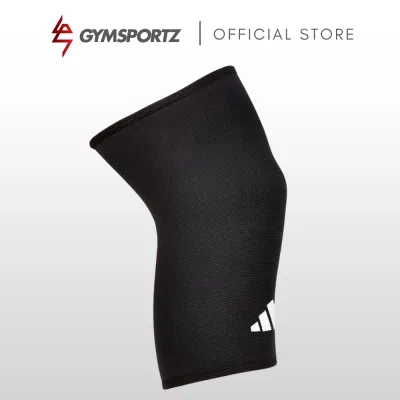
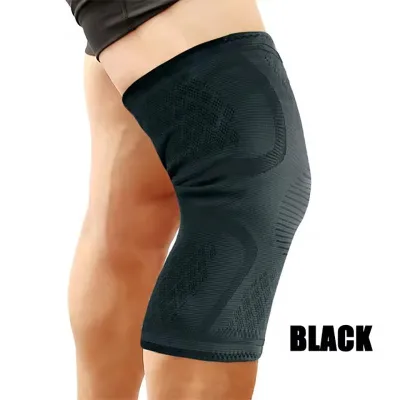
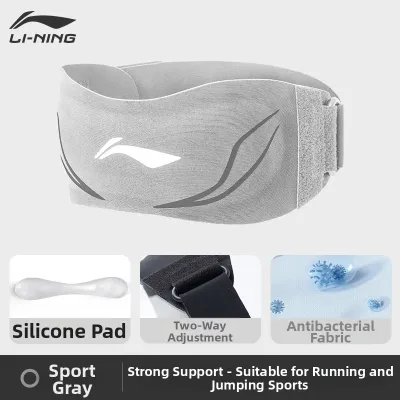
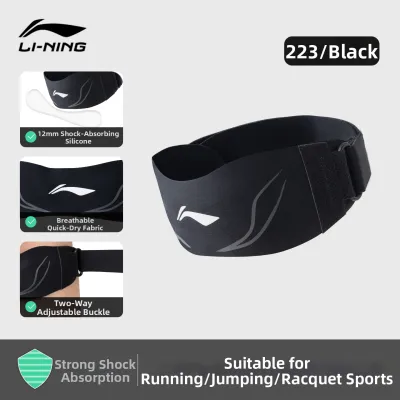
Prices are valid at publication and may change. Please refer to the product page for the latest price.
Knee Sleeves: Compression and General Support
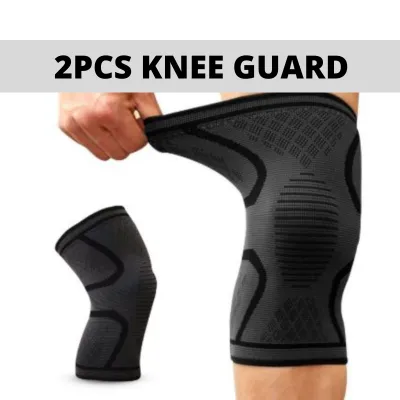
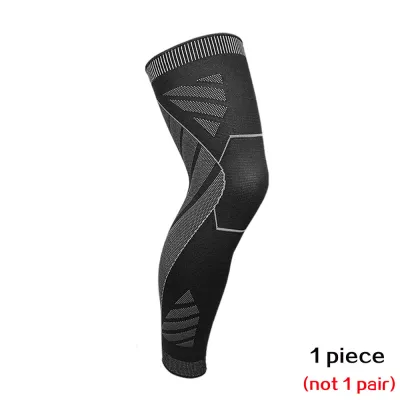
Knee sleeves are slip-on, tubular supports typically crafted from neoprene, knit fabrics, or elastic materials. They are designed to slide over the foot and sit snugly around the entire knee joint. Because they do not feature rigid structural components, they allow for a full, natural range of motion while providing consistent pressure across the joint.
The primary benefit of a knee sleeve lies in its ability to retain warmth, deliver uniform compression, and enhance proprioception. Proprioception is your brain’s ability to sense the position and movement of your joint, which helps improve movement patterns and stability during exercise. The compression also helps manage minor swelling and keeps the joint warm, reducing stiffness during rest periods.
These supports are highly suited for activities like weightlifting, general gym workouts, running, and daily wear for mild joint stiffness. In warm and humid environments, such as outdoor running trails or non-air-conditioned training spaces, neoprene sleeves can trap significant heat and sweat. For these conditions, look for lightweight, breathable knit fabrics that offer compression without excessive heat retention.
However, knee sleeves do not provide structural stability or restrict unwanted lateral joint movement. They will not prevent a ligament from twisting or tearing under high lateral forces. When purchasing, check product labels for material composition to avoid skin allergies, and follow the manufacturer’s care instructions to maintain the elastic tension over time.
Knee Straps: Targeted Relief for Tendon Discomfort
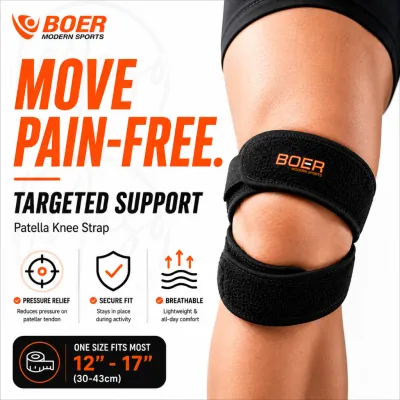
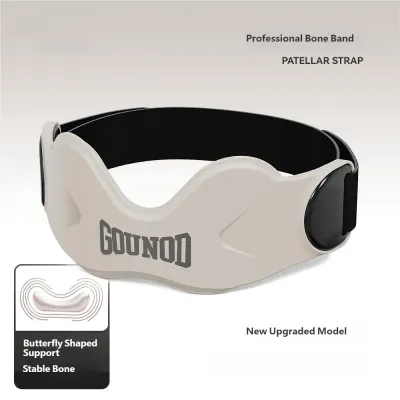
Knee straps, also known as patellar tendon straps, consist of a narrow, adjustable band worn directly below the kneecap. Unlike sleeves that cover the entire joint, a strap focuses its support on a very specific anatomical point. It is designed to apply targeted pressure to the patellar tendon, which connects your kneecap to your shinbone.

This targeted pressure alters the angle at which the tendon sits, effectively distributing forces away from the tendon itself and reducing strain during repetitive impact. Because the strap is minimal in design, it does not restrict overall knee flexion or extension, allowing you to move freely without the bulk of a full sleeve or brace.
Knee straps are ideal for jumping sports like basketball and volleyball, as well as running and cycling, where repetitive knee bending can strain the patellar tendon. They are highly portable and easy to adjust mid-workout using simple hook-and-loop closures, making them a practical choice for athletes who want targeted relief without extra weight.
Despite their convenience, knee straps offer no lateral support and cannot protect against ligament injuries. Proper placement is critical to their effectiveness; the strap must sit precisely on the tendon below the kneecap, not on the kneecap itself. Always refer to the manufacturer’s fitting guide to ensure correct positioning and tension.
Hinged Knee Braces: Maximum Stability and Protection
Hinged knee braces represent the highest level of external joint support. They incorporate rigid or semi-rigid hinges made of lightweight metal or composite materials on the medial and lateral sides of the knee. These hinges are integrated into a structured sleeve or a wrap-around strapping system that secures the brace firmly to the thigh and calf.
The primary function of a hinged brace is to control the joint’s range of motion, prevent lateral shifting, and protect the knee from hyperextension. By physically blocking movements that could compromise the joint, these braces shield vulnerable ligaments, such as the ACL, MCL, or LCL, from excessive stress during sudden pivots or impacts.
These braces are typically recommended for post-injury rehabilitation, contact sports like rugby or football, heavy powerlifting, or any activity requiring strict joint alignment. If you are returning to sport after a ligament tear or joint surgery, a hinged brace provides the mechanical boundary needed to prevent re-injury while your tissues continue to heal.
Because they are bulky and restrict natural movement, hinged braces are generally not suitable for activities requiring maximum agility or speed unless medically necessary. They can also be challenging to fit correctly without guidance. Before purchasing, verify the hinge mechanism and strapping system against your specific mobility requirements, and ensure the materials do not cause chafing during movement.
How to Choose the Right Knee Support for Your Activity
To determine which knee support fits your needs, evaluate your activity intensity, required joint mobility, and the level of structural support your knee demands.
Choose a Knee Sleeve if:
- You need mild support, joint warmth, and improved spatial awareness during general exercise, running, or daily tasks.
- You do not have a history of major ligament injuries or severe joint instability.
- You want to maintain a full, unrestricted range of motion during your movements.
Choose a Knee Strap if:
- You experience localized discomfort directly below the kneecap during repetitive jumping, running, or cycling.
- You want to minimize bulk and heat retention while keeping your joint fully mobile.
- Your primary goal is to manage patellar tendon strain rather than stabilize the entire joint.
Choose a Hinged Knee Brace if:
- You are recovering from a ligament injury, joint surgery, or severe instability.
- You participate in high-impact contact sports where lateral joint shifting is a major risk.
- You require strict mechanical boundaries to prevent hyperextension or lateral movement.
| Support Type | Support Level | Mobility Restriction | Bulkiness | Primary Use Case |
|---|---|---|---|---|
| Knee Sleeve | Mild | Low | Low | General gym workouts, running, mild stiffness |
| Knee Strap | Targeted (Tendon) | Very Low | Minimal | Jumping sports, running, cycling, patellar tendon relief |
| Hinged Brace | Maximum | High | High | Post-injury recovery, contact sports, ligament protection |
When shopping on an online marketplace or at a local sporting goods store, look closely at specific product specifications rather than relying solely on the general category. Features like anti-slip silicone grips along the inner hem help keep sleeves from sliding down during runs, while adjustable straps allow you to customize the compression level of a knee strap.
To ensure the support functions correctly and maintains healthy circulation, you must choose the correct size. Use a flexible measuring tape to measure your knee circumference at the point specified by the brand’s sizing chart. A support that is too tight can restrict blood flow and cause swelling, while one that is too loose will fail to provide the intended compression or stability.
Safety Boundaries and When to Consult a Professional
Using a knee support should never result in discomfort or adverse physical symptoms. Stop using any knee support immediately if you experience increased pain, numbness, tingling, skin irritation, or signs of restricted blood circulation, such as cold toes or swelling below the brace.
Severe joint injuries, sudden swelling, or an inability to bear weight require immediate medical evaluation. A hinged or rigid brace should not be self-prescribed for acute injuries without a professional diagnosis, as improper immobilization can delay recovery or worsen joint stiffness.
If your knee discomfort persists despite using the appropriate support type, consult a physiotherapist or doctor. Knee supports are excellent tools for managing load and providing mechanical aid, but they do not fix underlying biomechanical issues, muscle imbalances, or structural damage.
Frequently Asked Questions (FAQ)
Can I wear a knee support all day?
Lightweight, properly sized knee sleeves are generally safe for extended wear during daily activities if they do not restrict circulation or cause skin irritation. However, restrictive hinged braces should only be worn during specific physical activities, rehabilitation exercises, or as directed by a healthcare professional. Avoid wearing any tight support continuously without breaks, as prolonged compression can impair circulation, weaken the surrounding muscles over time, and cause skin breakdown.
Should I wear knee support on both knees or just the injured one?
Unilateral use is the standard approach when you are targeting a specific injury, localized discomfort, or recovering from surgery on one leg. Wearing a support on only one knee allows you to address the affected joint without unnecessarily restricting the healthy one. However, bilateral use may be considered for general compression, warmth, or preventive support in high-impact sports like weightlifting, provided the supports do not restrict your natural movement patterns or cause discomfort.
Community discussion
Share your experience or ask a question. Comments are reviewed before publication.