
Choosing the right knee guard for your sport is not about finding the most heavily reinforced option on the shelf. Instead, the ideal choice depends entirely on matching the structural design of the guard to the specific movement patterns of your activity and the current condition of your joint. A guard that is too restrictive will hinder your athletic performance, while one that is too loose will fail to provide the necessary joint reassurance.
To make an informed decision, you must evaluate the three primary categories of knee supports: sleeves, wraps, and hinged braces. Each design serves a distinct purpose, ranging from basic warmth and sensory feedback to rigid mechanical stabilization. By understanding how these structures interact with your knee joint during movement, you can select a tool that supports your athletic goals without compromising your natural movement patterns.
The Core Trade-Off: Mobility vs. Support
Every knee guard operates on a fundamental engineering trade-off: as mechanical support increases, your joint’s natural range of motion decreases. A highly flexible sleeve allows your knee to bend, rotate, and extend without restriction, but it offers minimal physical resistance against external forces or sudden twisting. Conversely, a heavy-duty hinged brace physically blocks potentially harmful lateral movements, but its rigid structure adds weight and limits your agility.
Products mentioned in this guide
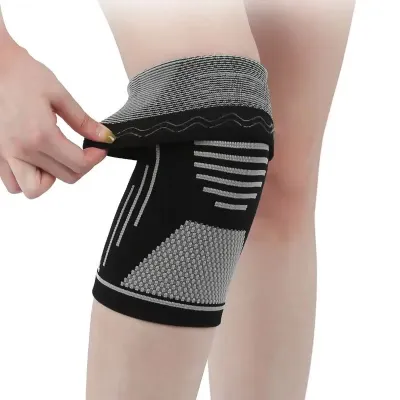
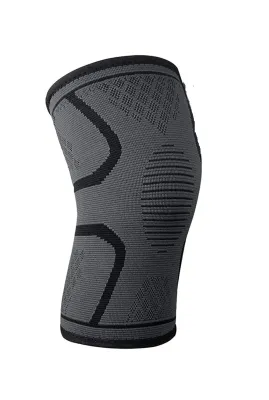
![[$61 Buy] EBENE Bio-Ray Compression Knee Guard - Best for Active Support](https://img.lazcdn.com/g/p/18c4ecd447b81334b7d42d3631fcfe0a.jpg_400x400q80.jpg_.webp)
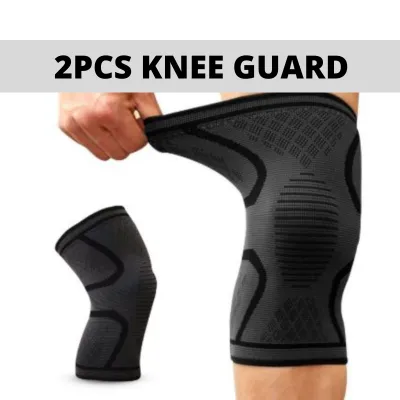
Prices are valid at publication and may change. Please refer to the product page for the latest price.
When selecting a knee guard, you must analyze the biomechanical demands of your sport. Linear sports, such as distance running, cycling, or straight-line sprinting, require repetitive, predictable flexion and extension. These activities benefit from lightweight options that do not interfere with your stride. In contrast, sports involving frequent cutting, jumping, rapid deceleration, or physical contact—such as basketball, football, netball, or badminton—place high lateral stress on the knee joint, often requiring more structured support to assist with stability.
It is crucial to remember that knee guards are supplementary tools designed to assist your body, not replace its natural systems. No brace or sleeve can compensate for weak muscles, poor movement mechanics, or inadequate physical conditioning. Relying solely on a guard to push through an unaddressed injury can lead to altered movement patterns and secondary issues elsewhere in the body. For long-term joint health, external support should always be paired with targeted strength training, mobility work, and, when necessary, professional medical guidance.
Knee Sleeves: Compression and Mild Support
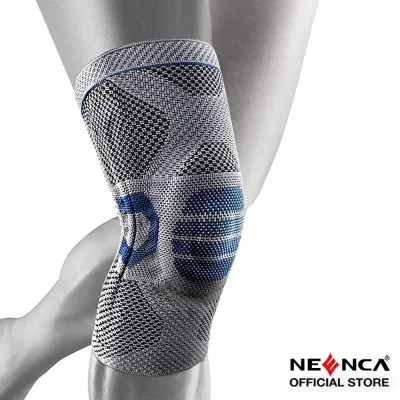
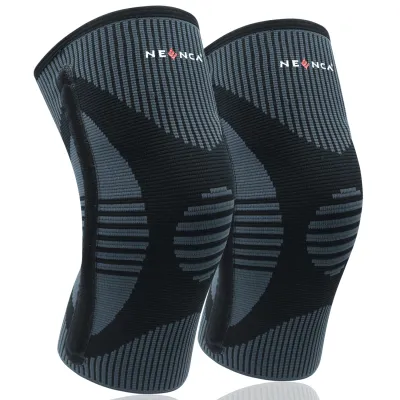
Knee sleeves are the most common type of support seen in gyms and fitness centers. Typically constructed from neoprene, knit fabric, or elastane blends, these pull-on sleeves fit snugly around the entire joint. Rather than mechanically restricting movement, a knee sleeve works primarily through compression and heat retention. The compression increases local blood flow and enhances proprioception—your brain’s awareness of the joint’s position and movement in space—which can improve coordination and confidence during high-repetition movements.

These sleeves are highly suited for sports and activities where maintaining a full, unrestricted range of motion is paramount. Weightlifters, powerlifters, functional fitness athletes, and recreational runners frequently use sleeves to keep the joint warm and cushioned during training. The uniform pressure helps manage minor, generalized soreness and provides a psychological sense of security when executing deep squats or lunges.
However, knee sleeves have clear structural limitations. Because they lack rigid stays, straps, or hinges, they cannot prevent the knee from buckling inward or outward under heavy lateral loads. They offer no mechanical protection for compromised ligaments, such as a torn anterior cruciate ligament (ACL) or medial collateral ligament (MCL). If your sport involves unpredictable contact or rapid changes of direction on uneven surfaces, a simple sleeve may not provide sufficient stabilization.
When choosing a knee sleeve, pay close attention to the material thickness and construction details. Neoprene sleeves generally come in thicknesses of 3mm, 5mm, or 7mm. A 3mm sleeve is highly breathable and ideal for endurance running or warm-weather workouts where agility is key. A 5mm sleeve offers a balanced middle ground for general gym training, while a 7mm sleeve provides heavy compression and warmth suited for heavy lifting but significantly limits flexibility over longer distances. Additionally, look for anatomical paneling, flatlock stitching to prevent chafing, and integrated anti-slip silicone wave bands along the inner top cuff to keep the sleeve from sliding down during active movement.
Wraparound Braces: Adjustable and Versatile
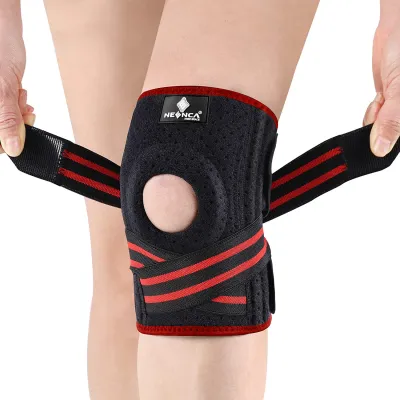
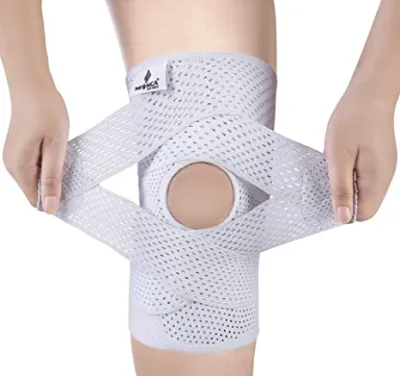
Wraparound braces, often featuring an open-patella design, offer a middle ground between simple compression sleeves and rigid hinged braces. Instead of sliding over the foot, these braces wrap directly around the knee joint and secure with adjustable hook-and-loop straps. This open, adjustable design makes them highly versatile for athletes who need to customize their level of support throughout a workout or game.
The primary advantage of a wraparound brace is its adaptability. If you are recovering from a minor strain and experience fluctuating swelling, you can loosen or tighten the straps to accommodate the changing volume of your joint. The open-patella design, often reinforced with a padded buttress or ring around the kneecap, helps track the patella properly, reducing localized pressure and discomfort during bending movements. This makes wraps highly useful for managing mild patellofemoral pain syndrome or general instability during low-to-moderate impact activities.
Despite their versatility, wraparound braces have distinct drawbacks during high-intensity sports. The multiple straps and overlapping material layers can create a bulkier profile under or over sportswear, which may cause friction or restrict deep knee bends. Furthermore, during rapid, explosive movements or prolonged running, the hook-and-loop fasteners can gradually shift, stretch, or loosen, requiring you to pause and re-adjust the brace to maintain consistent tension.
To select a high-quality wraparound brace, examine the strap configuration and material durability. Look for designs with cross-straps or a three-way strapping system, which distribute tension more evenly and provide better patellar tracking than simple two-strap models. The material should be breathable yet resilient; high-grade perforated neoprene or advanced spacer fabrics allow heat and moisture to escape while maintaining their elasticity over repeated uses. Ensure the hook-and-loop fasteners are wide and securely stitched to prevent premature fraying or peeling during active play.
Hinged Braces: Maximum Stability for High-Risk Activities
Hinged knee braces represent the highest level of external joint stabilization available without custom medical fabrication. These braces feature rigid lateral and medial stays—typically made of lightweight aluminum or high-strength composite plastics—connected by mechanical hinges that align with the knee’s natural pivot point. This rigid framework physically prevents the knee joint from bending sideways or hyperextending, shielding vulnerable ligaments from extreme forces.
These braces are specifically engineered for high-risk, high-impact scenarios. They are commonly utilized in contact sports like rugby, American football, and ice hockey, where collision forces can easily force the knee into unnatural angles. They are also highly valuable during the rehabilitation phases of major ligament reconstructions, such as ACL, MCL, or LCL surgeries, helping protect the healing graft as the athlete transitions back to functional movement. In many cases, these braces are worn under the direct guidance or prescription of an orthopedic specialist or physical therapist.
The trade-off for this extreme stability is a significant reduction in mobility, speed, and comfort. Hinged braces are heavy, bulky, and can alter your natural running gait if worn unnecessarily. Because they mechanically take over the stabilizing work of your muscles and ligaments, wearing them during low-risk activities or for extended periods without a medical indication can lead to muscle laziness and eventual atrophy in the quadriceps, hamstrings, and calves. They are entirely unsuitable for sports requiring extreme agility, deep flexibility, or lightweight gear, such as gymnastics, long-distance running, or competitive swimming.
When evaluating a hinged brace, check the hinge mechanism and the strapping system. Polycentric hinges, which mimic the complex gliding and rolling motion of the human knee, offer a smoother feel and better alignment than simple single-axis hinges. Look for models with heavy-duty, non-stretch thigh and calf straps that lock the rigid frame securely against your leg bones, preventing the brace from migrating downward. Finally, verify if the brace allows you to insert extension or flexion stops to limit the range of motion to a specific safe zone, which is particularly critical during post-injury rehabilitation.
Comparison Matrix: Matching Guard Type to Your Sport
To help you quickly identify which structural design aligns with your athletic needs, use the following comparison matrix. This table outlines the key characteristics, ideal sports, and primary limitations of each knee guard type.
| Knee Guard Type | Support Level | Mobility Impact | Best For (Sports/Conditions) | Key Limitations |
|---|---|---|---|---|
| Knee Sleeve | Mild / Proprioceptive | Minimal | Weightlifting, running, cycling, general fitness | No lateral stability; cannot protect damaged ligaments |
| Wraparound Brace | Moderate / Adjustable | Moderate | Badminton, tennis, golf, managing fluctuating swelling | Straps can loosen during high-intensity play; bulkier profile |
| Hinged Brace | Maximum / Rigid | High | Rugby, skiing, post-injury rehab, contact sports | Heavy and bulky; restricts agility; risk of muscle reliance |
Disclaimer: This matrix serves as a general structural guide. Your final selection must always account for your personal injury history, joint condition, and any specific recommendations from your medical professional or physical therapist.
Verifying Fit and Safety Before You Play
Once you have selected the appropriate type of knee guard, verifying a proper fit is essential to ensure both safety and performance. An ill-fitting guard can restrict blood circulation, cause painful skin chafing, or slide down constantly, rendering its protective features useless.
Begin with a static fit check. Put the guard on according to the manufacturer’s instructions, ensuring any patella cutout or hinge alignment matches your anatomy perfectly. The guard should feel snug and supportive but not painfully tight. Check the upper and lower edges for excessive red marks or deep indentations on your skin. If you experience any numbness, tingling, coldness in your foot, or a pins-and-needles sensation, the guard is too tight or the straps are over-tensioned; loosen them immediately to restore proper blood flow.
Next, perform a dynamic test before heading onto the court or field. Replicate your sport’s specific movements at a slow, controlled intensity. Perform a few shallow squats, gentle lunges, light jogs, and lateral side-steps. Observe if the guard bunches up behind the knee, pinches your skin, or slides down your calf. If the guard shifts significantly during these basic movements, you may need to adjust the strap tension, try a different size, or look for a model with better anti-slip features.
Finally, establish clear safety boundaries. If you experience sharp, sudden pain, increased swelling, or joint locking while wearing the guard, stop your activity immediately. A knee guard is designed to support a functional joint, not to mask severe underlying pathology. If the guard itself suffers a structural failure—such as a bent hinge, torn strap, or cracked frame—cease using it immediately, as damaged components can cause unpredictable joint loading or skin injuries.
Frequently Asked Questions (FAQ)
Can I wear a knee guard all day for prevention?
You should avoid wearing a knee guard all day as a preventative measure unless specifically instructed by a medical professional. Continuous reliance on external support can cause the stabilizing muscles around your knee, such as the quadriceps and hamstrings, to become less active. Over time, this muscle laziness can lead to weakness and increased vulnerability to injury when you play without the guard. Instead, wear the guard primarily during your active sports sessions or high-load training, and focus on targeted strength and balance exercises to build natural joint stability.
How do I clean and maintain my knee guard?
To maintain the elasticity, hygiene, and structural integrity of your knee guard, always consult the manufacturer’s care label first. As a general rule, hand wash your knee guard in cold water using a mild detergent to prevent breaking down the elastic fibers or damaging any integrated silicone grips. Avoid using bleach or fabric softeners. Rinse the guard thoroughly and squeeze out excess water gently without wringing it. Always air dry the guard flat in a shaded, well-ventilated area; never use a clothes dryer or expose it to direct high heat, as extreme temperatures can warp plastic hinges, degrade neoprene, and ruin adhesive bonds.
Community discussion
Share your experience or ask a question. Comments are reviewed before publication.