
Working out at home in Singapore often requires a masterclass in space optimization. When your living room doubles as a home gym, choosing the right small dumbbell is not just about fitness goals; it is about preserving your floor space and keeping your household organized. The ideal choice for a Housing & Development Board (HDB) flat depends on how you balance your training style against your storage limits. While dial-select dumbbells offer an excellent space-saving footprint by packing multiple weight options into a single pair, standard adjustable dumbbells provide a highly durable, budget-friendly alternative, and classic fixed-weight dumbbells offer unmatched simplicity if you only need a few specific weights.
Assessing Your HDB Storage and Training Goals
Before browsing online marketplaces or visiting local sporting goods stores, you must map out your physical space and training trajectory. HDB flats, particularly newer Build-To-Order (BTO) units, feature compact layouts where every square meter counts. Begin by measuring your intended storage area, whether that is a corner of the living room, a shelf in a bomb shelter, or the clearance space under your bed frame. Knowing these exact dimensions prevents the frustration of buying equipment that blocks walkways or prevents doors from opening fully.
Next, evaluate your current fitness level and long-term training progression. If your routine focuses on light aerobic conditioning, physical therapy, or high-repetition endurance work, you may only need one or two light weights. However, if your goal is progressive overload—gradually increasing resistance to build muscle strength—you will require a system that allows you to scale up the weight over time.
Products mentioned in this guide
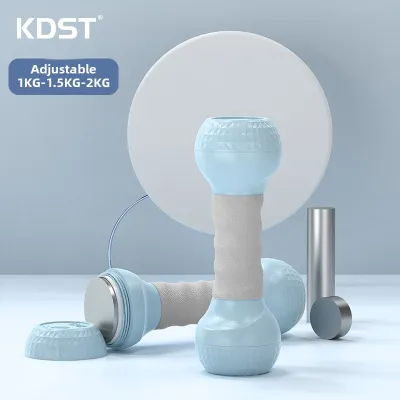
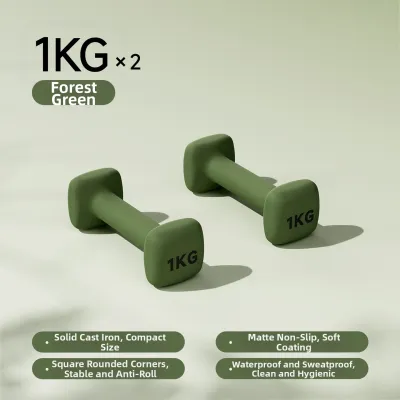
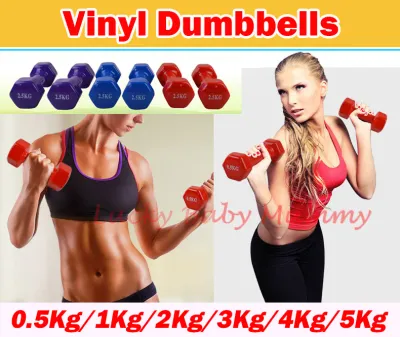
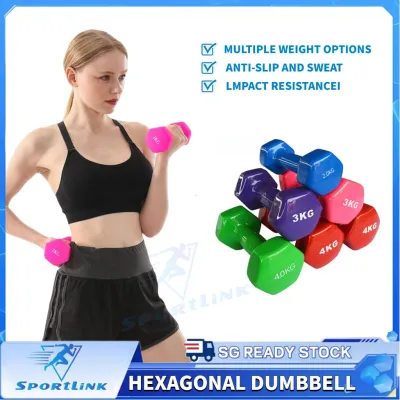
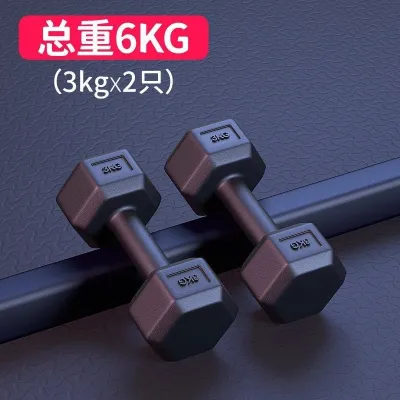
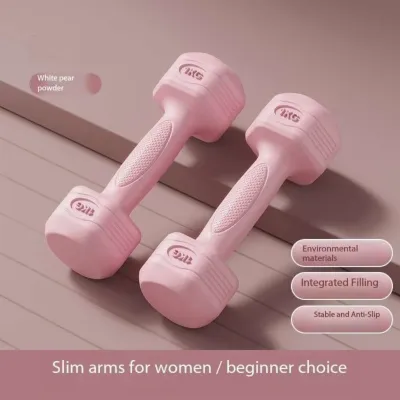
![[SG In Stock]Neoprene Dumbell Set for Weight Strength Training 1/2/3KG Suitable for Home Gym Exercise Small Dumbbell Set](https://img.lazcdn.com/g/p/923f27057110e9aadae3d93d3c8f3495.jpg_400x400q80.jpg_.webp)
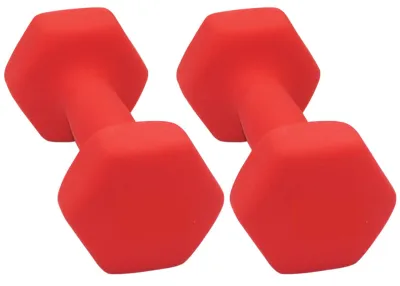
Prices are valid at publication and may change. Please refer to the product page for the latest price.
Finally, consider your budget flexibility alongside your willingness to trade physical space for convenience. Premium space-saving designs often require a larger upfront financial investment, whereas traditional options cost less but demand more storage planning. Deciding where you sit on this spectrum will streamline your decision-making process.
Fixed-Weight Dumbbells: Simplicity vs. Storage Clutter
Fixed-weight dumbbells are the traditional option found in commercial gyms. Their primary appeal lies in their absolute simplicity and rugged durability. Because they are cast or molded as a single solid piece, they have no moving parts, locking collars, or mechanical dials that can wear out, jam, or break over time. You can pick them up and start exercising instantly, making them highly efficient for quick workouts where you do not want to waste time adjusting equipment.

However, the major drawback of fixed-weight dumbbells in an HDB setting is the rapid accumulation of storage clutter. As your strength improves, you must purchase entirely new pairs of dumbbells to continue progressing. What starts as a single pair of small dumbbells can quickly grow into a collection of four or five pairs, taking up valuable floor space and creating a tripping hazard in tight living areas.
To manage this, perform a storage check before choosing fixed weights. If you only plan to use one or two specific weights, a stackable hexagonal design is highly practical because the flat edges prevent them from rolling away. If you require a wider range, verify whether your flat has the floor space to accommodate a small vertical A-frame rack, which minimizes the footprint by stacking the weights vertically rather than spreading them across the floor.
Standard Adjustable Dumbbells: Budget Flexibility vs. Setup Time
Standard adjustable dumbbells consist of a threaded metal bar, loose weight plates, and spinlock collars or spring clips to secure the plates. This design is highly cost-effective per kilogram, making it an excellent choice for budget-conscious lifters who still want a wide range of weight options. When fully disassembled, the plates can be stacked neatly in a corner or packed into a compact plastic case, taking up very little permanent space in your home.
The trade-off with standard adjustable dumbbells is the time and effort required to change weights during a workout. Unscrewing the collars, sliding plates on or off, and tightening the collars back down can take up to a minute between sets. This delay can disrupt your workout flow, especially during fast-paced circuit training or supersets where rapid transitions are necessary. Additionally, if the collars are not tightened securely, the plates can rattle or shift, which can be distracting and potentially unsafe.
If you opt for this style, establish a dedicated space check for your loose plates. Leaving heavy iron plates scattered on your floor can damage your tiles and lead to stubbed toes. A small, sturdy plastic tray or a designated low shelf in a cabinet is essential for keeping the unused plates organized and safely out of the way when they are not in use.
Dial-Select Dumbbells: Space Efficiency vs. Premium Cost
Dial-select dumbbells represent the modern solution to home workout space constraints. By utilizing a mechanical dial or pin system, these dumbbells allow you to select your desired weight while leaving the remaining plates resting securely in a custom base tray. A single pair of dial-select dumbbells can replace up to ten or fifteen individual pairs of traditional dumbbells, offering an incredibly compact footprint that fits easily on a small shelf or in a closet corner.
This design is highly efficient for dynamic workouts, allowing you to transition between different exercises and weight increments in a matter of seconds. However, this convenience comes with a premium upfront cost, often requiring a larger initial investment than other dumbbell types. Furthermore, the internal selection mechanisms are complex and require careful handling; dropping them or treating them roughly can damage the alignment, rendering the adjustment system unusable.
Before purchasing a dial-select set, verify the exact dimensions of the base tray against your available storage space. Because the tray must hold all the plates simultaneously, it has a fixed length that does not shrink when you select a lighter weight. Ensure that this base can sit flat on your designated shelf or floor space without overhanging, as an unstable base increases the risk of the dumbbells falling and sustaining mechanical damage.
Direct Comparison: Space, Cost, and Usability
To help you decide which system fits your HDB flat best, it is helpful to compare their key characteristics side by side. Each option represents a distinct balance of spatial economy, financial investment, and practical usability.
| Dumbbell Type | Footprint Size | Weight Transition Speed | Relative Cost | Mechanical Durability |
|---|---|---|---|---|
| Fixed-Weight | Large (increases with progression) | Instant (pick up and go) | Low (per pair) | Extremely High (no moving parts) |
| Standard Adjustable | Small (plates stack compactly) | Slow (manual collar adjustment) | Low to Moderate | High (simple threaded parts) |
| Dial-Select | Minimal (single fixed base tray) | Fast (turn dial or pull pin) | High | Moderate (requires careful handling) |
Use this simple decision framework to guide your final purchase:
- Choose Fixed-Weight if you only need one or two specific weight levels, prioritize absolute durability, and want to start your workouts instantly without any setup.
- Choose Standard Adjustable if you are working with a modest budget, want a wide range of weight options, and do not mind spending a bit of extra time changing plates between exercises.
- Choose Dial-Select if you have very limited storage space, want to perform fast-paced workouts with multiple weight changes, and are willing to invest more upfront for maximum convenience.
Managing Noise, Floor Impact, and Safety in an HDB
Living in an HDB flat means sharing walls and floors with neighbors, making noise management and floor protection critical considerations for any home workout routine. The material of your small dumbbell plays a major role in this. Bare cast-iron dumbbells are highly durable but can clatter loudly during adjustments and easily scratch or chip ceramic floor tiles if set down too quickly. Dumbbells coated in rubber, neoprene, or urethane are much quieter, providing a protective layer that dampens sound and reduces the risk of scuffing your floors.
Regardless of the dumbbell material you choose, investing in high-density rubber floor mats is highly recommended. These mats distribute the weight of the dumbbells, absorb impact noise, and protect your flat’s flooring from structural damage. Avoid using thin yoga mats for heavy weights, as they do not provide sufficient cushioning to prevent impact transmission to the floor below.
Safety should also be a top priority when working out in a confined space. Before starting any exercise session, perform a quick safety check on your equipment. For standard adjustable models, ensure the collars are screwed on tightly and do not back off during movement. For dial-select models, verify that the dial is fully engaged in its slot and that the plates are locked securely in place before lifting the handle from the tray.
Final Decision Framework: Which Type Should You Buy?
Ultimately, the best small dumbbell for your HDB flat is the one that fits both your physical living space and your personal fitness routine. If your storage space is extremely tight, prioritizing a single compact system like a dial-select dumbbell will keep your home clutter-free and highly functional. If budget is your primary constraint, a standard adjustable set offers the best value while still keeping your footprint relatively small.
When purchasing, always check the manufacturer’s warranty terms and local return policies, particularly for mechanical dial-select models that contain intricate moving parts. If you are still unsure about your long-term commitment to a home workout routine, consider starting with a modest, mid-range weight set. You can always expand your equipment collection later once you have established a consistent habit and have a clearer understanding of your spatial limits.
Frequently Asked Questions (FAQ)
Can I drop adjustable or dial-select dumbbells on HDB flooring?
No, you should never drop adjustable or dial-select dumbbells on HDB flooring. Dial-select models contain precise internal gears, pins, and alignment tracks that can easily bend, crack, or jam upon impact, rendering the adjustment mechanism completely useless. Standard adjustable dumbbells can also suffer from bent threaded bars or cracked locking collars if dropped. Furthermore, dropping heavy weights can easily crack or shatter HDB ceramic floor tiles and create disruptive noise for your neighbors downstairs. Always lower your weights to the floor in a controlled, gentle manner.
Do I need a dedicated rack for fixed-weight dumbbells in a small flat?
You do not strictly need a dedicated rack, but using one can significantly improve safety and organization in a small flat. Leaving loose, round dumbbells on the floor creates a serious tripping hazard in narrow HDB corridors and living areas, and they can easily roll into walls or furniture. If you want to avoid a bulky floor rack, opt for hexagonal-shaped dumbbells that stay securely in place when set down. Alternatively, you can store your dumbbells in sturdy, low-profile plastic bins under your bed frame or inside a dedicated storage cabinet to keep them out of sight.
Community discussion
Share your experience or ask a question. Comments are reviewed before publication.