
Starting your fishing journey requires the right tools, and a small fishing net is one of the most critical yet overlooked pieces of gear for a beginner. The ideal net for someone starting out is one that matches their specific activity, is lightweight enough to handle with one hand, and features materials that protect both the catch and the fishing line. For most beginners, a small landing net with a rubberized mesh and a short, high-grip handle offers the most straightforward learning curve. It minimizes hook tangles, protects the fish’s protective slime coat, and fits easily into a backpack or small kayak.
Choosing the wrong net can lead to frustrating tangles, lost fish, or even accidental damage to local aquatic life. By understanding the differences between landing nets, bait-collecting dip nets, and specialized cast nets, you can select a tool that enhances your time on the water. Whether you are targeting small peacock bass in local reservoirs, collecting bait along coastal breakwaters, or exploring shallow tide pools, matching your net to your environment ensures a successful and ethical angling experience.
Identify the Right Type of Small Fishing Net for Your Activity
To choose the right net, you must first define how you plan to use it. Beginners often confuse landing nets, dip nets, and cast nets, yet each serves a completely distinct purpose on the water. Using the wrong tool not only makes fishing more difficult but can also damage your gear or harm the surrounding environment.
Products mentioned in this guide
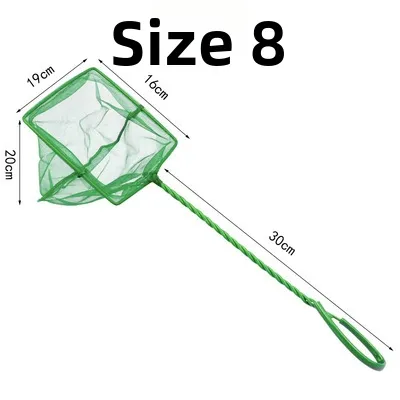
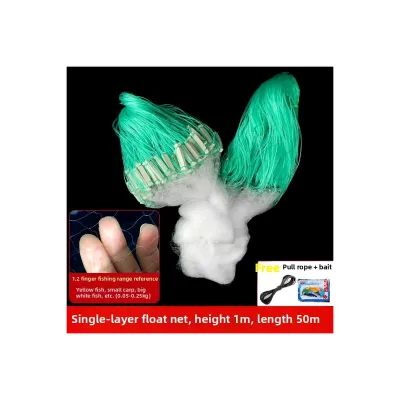
![[Ready Stock] sportschannel Fishing Net Fish Mesh Trap Monofilament Gill Netting Outdoor Fishing Tackle](https://img.lazcdn.com/g/p/01fc5cc18614bfecb3a79b0736c07143.jpg_400x400q80.jpg_.webp)
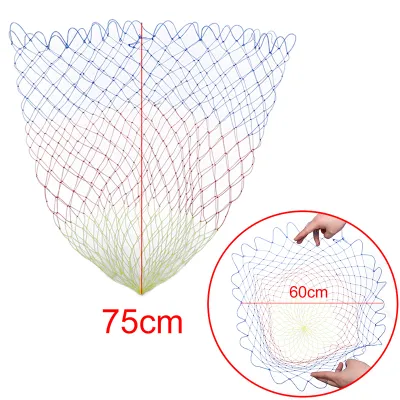
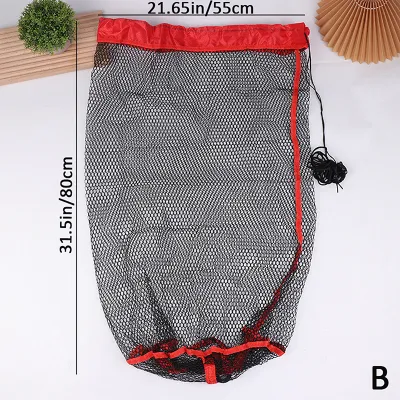
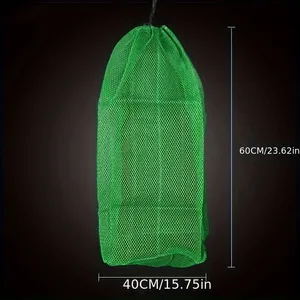
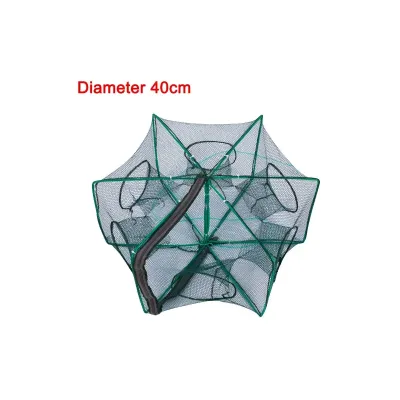
Prices are valid at publication and may change. Please refer to the product page for the latest price.
Landing nets are designed specifically to assist you in securing a fish that you have already hooked on a line. When a fish is tired and brought close to the shore, boat, or kayak, the landing net is scooped underneath it to lift it safely out of the water. For beginners, these nets are highly recommended because they prevent the line from snapping under the fish’s weight at the last second. They typically feature a wide hoop, a relatively deep bag, and a handle that allows you to reach past the water’s edge.
Dip nets, on the other hand, are meant for actively scooping up small aquatic organisms, such as baitfish, shrimp, or insects, directly from the water. These nets are characterized by very fine, tightly woven mesh and a rigid, often flat-fronted frame that can be scraped along the bottom of a stream or pool. If your goal is to gather live bait before casting a line, a small dip net is an indispensable and highly accessible tool that requires virtually no prior training to use effectively.
Cast nets represent a much more specialized category. These are circular nets with weighted edges that are thrown by hand so they open up in the air and sink rapidly over a school of baitfish. While highly effective for gathering large quantities of bait, cast nets have a steep learning curve that can frustrate beginners. They require coordinated physical movement to throw correctly and are physically demanding due to the integrated weights.
Before purchasing any net, especially a cast net, it is vital to research local fishing regulations. In many regions, including Singapore, the use of cast nets is strictly regulated or entirely prohibited in specific water bodies, such as public reservoirs and nature reserves. Landing nets and small hand-held dip nets are generally permitted in designated fishing zones, but you should always verify the current guidelines of local water authorities to ensure compliance and avoid heavy fines.
Key Specifications to Evaluate Before Buying
Once you know which type of net fits your activity, you must evaluate its physical specifications. The mesh size, material, and handle construction directly impact how easy the net is to use and how well it preserves the quality of your catch.

Mesh size and shape are critical for preventing tangles and protecting fish. For landing nets, a larger mesh size (around 1 to 2 centimeters) allows water to flow through quickly, making the net easier to maneuver in moving currents. However, if the mesh is too large, small fish can slip through or get their gills caught in the openings. For dip nets targeting bait, a micro-mesh or fine mesh (under 0.5 centimeters) is necessary to prevent tiny shrimp or minnows from escaping. The shape of the bottom of the net bag also matters; a flat-bottomed bag supports the fish evenly, whereas a cone-shaped bag can pinch the fish and cause unnecessary stress.
The netting material itself is perhaps the most important choice you will make. Traditional nylon netting is lightweight and inexpensive, but it has significant drawbacks for beginners. Nylon fibers can act like fine blades, scraping away a fish’s protective slime coat and splitting its fins, which can lead to infections after release. Furthermore, fishing hooks easily pierce and tangle in braided nylon, leading to frustrating delays on the water. Modern rubber or rubber-coated nylon mesh is the preferred choice for modern anglers. Rubber is incredibly gentle on fish skin, does not absorb water or odors, and is virtually snag-proof, allowing you to remove hooks easily without tearing the net.
Hoop and handle construction determine the net’s durability and portability. For beginners, a lightweight aluminum or composite fiberglass hoop is ideal because it resists corrosion and does not fatigue your arm during a long day of fishing. Handles come in fixed, folding, or telescopic designs. A fixed handle offers the greatest structural strength but can be awkward to transport. Telescopic handles allow you to extend your reach when fishing from high banks or piers, then collapse down for easy storage in a backpack. Look for handles with non-slip EVA foam or textured rubber grips, which ensure you maintain a secure hold even when your hands are wet.
Match the Net to Your Specific Beginner Scenario
To simplify your decision, consider which of the following common beginner scenarios matches your planned outing. Selecting a net tailored to your specific environment will prevent you from carrying unnecessary weight or struggling with inappropriate gear.
Scenario A: Assisting with hook-and-line fishing. If you are heading to a designated reservoir or coastal fishing jetty with a rod and reel, your primary need is a reliable landing net. Look for a model with a hoop diameter of 30 to 40 centimeters, which is large enough to accommodate common species like peacock bass, halfbeaks, or small snappers. Opt for a short, floating handle if you are fishing from a kayak, or a telescopic handle that extends to at least 1.2 meters if you are standing on a high concrete bank. Ensure the mesh is made of soft, knotless rubber to facilitate quick, safe catch-and-release.
Scenario B: Catching live bait or exploring tide pools. If you are introducing children to the water or want to collect wild bait like glass shrimp or small crabs along a rocky shoreline, a sturdy dip net is your best option. Choose a net with a D-shaped or flat-fronted aluminum frame, which allows you to flush the net flat against sandy bottoms or rock faces. The mesh must be extremely fine—ideally a soft micro-mesh—to hold tiny organisms without damaging them. A short, fixed handle of 30 to 50 centimeters provides the best leverage and control for quick, sweeping motions in shallow water.
Scenario C: Introduction to net casting. If you are determined to learn the art of throwing a cast net to gather bait in open coastal waters, start small. Beginners should look for a practice cast net with a radius of no more than 3 to 4 feet (approximately 0.9 to 1.2 meters). Larger nets are incredibly difficult to throw without advanced technique and can easily tangle around your body. Choose a net with light weights to avoid straining your shoulders during practice. Always practice your throwing technique on a soft grass lawn first to avoid tearing the delicate mesh on sharp rocks or barnacles, and strictly verify that cast netting is permitted in your chosen body of water before heading out.
Essential Care and Maintenance for Longevity
A high-quality fishing net can last for years if you practice basic maintenance after every outing. Neglecting your gear leads to dry rot, unpleasant odors, and structural failures that could cause you to lose a prized catch.
Always rinse your net thoroughly with clean freshwater immediately after use. This is especially critical after fishing in saltwater environments, as salt crystals will dry inside the mesh fibers and handle joints, causing rapid corrosion of metal parts and weakening synthetic netting. Wash away any mud, algae, fish slime, or scales that have adhered to the mesh, as these organic materials will rot and create strong, persistent odors.
After rinsing, hang the net to dry in a well-ventilated, shaded area. Never store a wet net inside a plastic bag, car trunk, or tight storage locker, as the trapped moisture will quickly promote the growth of mold and mildew, which degrades both rubber and nylon. Avoid leaving the net in direct sunlight for extended periods; ultraviolet (UV) rays break down synthetic netting materials, making them brittle and prone to tearing under pressure.
Finally, store your net in a cool, dry place away from sharp tools or heavy equipment that could bend the hoop or puncture the mesh. If your net has a telescopic handle, store it in the fully collapsed position to protect the internal locking mechanisms from accidental impact.
Frequently Asked Questions (FAQ)
Do I need a special permit to use a small cast net?
Yes, in many jurisdictions, the use of cast nets is highly restricted and may require a specific permit, or it may be banned entirely in freshwater bodies. For example, in Singapore, cast netting is prohibited in all reservoirs and nature reserves, and is only permitted in specific coastal areas. Always consult the official guidelines of local environmental and fisheries authorities before purchasing or using a cast net to ensure you are operating within legal boundaries.
How do I untangle a small fishing net without tearing the mesh?
Untangling a net requires patience and a systematic approach. Avoid pulling or tugging forcefully on the mesh, as this will only tighten the knots and potentially rip the material. Start from the outer edges of the tangle and work your way inward, gently loosening the loops one by one. If a fishing hook is deeply embedded in nylon mesh, use a pair of needle-nose pliers to carefully back the barb out of the fiber, or use line cutters to snip the fishing line rather than cutting the net itself. If you are using a rubber net, hooks should slide out easily with minimal manipulation.
Community discussion
Share your experience or ask a question. Comments are reviewed before publication.