
Choosing the right small Pilates ball size is essential for maintaining proper joint alignment and maximizing muscle engagement. Typically ranging from 18 cm to 25 cm in diameter, these compact tools add resistance, support, and instability to your routine. The ideal size depends on your specific exercise goals, body proportions, and natural joint mobility.
Why the Diameter of a Small Pilates Ball Matters
The physical diameter of a small Pilates ball directly dictates your joint angles and range of motion during a workout. When you squeeze or press against the ball, its size determines how far your limbs must travel before meeting resistance. If the ball is too large, your joints may be forced into awkward, wide angles that limit your ability to apply even pressure. Conversely, a ball that is too small can restrict your movement, preventing you from achieving a full muscle contraction.
Using an incorrectly sized ball often triggers compensatory movements as your body attempts to find stability. For instance, if a ball placed between your knees is too narrow, your hips may rotate inward, placing undue strain on your lower back and knees. Biomechanical feedback—such as joint comfort, smooth movement, and the ability to maintain a neutral spine—should always guide your choice.
Products mentioned in this guide
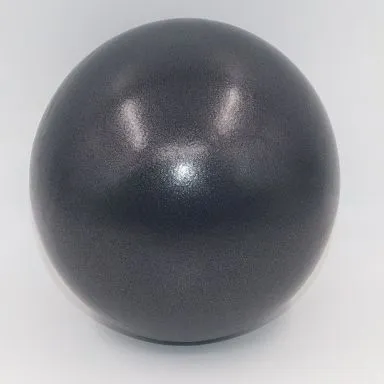
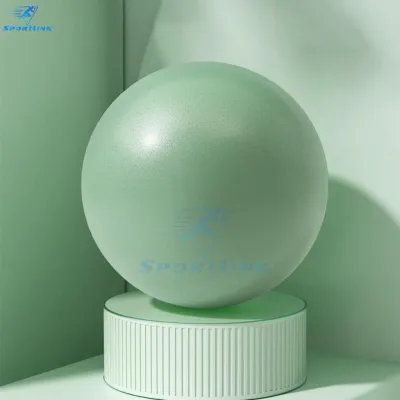
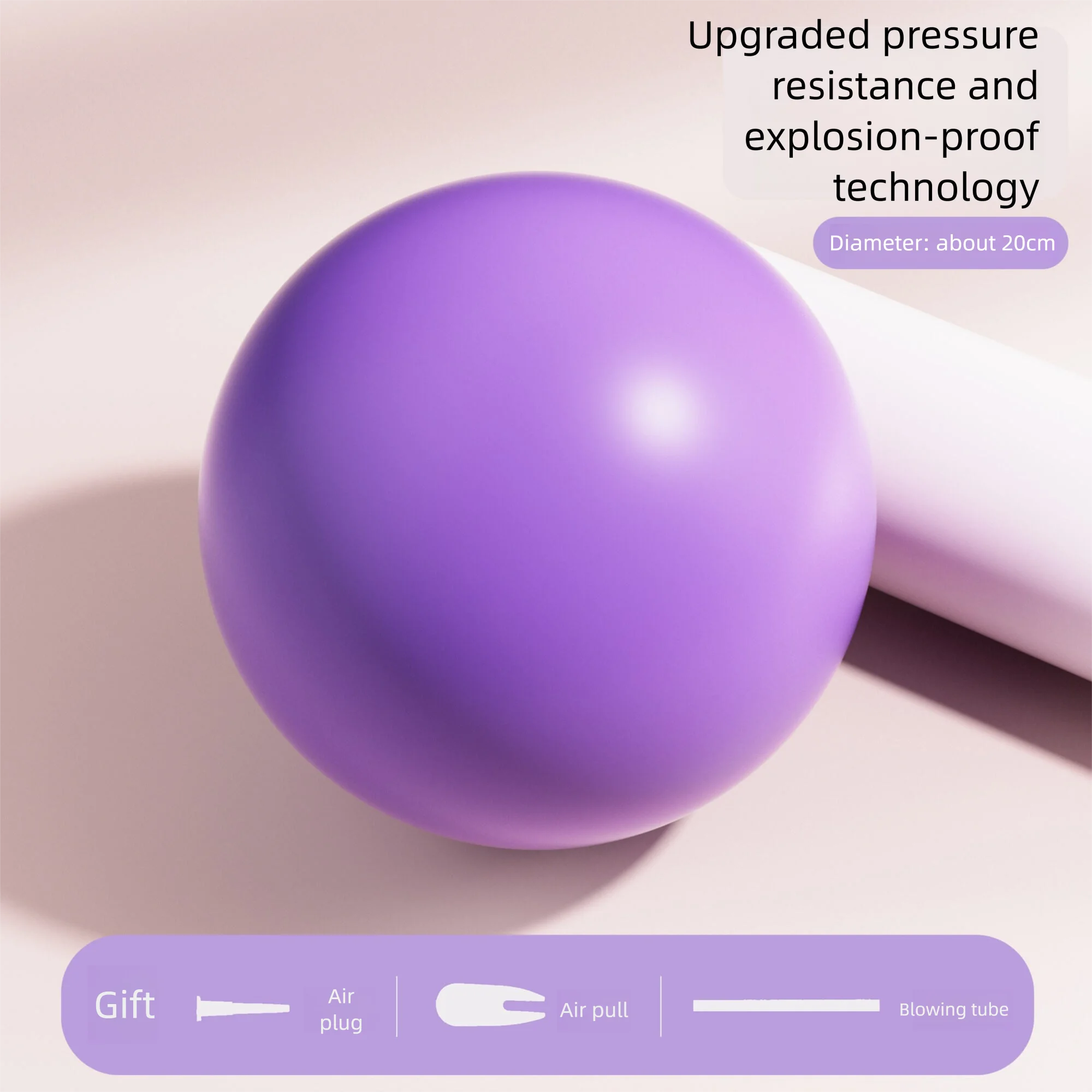
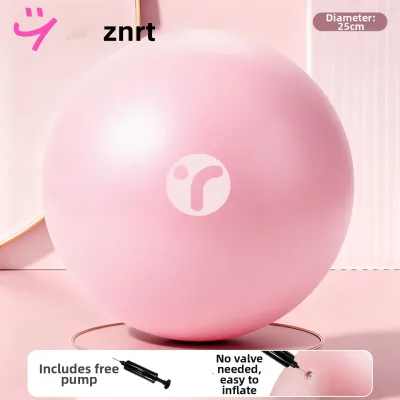
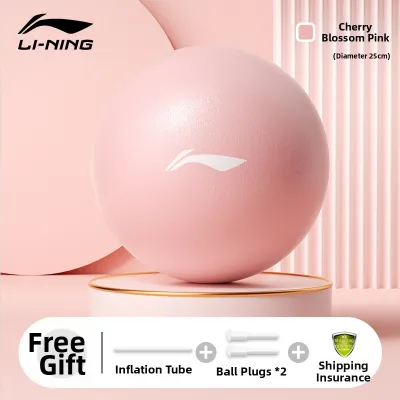

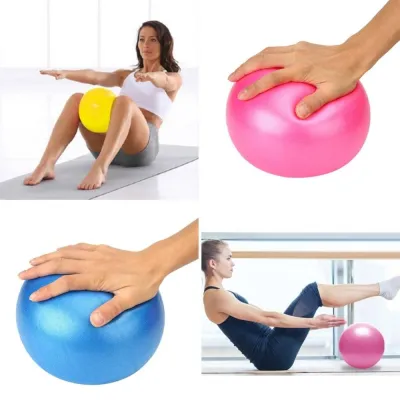
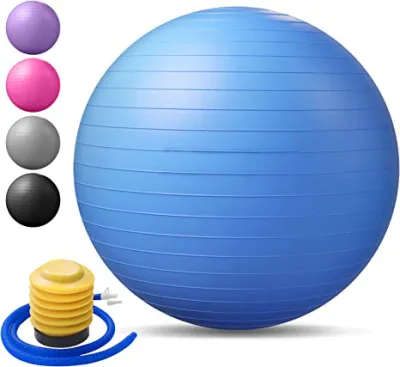
Prices are valid at publication and may change. Please refer to the product page for the latest price.
Matching Ball Size to Your Primary Exercise Focus
Different Pilates exercises target distinct muscle groups across various planes of motion, meaning a single diameter may not offer the same level of support for every movement. Your choice should align with the specific limb distances and resistance levels required to perform your primary exercises safely and effectively.

Inner Thigh Squeezes and Lower Body Alignment
When performing inner thigh squeezes in a supine or seated position, the ball acts as a spacer that engages your adductor muscles. To ensure safe alignment, your knees and hips should remain parallel and track in a straight line when the ball is fully compressed. If the ball is too wide, your knees will be forced outward beyond hip-width, which can strain the outer hip joints and prevent proper muscle engagement.
You can check your alignment by observing your pelvis and spine during the squeeze. If you feel your pelvis tilting backward or your lower back flattening excessively, the ball may be too large for your natural hip structure. A comfortable diameter is one that matches the natural distance between your knees when your feet are planted hip-width apart.
Core Activation and Abdominal Support
For core exercises, the small Pilates ball is frequently placed behind the mid-back, under the sacrum, or between the ankles to challenge your stability. The diameter and compressibility of the ball directly influence how deeply you can engage your pelvic floor and transverse abdominis. A slightly deflated ball provides a supportive yet unstable surface that forces these deep stabilizing muscles to fire continuously to maintain balance.
If the ball is too large or over-inflated when placed behind your back, it will force your spine into an exaggerated arch, straining the lower back and disengaging the abdominal wall. If the ball is too small, it will fail to provide the tactile feedback needed to guide your movement. Look for a size that allows you to sink slightly into the ball while keeping your ribs knitted and your pelvis in a stable, neutral position.
Upper Body Toning and Arm Placement
Upper body Pilates movements rely on the ball to build shoulder stability, chest strength, and arm endurance. When holding the ball between your hands or forearms, your shoulders should remain relaxed, down, and away from your ears, with your elbows slightly bent and wrists straight. If the ball’s diameter is too wide for your shoulder width, pressing inward can cause your shoulders to shrug upward, leading to neck tension and poor alignment.
Your hand size, grip strength, and arm length play a significant role in determining the optimal diameter for upper body work. A ball that is too large can make overhead presses or chest-hugging movements awkward, potentially impinging the shoulder joint as you reach forward or upward. Choosing a size that allows you to maintain a secure, comfortable grip without straining your wrists ensures that the resistance is distributed evenly.
Body Proportions and Personal Fit Considerations
While exercise type is a primary factor, your unique body proportions must also guide your selection. Taller individuals with longer limbs generally require a slightly larger ball, such as a 23 cm to 25 cm model, to bridge the natural gap between their knees or hands without compromising their joint mechanics. Shorter individuals or those with narrower frames often find that an 18 cm to 20 cm ball allows them to maintain proper alignment without overextending their joints.
Your baseline flexibility and joint mobility also dictate the maximum comfortable diameter you can safely use. If you have tight hip flexors or limited shoulder mobility, a larger ball can exacerbate these restrictions during deep stretches or wide placements. A smaller, more compliant ball allows you to work within your current range of motion without forcing your joints into uncomfortable positions.
As you transition between different exercises in your routine, pay close attention to your personal comfort thresholds. If a specific size requires you to constantly adjust your posture or causes localized discomfort, it is a sign that the ball does not match your proportions. A versatile fit is one that feels supportive and unobtrusive across multiple movement patterns.
How to Verify the Right Size Before You Commit
Before purchasing a small Pilates ball, you can easily simulate different diameters at home using common household items. A rolled-up bath towel secured with elastic bands, a small decorative cushion, or a soft toy can mimic the approximate size and compressibility of a Pilates ball. Place your temporary substitute between your knees or behind your lower back to test how different thicknesses feel against your body during basic movements.
During this home test, monitor specific physical cues to evaluate the fit. You should feel your target muscles working without experiencing sharp joint pain, pinching, or excessive muscle fatigue in non-target areas. Additionally, pay attention to your breathing capacity; if a simulated size forces you into a posture where you cannot take deep, diaphragmatic breaths, the diameter is likely too large or positioned incorrectly.
If you experience persistent discomfort, joint clicking, or difficulty maintaining a neutral spine during these tests, stop the movements immediately. Consider consulting a certified Pilates instructor or a fitness professional to assess your alignment and recommend a tailored size.
Frequently Asked Questions (FAQ)
Can I use one small Pilates ball for all exercises?
Yes, you can use a single small Pilates ball for a variety of exercises, but it requires a compromise. A mid-sized ball, typically around 22 cm, is highly versatile and can be adapted for core, lower body, and upper body work by adjusting its inflation level. However, if your routine focuses heavily on a specific area—such as deep core support or targeted inner thigh work—investing in a size tailored to that movement will provide better alignment and muscle activation.
Does the material or firmness change how the size feels?
Absolutely. The inflation level and material density of the ball significantly alter its perceived size and performance. Under-inflating a larger ball (such as a 25 cm ball) allows it to compress easily, mimicking the joint clearance and tactile feedback of a smaller, firmer ball while offering a softer support surface. Adjusting the air volume is an excellent way to customize the ball’s firmness to match different exercises without needing to buy multiple sizes.
Community discussion
Share your experience or ask a question. Comments are reviewed before publication.