
Snorkeling offers an unparalleled window into the marine world, but for beginners who rely on spectacles to navigate daily life, the underwater environment can easily become a blur. Fortunately, modern water sports equipment provides highly effective solutions for nearsightedness, commonly referred to as myopia. Navigating these options requires understanding how water alters your vision and identifying which mask configuration matches your optical needs and budget.
For beginners with myopia, the most practical solutions include pre-made corrective lenses (often called drop-in diopters), custom-ground prescription lenses bonded to a mask, or wearing daily disposable contact lenses under a standard mask. Each approach carries distinct trade-offs in terms of optical precision, cost, and safety. Choosing the correct setup ensures you can clearly see marine life, read your depth gauge, and maintain spatial awareness in the water.
While selecting gear is an important step, equipment cannot replace water confidence, swimming ability, or situational awareness. In Singapore, where tropical waters and regional reef destinations like Tioman or Redang attract many first-time snorkelers, preparing your vision gear beforehand is essential for a safe excursion. Understanding your options will help you make an informed decision before you head to the coast.
Products mentioned in this guide
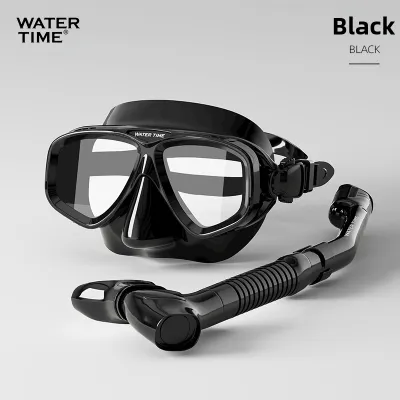
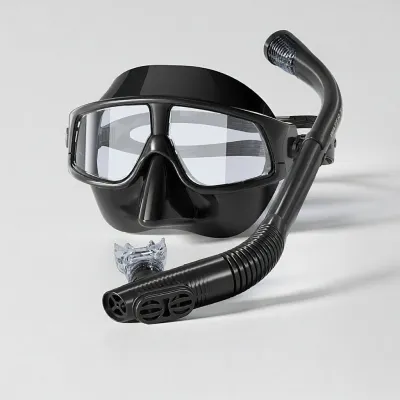
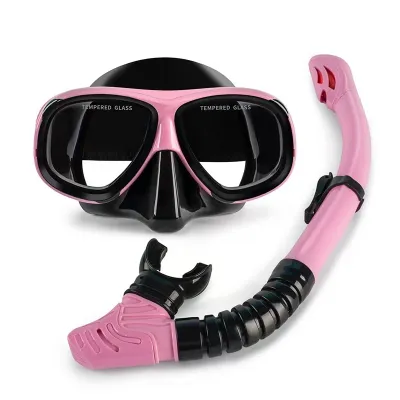
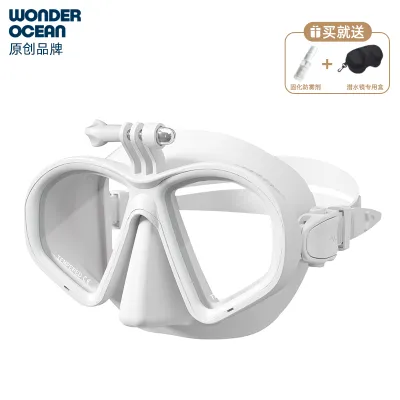
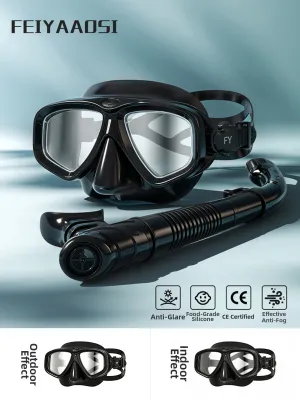
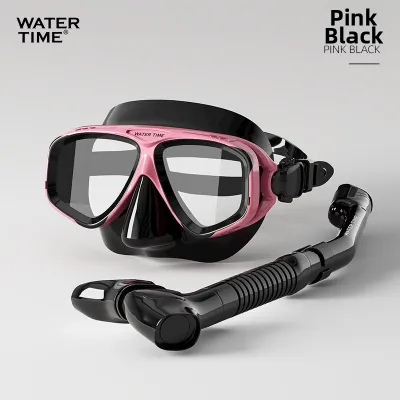
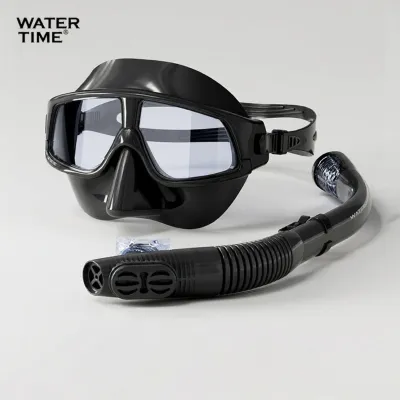
Prices are valid at publication and may change. Please refer to the product page for the latest price.
Prescription Solutions for Snorkeling: Finding a Snorkeling Mask for Myopia
Correcting your vision underwater is essential for safety and enjoyment. Beginners have three primary options to address myopia while snorkeling: pre-made step-off lenses, custom-ground prescription lenses, or wearing contact lenses under a standard mask. Each method serves different vision profiles and financial considerations.
Pre-made step-off lenses, also known as drop-in diopters, are mass-produced lenses manufactured in standard spherical increments, typically ranging from -1.50 to -8.00 diopters in 0.50-diopter steps. These lenses are designed to fit into compatible dual-lens masks, allowing users to select a different strength for each eye if needed. Because they are pre-fabricated, they are highly cost-effective, with complete setups usually costing between S$60 and S$150 in Singapore. The primary drawback is their inability to correct for astigmatism (cylindrical error), meaning users with significant astigmatism may still experience slight blurriness. Additionally, because they are sold in fixed increments, you must round down to the nearest half-diopter to avoid eye strain.
Custom prescription lenses represent the gold standard for underwater vision correction. These are custom-ground by ophthalmic laboratories to match your exact optical prescription, including precise cylinder values for astigmatism and exact pupillary distance (PD) alignment. The lenses are either permanently bonded to the inside of the mask’s tempered glass or installed as complete replacement lenses within a compatible frame. While they offer unmatched visual clarity, they require a higher investment, typically ranging from S$200 to S$450, and require a manufacturing lead time of one to two weeks. This option is highly recommended for individuals with complex prescriptions, high astigmatism, or significant differences in prescription strength between their left and right eyes.
Wearing contact lenses with a standard mask is a common alternative that offers maximum convenience and flexibility, as it allows you to use any off-the-shelf snorkeling mask. However, this method introduces notable safety and hygiene risks. If seawater enters the mask due to a poor seal or during a mask clearing maneuver, the salt water can displace the contact lens, leaving you temporarily disoriented. More seriously, marine environments harbor various microorganisms, including Acanthamoeba, which can trap themselves beneath a contact lens. This can lead to rapid, severe corneal infections, inflammation, and potential vision loss. If you choose this route, you must wear daily disposable lenses, maintain a highly secure mask seal, and discard the lenses immediately after exiting the water.
To help you evaluate these options, the following decision matrix matches common vision profiles with the most suitable underwater correction methods:
| Myopia Level | Astigmatism Status | Budget Range (SGD) | Recommended Solution | Key Trade-off |
|---|---|---|---|---|
| Mild (-0.50 to -1.50) | Negligible (< 0.75 CYL) | S$0 (No extra cost) | Standard mask without correction | Natural water magnification compensates for mild myopia; objects may appear slightly closer. |
| Moderate to High (-1.50 to -8.00) | Low (< 1.00 CYL) | S$60 to S$150 | Pre-made drop-in diopter mask | Highly affordable and fast; does not correct astigmatism; limited to 0.50-diopter steps. |
| Extreme (> -8.00) or Unequal | High (> 1.00 CYL) | S$200 to S$450 | Custom-ground prescription mask | Perfect optical correction; higher financial investment and requires advance ordering. |
| Variable / Active Sportsman | Any | Low per use (Contact cost) | Daily disposable contacts + standard mask | High infection risk if water enters; requires immediate disposal after snorkeling; high convenience. |
Essential Mask Features for Beginners Needing Vision Correction
When shopping for a snorkeling mask to accommodate prescription lenses, physical and structural features dictate both comfort and optical compatibility. Not all masks can accept corrective lenses, and understanding these design elements will prevent purchasing incompatible gear.

To accommodate prescription lenses, a mask must feature a dual-lens construction, where the front glass is split into two distinct panes separated by a central frame over the nose bridge. This structural split is necessary because it allows the left and right lenses to be removed and replaced independently with corrective glass. Single-lens (panoramic) masks, which feature a continuous pane of glass across the face, cannot support drop-in diopters and are exceptionally difficult to fit with custom bonded lenses due to alignment and structural limitations.
The internal volume of a mask refers to the amount of air space trapped inside the skirt when worn. Beginners should prioritize low-volume masks, as they sit closer to the face. This proximity offers two distinct advantages: it reduces the effort required to clear water from the mask if a leak occurs, and it positions the lenses closer to your eyes, which naturally expands your peripheral field of view. A lower volume also reduces the buoyancy of the mask, preventing it from pulling upward against your strap and face while swimming.
The skirt is the flexible silicone boundary that seals the mask to your face. High-quality masks utilize 100% liquid silicone, which is hypoallergenic, exceptionally soft, and highly conformable. Cheap masks often use PVC or lower-grade plastics that stiffen in cooler water, lose their shape in the tropical heat of Singapore, and cause painful pressure points. A soft silicone skirt ensures a watertight seal with minimal strap tension, preventing tension headaches and unsightly red marks on your face after a session.
Frameless masks have their silicone skirts molded directly around the glass lenses, resulting in a lightweight, flexible, and highly packable design. However, because they lack a rigid plastic sub-frame, they cannot support interchangeable drop-in prescription lenses. Framed masks utilize a robust, rigid plastic frame that holds the lenses securely in place. This rigid structure is essential for supporting the added weight of thick prescription glass and allows the frame to be disassembled to swap out standard lenses for corrective ones.
Some beginner-focused masks feature a one-way purge valve located in the nose pocket, designed to let water drain out automatically when you exhale through your nose. While this sounds highly convenient, purge valves introduce a significant point of failure. A single grain of sand, a piece of seaweed, or salt crystallization can easily prop the delicate silicone valve open, leading to continuous, frustrating flooding. For prescription mask users, a standard, non-purge mask is almost always preferred, as it minimizes the risk of water entering and disrupting your vision.
How to Translate Your Eyeglass Prescription for Underwater Use
Light travels through water at a different speed than through air. When light passes from the water, through the flat glass lens of your mask, and into the air pocket inside, it bends. This refraction creates an optical magnification effect of approximately 33%, making objects underwater appear about 25% larger and closer than they actually are.
Because water naturally magnifies your surroundings, it acts as a mild corrective lens. If you have very mild myopia (under -1.50 diopters), you may find that you can see perfectly fine underwater without any prescription lenses at all. For moderate to high myopia, this magnification means your regular eyeglass prescription will feel too strong underwater, potentially causing headaches or eye strain. To compensate, a general guideline is to reduce the strength of your negative prescription slightly—typically by adding +0.50 diopters to your negative spherical value (for example, reducing a -4.00 prescription to -3.50).
Astigmatism is caused by an irregular curvature of the eye’s cornea or lens, resulting in distorted vision at all distances. In standard glasses, this is corrected using cylindrical power (CYL) and an axis orientation. Pre-made drop-in snorkeling lenses do not correct for astigmatism. If your cylinder value is less than -1.00, your brain can usually adapt to the minor distortion underwater. However, if your astigmatism is higher, you will likely experience persistent blurriness and visual fatigue unless you invest in custom-ground lenses that incorporate your exact cylinder and axis values. For older snorkelers experiencing presbyopia, custom masks can be fitted with bifocal segments (often called gauge readers) at the bottom of the lenses, allowing you to read your dive computer or examine small marine life up close while maintaining distance vision through the top portion.
It is critical to understand that these guidelines are general rules of thumb and should never replace professional medical advice. You should never guess your underwater prescription or try to calculate it yourself using online formulas. Always consult a qualified, registered optometrist. Inform them that you are purchasing a snorkeling mask, and provide the physical dimensions or vertex distance of the mask if possible. A professional eye care provider will ensure your prescription is calculated safely, protecting you from severe eye strain, disorientation, or dizziness while in the water.
Fitting, Defogging, and Caring for Prescription Lenses
To ensure your prescription mask performs optimally, you must achieve a perfect physical fit, prepare the lenses to prevent fogging, and maintain the materials to extend their lifespan. Proper preparation prevents water intrusion and maintains optical clarity.
To perform the strapless inhale test, place the mask gently on your face without putting the strap over your head. Ensure all hair is cleared from your forehead and temples. Inhale slightly through your nose and hold your breath. If the mask suctions firmly to your face and does not fall off when you look down, the fit is correct. If you feel air leaking in around the temples, cheeks, or nose pocket, the mask does not match your facial contour, and you should try a different model.
New tempered glass lenses are coated with a thin layer of silicone residue from the manufacturing process. If left untreated, this film causes immediate, severe fogging. For standard tempered glass lenses, a mild, non-chlorinated, non-whitening toothpaste or a specialized mask scrub can be rubbed onto the inside of the dry lenses with a clean finger and rinsed thoroughly. Before applying any abrasive cleaning agent, toothpaste, or commercial scrub to your lenses, check the product’s label and the mask manufacturer’s instructions. If instructions conflict, the lens material is unidentified, or the use of abrasives is not explicitly covered, stop immediately and consult the manufacturer or a qualified professional. Using unauthorized abrasives on coated or plastic lenses can cause permanent scratching and void your warranty.
Before entering the water, apply a drop of commercial anti-fog solution or diluted baby shampoo to the dry lenses, spread it evenly, and rinse it quickly in clean water. Avoid using harsh household detergents, which can irritate your eyes and damage the silicone skirt. For masks with delicate prescription coatings or anti-reflective treatments, ensure the anti-fog product is labeled as safe for coated lenses.
Saltwater is highly corrosive to frame screws, and Singapore’s intense tropical sun can rapidly dry out and crack the silicone skirt. Always rinse your mask in clean, fresh water immediately after use. Hang it to dry in a shaded, well-ventilated area away from direct sunlight. Once dry, store it in a rigid protective case to prevent the lenses from scratching and to keep dust from settling on the silicone.
Safety, Spatial Awareness, and Mask Clearing for Myopic Snorkelers
Using a prescription mask alters how you perceive distances and depth. Understanding these visual changes and knowing how to handle common underwater situations is vital for a safe snorkeling experience.
The combination of water refraction and prescription lenses can temporarily distort your spatial awareness. Objects, rocks, and marine life will appear closer and larger than they are in reality. When you first enter the water, take a few minutes to float quietly and adjust to this visual shift. Move slowly and deliberately to avoid accidentally kicking or touching fragile coral reefs, which can cause severe cuts to your skin and permanent damage to the marine ecosystem.
Water entering your mask is a common occurrence, but for myopic snorkelers, it can cause immediate panic if vision is obscured. To clear your mask calmly, take a deep breath through your mouth. Press the top frame of the mask firmly against your forehead with one hand to create a pivot point. Look upward toward the surface, and exhale steadily and forcefully through your nose. The exhaled air will rise to the top of the mask, displacing the water and forcing it out through the bottom silicone seal. Practice this technique in shallow, waist-deep water before venturing into deeper areas or currents.
Water sports carry inherent risks, and equipment cannot replace proper swimming skills, physical fitness, or sound judgment. Before entering open water, assess your ability limits, check local weather forecasts (such as those from the National Environment Agency in Singapore), and inspect the water for strong currents. If conditions are unfavorable or you do not feel confident, postpone the activity. Always wear a personal flotation device if you are a beginner, and establish clear stop conditions with your buddy before swimming.
Pay close attention to how your eyes and head feel during your snorkel. Symptoms such as persistent eye strain, double vision, dizziness, or a throbbing headache are clear indicators that your mask is either adjusted too tightly or your prescription lenses are misaligned. If you experience any of these symptoms, signal your buddy and exit the water immediately. Continuing to snorkel with compromised vision or physical discomfort increases the risk of panic, disorientation, and accidents.
Frequently Asked Questions (FAQ)
Can I wear daily disposable contact lenses while snorkeling?
Yes, but it requires extreme caution due to the risk of severe waterborne eye infections. Seawater contains pathogens like Acanthamoeba that can get trapped under the contact lens, potentially leading to corneal ulcers. If you must wear contacts, use daily disposables, ensure your mask has an exceptionally tight, leak-free seal, and discard the lenses immediately after your snorkel session. If seawater enters your mask and contacts your eyes, remove and discard the lenses as soon as possible and rinse your eyes with sterile saline.
Are full-face snorkeling masks safe with prescription inserts?
Full-face snorkeling masks are generally not recommended for users needing prescription correction. The curved plastic lens of a full-face mask inherently introduces significant visual distortion, which is worsened when adding prescription inserts. Furthermore, many low-quality full-face masks carry risks of carbon dioxide (CO2) buildup if the internal valve system fails or if you breathe heavily. Traditional half-masks with dual lenses are far safer, provide superior optical clarity, and allow for easier, more reliable prescription customization.
Why does my new prescription mask fog up immediately?
Persistent fogging in a new prescription mask is usually caused by two factors: a thin layer of residual silicone film left on the lenses from the manufacturing process, or warm, moist air escaping from your nose into the mask due to an improper skirt seal. Ensure you have thoroughly cleaned the lenses according to the manufacturer’s instructions. Additionally, check the fit of your mask to ensure the silicone skirt is sealing perfectly around your nose and forehead without any hair or hood trapped underneath.

Community discussion
Share your experience or ask a question. Comments are reviewed before publication.