
Quick Answer: Soft vs Cast Iron Kettlebells
Choosing between a soft kettlebell and a traditional cast iron kettlebell depends primarily on your training environment, experience level, and workout goals. If you train in a shared living space, such as a high-rise apartment with sensitive flooring and nearby neighbors, a soft kettlebell is often the most practical choice. These weights are designed to minimize impact noise and protect delicate surfaces like hardwood, vinyl, or ceramic tiles from accidental drops and scratches. They provide an excellent entry point for beginners who are building confidence with weight lifting and want to avoid painful bumps during high-repetition movements.
Conversely, a solid cast iron kettlebell remains the standard for dedicated home gyms, garage setups, and advanced lifters. If your routine focuses on high-volume dynamic movements like swings, cleans, snatches, and Turkish get-ups, the structural stability of cast iron is unmatched. These traditional weights offer a compact profile, a consistent center of mass, and a standardized handle texture that allows for smooth hand transitions even during sweaty sessions. Rather than focusing solely on the weight of the implement, your final decision should hinge on your flooring, local noise restrictions, and whether your training style demands a rigid, traditional grip.
Core Differences in Design, Grip, and Movement
To understand how these two types of kettlebells perform in action, it is essential to examine their physical construction. Traditional cast iron kettlebells are cast as a single piece of solid metal, resulting in a highly dense, compact tool. The handle and the bell are structurally continuous, which eliminates any risk of parts separating. Soft kettlebells, on the other hand, utilize a variety of outer materials to cushion impacts. Common designs feature thick neoprene sleeves, heavy-duty vinyl skins, or reinforced canvas fabrics filled with steel shot, iron sand, or dense synthetic pellets. This outer layer creates a pliable surface that deforms slightly upon impact, absorbing energy that would otherwise be transferred directly to your floor or body.
Products mentioned in this guide
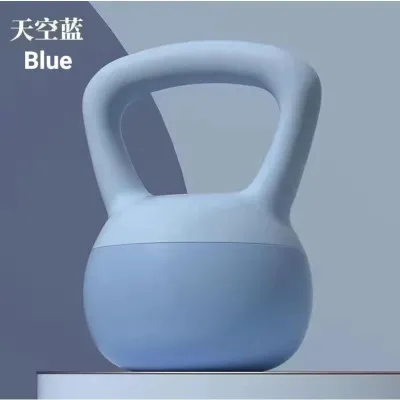
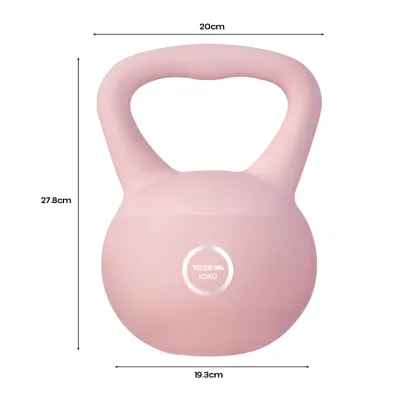
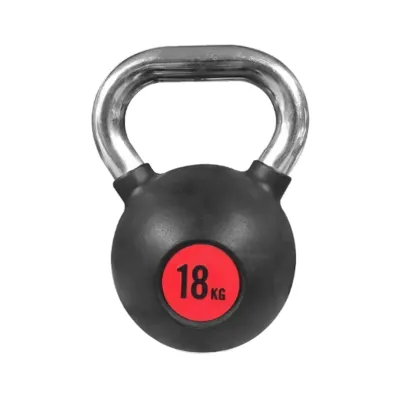
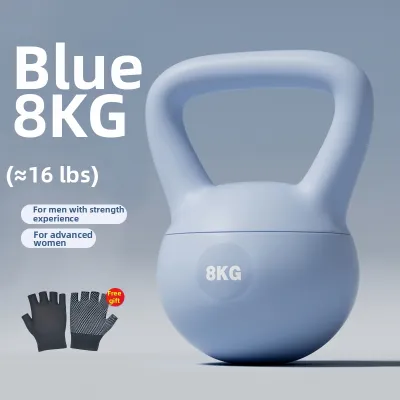
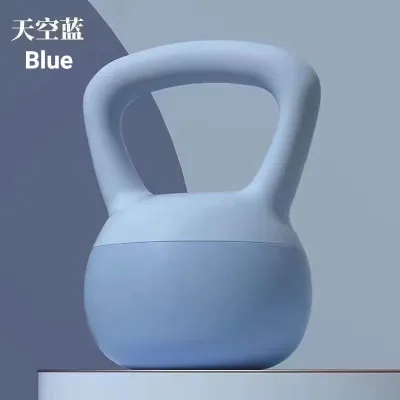
![[SG Stock]Household dumbbells hip exercise equipment soft kettlebell weight training anti-slip sweat-proof sports equipment](https://img.lazcdn.com/g/p/186cc3a2caeca46f8413934b7d88e4a4.jpg_400x400q80.jpg_.webp)
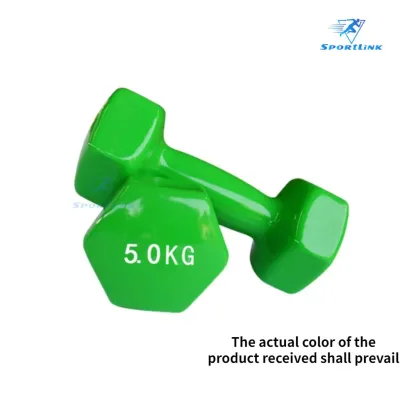
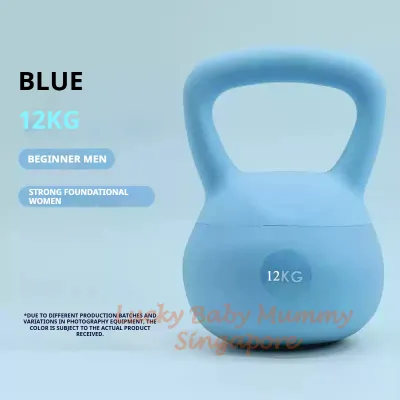
Prices are valid at publication and may change. Please refer to the product page for the latest price.

This difference in materials directly impacts handle thickness, texture, and overall grip security. Cast iron handles are typically finished with a powder coating, matte paint, or left as bare metal, which holds gym chalk exceptionally well and allows the hand to slide smoothly during dynamic rotations. Soft kettlebells often feature handles wrapped in vinyl, thick plastic, or even soft webbing. While these materials are comfortable for basic two-handed swings, they can become slippery when wet with sweat. Furthermore, some soft models have thicker or wider handles to accommodate the bulkier attachment points of the soft shell, which can prematurely fatigue your grip during high-repetition sets.
The physical dimensions and center of mass also vary significantly between the two styles. Because cast iron is highly dense, a 16kg cast iron kettlebell is relatively compact, allowing it to pass easily between your legs during swings and sit comfortably against your forearm during overhead presses. A soft kettlebell of the same weight must use less dense filler materials, resulting in a much larger physical footprint. This increased bulk can alter the mechanics of complex exercises. During a clean or a snatch, a larger, softer bell may strike your forearm differently or require a wider stance to avoid hitting your knees, making precise movement patterns more challenging to maintain.
Floor Safety, Noise, and Space Considerations
For home fitness enthusiasts, the relationship between your equipment and your living space is just as important as the workout itself. Dropping a solid cast iron kettlebell on bare hardwood, laminate, or ceramic tile can cause immediate, costly damage, ranging from deep gouges to shattered tiles. To train safely with cast iron, you typically need to invest in heavy-duty rubber gym mats or specialized drop pads to protect your subfloor. Soft kettlebells mitigate this risk entirely. Their pliable outer shells and shifting internal fillers distribute the force of an impact over a larger surface area, allowing you to set the weight down with minimal risk of scratching or denting standard residential flooring.
Noise control is another critical factor, particularly in dense urban housing where sound travels easily through walls and floors. The metallic clatter of a cast iron kettlebell hitting the floor, or even the low-frequency vibration of setting it down firmly, can easily disturb family members or neighbors. Soft kettlebells excel at dampening these sounds. The fabric or neoprene exterior acts as a natural acoustic muffler, absorbing the sharp click of floor contact. This makes soft weights highly suitable for early morning or late-night workouts when keeping a quiet household is a priority.
Storage and portability also present distinct trade-offs. Cast iron kettlebells are incredibly compact and can be tucked away in a closet, under a bed, or on a small storage rack without taking up valuable floor space. However, they are entirely rigid and heavy to transport. Some soft kettlebells, particularly those designed with fillable sandbags, offer unique travel-friendly advantages. You can empty the sand filler before a trip, pack the lightweight outer shell in your luggage, and refill it with dry sand at your destination. For stationary home use, however, keep in mind that the larger footprint of pre-filled soft kettlebells means they will occupy slightly more storage space than their cast iron counterparts.
Durability, Maintenance, and Longevity
The long-term value of your investment depends heavily on how well each material withstands the rigors of regular training. Cast iron kettlebells are virtually indestructible under normal training conditions. A high-quality cast iron bell can easily last a lifetime, as there are no seams to split, zippers to fail, or fabrics to tear. The primary maintenance concern for cast iron is rust prevention, especially in humid tropical climates. If the protective powder coating or paint chips off, exposure to sweat and moisture in the air can lead to surface rust. Periodically wiping down the metal with a dry cloth and occasionally applying a thin layer of protective oil or touch-up paint is usually all that is required to keep them in pristine condition.
Soft kettlebells have a more finite lifespan due to the nature of their materials. Over time, the constant impact of setting the weight down, combined with the friction of dynamic movements, can stress the seams, stitching, or zippers of fabric-based models. If a seam splits, the internal sand or metal shot can leak out, rendering the kettlebell unusable and creating a mess in your workout area. Neoprene and vinyl covers can also degrade, crack, or peel when exposed to direct sunlight, sweat, and cleaning chemicals. To maximize the lifespan of a soft kettlebell, it should be stored indoors away from direct sunlight and wiped down with a mild, non-abrasive damp cloth after use.
Before starting any workout session, it is crucial to perform a quick safety inspection of your equipment. For soft kettlebells, check the integrity of all stitching, look for any signs of filler leakage, and ensure the handle attachment points remain secure and rigid. For cast iron kettlebells, run your hand over the handle to check for any sharp metal burrs, chips in the coating, or rough spots that could tear your skin during high-repetition swings. Taking these simple precautionary steps ensures your training remains safe and uninterrupted.
Decision Framework: Which Kettlebell Should You Buy?
To finalize your purchase decision, evaluate your personal training environment and fitness goals against the following practical criteria.
Choose a soft kettlebell if:
- You train on sensitive flooring: Your workout space features unprotected hardwood, laminate, or tile, and you want to avoid using bulky rubber mats.
- Noise reduction is a priority: You live in a shared apartment or condo and need to keep impact sounds to an absolute minimum to avoid disturbing neighbors.
- You are a beginner: You are new to kettlebell training and prefer a gentler material that is less intimidating when learning basic movements.
- You want a travel-friendly option: You plan to take your workouts outdoors or on trips and prefer a model that can be emptied and refilled on-site.
Choose a cast iron kettlebell if:
- You have a dedicated gym space: You train on thick rubber gym flooring, in a garage, or outdoors where floor damage is not a concern.
- You perform advanced ballistic movements: Your routine includes high-velocity exercises like snatches, cleans, and Turkish get-ups that require a compact shape and a smooth, rotating handle.
- You want maximum durability: You view your fitness equipment as a lifetime investment and want a tool that will never wear out, leak, or require seam repairs.
- You require precise weight increments: You are following a structured strength program that demands exact, unyielding weight distributions and standard dimensions.
Verify first before buying:
- Weight accuracy: Check customer feedback or manufacturer specifications regarding weight tolerance, as some budget soft models can deviate slightly from their stated weight.
- Handle clearance: Ensure there is sufficient space between the handle and the bell body to comfortably fit your hands without pinching your fingers.
- Return policies: When purchasing from an online marketplace, verify the seller's return policy in case the physical dimensions of the kettlebell do not fit your body size or grip style.
Frequently Asked Questions (FAQ)
Can I use a soft kettlebell for advanced ballistic exercises like snatches?
While it is physically possible to perform snatches with a soft kettlebell, it is generally less efficient and comfortable than using a cast iron model. The bulkier dimensions of soft kettlebells can make the transition around your wrist awkward, often leading to the bell flopping hard against your forearm. Additionally, the handles on soft models may lack the smooth, low-friction finish required for the quick hand rotations inherent in snatches and cleans. If you plan to perform these advanced movements frequently, check the handle clearance and choose a model with a rigid, smooth handle and a relatively firm shell to minimize friction and impact discomfort.
Do soft kettlebells lose their shape or weight accuracy over time?
Soft kettlebells filled with loose materials like sand or steel shot can experience shifting of their internal contents over time. This shifting can cause the weight to settle toward the bottom, slightly altering the center of mass during your exercises. While this does not change the actual physical weight of the implement, it can make the kettlebell feel different during dynamic movements. To ensure long-term usability, look for high-quality soft kettlebells that feature internal baffling or molded cores designed to keep the filler material securely in place, and regularly inspect the seams for any signs of stretching or leakage.
Community discussion
Share your experience or ask a question. Comments are reviewed before publication.