
Quick Answer: Which Bag Protects Your Rackets Better?
Choosing between a soft case and a hard case badminton bag depends on your daily transit habits, gear volume, and how you travel to the court. Neither construction type offers a universal advantage for every player, as each excels under different physical conditions.
Hard case badminton bags provide superior protection against blunt impacts, crushing forces, and external pressure. If you frequently travel on crowded public buses, navigate busy train stations, or need to stack your gear under heavy items, a hard shell offers a rigid shield that prevents your rackets from bending or snapping.
Soft case badminton bags excel in flexibility, weight distribution, and storage capacity. If you commute by private car, need to pack bulky items like shoes and apparel, or prioritize a lightweight carry, a padded soft bag is highly practical. However, regardless of the outer shell, your rackets are only safe if they are properly secured inside the compartments; loose gear can still suffer damage from internal friction during transit.
Products mentioned in this guide
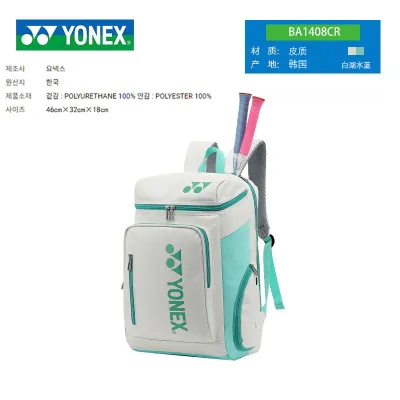
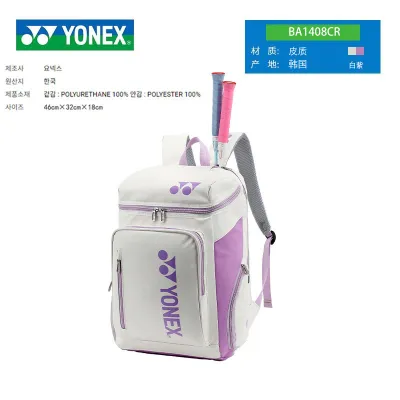
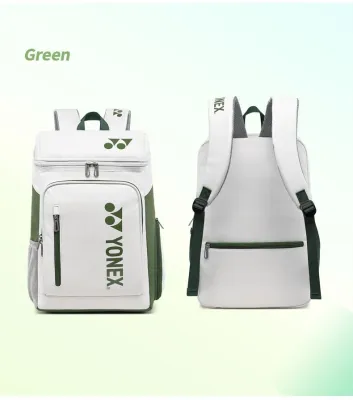
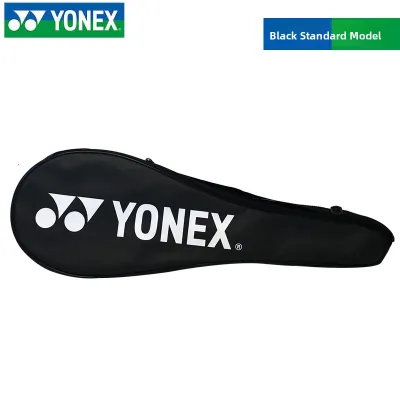
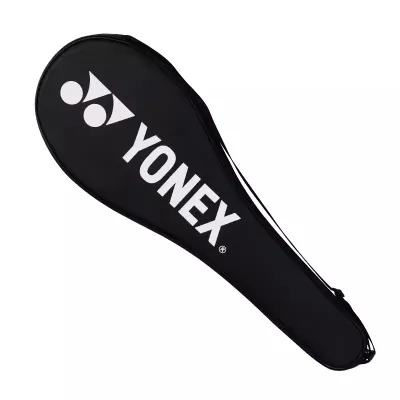
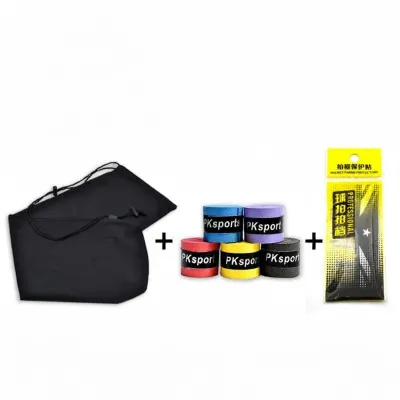
Prices are valid at publication and may change. Please refer to the product page for the latest price.
Structural Differences: How Soft and Hard Cases Are Built
The fundamental difference between these two bag types lies in their materials and structural engineering, which dictate how they respond to physical stress.

Hard case bags are typically constructed using molded materials such as ethylene-vinyl acetate (EVA) foam or thin polycarbonate shells. These materials are pre-shaped during manufacturing, allowing the bag to maintain its structural form whether it is completely empty or packed to capacity. The rigid exterior acts as an arch, distributing external pressure across the outer surface rather than transferring the load directly to the fragile graphite rackets inside.
Soft case bags are built from woven synthetic fabrics, most commonly high-denier polyester or nylon. To provide protection, manufacturers sandwich layers of closed-cell or open-cell foam padding between the outer fabric and the inner lining. While these bags lack a rigid outer skeleton, their thick fabric walls cushion your gear against minor bumps and scrapes.
Inside the compartments, the design philosophies continue to diverge. Hard cases often feature molded recesses, dedicated slots, or integrated Velcro straps designed to anchor the racket handle and frame firmly in place. Soft cases rely more on fabric dividers, zippered pockets, and thermal-lined compartments to organize gear. This structural difference creates a clear trade-off: hard cases offer rigid shape retention at the cost of flexibility, while soft cases can compress and conform to tight storage spaces but offer less resistance against heavy, concentrated loads.
Racket Protection: Evaluating Impact, Pressure, and Environment
To understand which bag protects your rackets better, you must evaluate how each design handles real-world hazards, including physical impacts, structural pressure, and environmental exposure.
Impact and Crushing Resistance
In a busy sports hall or locker room, bags are often tossed onto benches, stacked in piles, or accidentally stepped on. A hard case bag excels in these high-pressure scenarios. The molded shell absorbs the initial shock of a drop and deflects point-loads, ensuring that a heavy object placed on top of the bag does not bend the carbon fiber shafts of your rackets. In contrast, a soft case bag can compress under heavy loads. If another player accidentally sits on a soft bag, the pressure is transmitted directly to the contents, which can warp the racket frames or crack the shafts.
Internal Shock Absorption
While a hard shell deflects external forces, it can sometimes transfer the vibration of a drop directly to the interior if the internal padding is insufficient. If your rackets are not strapped down inside a hard case, they may rattle against the rigid inner walls during a fall. Soft cases, with their thick, yielding foam layers, are highly effective at dampening vibrations and absorbing minor shocks from daily handling, keeping your rackets cushioned in a soft environment.
Environmental and Weather Protection
Badminton gear is highly sensitive to environmental changes. High humidity and extreme heat can cause racket strings to lose tension rapidly and degrade the polyurethane grips. Many premium badminton bags feature thermal-lined compartments, which use reflective foil materials to regulate internal temperatures. When evaluating bags, verify whether the thermal lining covers the entire racket compartment. Additionally, consider moisture resistance. A molded EVA hard shell naturally sheds water during a sudden tropical downpour on your walk to the sports hall. Soft polyester bags require a water-resistant polyurethane (PU) coating or an integrated rain cover to keep moisture from seeping through the seams and dampening your grips.
Beyond Protection: Weight, Capacity, and Daily Usability
While protecting your rackets is a primary concern, a bag must also fit into your daily routine. Weight, carrying comfort, and storage capacity are critical factors for regular players.
Hard case bags are inherently heavier than their soft counterparts due to the density of molded EVA or polycarbonate. Carrying a heavy, rigid bag over long distances can cause shoulder fatigue. To mitigate this, look for hard cases equipped with wide, ergonomically curved backpack straps, chest buckles, and breathable mesh back panels that help distribute the weight evenly across your torso.
Soft case bags are lightweight and comfortable to carry, making them ideal for players who walk or cycle to the courts. Because the fabric is flexible, soft bags can expand slightly to accommodate bulky, irregular items. If you need to pack a pair of court shoes, a towel, a change of clothes, multiple tubes of shuttlecocks, and a water bottle, a soft bag will stretch to fit these items. A hard case has fixed, rigid boundaries; attempting to force too much gear into a hard case can strain the zippers and potentially crush the items inside.
Storage footprint is another practical consideration. At home, an empty soft bag can be flattened and stored on a shelf or in a drawer. A hard case bag occupies the same amount of physical space whether it is full or empty, requiring dedicated closet space. On public transit, a soft bag is easier to squeeze between your feet, whereas a rigid hard case can feel bulky and cumbersome in tight spaces.
Decision Framework: Choosing the Right Badminton Bag for You
To make the right choice, match the bag’s construction to your specific playing frequency, transportation methods, and gear requirements.
Choose a Hard Case Bag If:
- You commute via public transit: You need a rigid shell to protect your rackets from being squeezed or bumped in crowded trains or buses.
- You travel for tournaments: You frequently pack your gear into car trunks under other luggage or check your bag for flights.
- You carry premium rackets: You prioritize maximum crush resistance for high-end, fragile frames and carry minimal extra apparel.
- You prefer an upright design: You want a bag that stands stable on the floor without collapsing.
Choose a Soft Case Bag If:
- You travel by private car: Your bag sits safely on the back seat or in an uncrowded trunk, minimizing the risk of crushing.
- You carry extensive gear: You need to pack bulky items like shoes, towels, warm-up jackets, and multiple shuttlecock tubes.
- You prioritize lightweight comfort: You walk or cycle to the courts and want to minimize carrying fatigue.
- You have limited storage space: You need a bag that can be compressed and stored easily when not in use.
Pre-Purchase Verification Checklist
Before purchasing any badminton bag, perform these quick quality checks to ensure durability:
- Inspect the Zippers: Look for thick, heavy-duty zippers with smooth action. Double-stitched zipper tracks and water-resistant rubber seals are excellent indicators of quality.
- Check Strap Attachment Points: Examine the stitching where the shoulder straps connect to the bag body. Look for reinforced cross-stitching or metal rivets, which prevent the straps from tearing under load.
- Evaluate Internal Straps: Open the racket compartment and test the tension of the internal Velcro or elastic straps. They should hold a racket firmly against the back panel without allowing it to slide.
- Assess Fabric Thickness: For soft bags, feel the thickness of the outer material. A higher denier rating (such as 600D or above) indicates better tear resistance and longevity.
Frequently Asked Questions (FAQ)
Can I fit badminton shoes inside a hard case racket bag?
It depends entirely on the bag’s specific compartment design. Because hard cases have rigid, non-stretchable outer shells, they cannot expand to accommodate bulky items. If the hard case does not feature a dedicated, ventilated shoe compartment that carves out internal space, you may struggle to fit shoes alongside your rackets and shuttlecocks. Always check the internal dimensions and compartment layout before purchasing, or consider carrying your court shoes in a separate lightweight shoe bag.
How should I clean and maintain my badminton bag to ensure longevity?
To clean a soft case bag, empty all compartments and gently wipe the exterior with a damp microfiber cloth and mild soapy water; avoid machine washing, as it can degrade the internal foam and water-resistant coatings. For hard cases, wipe the molded EVA or polycarbonate shell with a damp cloth to remove scuffs and dirt. Always allow both bag types to air-dry completely in a shaded, well-ventilated indoor area before storing them. Never expose your bag to direct, intense sunlight or harsh chemical solvents, which can warp the shell or weaken the fabric fibers.
Community discussion
Share your experience or ask a question. Comments are reviewed before publication.