
Finding a home rowing machine that fits comfortably into a Singapore Housing & Development Board (HDB) flat is entirely possible, provided you look beyond generic marketing labels and focus on precise physical dimensions. Because HDB layouts prioritize efficient use of space, the key is matching the machine’s active operational footprint and its inactive storage profile to your specific room dimensions. By evaluating how a machine folds, stands, or telescopes, you can maintain an active cardio routine without permanently sacrificing your living room or bedroom floor area.
Understanding HDB Space Constraints for Fitness Equipment
Living rooms and spare bedrooms in modern HDB flats require careful spatial planning. When introducing a home rowing machine, you must differentiate between its operational footprint and its storage footprint. The operational footprint is the total floor area required during a full rowing stroke, which is always larger than the physical frame of the machine itself.
For safe operation, you need to account for clearance around the equipment. A buffer of at least 50 centimeters on either side of the rail is recommended to allow for safe mounting, dismounting, and adequate ventilation during intense workouts. This buffer also ensures you do not accidentally strike nearby walls or furniture during your workout.
Products mentioned in this guide
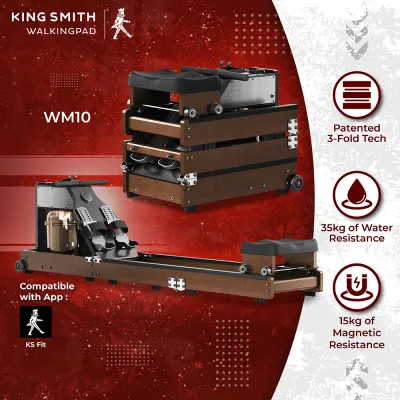
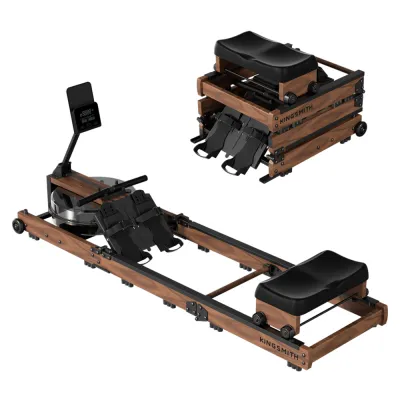
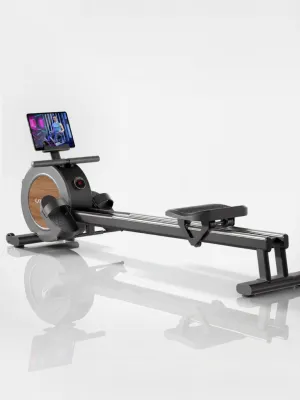
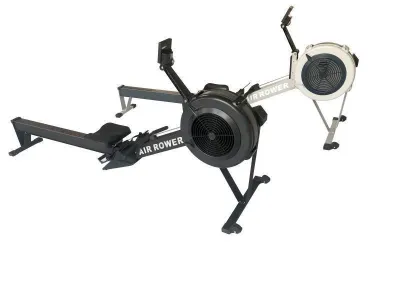
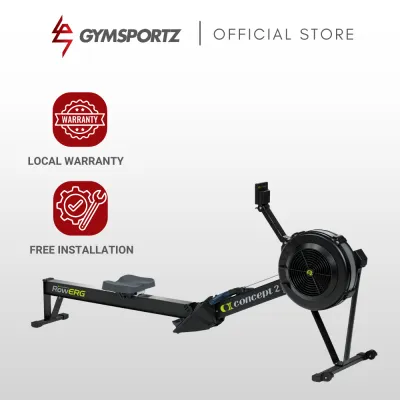
Prices are valid at publication and may change. Please refer to the product page for the latest price.
Using a high-density equipment mat is also essential in an HDB flat. A mat not only protects your vinyl, parquet, or tiled flooring from scratches and sweat but also helps dampen vibrations and noise that could otherwise travel through the concrete floor slab to your neighbors below.
Vertical space and access routes are equally critical. Modern HDB ceilings typically hover around 2.6 meters, which generally accommodates upright storage designs, but you must verify that the top of the rail does not interfere with ceiling fans or light fixtures when lifted. Additionally, ensure the machine’s packaged and assembled dimensions can navigate standard flat entrance doors and narrow household corridors.
Key Dimensions to Measure Before Buying
To ensure a home rowing machine fits your flat, you must take precise measurements of your designated workout area before browsing models. First, measure the maximum rail length required for your height. The rail must be long enough to accommodate your inseam and full leg extension during the drive phase without the seat hitting the rear stopper.

Second, check the width of the front and rear stabilizers. While the main rail of a rowing machine is relatively narrow, the stabilizers at either end prevent the machine from rocking or tipping during use. These stabilizers must sit completely flat on your flooring, clear of any rugs, skirting boards, or furniture legs.
Consider the seat height as well. Low-profile machines sit closer to the ground, making them feel less visually intrusive in a small room, but they require more mobility to mount and dismount. Higher seats are easier to access but can make the machine look bulkier when left unfolded.
Do not forget to account for the handlebar sweep and elbow clearance. During the finish phase of the stroke, your elbows and the handlebar itself will extend wider than the frame, requiring extra lateral clearance. Finally, verify the height of the performance monitor and the highest point of the handlebar arc during active use to ensure they do not collide with wall-mounted televisions or low shelving.
Space-Saving Rowing Machine Designs
Manufacturers utilize several mechanical approaches to reduce the spatial impact of fitness equipment when it is not in use. These designs generally fall into foldable frames, upright storage configurations, or telescopic rails. Each approach involves a trade-off between setup time, structural stability, and the actual square footage reclaimed.
Foldable and Upright Storage Models
Foldable and upright models are the most common solutions for space-constrained homes. Foldable machines typically feature a hinge in the middle of the rail, allowing the rear frame to fold upward or collapse toward the flywheel assembly. Upright storage models, on the other hand, do not fold but are designed to tip forward to stand vertically on their front stabilizers.
When evaluating these options, check the folded dimensions and the stability of the base in its stored position. Some vertical models rely on a freestanding base with transport wheels, while others may require wall anchoring to prevent accidental tipping, especially in households with children or pets.
Additionally, assess the physical effort and overhead clearance needed to transition the machine from storage to use. Lifting a heavy steel frame or a water-resistance tank upright requires a certain level of physical strength. You must also ensure your ceiling height allows for the full arc of the machine as you lift it into its vertical position.
Compact and Telescopic Rail Options
For rooms where vertical storage is impractical due to low fixtures or shelving, compact and telescopic rail designs offer an alternative. These models utilize sliding, nesting, or retractable rails that shorten the physical length of the machine when stored.
While highly space-efficient, telescopic rails can limit the maximum user height and overall stroke length. If you have a longer inseam, verify that the shortened rail still allows for a complete leg extension. You should also carefully review the locking mechanisms on these rails.
The joints must lock securely to ensure structural stability and safety during intense workouts, preventing any flexing or shifting of the rail under load. Compare the fully retracted length against your available storage alcoves, such as under-bed clearances or wardrobe gaps, to confirm a proper fit.
How to Evaluate a Rowing Machine for Your Flat
Selecting the right home rowing machine requires a systematic verification process rather than relying on broad product categories. Start by cross-referencing the manufacturer’s specified user height and weight limits with the machine’s physical dimensions. A machine that is too short will restrict your workout, while one that is too large will obstruct your living space.
Always consult the official product manual or technical specification sheet for exact operational and stored measurements, as retail summaries often omit the clearance needed for moving parts. Next, plan the delivery route from the building entrance to your flat.
Pay close attention to the transport wheels integrated into the stabilizer bars. In a tight HDB flat, you will likely need to roll the machine out of a corner or from behind a sofa for every workout. Ensure the wheels are made of a non-marking material like polyurethane to avoid scuffing your floors, and check that they roll smoothly over transitions between different flooring types, such as from tile to laminate.
Verify that the packaged box dimensions can fit through standard lift doors, navigate tight stairwells if necessary, and pass through your main door and bedroom frames. If a machine cannot be easily transported in its shipping box, you may need to arrange for on-site assembly, which requires its own temporary workspace.
Common Space-Matching Mistakes to Avoid
One of the most frequent errors is relying solely on marketing terms like “compact,” “mini,” or “space-saving” without verifying the exact centimeter measurements against your floor plan. Another common oversight is ignoring the handlebar sweep and elbow clearance; while the metal frame of a home rowing machine might be narrow, your body and arms will extend significantly beyond this footprint during active use.
Finally, do not forget to measure the ceiling height for vertical storage or the clearance needed for the monitor arm. Some performance monitors are mounted on fixed arms that do not fold down, which can add unexpected height when the machine is stood upright, potentially striking low ceilings or overhead cabinetry.
Frequently Asked Questions (FAQ)
Can I keep a rowing machine on a balcony or outdoor corridor?
Storing or using a home rowing machine on an open balcony or outdoor corridor is generally not recommended. Singapore’s high humidity, ambient dust, and exposure to direct sunlight or rain can rapidly degrade electronic monitors, rust steel frames, and damage resistance mechanisms. Furthermore, storing equipment in common corridors often violates local estate management and fire safety guidelines, which require these pathways to remain completely clear for emergency evacuation. If you must store the machine on a fully enclosed, sheltered balcony, check the manufacturer’s warranty terms, as environmental damage is frequently excluded from coverage.
Do magnetic rowing machines take up less space than water or air models?
The resistance type of a home rowing machine does not strictly dictate its physical length or operational footprint. While water rowers often feature longer, solid wood or steel frames to accommodate a fixed water tank, and air rowers typically have prominent fan flywheels, magnetic models are not automatically smaller. Some magnetic rowers utilize folding hinges to reduce their footprint, but others maintain long, non-folding rails for structural rigidity. Rather than assuming a machine is compact based on its resistance mechanism, always compare the specific model’s stored and operational dimensions listed in the technical specifications.
Community discussion
Share your experience or ask a question. Comments are reviewed before publication.