
Setting up a home gym in a Housing & Development Board (HDB) flat requires careful spatial planning, where every square meter of floor space must be maximized. When integrating a landmine attachment into a compact layout, the most suitable design depends heavily on your existing equipment and how much floor area you can permanently dedicate to training. For many HDB owners, rack-mounted brackets and sleeve-based inserts offer highly space-efficient solutions because they minimize or entirely eliminate dedicated floor footprints. Plate-loaded bases provide excellent freestanding flexibility but require a larger physical footprint and careful positioning to avoid obstructing walkways. Choosing the right design involves balancing your current gear setup, your available clearance, and your storage preferences to maintain a safe, functional workout environment.
Comparing Landmine Attachment Designs for Small Spaces
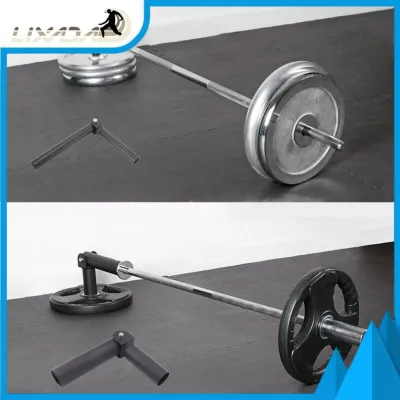
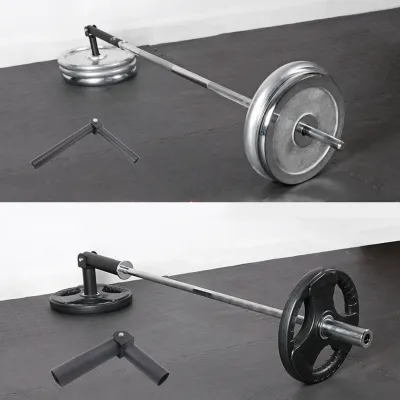
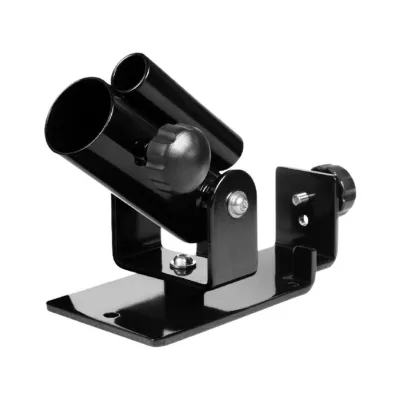
Plate-loaded bases feature a heavy steel pivot attached to a post that slides into the center hole of one or more standard weight plates lying flat on the floor. While highly portable and requiring no mounting hardware, they demand a dedicated patch of floor space. The stability of a plate-loaded base relies entirely on the weight of the anchor plates; lighter setups may slide or tip during dynamic, lateral movements. Additionally, the physical diameter of the bumper or iron plates used as the anchor adds to the overall footprint, which can clutter narrow HDB spare rooms or bomb shelters.
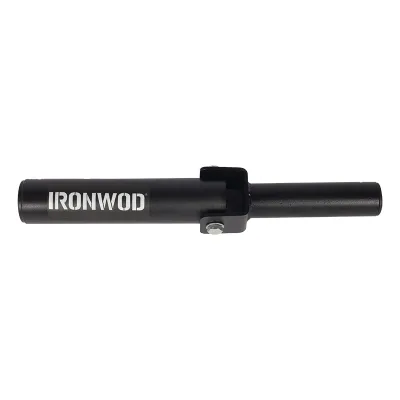
Sleeve-based inserts are incredibly compact, minimalist options consisting of a pivot joint welded directly to a solid steel pin. You slide this pin directly into the center sleeve of a stacked pile of weight plates or a dedicated floor receiver. Because they utilize weight plates you already own and store, they do not require a separate, bulky base frame. When your workout is finished, you can simply slide the insert out and tuck it into a drawer or a small storage bin, making it a practical choice for multi-purpose rooms where gym equipment must be hidden away.
Products mentioned in this guide
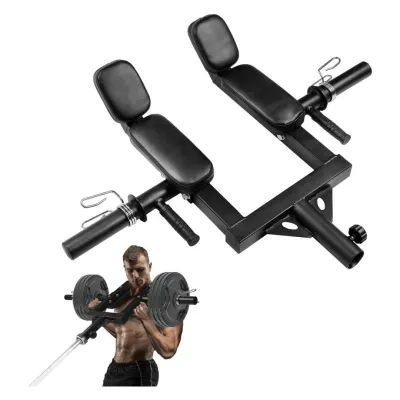
![🇸🇬 [READY STOCK] Landmine Attachment Workout](https://img.lazcdn.com/g/p/b8a4934ac86397d355a97f89b04a1b8e.jpg_400x400q80.jpg_.webp)
Prices are valid at publication and may change. Please refer to the product page for the latest price.
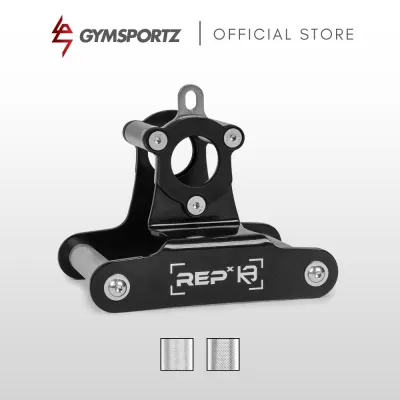
Rack-mounted brackets are a highly space-efficient option if you already own a squat stand or a power rack. These attachments bolt directly onto the uprights or base crossmembers of your rack, utilizing existing structural steel to secure the pivot joint. This design boasts a true zero-floor-footprint advantage, leaving your entire floor area clear for footwork and movement. However, you must account for the swing path of the barbell, which will pivot outward from the rack, requiring you to position the rack itself with sufficient clearance from adjacent walls and furniture.
Assessing Space and Clearance in an HDB Layout
Standard HDB flats typically feature a ceiling height of approximately 2.6 meters, though some newer developments or top-floor units may offer slightly more clearance. When performing overhead movements like landmine presses, you must verify that the combined height of your fully extended arm, the angled barbell, and the radius of the loaded weight plate does not contact the ceiling or overhead light fixtures. To check this safely, hold a standard broomstick or a lightweight training bar at the maximum extension angle of your planned exercises and measure the distance to the ceiling.

Rotational movements, such as landmine twists or standing torso rotations, require a wide lateral clearance zone. A standard Olympic barbell is 2.2 meters long, and even a shorter 1.8-meter bar sweeps a significant arc when pivoted from a fixed point. You can calculate your safe swing radius by mapping out a semi-circle on your floor using the pivot point as the center and the length of your barbell as the radius. Ensure this arc is clear of any structural obstacles, as colliding with a wall mid-movement can cause serious injury or property damage.
HDB bedrooms often feature built-in wardrobes, study desks, or sliding window panels that cannot be easily relocated. When planning your landmine setup, maintain a buffer zone of at least 50 centimeters beyond the maximum reach of your barbell and plates. This buffer helps prevent accidental impacts with glass windows, plaster walls, or wooden cabinetry during high-velocity movements. It also ensures that other household members can safely walk past the workout area without stepping into the path of a moving barbell.
Matching the Attachment to Your Existing Equipment
If you already have a rack, a rack-mounted bracket is almost always the most logical choice. Before purchasing, you must verify the exact specifications of your rack’s uprights, which typically measure 50x50mm, 60x60mm, or 75x75mm, along with the diameter of the accessory holes (commonly 5/8-inch or 1-inch). Choosing a bracket that matches these dimensions helps ensure a secure connection that preserves your rack’s structural integrity.
If your setup consists solely of a barbell and a set of weight plates without a central rack, a plate-loaded base or a sleeve-based insert is necessary. A plate-loaded base is highly functional if you have a dedicated corner where you can leave the anchor plates stacked. This setup allows you to quickly insert the barbell and begin training without needing to assemble or disassemble heavy hardware before and after every session.
For those who train in a living room or a shared study and need to pack everything away daily, sleeve-based options are highly practical. These inserts can be paired with a single heavy bumper plate laid flat on a protective mat. Once your training session is complete, the barbell, the bumper plate, and the sleeve insert can be stored vertically in a closet, leaving the room clear of gym clutter.
Managing Floor Protection and Storage in Compact Rooms
HDB flooring, whether standard ceramic tiles, polished porcelain, or modern vinyl planks, is susceptible to cracking or denting under heavy point loads. A plate-loaded landmine base concentrates significant weight onto a small surface area, especially during heavy presses or rows. To safeguard your flooring, place a high-density rubber gym mat with a thickness of at least 15mm to 20mm beneath the base. This matting disperses the concentrated load and absorbs the vibrations and minor impacts generated during dynamic movements.
If you opt for a rack-mounted unit, the repetitive rotational forces exerted during landmine exercises can gradually loosen mounting bolts over time. Regularly inspect the bracket attachment points, checking for any play or shifting between the bracket and the rack upright. Ensure all locking pins, cotter pins, or bolts are tightened securely to the manufacturer’s specifications before starting your workout to help prevent sudden structural failure.
Reclaiming floor space in a small HDB flat is essential for maintaining a comfortable living environment. Utilize vertical storage solutions, such as wall-mounted barbell hangers or vertical plate trees, to store your bar and plates when they are not in use. Many sleeve-based and plate-loaded landmine attachments are compact enough to fit onto standard accessory pegs or inside small storage bins, keeping your floor clear between workouts.
Frequently Asked Questions (FAQ)
Can I use a landmine attachment without a power rack in a small room?
Yes, you can easily use a landmine attachment without a power rack by selecting either a plate-loaded base or a sleeve-based insert. These designs function independently of any large rig structures, relying instead on the weight of standard Olympic or standard-sized weight plates laid flat on the floor to act as an anchor. To help maintain safety and stability during heavy or dynamic movements, you must use a sufficiently heavy anchor plate—typically 20kg or more—and place it on a non-slip surface to prevent the base from sliding or tipping during your exercises.
Will a plate-loaded landmine base damage HDB floor tiles?
A plate-loaded landmine base can potentially damage HDB floor tiles if it is placed directly on the bare floor without adequate protection. The concentrated weight of the barbell, the anchor plates, and the downward force exerted during exercises creates a high-pressure point load that can crack ceramic or homogenous tiles and dent vinyl flooring. To prevent this damage, place a high-density rubber gym mat of at least 15mm thickness under the entire assembly to distribute the weight evenly and absorb impact forces.
Community discussion
Share your experience or ask a question. Comments are reviewed before publication.