
Finding the right back extension bench for a small Housing & Development Board (HDB) flat requires balancing your fitness goals with strict spatial constraints. Foldable back extension benches and compact, adjustable Roman chairs are the most effective options for limited living spaces. These designs allow you to target your lower back, glutes, and hamstrings without permanently sacrificing valuable floor area. By prioritizing models with quick-release locking pins, collapsible frames, and transport wheels, you can easily transition your living room or study from a dedicated workout zone back into a comfortable household space.
To make an informed decision, you must evaluate how a bench fits both your physical body and your home’s layout. This guide outlines how to measure your flat, compare space-saving designs, plan efficient storage workflows, and avoid common spatial planning mistakes.
Measuring Your HDB Flat for a Back Extension Bench
Before purchasing any fitness equipment, you must accurately assess the physical space it will occupy during both use and storage. A common error is relying solely on the static dimensions listed on a product page, which only represent the machine’s physical footprint when idle.
Products mentioned in this guide
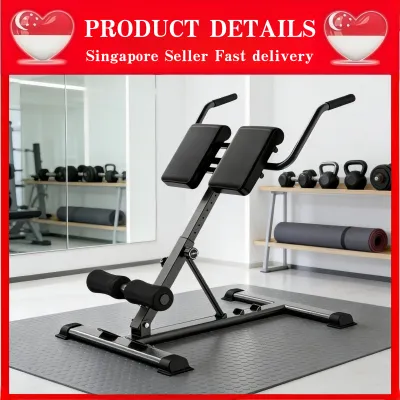
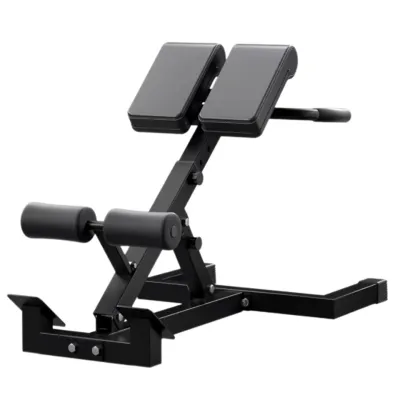
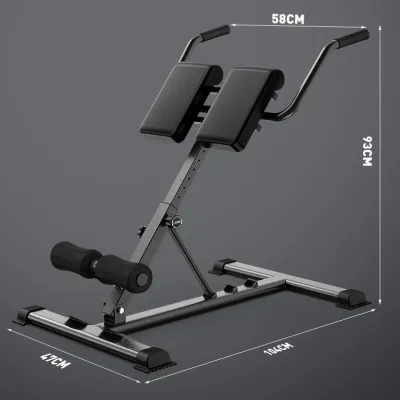
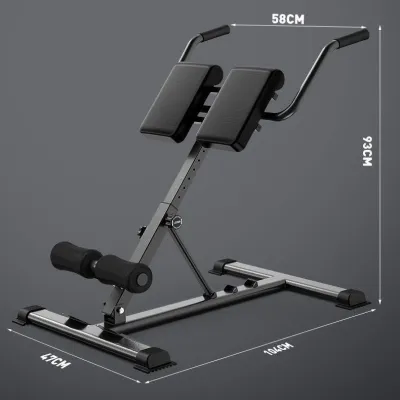
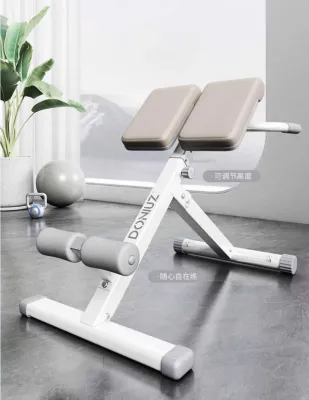
![🇸🇬 [READY STOCK]Raikos Multi-Functional Bench for Full All-in-One Body Workout – Hyper Back Extension Roman Chair Adjustable Ab Sit up Bench Decline Bench Flat Bench](https://img.lazcdn.com/g/p/1f45b4809dcb4426ef38f40db18c9638.jpg_400x400q80.jpg_.webp)
Prices are valid at publication and may change. Please refer to the product page for the latest price.
Static Footprint vs. Dynamic Clearance
- Static Footprint: This is the physical floor space the bench covers when assembled. For a standard compact Roman chair, this typically ranges from 90 to 120 centimeters in length and 60 to 75 centimeters in width.
- Dynamic Clearance: This is the total active zone required when you are performing an exercise. During a back extension, your upper body extends far beyond the front pads of the bench. You must calculate your total height and add at least 60 centimeters of clearance in front of the machine to prevent your head or hands from colliding with walls, television consoles, or furniture.
Navigating Delivery Pathways Before the equipment even reaches your living room, it must pass through several tight entry points. Measure the width of your HDB corridor, the elevator door opening, and your main entryway. While most flat-packed benches arrive in manageable boxes, pre-assembled or heavy-duty semi-commercial models can be incredibly difficult to maneuver around tight corner units or through standard 80-centimeter bedroom doors.
Checking Vertical Clearance Standard HDB ceiling heights typically hover around 2.6 meters. While this is generally sufficient for most exercises, you must verify overhead clearance if you plan to use an inclined Roman chair or perform weighted extensions where dumbbells or weight plates are raised. Ensure the exercise path is completely clear of low-hanging ceiling fans, decorative light fixtures, or wall-mounted air conditioning units.
Evaluating Space-Saving Back Extension Bench Designs
Selecting the right configuration depends on how often you plan to use the bench and where you intend to store it. Different space-saving designs offer distinct trade-offs between structural stability and ease of storage.

Foldable Frames vs. Fixed Compact Models Foldable back extension benches feature hinge joints and locking pins that allow the frame to collapse into a relatively flat profile. This design is ideal if you need to store the equipment completely out of sight after every workout. However, frequent folding and unfolding subjects the hinge joints to continuous wear. Fixed compact models lack these folding joints, making them inherently more rigid and stable, but they require a permanent dedicated corner in your home.
Adjustable Roman Chairs with Compact Bases Some benches feature a shortened base frame to minimize their floor footprint. While a smaller base saves space, it alters the machine’s center of gravity. When using a compact Roman chair, you must verify that your hips align correctly over the support pads. If the base is too short and your body weight shifts too far forward, the rear stabilizer feet may lift off the ground. Look for models with extended, rubber-capped stabilizer feet that maximize floor grip without adding excessive length to the frame.
Verifying Structural Specifications Because space-optimized designs use lighter or thinner steel tubing to remain portable, you must carefully check the manufacturer’s rated weight capacity. Ensure the limit comfortably accommodates your body weight plus any additional resistance, such as weight vests or plates, you plan to hold. Look for frames constructed from at least 50 mm by 50 mm steel tubing to ensure long-term durability.
Planning Storage and Daily Workflow
An equipment purchase is only successful if it integrates seamlessly into your daily household routine. If setting up the bench is too difficult, it will likely end up gathering dust or permanently blocking a walkway.
Identifying Practical Storage Zones
- Under-Bed Storage: If you plan to slide the collapsed bench under a bed frame, measure the vertical clearance from the floor to the underside of the bed. Most foldable benches require at least 15 to 25 centimeters of vertical clearance when folded flat.
- Household Shelters and Deep Closets: HDB household shelters (storerooms) are excellent storage zones. If storing the bench vertically in a closet or shelter, ensure the folded length does not exceed the height of your storage shelves.
- Behind Doors or Furniture: The narrow gap between a wardrobe and the wall can serve as a discreet storage slot, provided the bench can stand securely on its end.
Safety Protocols for Vertical Storage Leaning a heavy steel bench vertically against a wall poses a tipping hazard, especially in households with children or pets. Always store the bench with the heaviest end (usually the base frame) resting firmly on the floor. If possible, secure the upright frame with a simple wall-mounted safety strap or bungee cord to prevent it from being accidentally knocked over. Ensure the rubber feet of the bench are clean to prevent them from scuffing or staining your walls.
Managing Multi-Purpose Spaces If your workout area doubles as a living room or home office, establish a clear workflow. Choose a bench equipped with built-in transport wheels on the base. This allows you to easily roll the equipment from its storage spot to the workout zone without lifting the full weight of the frame, protecting both your back and your flooring from unnecessary strain.
Common Space and Sizing Mistakes to Avoid
To ensure your home workouts remain safe and comfortable, avoid these common spatial planning pitfalls:
Ignoring the User’s Body Length A bench that is labeled “compact” may not comfortably accommodate taller users. If the distance between the footplates and the hip pads is too short, you will not be able to achieve a full range of motion, which can place improper stress on your knees and lower back. Always check the maximum user height specifications provided by the manufacturer.
Relying Solely on “Foldable” Marketing Labels Not all foldable benches collapse into a truly flat profile. Some models fold into an “A-shape” that still requires significant floor space or height to store. Always verify the exact folded dimensions (length, width, and height) rather than assuming the term “foldable” guarantees a fit for your specific storage compartment.
Neglecting Floor Protection and Safety Mats Placing a heavy steel bench directly on HDB vinyl, laminate, or polished tile flooring can cause permanent scratches, dents, or slipping during dynamic movements. You must factor in the space and thickness of a high-density rubber gym mat. A proper mat dampens noise, protects your flooring, and prevents the bench from sliding, but it also adds a small amount of height and requires its own storage solution if it cannot be left flat on the floor.
Frequently Asked Questions (FAQ)
Can I safely keep a folded back extension bench under my bed?
Yes, you can safely store a folded bench under your bed, provided you verify the physical clearance beforehand. Measure the distance from the floor to the lowest point of your bed frame to ensure the folded height of the bench fits easily. To maintain the equipment, keep the under-bed area clean and dry; excessive dust accumulation can settle into the hinge joints and adjustment pins, leading to premature wear or grinding. Additionally, consider the weight of the bench. If the unit weighs over 20 kilograms, repeatedly lifting and sliding it out from under a low bed can place strain on your lower back before your workout even begins.
Do foldable back extension benches compromise on stability?
Foldable back extension benches do not inherently compromise on safety, but they do require more careful inspection than fixed-frame models. The stability of a foldable bench depends heavily on the quality of its locking mechanisms and the width of its base stabilizers. When shopping, look for models that utilize threaded screw-lock pins rather than simple slide-in pull pins, as threaded pins tighten the joint and eliminate frame wobble. Always inspect the hinge joints regularly for any signs of metal fatigue or loosening bolts, and ensure the bench is placed on a completely level, non-slip surface during use.
Community discussion
Share your experience or ask a question. Comments are reviewed before publication.