
Finding a cycling machine that fits comfortably into a Singapore HDB flat requires balancing your fitness goals with the realities of high-density, compact living. The most space-efficient options are folding exercise bikes, which can collapse to under half their operational size, and compact upright bikes with a minimized footprint of around 0.5 square meters. For those with severely limited space, under-desk pedal units offer a zero-footprint alternative that slides under existing furniture. Choosing the right machine involves evaluating how often you plan to move the equipment, your preferred workout intensity, and the specific layout of your home.
To make an informed decision, you must look past generic marketing labels like “ultra-compact” and analyze the exact physical dimensions, clearance zones, and mechanical specifications of each model. By matching these factors to your household habits and flooring type, you can maintain a consistent cardio routine without turning your living room or bedroom into an overcrowded gym.
Assessing Your Available Space and Clearance Needs
Before browsing online marketplaces or visiting local fitness showrooms, you must establish the precise boundaries of your workout area. Many buyers make the mistake of measuring only the static footprint of the machine—the length and width of the base frame when resting on the floor. In a typical HDB flat, where bedrooms and living areas serve multiple purposes, you must account for three distinct spatial dimensions: static footprint, operational clearance, and storage clearance.
Products mentioned in this guide
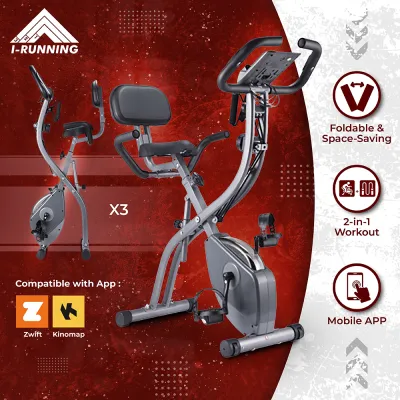
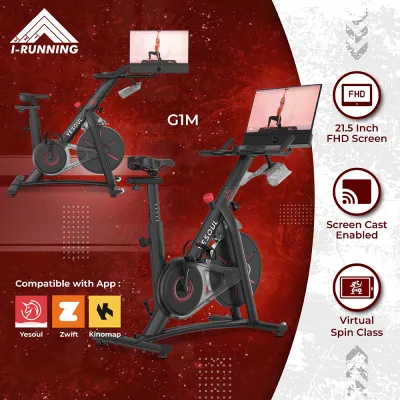
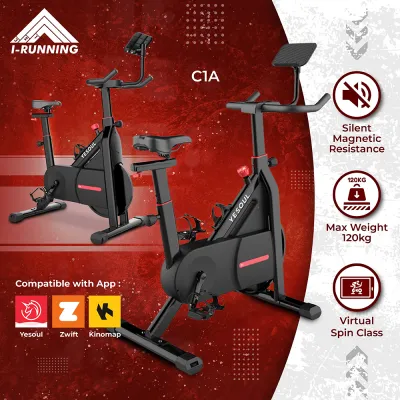
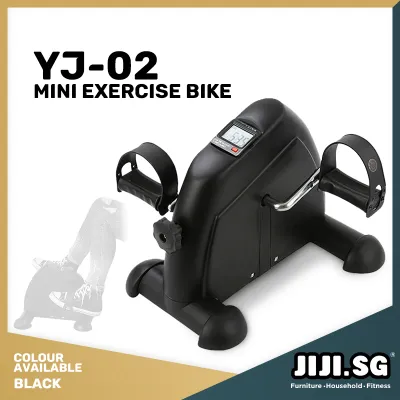
Prices are valid at publication and may change. Please refer to the product page for the latest price.
Start by using a metal measuring tape to map out the floor area of your designated workout spot, whether it is a corner of the master bedroom, a study room, or a space adjacent to your living room television console. Write down the maximum allowable length and width, but do not stop there. Measure the vertical height of the room as well, especially if you are considering an upright bike where your head will rise significantly higher than your standing height during out-of-the-saddle riding.
Operational clearance is the extra space required to use the machine safely and comfortably. You must add at least 50 to 60 centimeters of open space on all sides of the cycling machine. This buffer zone ensures you can mount and dismount without brushing against walls, knocking into furniture, or scraping your knuckles on nearby shelves. Furthermore, your body moves dynamically while pedaling; your elbows flare outward, your knees rise, and you may lean forward or backward. Ensure that the pedal path, which often extends slightly wider than the base frame, has complete clearance from low-lying obstacles like coffee tables or sofa edges.
Storage clearance is equally critical if you plan to tuck the machine away after each workout. For folding models, calculate the swing radius of the frame as it collapses and identify where the unit will stand when folded. If you plan to store it in a household shelter (bomb shelter), a built-in wardrobe, or behind a bedroom door, verify the height and depth of that storage niche. A bike that is easy to fold but too tall to fit inside your storage closet will end up permanently parked in your living space.
Finally, map out the delivery route from your building’s lift lobby to the target room. HDB corridors can be narrow, and standard bedroom door frames in Singapore typically measure between 80 and 90 centimeters in width. If the cycling machine arrives fully or partially assembled, you must ensure the delivery team can maneuver the box through your main gate, front door, hallway bends, and bedroom entryways without damaging your walls or the equipment.
Comparing Types of Compact Cycling Machines
Different mechanical designs offer distinct advantages depending on how much floor space you can permanently dedicate to fitness equipment. Understanding the trade-offs between folding, stationary compact, and under-desk models will help you select a machine that aligns with your daily routine.

Folding Exercise Bikes
Folding exercise bikes, often designed with an X-frame chassis, are engineered specifically for multi-purpose rooms where floor space must be reclaimed after use. When open, these bikes provide a standard upright or semi-recumbent riding position; when closed, the frame pivots inward, reducing the horizontal footprint by up to 50 percent. This allows you to roll the machine into a corner, place it inside a deep wardrobe, or store it flat against a wall.
While highly convenient, folding frames involve structural compromises that you must consider. Because the frame relies on a central hinge and locking pin rather than a solid, continuous steel weld, it inherently exhibits more flex under load. If you engage in high-speed pedaling or stand up to climb, you may feel a slight swaying sensation. Additionally, folding bikes typically feature lighter flywheels and lower overall weight capacities, making them less suitable for heavier users or those seeking intense, high-resistance training. When shopping, always verify that the model includes built-in transport wheels on the front stabilizer bar, which are essential for rolling the unit across laminate or vinyl flooring without straining your back.
Compact Upright Bikes
Compact upright bikes do not fold, but they are engineered with a minimized, space-saving base that typically occupies a permanent footprint of roughly 80 centimeters in length and 50 centimeters in width. These models prioritize structural stability and ride quality over concealability. By utilizing a solid, non-folding steel frame, they can support heavier flywheels and higher user weight limits without wobbling during vigorous workouts.
These machines are ideal if you have a dedicated corner in your home office or master bedroom and prioritize workout consistency. Because the bike is always set up and ready to ride, there is less friction to starting your daily exercise. Look for designs that feature a vertically oriented frame, where the handlebars and seat post align closely over the center of gravity. This vertical configuration minimizes the lateral space the bike occupies, allowing it to sit flush against a wall or in a tight corner without blocking walkways.
Under-Desk and Mini Pedalers
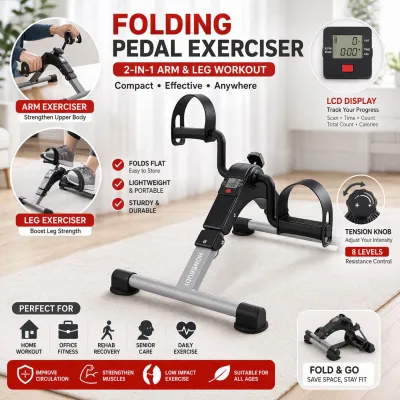
Under-desk and mini pedalers represent the most compact category of cycling equipment, consisting of a standalone pedal mechanism and a small console without a seat or handlebars. You place the unit on the floor and pedal while sitting on your existing office chair, sofa, or dining chair. When your workout is complete, the unit can be easily lifted and stored under a bed, inside a TV console, or beneath a desk.
While these devices require virtually zero dedicated floor space, they have clear ergonomic and performance limits. Because you are sitting on a standard chair rather than a bike saddle, your body angle is different, which can put unique pressure on your lower back if your chair does not provide adequate support. Furthermore, mini pedalers are prone to sliding forward on smooth HDB flooring, such as polished homogeneous tiles or luxury vinyl planks, when you apply forward force. To prevent this, you will need to place the unit against a wall or secure it to your chair with a strap. Before purchasing, measure the vertical clearance under your desk; you will need enough height to accommodate both the machine and the upward sweep of your knees during the pedal rotation to avoid hitting the underside of your workspace.
Critical Specifications to Verify Before Buying
To ensure your chosen cycling machine is safe, durable, and compatible with your body, you must carefully review the manufacturer’s technical specification sheet. Do not rely on generic marketing descriptions; instead, cross-reference your personal measurements with the machine’s structural limits.
- Maximum User Weight Capacity: Always check the certified weight limit of the machine. For folding models, this limit is often lower, ranging from 90 to 110 kilograms. To ensure safety and longevity, select a machine with a weight capacity that exceeds your actual body weight by at least 10 to 15 percent. This safety margin accounts for the dynamic, downward forces exerted on the frame and pedals when you transition from a slow spin to a faster cadence.
- Inseam and Height Compatibility: A machine that is too small will force your knees into an awkward, cramped angle, while a machine that is too large will cause you to stretch and strain your hips to reach the bottom of the pedal stroke. Measure your inner leg length (inseam) from your groin to the floor while wearing your workout shoes. Compare this measurement against the manufacturer's seat-to-pedal range. Ensure the seat post has enough adjustment holes to allow a slight, five-degree bend in your knee when the pedal is at its lowest point.
- Resistance Type and System: Cycling machines primarily use either magnetic or friction resistance. Magnetic resistance systems utilize a series of magnets positioned near a metal flywheel. As you turn the dial or select a digital level, the magnets move closer to or further from the wheel to alter the resistance. This system is non-contact, meaning it operates in near-total silence and suffers no physical wear, making it highly durable and ideal for quiet HDB environments. Friction resistance relies on felt or leather pads pressing directly against the spinning flywheel. While often cheaper and capable of providing infinite resistance, friction pads hiss during use, wear out over time, and release tiny fibers of dust that require regular cleanup.
- Flywheel Weight: The weight of the flywheel directly dictates the smoothness of the pedaling motion. A heavier flywheel (typically 8 kilograms or more on compact uprights) creates greater kinetic momentum, simulating the natural feel of outdoor cycling. Folding bikes and mini pedalers often feature very light flywheels (under 4 kilograms) to keep the overall machine weight manageable. While easier to transport, a light flywheel can result in a choppy, uneven pedal stroke at higher resistance levels.
Managing Noise, Vibration, and Floor Protection
Living in a multi-story HDB apartment means your daily workout can easily impact your downstairs neighbors. Low-frequency vibrations travel efficiently through solid concrete floor slabs, converting into an annoying, low-pitched hum in the apartment below. Managing this acoustic footprint is just as important as managing the physical footprint of your machine.
First, prioritize a magnetic resistance cycling machine. Because there is no physical contact between the braking system and the flywheel, the mechanical noise is kept to an absolute minimum. If you live in a household where family members sleep or study while you exercise, a magnetic bike allows you to ride at any hour without causing a disturbance.
Second, invest in a high-density equipment mat. Placing the cycling machine directly on laminate, parquet, or vinyl flooring can cause permanent damage. The concentrated weight of the machine, combined with your body weight and the shifting forces of your workout, can leave deep indentations or scratches on your floor. A specialized fitness mat made of high-density PVC, rubber, or dense EVA foam (at least 6 millimeters thick) serves multiple purposes. It distributes the point load of the stabilizer feet, prevents the machine from slipping or walking across the floor during fast rides, and acts as a dampening barrier that absorbs structural vibrations before they can penetrate the concrete floor slab.
Third, establish a regular maintenance routine. Over time, the repeated vibrations of pedaling can cause bolts, pedal threads, and stabilizer caps to loosen slightly. When these components lose their tight connection, they begin to rub against one another, creating squeaks, clicks, and metallic groans. Every two to three weeks, use the tools provided by the manufacturer to inspect and tighten the main assembly bolts, especially those securing the pedals to the crank arms and the stabilizer bars to the main frame. Applying a small amount of silicone lubricant to moving hinges on folding models will also keep the folding mechanism operating smoothly and silently.
Common Space-Matching Mistakes to Avoid
Many HDB residents end up with underutilized fitness equipment due to common oversight errors during the planning and buying phases. Recognizing these pitfalls beforehand will save you from buyer’s remorse.
One frequent mistake is failing to account for the dynamic sweep of your body during a workout. A cycling machine might fit perfectly into a narrow alcove when stored, but once you sit on it, your knees may bump against a nearby desk, or your shoulders might brush against a hanging curtain. Always visualize your body on the machine, and physically test your clearance by mimic-pedaling in the space before finalizing the machine’s placement.
Another common error is placing the cycling machine in high-humidity zones of the flat. Due to limited space, some homeowners relegate their exercise equipment to service yards, balconies, or areas directly adjacent to bathroom doors or open kitchens. Singapore’s tropical, humid climate, combined with airborne grease from cooking or steam from showers, can rapidly accelerate the corrosion of steel frames, rust internal bearings, and cause electronic consoles to malfunction. Keep your cycling machine in a dry, well-ventilated indoor area, and always wipe down the frame and handlebars with a dry microfiber cloth after every ride to remove corrosive sweat.
Finally, avoid purchasing a heavy, non-folding compact bike if you do not have a dedicated, permanent spot for it. If you have to lift and drag a 30-kilogram machine across your flat every time you want to use it, you will quickly find the process too exhausting, and the bike will either sit permanently in a disruptive location or accumulate dust in a corner. If you must move the machine frequently, prioritize lightweight folding models with high-quality transport wheels, or opt for a highly portable under-desk pedaler.
Frequently Asked Questions (FAQ)
Can I safely use a cycling machine on an elevated HDB platform bed or raised floor?
Using a cycling machine on elevated carpentry requires caution. Elevated platform beds and raised laminate floors are typically constructed using timber framing and plywood panels. While sturdy enough to support a mattress and sleeping occupants, they are not always engineered to withstand the concentrated, dynamic loads of cardio equipment. The combined weight of the machine and an active rider can cause the plywood panels to flex, potentially cracking the joints or damaging the underlying support structure. Furthermore, any slight unevenness in the carpentry will cause the bike to wobble, creating a safety hazard. Before placing a machine on a platform, check the structural load limits with your interior designer or contractor, and use a leveling mat to distribute the weight evenly.
Do folding bikes compromise workout intensity compared to standard models?
Yes, folding bikes generally offer lower maximum workout intensity compared to standard, non-folding compact upright or spin bikes. To maintain a lightweight and foldable design, manufacturers equip folding bikes with smaller, lighter flywheels and simpler magnetic resistance mechanisms. This setup is excellent for moderate cardiovascular exercise, steady-state active recovery, and burning calories while watching television. However, if your fitness goals include high-intensity interval training (HIIT), heavy climb simulations, or standing up to sprint, a folding bike will likely feel unstable and fail to provide enough resistance. For intense training, a sturdier compact upright bike with a heavier, solid frame is a much safer and more effective choice.
Community discussion
Share your experience or ask a question. Comments are reviewed before publication.