
Selecting the right pull-up rack for a Housing & Development Board (HDB) flat requires balancing structural safety, personal fitness goals, and limited floor space. The most space-efficient solution is a doorway pull-up bar, which utilizes existing frames to offer a zero-footprint workout setup. For those seeking greater stability for advanced exercises, a wall-mounted folding pull-up rack provides a robust alternative that folds flat against concrete walls when not in use. Freestanding power towers and ceiling-mounted rigs offer excellent stability but demand significant spatial clearance, making them suitable only for dedicated workout rooms. By understanding the structural limits of your flat, you can select a rack that keeps you active without cluttering your living space.
Assessing Your HDB Space and Installation Limits
Before purchasing any fitness equipment, you must evaluate the physical dimensions of your flat. Start by measuring your vertical clearance. You need to calculate the distance from the ceiling to your head when you are hanging from the bar, ensuring there is enough overhead space for your head to clear the bar without hitting the ceiling. Additionally, account for horizontal swing space to prevent your knees or feet from colliding with nearby furniture, walls, or television consoles during dynamic movements.
The structural composition of your HDB walls is another critical factor. Most HDB flats feature a mix of structural concrete walls (such as household shelters or load-bearing columns) and non-structural partition walls (like drywall or lightweight concrete blocks). Mounting heavy fitness equipment on non-structural partition walls can lead to severe structural damage and safety hazards.
Products mentioned in this guide
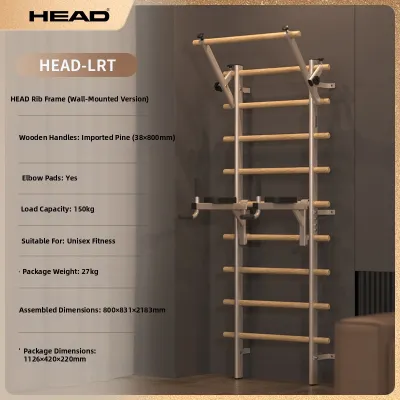
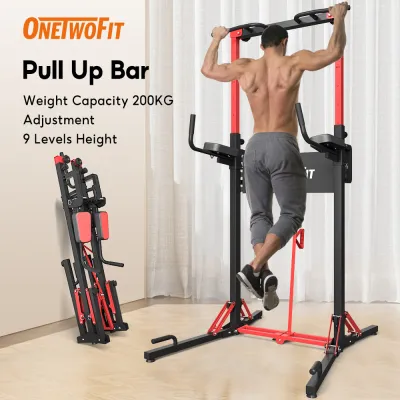
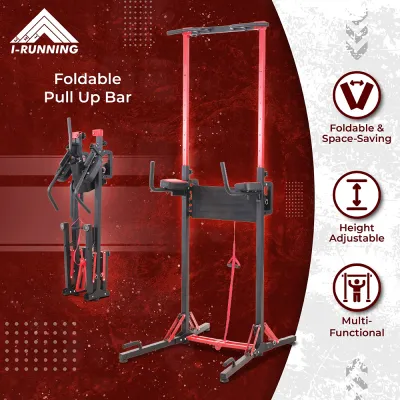
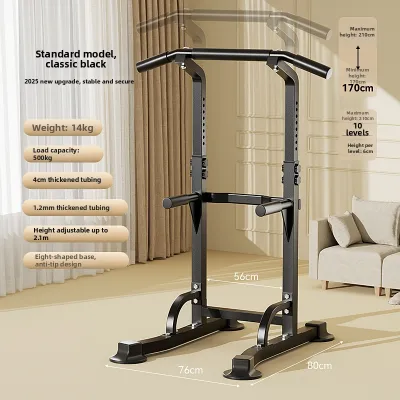
![[Ready Stock] UltimateSup Wall Mounted Pull Up Bars Portable Home Chin Up Fitness Equipment Pull Up Bar No Drilling Load Bearing](https://img.lazcdn.com/g/p/9e3a5040799705b35dace88921b6ab7b.png_400x400q80.png_.webp)
Prices are valid at publication and may change. Please refer to the product page for the latest price.
Finally, consider the daily traffic flow of your household. If your pull-up rack is installed in a multi-purpose living room or a shared corridor, it should not obstruct walkways or prevent doors from opening fully. Choosing equipment that can be easily folded, detached, or stowed away helps maintain a clean, clutter-free living environment.
Doorway Pull-Up Bars: The Zero-Footprint Option
Doorway pull-up bars are highly popular in Singapore due to their minimal space requirements and ease of installation. These bars generally fall into two categories: lever-style bars and telescopic tension bars. Lever-style bars hang over the top door molding, using leverage to distribute your body weight against the door frame and wall. This design requires a sturdy, protruding top door trim to hook onto securely.

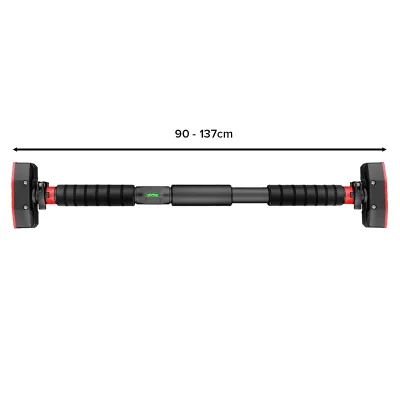
Telescopic bars, on the other hand, extend outward to wedge themselves between the inner sides of the door frame. They rely entirely on friction, pressure, and internal locking mechanisms to stay in place. While they do not require a top molding, they exert significant outward force on the sides of the frame.
Before choosing either option, inspect your HDB door frame materials carefully. Solid timber frames are ideal for supporting these bars, whereas hollow aluminum, thin metal, or PVC frames can easily warp, crack, or buckle under the pressure.
Safety checks are paramount when using doorway bars. Always verify the manufacturer’s weight capacity and perform a quick pull-test before every workout session. Regularly check the tightness of telescopic bars, as temperature changes and vibrations can cause them to loosen over time. Avoid using these bars on sliding doors, glass-paneled doors, or frames that show signs of structural wear.
Wall-Mounted Pull-Up Racks: Balancing Space and Stability
If you want a highly stable workout experience without sacrificing floor space, a wall-mounted pull-up rack is an excellent middle ground. Unlike doorway bars, wall-mounted racks are bolted directly into the wall, allowing for a wider range of exercises and higher weight capacities. To maximize space in a compact HDB flat, look for foldable wall-mounted pull-up bars that swing inward or fold flat against the wall when your workout is complete.
The installation of a wall-mounted rack requires careful planning and heavy-duty hardware. These racks must be anchored into solid concrete or brick walls using high-quality expansion bolts. Never attempt to mount a pull-up rig onto drywall, plasterboard, or lightweight partition walls, as these materials cannot support the dynamic forces generated during pull-ups.
Clearance planning is also essential for wall-mounted setups. Ensure the bar sits far enough from the wall to allow your body to move freely without your knees or chest bumping into the concrete. A distance of at least 50 to 60 centimeters from the wall is typically recommended to perform clean, unobstructed repetitions.
Ceiling-Mounted and Freestanding Racks: Spatial Realities
Ceiling-mounted and freestanding racks present unique spatial and structural challenges in an HDB environment. Ceiling-mounted racks require drilling directly into the concrete ceiling slab. While this offers a completely clear floor area, drilling into HDB ceiling slabs requires strict adherence to building guidelines to avoid damaging embedded utility lines or structural reinforcement bars.
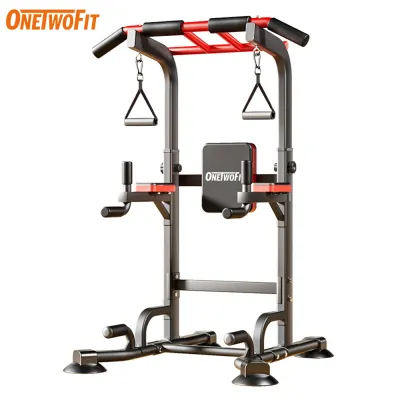
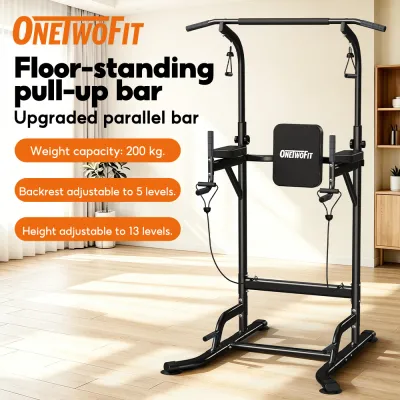
Freestanding pull-up towers, or power towers, eliminate the need for drilling entirely, making them highly stable and versatile. However, they demand a significant amount of floor space and vertical clearance. Many freestanding models have a wide base to prevent tipping, which can easily overwhelm a small bedroom or living room.
Furthermore, the height of freestanding towers can make overhead exercises difficult if your flat has low ceilings. Moving these heavy, bulky steel frames through narrow HDB corridors, tight doorways, and passenger lifts during delivery or relocation can also be a logistical challenge.
These larger setups are best reserved for dedicated home gym rooms where the floor is protected by heavy-duty rubber mats and there is ample clearance on all sides. If you do not have a spare room to dedicate solely to fitness equipment, a doorway or folding wall-mounted option remains the more practical choice.
Installation Safety and HDB Modification Rules
Before you pick up a hammer drill, you must understand the rules regarding home modifications in Singapore. HDB flats have strict guidelines to preserve the structural integrity of the building. Drilling into structural columns, beams, or pre-cast load-bearing walls is generally restricted or requires professional assessment to avoid hitting concealed electrical wiring or water pipes.
If you are planning to install a heavy wall-mounted or ceiling-mounted rig, it is highly recommended to hire a qualified contractor. A professional installer can use a wall scanner to locate hidden conduits and ensure the correct expansion bolts are used for your specific wall type.
For tenants renting an HDB flat, drilling holes into the walls or ceiling is often prohibited under standard tenancy agreements. Tenants should always seek written permission from their landlord before undertaking any drilling. If drilling is not permitted, non-destructive alternatives like high-quality doorway tension bars or compact freestanding frames are the only viable options to avoid losing your security deposit.
Frequently Asked Questions (FAQ)
Can I install a pull-up rack on an HDB false ceiling?
No, you should never install a pull-up rack or any heavy fitness equipment on an HDB false ceiling. False ceilings are made of lightweight plasterboard or gypsum boards designed purely for aesthetic purposes, such as hiding wiring or housing recessed lights. They are suspended from the actual concrete slab by thin metal frames and cannot support dynamic human weight. Attempting to mount a rack here will result in the ceiling collapsing, causing severe injury and expensive property damage. Any ceiling-mounted equipment must be anchored directly into the structural concrete slab above the false ceiling.
Are there renter-friendly pull-up options that require no drilling?
Yes, there are several renter-friendly options that do not require drilling or permanent modifications to the flat. Heavy-duty doorway pull-up bars that rely on leverage or high-friction telescopic mechanisms can be installed and removed without leaving holes, though you should place padding under the contact points to prevent scuffing the door frame. Alternatively, a compact freestanding power tower can be placed on a protective rubber mat to safeguard the flooring. Always review your tenancy agreement and consult your landlord before introducing large equipment to ensure compliance with house rules.
Community discussion
Share your experience or ask a question. Comments are reviewed before publication.