
To fit a stationary bicycle into a small Housing & Development Board (HDB) flat in Singapore without cluttering your home, you must prioritize the machine’s physical footprint, operational clearance, and storage versatility. The ideal choice depends on whether you can dedicate a permanent corner for workouts or if you need to pack the equipment away after every session.
By matching your home’s layout with the right category of cardio equipment, you can maintain an active lifestyle without sacrificing valuable living space. This guide breaks down the spatial realities of indoor cycling in compact apartments to help you make an informed decision.
Understanding Space Constraints in HDB Flats
Typical master bedrooms or living rooms in modern 3-room or 4-room BTO flats have limited free floor space once essential furniture like queen-sized beds, wardrobes, and sofas are in place. Distinguishing between the total floor area of a room and its actual, usable clear space is the first step in planning your purchase.
Products mentioned in this guide
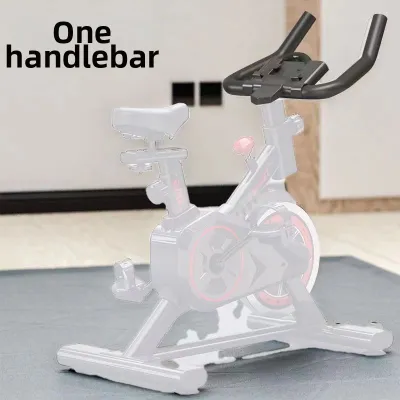
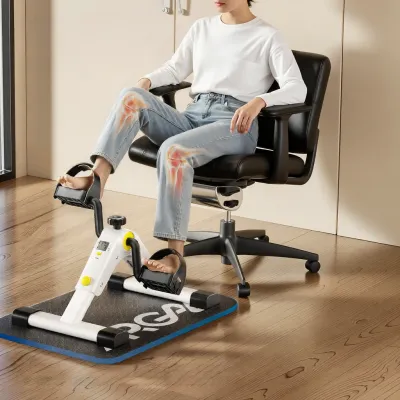
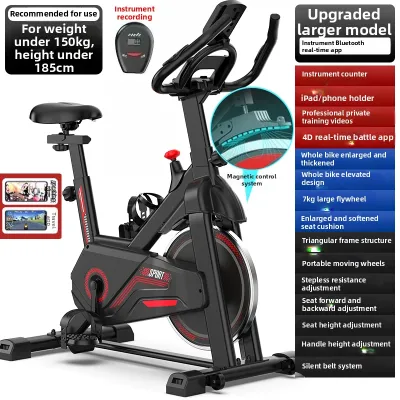
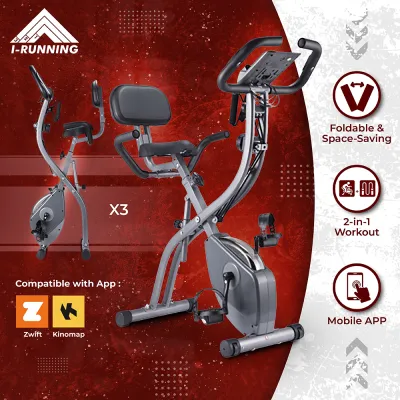
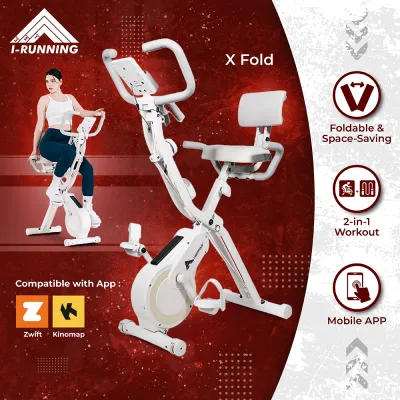
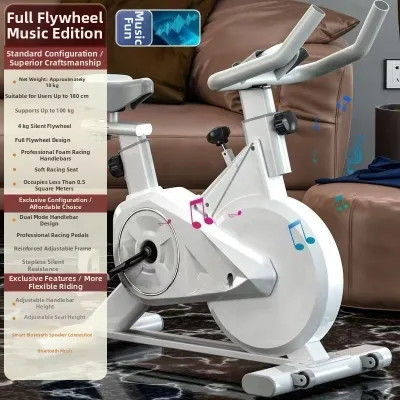
Prices are valid at publication and may change. Please refer to the product page for the latest price.
You must account for the “operational footprint” of the stationary bicycle, which is significantly larger than its static dimensions. Operating the bike requires extra room to mount and dismount safely, as well as lateral clearance for your knees and elbows during vigorous pedaling. If the bike is placed too close to a wall or a television console, you risk scraping your limbs or damaging your home’s interior.
Standard HDB ceiling heights typically hover around 2.6 meters, but this can be lower if you have installed false ceilings or plaster boards. If you are considering a tall upright bike or plan to stand up while pedaling, check the vertical clearance carefully. This is especially critical if your room features a ceiling fan, as any accidental contact can cause severe injury.
Singapore’s tropical climate means that indoor workouts quickly generate substantial heat and sweat. Placing a bike in a cramped, poorly ventilated common bedroom can make exercise highly uncomfortable. Ensure your chosen spot allows for adequate airflow, whether from an open window, a standing fan, or an air-conditioning unit, to keep your body temperature regulated.
Types of Stationary Bicycles for Compact Spaces
Selecting the right style of stationary bicycle is a balancing act between your fitness goals and the architectural limits of your flat. Different designs offer distinct advantages in how they occupy space, both during use and when stored out of sight.

Foldable Exercise Bikes
Foldable exercise bikes, often featuring an X-frame design, are highly popular among homeowners who do not want a permanent fitness fixture in their living rooms. These models operate on a dual-footprint concept: they spread out to provide a stable base during your workout, and then fold vertically into a much narrower profile for storage. This allows you to tuck the machine into a utility closet, behind a wardrobe, or next to a refrigerator when it is not in use.
However, you must remember that a foldable bike still requires its full operational clearance when open. You cannot bypass the physical space needed for a safe workout just because the machine can shrink afterward. Additionally, because these frames are designed to fold, they rely heavily on the integrity of their joint mechanisms.
Before purchasing, always check the quality of the folding hinges, locking pins, and structural materials. Lightweight, budget-friendly folding models often have lower maximum weight capacities and may feel less stable if you tend to pedal aggressively. Ensure the manufacturer’s weight limit comfortably accommodates your body weight to prevent premature wear or structural failure.
Compact Upright and Magnetic Bikes
If you prefer a sturdier ride and have a dedicated corner that does not need to be cleared daily, a compact upright bike is an excellent alternative. These non-folding machines are engineered with a narrow, heavy base and a vertical frame structure that minimizes handlebar overhang. They occupy a permanent but modest footprint, making them ideal for placement beside a study desk or in a bedroom nook.
When choosing a stationary bicycle for an HDB flat, the type of resistance mechanism is just as important as its physical size. Magnetic resistance is highly recommended for high-density living. Unlike friction-based pads that wear down and emit a rubbing noise, magnetic systems adjust resistance by moving magnets closer to or further from the flywheel.
This frictionless design operates almost silently, allowing you to cycle late at night or early in the morning without disturbing family members sleeping in the next room or neighbors sharing an adjacent wall. It also eliminates the need for regular pad replacements, reducing long-term maintenance tasks.
Mini Pedal Exercisers and Under-Desk Bikes
For those facing severe space constraints or looking to stay active while working from home, mini pedal exercisers offer an ultra-compact solution. These devices consist solely of the pedal mechanism and a small base, completely omitting the seat and handlebars. You can place them directly on the floor in front of your existing office chair, sofa, or dining chair.
While they excel at saving space and can easily be slid under a bed or coffee table when finished, they do come with significant trade-offs. Because they lack a unified frame connecting the seat to the pedals, maintaining stability can be challenging on smooth flooring, and you may find yourself sliding backward. They also offer lower maximum resistance levels and provide no upper-body support or engagement, making them better suited for light cardio and joint mobility rather than intense fitness training.
Key Dimensions and Clearance Requirements
To ensure your stationary bicycle integrates seamlessly into your home, you must move beyond guesswork and take precise measurements. Start by verifying the manufacturer’s listed “base footprint,” which represents the maximum length and width of the bike’s frame when fully assembled. Compare these dimensions directly against the floor area of your intended workout spot.
Do not plan to place the bike flush against walls or furniture. For safety and comfort, you should maintain a clearance buffer of at least 50 cm on all sides of the machine. This buffer provides the necessary room to mount and dismount without tripping, allows for unrestricted elbow and knee movement, and ensures proper air circulation around your body as you exercise.
Beyond the workout spot itself, you must map out the delivery route. HDB corridors, main entry doors, and elevator cabins can be surprisingly narrow, particularly in older estates. Measure the widths of your front door frame, any internal hallway turns, and the elevator entrance to confirm that the packaged box or pre-assembled bike can pass through safely without scuffing your walls or getting stuck.
Below is a comparison table outlining the typical space profiles and best use cases for different types of stationary bicycles suitable for HDB living:
| Bike Type | Typical In-Use Footprint Profile | Storage Profile | Best Use Case |
|---|---|---|---|
| Foldable Exercise Bike | Moderate (approx. 90 cm x 50 cm) | Compact vertical fold; fits in closets or behind doors | Users who need to clear space daily and prefer low-to-medium intensity cardio. |
| Compact Upright Bike | Small to Moderate (approx. 100 cm x 55 cm) | Non-folding; occupies a fixed, permanent floor area | Daily riders seeking high stability, quiet magnetic resistance, and a dedicated workout nook. |
| Mini Pedal Exerciser | Extremely Small (approx. 50 cm x 40 cm) | Highly portable; fits under desks, beds, or inside cabinets | Multi-taskers, remote workers, or those with severe space limits wanting light activity. |
Smart Placement and Storage Strategies
Integrating fitness equipment into a small flat requires creative spatial planning. Rather than letting a stationary bicycle dominate your living room, look for underutilized multi-purpose zones. An enclosed balcony, a quiet corner of your study room, or a small nook in your master bedroom can serve as an excellent dedicated workout zone without disrupting the flow of your main living areas.
If you must place the bike in a shared space, consider using visual design techniques to maintain a clean aesthetic. Lightweight folding screens, open wooden shelving units, or strategically placed indoor plants can act as elegant room dividers. These dividers help separate your active workout zone from your relaxation or dining areas, keeping your home feeling organized rather than cluttered.
Protecting your HDB flooring is another critical consideration. Whether your flat features homogeneous tiles, vinyl planks, or engineered timber laminate, the weight of the bike combined with your movement can cause scratches, indentations, or scuffs. Sweat can also drip onto the floor, potentially damaging wood or laminate over time.
Always place a high-density, non-slip equipment mat beneath your stationary bicycle. This mat serves multiple purposes: it catches perspiration, prevents the bike from shifting during intense pedaling, and absorbs structural vibrations. Dampening these vibrations is essential for maintaining good relations with your downstairs neighbors, as low-frequency hums can easily travel through concrete floors.
Finally, prioritize portability when shopping. Look for models equipped with built-in transport wheels on the front stabilizer bar. These wheels allow you to tip the bike forward and easily roll it across your flat, enabling quick transitions from storage to your workout spot without straining your back or lifting heavy loads.
Common Sizing and Buying Mistakes to Avoid
One of the most frequent mistakes buyers make is focusing solely on a bike’s folded dimensions while ignoring its operational size. A machine that looks incredibly compact in a promotional photo may require a surprisingly large clearance area once you open it and begin pedaling. Always base your spatial planning on the fully extended, active dimensions.
Another common pitfall is purchasing a heavy, commercial-grade spin bike without assessing how often you will need to move it. If your layout requires you to roll the bike out of a bedroom closet for every single workout, a 40 kg studio bike will quickly become a physical chore to set up, eventually discouraging you from exercising altogether. Match the weight of the machine to your willingness to move it.
Do not sacrifice structural stability for the sake of saving a few centimeters. Extremely cheap, ultra-lightweight folding bikes can feel wobbly or flex under load, which compromises your safety and reduces the quality of your workout. Always verify the maximum user weight rating and choose a model with a robust locking mechanism.
Lastly, avoid friction-resistance models or fan/air bikes if you live in a compact HDB flat. Fan bikes generate a significant amount of wind and a high-pitched whirring noise that can be highly disruptive in an enclosed room. Friction-pad bikes can produce a rubbing sound and require regular lubrication or pad replacement. Stick to magnetic resistance systems for a quiet, low-maintenance, and neighbor-friendly home workout.
Frequently Asked Questions (FAQ)
Can I keep a stationary bicycle on an HDB balcony?
Keeping a stationary bicycle on an HDB balcony is highly dependent on whether the balcony is fully enclosed or open to the elements. If you have a fully enclosed balcony with zip blinds or sliding glass windows that keep out rainwater, it can serve as an excellent workout nook. However, if your balcony is open, exposing the equipment to Singapore’s high humidity, direct sunlight, and heavy driving rain is highly discouraged. Moisture will quickly corrode metal frames, degrade rubber grips, and short-circuit any electronic consoles or magnetic sensors. Always check the manufacturer’s warranty guidelines, as outdoor or semi-outdoor exposure typically voids coverage.
Do foldable exercise bikes support high-intensity interval training (HIIT)?
Most standard foldable exercise bikes are engineered for steady-state, low-to-moderate intensity cardio sessions rather than vigorous high-intensity interval training (HIIT). The lightweight frame, X-hinge design, and folding joint pins inherent to these models generally lack the structural rigidity and lateral stability required to support out-of-the-saddle sprinting or rapid changes in pedaling speed. Attempting intense standing sprints on a foldable bike can cause the frame to flex, wobble, or tip over, posing a safety risk. For intense HIIT workouts, a compact but non-folding upright bike with a solid, heavy-duty frame is a much safer and more durable choice.
Community discussion
Share your experience or ask a question. Comments are reviewed before publication.