
Maintaining a consistent strength training routine can be a challenge in a compact Housing & Development Board (HDB) flat. With multi-purpose living rooms and limited storage, bulky gym equipment is rarely practical. Fortunately, achieving your fitness goals does not require a dedicated home gym. By selecting the right category of compact weights, you can perform highly effective full-body workouts in a space no larger than a standard yoga mat. This guide focuses on evaluating space-saving weight categories, key selection criteria, and safe storage solutions tailored for women training at home. Rather than ranking specific brands, we will examine the structural and functional features of various equipment types so you can make an informed decision that fits your home and your routine.
Key Criteria for Choosing Compact Weights in Small Apartments
When space is at a premium, every square centimeter of your living area must be utilized efficiently. The first factor to evaluate is the physical footprint of the equipment relative to its usable weight range. Traditional dumbbell sets require a dedicated horizontal rack, which can easily consume an entire corner of a room. In contrast, space-saving alternatives should offer a wide range of resistance levels while occupying a single, compact storage spot. Look for designs that consolidate multiple weight increments into a single unit or those that can be easily stacked when not in use.
Noise and vibration transfer represent another major consideration when working out in a high-rise HDB flat. Sound travels easily through concrete floors, and the impact of placing heavy weights down too quickly can disturb neighbors living directly below you. When evaluating equipment, consider how the materials and design affect noise levels. Metal-on-metal contact in some adjustable systems can create a noticeable clanging sound during use, whereas rubber-coated or vinyl-wrapped weights tend to be much quieter. Additionally, you must assess how easily you can control the descent of the weight to minimize floor impact.
Products mentioned in this guide
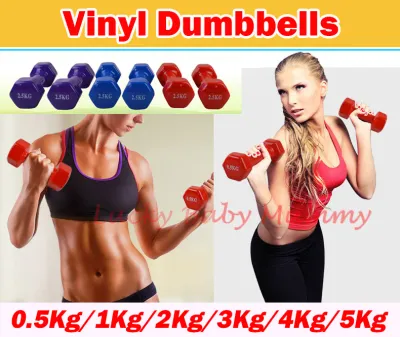
![[SG In Stock]Neoprene Dumbell Set for Weight Strength Training 1/2/3KG Suitable for Home Gym Exercise Small Dumbbell Set](https://img.lazcdn.com/g/p/923f27057110e9aadae3d93d3c8f3495.jpg_400x400q80.jpg_.webp)
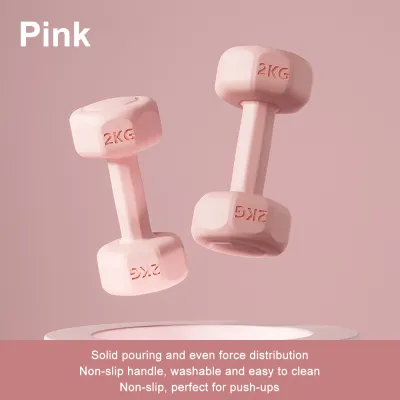
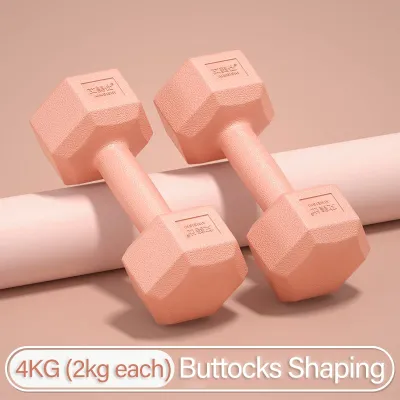
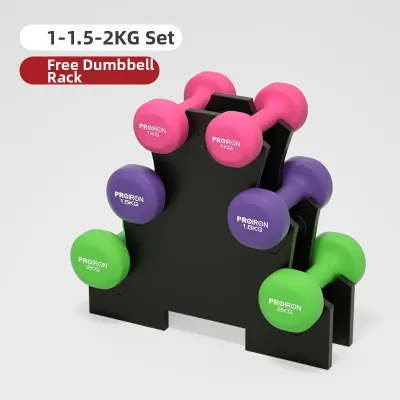
Prices are valid at publication and may change. Please refer to the product page for the latest price.
Storage mechanisms dictate how seamlessly you can transition your living room from a temporary workout space back into a relaxing home environment. Equipment that features nesting designs, stackable components, or compatibility with vertical storage racks allows you to clear your floor space in seconds. If you plan to store your weights under a bed or inside a utility closet, measure the clearance height beforehand. Some adjustable weights come with bulky storage cradles that may not fit under standard low-profile furniture frames, requiring you to find alternative storage spots.
Finally, you must keep HDB structural guidelines and floor load limits in mind, particularly if you plan to accumulate a significant amount of weight. While standard residential floors are designed to support typical household loads, concentrated heavy equipment stored in a single spot can place unnecessary stress on specific floor tiles. Distributing your equipment across a wider surface area or choosing lighter, highly versatile resistance options is a safer approach. Always prioritize equipment that can be stored flat and distributed evenly rather than stacked in a single, heavy column.
Best Space-Saving Weight Categories for Home Workouts
Selecting the right equipment involves balancing your current strength levels, your long-term fitness goals, and the physical limitations of your apartment. Different weight categories offer distinct advantages depending on whether you prioritize progressive overload, maximum portability, or multi-functional use. By understanding how these categories compare, you can choose the system that best supports your training style without cluttering your living space.

Adjustable Dumbbells and Kettlebells
Adjustable dumbbells and kettlebells are among the most space-efficient tools available for progressive strength training. A single pair of selectorized dumbbells can replace up to ten or fifteen individual pairs of traditional weights, saving an immense amount of floor space. These systems typically use a dial, pin, or twisting handle mechanism to engage different weight plates stored in a custom cradle. This allows you to quickly adjust the resistance between exercises, making them ideal for workouts that transition rapidly from upper-body movements to lower-body compounds.
Before purchasing an adjustable system, it is essential to verify the security of the locking mechanism. The plates must remain firmly locked in place during overhead movements or dynamic swings to prevent injury. Take the time to inspect the build quality and read the manufacturer’s instructions regarding maintenance and handling. Additionally, measure the physical dimensions of the storage cradle; because these units must house all the plates simultaneously, the cradle itself can be relatively long and may require a dedicated, stable surface.
For women focusing on progressive overload, look for adjustable sets that offer small weight increments, such as 1 kg or 2 kg steps. Finer increments are particularly valuable for upper-body exercises like shoulder presses or lateral raises, where jumping up by 5 kg at once can be too challenging. Ensure the minimum weight setting is light enough for your warm-ups and isolation movements, while the maximum capacity provides enough resistance for lower-body exercises like squats and deadlifts.
Resistance Bands with Door Anchors and Handles
If you have virtually zero floor space to spare, resistance bands offer an ultra-compact alternative that can easily fit into a small drawer or a travel bag. Stackable tube bands with clip-on handles and loop bands allow you to perform almost any exercise you would typically do with free weights. Because bands rely on elastic tension rather than gravity, they provide variable resistance that increases as the band stretches, which can help challenge your muscles through different ranges of motion.
When using resistance bands in an HDB flat, verifying door frame compatibility and anchor safety is paramount. Ensure that any door you use as an anchor point closes securely in the direction opposite to the pull, and lock the door to prevent anyone from opening it mid-exercise. Inspect the door hinges and frame for structural integrity before applying heavy tension. It is also critical to regularly check the bands for micro-tears, discoloration, or wear near the connection points, as a snapping band can cause significant injury.
While bands are incredibly space-efficient, they do have limitations when it comes to tracking precise progressive overload. Unlike iron weights, where a 5 kg plate is always exactly 5 kg, the resistance of a band varies based on how far it is stretched and the ambient temperature. This makes it more difficult to measure exact strength gains over time. However, for general conditioning, mobility work, and high-repetition training, they serve as an excellent primary or supplementary tool.
Stackable or Nesting Weight Sets
Stackable or nesting weight sets offer a middle ground between traditional fixed weights and complex adjustable systems. These sets are designed with clever geometries that allow smaller weights to fit neatly inside or alongside larger ones, forming a single cohesive unit when stored. For example, nesting kettlebells may feature hollow interiors that allow lighter shells to stack inside the heaviest bell, while some dumbbell sets stack vertically on a highly compact tree stand.
The primary trade-off with nesting sets is the balance between compact storage and the variety of weight increments available. Because they rely on physical nesting, these sets often feature fewer total weight options than dial-adjusted systems. You may find yourself with larger gaps between weight levels, which can make progressive overload more challenging. However, because they have fewer moving parts, nesting weights are often highly durable and less prone to mechanical wear over time.
When selecting a nesting set, focus on a starting weight range that accommodates both your weakest isolation movements and your strongest compound lifts. For instance, a set that ranges from 2 kg to 10 kg can cover lateral raises, bicep curls, and light goblet squats. If you find the maximum weight in a nesting set is too light for your lower-body training, you can easily supplement the routine by incorporating resistance bands to add extra tension to the movement.
How to Build a Compact Strength Routine
Designing an effective strength routine in a small apartment requires choosing exercises that maximize muscle engagement while minimizing the physical space you occupy. You do not need to perform wide, sweeping movements to get a great workout. Focus on exercises that require minimal vertical and horizontal clearance. For example, floor presses can replace bench presses, eliminating the need for a bulky workout bench. Goblet squats, lunges, and Romanian deadlifts can all be performed standing in a single spot, requiring no more than a square meter of floor space.
Combining different types of compact equipment can also optimize both your space and your training results. You can use lightweight resistance bands for dynamic warm-ups, rotator cuff activation, and high-repetition burnout sets. Once warmed up, transition to your adjustable dumbbells or nesting weights for heavy compound movements where tracking resistance is more critical. This hybrid approach keeps your equipment footprint small while ensuring you have the right tool for every phase of your workout.
Progressive overload is still entirely achievable even when your space limits the maximum physical weight you can store. If you run out of heavier plates, you can increase the difficulty of an exercise by altering other variables. Try slowing down the tempo of your lifts, adding a pause at the bottom of a squat, or increasing the total number of repetitions and sets. You can also decrease your rest periods between sets to increase metabolic stress, allowing you to continue making progress without needing to purchase heavier, bulkier equipment.
Safety, Storage, and Floor Protection
Protecting your home’s flooring and maintaining good relations with your neighbors are essential aspects of home fitness. Standard HDB flooring, whether it is ceramic tile, vinyl, or laminate, can easily scratch, dent, or crack under the impact of heavy weights. To prevent damage, always perform your workouts on a high-density rubber mat. Look for interlocking puzzle mats or thick roll-out utility mats that are at least 10 mm to 15 mm thick, as these provide excellent shock absorption and help dampen the sound of weights touching the floor.
Proper storage is equally important for keeping your living area safe and organized. Leaving weights scattered on the floor creates a serious tripping hazard, especially in shared households with children or pets. Utilize under-bed storage bins with heavy-duty casters, or dedicate a low shelf in a utility closet or bomb shelter for your equipment. If you use vertical racks, ensure they are positioned against a load-bearing wall and are stable enough to prevent tipping. Keep smaller accessories, such as resistance band handles, door anchors, and collar clips, in a designated basket so they do not get lost or damaged.
Finally, establish clear stopping conditions to ensure your workouts remain safe over the long term. Regularly inspect your equipment before every session. If you notice any wear on the locking mechanisms of your adjustable dumbbells, if a resistance band shows signs of fraying, or if you feel excessive floor vibration during a lift, stop immediately. Equipment maintenance and structural safety should always take precedence over completing a set.
Frequently Asked Questions (FAQ)
Can I use heavy weights on HDB flooring?
Yes, standard HDB floors are structurally capable of supporting typical residential loads, including personal fitness equipment. However, the primary risk comes from point loads and sudden impacts rather than static weight. Dropping a heavy dumbbell can easily crack ceramic tiles or dent vinyl flooring, leading to costly repairs. To protect your floors, always use a high-density rubber impact mat and avoid dropping weights under any circumstances. If you are performing heavy lifts, focus on controlled descents and place the weights down gently to minimize both floor stress and noise transmission to the neighbors below.
Are adjustable dumbbells worth the investment for small spaces?
For most women training in small apartments, adjustable dumbbells are highly worth the investment. While they carry a higher upfront cost in S$ compared to a single pair of fixed dumbbells, they replace an entire rack of weights, saving a massive amount of floor space. They allow you to seamlessly progress from lighter weights for upper-body exercises to heavier weights for lower-body movements. To ensure you get the most value, choose a reputable system with a durable locking mechanism, handle it with care, and avoid dropping them, as the internal selector components can be sensitive to impact.
How do I store weights safely in a shared living area?
Storing weights in a shared living area requires balancing accessibility with safety and aesthetics. Look for multi-functional furniture, such as storage benches or ottomans, that can conceal your weights when they are not in use. Alternatively, use low-profile, heavy-duty plastic bins that slide easily under a sofa or bed. If you prefer to keep them in a closet, place the heaviest items on the floor or the lowest shelf to prevent tipping hazards. Always store small components like clips, pins, and band anchors in a secure container out of reach of young children and pets to prevent choking or accidental misuse.
Community discussion
Share your experience or ask a question. Comments are reviewed before publication.