
Choosing the right swim training gear is essential for developing an efficient stroke, building cardiovascular endurance, and protecting your joints from repetitive strain. When comparing Speedo and Arena adult kickboards for lap swimming, there is no single option that suits every swimmer. The ideal choice depends on your specific training objectives, body composition, shoulder flexibility, and swimming technique. Speedo generally favors versatile, multi-grip designs with strategic cutouts that accommodate varied technical drills and hand positions, making them highly adaptable for multi-stroke athletes. Conversely, Arena typically emphasizes streamlined, high-buoyancy, hydrodynamic profiles designed to isolate the legs and promote a natural, narrow arm extension that minimizes shoulder strain. While both brands are highly respected in the aquatic community, you must evaluate specific physical factors—such as foam density, board thickness, and grip ergonomics—to ensure the equipment matches your body type and training routine. Remember that a training board is a tool to assist your practice; it cannot replace proper swimming technique, core engagement, or professional coaching.
Quick Answer: Which Brand Should You Choose?
Neither Speedo nor Arena is universally superior for every adult lap swimmer. Speedo is generally the better option if you want a versatile board with multiple hand placement options to support diverse technical drills. Arena is typically the better choice if you prioritize a highly streamlined, hydrodynamic profile that maximizes leg isolation while keeping your shoulders in a comfortable, natural position. Before making a purchase, you must verify the specific model’s dimensions, weight capacity, and foam density to ensure it matches your body type and training environment. Equipment cannot replace training, so always focus on maintaining proper form and core engagement during your sets.
Key Comparison Dimensions for Daily Training
Selecting a swimming board adult goes beyond finding a piece of foam that floats. For adult lap swimmers, a kickboard must act as a seamless extension of the body, maintaining correct alignment without causing joint strain or muscle compensation. Evaluating these training aids requires looking closely at three primary performance pillars: ergonomics and grip design, buoyancy and material density, and long-term durability in chlorinated environments. Understanding how these dimensions interact with your body biomechanics is key to choosing a board that enhances your performance rather than hindering it.
Products mentioned in this guide
![[SG Stock] Adult Kickboard Float Swimming Kick Board Large Pool Buoy](https://img.lazcdn.com/g/p/e951eafb3b250d7ec1e9801b7a043460.jpg_400x400q80.jpg_.webp)
![[SWANS] High Density EVA Swimming Kickboard](https://img.lazcdn.com/g/p/80ae15979bfd818c14bb1a0a1d695d92.png_400x400q80.png_.webp)
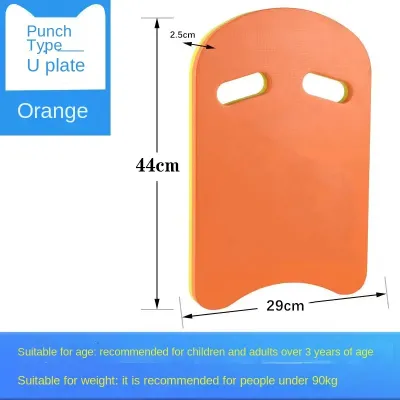
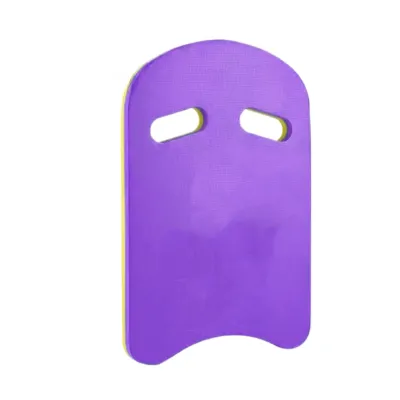
![[SG Stock] Swimming Kickboard Float Kids Adults Kick Board Learn To Swim Safety Pool Aid Plate Children](https://img.lazcdn.com/g/p/19e9b69ae94352f2a472a5e2355a4741.jpg_400x400q80.jpg_.webp)

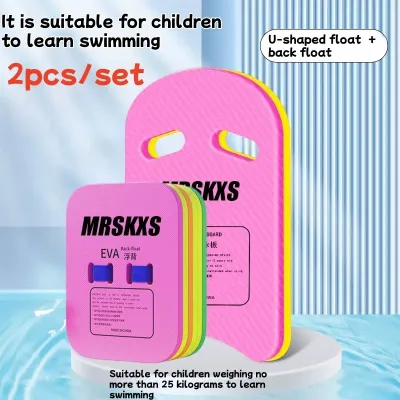
Prices are valid at publication and may change. Please refer to the product page for the latest price.

Ergonomics and Grip Design
The way you hold a kickboard directly influences the alignment of your shoulders, neck, and spine. When an adult swimmer grips a standard, flat board at the very top, it forces the arms into full extension and internal rotation. Over long distances, this position can pinch the subacromial space in the shoulder joint, leading to a common overuse injury known as swimmer’s shoulder. To mitigate this risk, manufacturers design their boards with distinct ergonomic philosophies.
Speedo frequently incorporates multi-grip features, such as integrated hand cutouts or scalloped side edges. These cutouts allow you to change your hand placement throughout a workout. For instance, you can hold the board at the bottom corners to keep your elbows slightly bent and your shoulders relaxed, or use the inner grips for single-arm drills. This versatility is highly beneficial for swimmers who perform diverse technical drills or those who experience stiffness when keeping their arms locked in a single position.
Arena, on the other hand, often focuses on smooth, continuous contours and tapered front profiles. Rather than cutting holes in the board—which can disrupt water flow and reduce buoyancy—Arena designs molded side channels and contoured thumb rests. This design encourages a streamlined, narrow arm position that mimics the natural catch phase of the freestyle stroke. By allowing the hands to rest naturally on the tapered nose, these boards help reduce shoulder elevation and minimize joint fatigue during high-volume kicking sets.
Swimmers must verify the board’s width and edge profile against their own body frame. If you have broad shoulders, a board that is too narrow will force your arms inward, causing chest compression and shoulder strain. Conversely, a board that is too wide can splay your arms outward, putting unnecessary stress on the rotator cuff muscles. Always check that the edge profile allows for a comfortable, secure grip without requiring excessive hand strength, which can cause forearm cramping.
Buoyancy and Material Density
Maintaining a horizontal body position is the foundation of efficient swimming. Adults naturally have a lower center of buoyancy than children due to denser bone structures and higher muscle mass in the lower body, which often causes the hips and legs to sink. A high-quality kickboard must provide sufficient upward force to elevate the hips, reducing hydrodynamic drag and allowing for a more effective kick.
However, excessive buoyancy can be just as problematic as insufficient flotation. If a board is too thick or buoyant, it pushes the swimmer’s chest and shoulders too high out of the water. This elevation forces the lower back to arch excessively, a condition known as lumbar lordosis, which can lead to severe lower back strain over time. The key is finding a board that balances lift with a flat, natural streamline.
The physical properties of the foam determine this balance. Both Speedo and Arena primarily use ethylene-vinyl acetate (EVA) foam, but they manipulate its density and distribution differently. A high-density EVA foam board is stiffer and thinner, offering a rigid platform that does not flex or bow under heavy load. This rigidity is crucial for advanced swimmers who generate high kicking forces and require a stable board that cuts through the water. A lower-density foam board is often thicker and softer, providing high static buoyancy but increased water resistance.
Speedo’s training boards typically offer moderate-to-high buoyancy, distributing the flotation evenly across the board’s surface. This provides a balanced feel that suits swimmers who already possess good natural body alignment and core strength. Arena often designs boards with targeted buoyancy profiles, concentrating the foam thickness at the front to actively lift the upper torso and assist swimmers who struggle with sinking legs. Swimmers should check the product specifications for thickness and weight recommendations, ensuring the board’s volume is appropriate for their body mass.
Durability and Chlorine Resistance
Pool environments are hostile to synthetic materials. Constant exposure to chlorine, bromine, salt, and human sweat, combined with UV radiation in outdoor pools—a common training venue in tropical climates like Singapore—will rapidly degrade low-quality foam. This degradation leads to waterlogging, where the foam absorbs water, loses its buoyancy, becomes heavy, and turns into a breeding ground for mold and bacteria.
To prevent this, high-quality training boards are constructed from closed-cell EVA foam. Unlike open-cell foam, closed-cell structures feature completely sealed microscopic pockets of gas. This prevents water from penetrating the core, ensuring the board remains lightweight, hygienic, and buoyant throughout its lifespan.
While both Speedo and Arena utilize premium closed-cell EVA foam, their manufacturing and surface finishing techniques differ. Speedo often employs textured surfaces or thermoformed outer skins. This protective outer layer acts as a barrier against physical abrasions, scratches, and the peeling that can occur when boards are stacked in communal gear bins or carried in tight mesh bags. The textured surface also provides additional friction, helping wet hands maintain a secure grip.
Arena frequently utilizes smooth, high-density finishes that repel water droplets and dry rapidly. This smooth surface minimizes drag and resists chemical absorption, preventing the foam from becoming brittle or chalky over time. However, smooth boards can become slippery when wet, requiring precise hand placement.
When evaluating durability, pay close attention to the edges and seams. Heat-sealed or molded edges are highly resistant to splitting, whereas glued seams are prone to failure when exposed to heat and pool chemicals. Swimmers should inspect these areas regularly to ensure the structural integrity of their training gear.
Speedo vs Arena Kickboards: Feature Breakdown
To help you compare the general design philosophies of these two leading brands, the table below outlines the typical characteristics of their adult kickboards.
| Feature | Speedo Typical Design | Arena Typical Design | Best Suited For |
|---|---|---|---|
| Shape Profile | Modified rectangular or V-shape with rounded corners | Highly hydrodynamic, tapered U-shape or ergonomic wedge | Speedo: Versatile drills<br>Arena: High-speed streamlining |
| Grip Options | Integrated hand cutouts and scalloped side grips | Smooth, contoured side channels and molded thumb rests | Speedo: Varied hand placements<br>Arena: Fixed, shoulder-friendly extension |
| Buoyancy Level | Moderate to high, balanced across the board surface | High to maximum, concentrated at the front for hip lift | Speedo: Balanced swimmers<br>Arena: Swimmers needing hip elevation |
| Edge Finish | Beveled or rounded edges for hand comfort | Tapered, hydrodynamic edges to reduce drag | Speedo: Comfort-focused grip<br>Arena: Drag-reduction focus |
Crucial Caveat: Please note that these are general brand design philosophies observed across their standard product lines. Both Speedo and Arena manufacture multiple models within their training ranges—including specialized alignment boards, pull-kick hybrids, and junior models. You must verify these specific traits on the product label, official manufacturer website, or product spec sheet before purchasing to ensure the model matches your training requirements.
How to Choose the Right Kickboard for Your Training Goals
Selecting the perfect kickboard requires matching the board’s design to your specific training objectives, physical needs, and swimming environment. Use the following decision framework to guide your choice.
Choose Speedo if:
- You perform a wide variety of technical drills, such as side kicking, vertical kicking, or single-arm drills, which require you to change your hand placement frequently.
- You prefer the security of integrated grip holes, which help you maintain a firm hold on the board when executing flip turns or pushing off the pool wall at high speeds.
- You want a versatile, multi-purpose training tool that can easily double as a basic alignment board or be held between your thighs for light upper-body positioning drills.
Choose Arena if:
- Your primary training goal is pure leg conditioning, requiring long, high-volume kicking sets to build cardiovascular and muscular endurance.
- You experience minor shoulder stiffness or discomfort and need a board with a tapered front that allows your arms to rest in a narrower, more natural, and joint-friendly streamline.
- You have dense lower limbs or struggle with sinking hips, and you require maximum buoyancy concentrated at the front of the board to keep your body horizontal without straining your lower back.
Verify first if:
- You have pre-existing shoulder, neck, or lower back injuries. In these scenarios, training equipment cannot replace medical advice or proper rehabilitation. Consult a sports physical therapist or a certified swim coach to determine if using a kickboard is safe for your condition, or if an alternative drill (such as snorkel kicking) is preferred.
- You train in a crowded public pool or a facility with strict lane space regulations. A wider, bulkier board can easily clip lane ropes or collide with other swimmers, making a narrower, streamlined board a safer choice.
- Your body weight requires a specific board thickness. Heavier adults should look for high-density boards with a thickness of at least 3 cm to ensure adequate flotation and prevent the board from flexing during hard efforts.
Maintenance Tips to Extend Your Kickboard's Lifespan
Proper post-swim care is essential to protect your investment, maintain hygiene, and preserve the structural integrity of your kickboard. EVA foam is highly durable, but neglect can quickly lead to material degradation, warping, and mold growth.
First, rinse your kickboard thoroughly with clean, fresh tap water immediately after every swim session. This step is critical to remove residual chlorine, bromine, salt, and body oils, which can slowly break down the foam’s molecular bonds and cause the surface to become brittle or sticky.
Second, allow the board to air-dry completely in a shaded, well-ventilated area. Never seal a damp kickboard inside a dark plastic swim bag or leave it in a damp locker, as this creates a warm, humid environment that promotes the rapid growth of mold and mildew.
Third, protect the board from extreme heat and ultraviolet (UV) radiation. In tropical environments like Singapore, leaving a kickboard in direct sunlight on the pool deck or inside a hot car trunk will cause the EVA foam to warp, shrink, bubble, or lose its buoyancy. Always store your gear in a cool, shaded place when not in use.
Finally, avoid physical abuse that can damage the foam’s cellular structure. Do not sit on, stand on, or stack heavy gym bags on top of your kickboard. EVA foam has some elastic recovery, but excessive, concentrated weight can cause permanent creasing, bending, and a permanent loss of structural stiffness, rendering the board ineffective for training.
Frequently Asked Questions (FAQ)
Can I use a standard junior kickboard for adult lap swimming?
Using a junior-sized kickboard is generally not recommended for adult lap swimming. While a junior board will technically float, it lacks the physical volume, length, and buoyancy required to support an adult’s body weight. When an adult uses an undersized board, the board sinks too deep into the water, forcing the swimmer to press down heavily with their hands to keep their head up. This action drops the hips and legs, destroying the swimmer’s horizontal streamline and creating massive hydrodynamic drag. Furthermore, the constant effort to maintain flotation with an inadequate tool puts severe, unnatural strain on the cervical spine and lower back. Always opt for boards specifically designed and rated for adult use.
Does the surface texture of the kickboard affect its speed in the water?
The surface texture of a kickboard has a negligible direct impact on its hydrodynamic speed compared to its overall shape, thickness, and profile. Texturing is primarily designed to improve grip, preventing your hands from slipping when the board is wet. The factors that actually determine a board’s speed and efficiency through the water are its frontal surface area, the taper of its nose, and the beveling of its edges. A board with a sharp, hydrodynamic taper will slice through the water with far less resistance than a blunt, rectangular board, regardless of whether the surface is smooth or textured. For high-speed kick sets, focus on the board’s shape and how well it helps you maintain a streamlined body position.
Community discussion
Share your experience or ask a question. Comments are reviewed before publication.