
Fitting a spinning bike into a typical HDB flat requires balancing the machine’s physical dimensions with the practical realities of high-density apartment living. A standard spinning bike generally occupies a floor footprint of about 120 cm in length by 50 cm in width. However, to exercise safely and comfortably, you must plan for an operational clearance of at least 50 cm to 60 cm on all sides. This brings the actual required workout area to approximately 220 cm by 170 cm. Understanding how these dimensions interact with your flat’s layout ensures your home workouts remain safe, effective, and completely unobtrusive to your daily household flow.
How to Measure Your Available Space
To find the right spot, start by measuring the exact floor footprint of your designated workout area. Use a physical measuring tape rather than relying on visual estimation. Mark out the length and width on the floor using masking tape to visualize how much floor space the bike will permanently occupy.
Next, account for mounting clearance. You need enough open space to safely mount and dismount the bike without bumping into walls, shelves, or other furniture. A clearance of at least 50 cm on at least one side of the bike is highly recommended for safe entry and exit.
Products mentioned in this guide
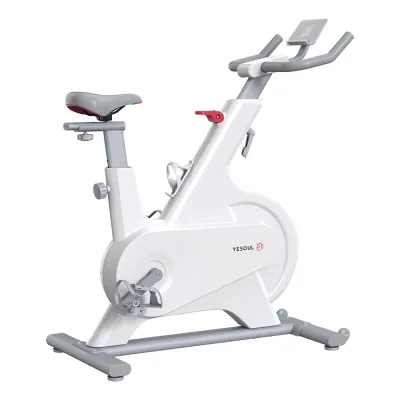
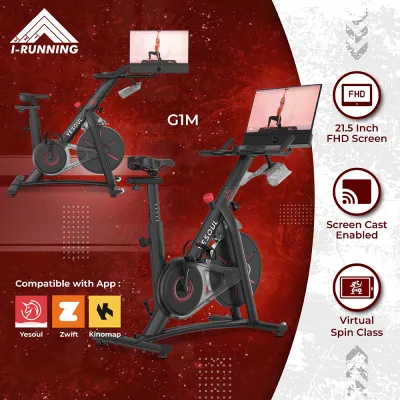
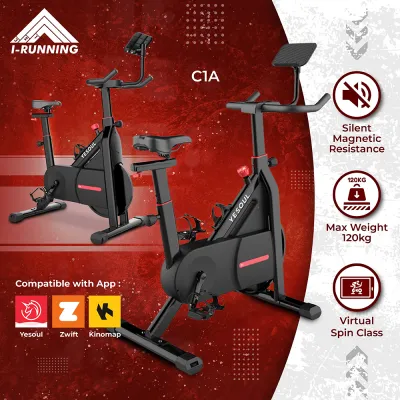
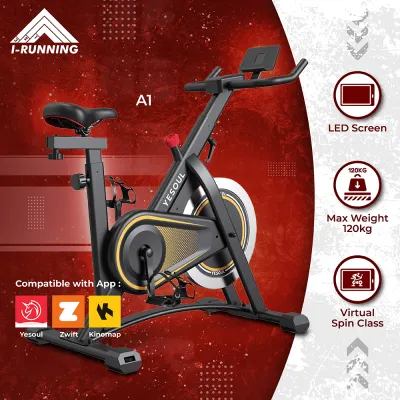
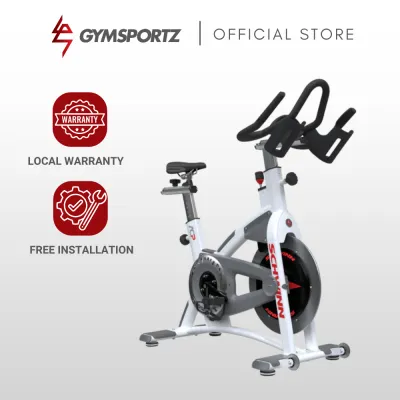
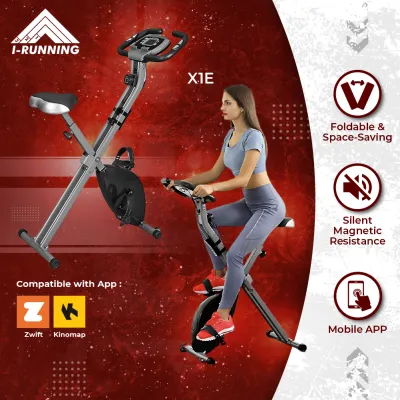
Prices are valid at publication and may change. Please refer to the product page for the latest price.
Do not forget to check your ceiling height, especially if you plan to perform standing climbs or if you are a taller rider. When standing on the pedals at their highest point, your head will rise significantly higher than your normal standing height. Ensure there is ample clearance between your head and any ceiling fans, light fixtures, or low-hanging beams.
Finally, verify the widths of your doorways, hallways, and lift entryways. Many HDB flats have narrow corridors or tight turns leading into bedrooms. Ensure the boxed or assembled bike can physically pass through these entry points during delivery and when moving it between rooms.
Standard Spinning Bike Footprints and Clearances
Standard indoor cycling bikes typically range from 110 cm to 140 cm in length and 50 cm to 65 cm in width. While these dimensions seem compact on paper, they represent the static physical footprint of the machine when it is completely idle.

The operational footprint is always larger. When you ride, your body sways slightly, your elbows flare out, and the handlebars or console may extend beyond the front base stabilizer. Additionally, your feet and knees require lateral clearance as they rotate through the pedal stroke.
Because designs vary widely between brands, always check the manufacturer’s official specification sheet for the exact dimensions of the base stabilizers, handlebar width, and maximum height adjustments. Do not assume all indoor bikes share the same compact frame.
Keep in mind that bikes designed with heavier flywheels or robust steel frames often feature a longer and wider base stabilizer to ensure stability during high-intensity, out-of-saddle efforts. A wider base prevents the bike from rocking, but it also demands a larger share of your floor space.
Space-Saving Features for Compact Layouts
If you are working with limited square footage, look for specific design features that make a spinning bike easier to manage in tight spaces. Built-in transport wheels on the front stabilizer are essential. These wheels allow you to tilt the bike forward and roll it into a closet, corner, or behind a screen when your workout is finished.
Adjustable seat and handlebar posts also help minimize the bike’s physical and visual profile. Lowering the handlebars and seat to their lowest positions after a workout can make the room feel less cluttered and prevent the bike from blocking natural light or sightlines.
Folding spinning bikes are available on the market, but they come with distinct trade-offs. While they fold to save space, they generally feature lighter frames, smaller flywheels, and lower weight capacities. For intense training, a rigid, non-folding frame offers far superior stability and safety.
Pay attention to the pedal design as well. Compact pedals or dual-sided pedals that accommodate both cycling shoes and standard athletic shoes keep the lateral profile slim. Avoid oversized pedal cages if you need to squeeze the bike into a narrow gap.
Strategic Placement for HDB Rooms
Integrating a spinning bike into an HDB flat requires strategic placement to maintain a harmonious living environment. In the living room, positioning the bike near a balcony door or a large window is ideal. This placement provides natural ventilation and a view, while keeping the main walkways between the kitchen, bedrooms, and main entrance completely clear.
If you prefer to place the bike in a bedroom or study, utilize corners or the space directly behind a door. If placing it behind a door, ensure the door can still open fully to prevent accidental collisions if someone enters the room while you are riding.
In multi-purpose areas, use a dedicated equipment mat or a low-pile rug to visually define your workout zone. This not only keeps your exercise space organized but also protects your flooring from sweat, scuffs, and the high-frequency vibrations generated during fast pedaling.
Always avoid placing the bike in high-traffic choke points, such as narrow hallways or directly in front of built-in wardrobes, utility closets, or household shelters. The bike must never block access to essential appliances, electrical distribution boards, or emergency exits.
Common Sizing and Placement Mistakes to Avoid
One of the most common mistakes is ignoring the swing radius of the handlebars and the full extension of the pedals. Ensure that when the handlebars are turned or when you are pedaling at high speed, no part of your body or the machine strikes nearby walls or furniture.
Placing the bike too close to a wall is another frequent error. This restricts airflow around your body, leading to overheating during intense sessions. Furthermore, sweat can easily splatter onto walls, causing unsightly stains, paint peeling, or damage to wallpaper over time.
Many buyers forget to measure the delivery path, only to find that the fully assembled bike cannot navigate the tight turn from the living room corridor into the spare bedroom. Measure every doorway and corner along the path before placing your order.
Lastly, do not overlook the necessity of a dedicated high-density equipment mat. Placing a heavy spinning bike directly on HDB vinyl, laminate, or tile flooring can cause permanent indentation, scratching, and significant noise transfer to the neighbors living directly below you.
Frequently Asked Questions (FAQ)
Can I keep a spinning bike on an HDB balcony?
Keeping a spinning bike on an HDB balcony is generally not recommended due to Singapore’s tropical climate. High humidity, heavy rain splashes, and direct sunlight can rapidly degrade plastic parts, damage electronic consoles, and cause the steel frame to rust. If a balcony is your only option, you must use a heavy-duty, weatherproof cover when the bike is not in use, and regularly inspect the mechanical parts for signs of corrosion. Additionally, check your estate’s guidelines and ensure the balcony floor can safely support the concentrated weight of the bike and rider.
Will a spinning bike cause noise complaints from downstairs neighbors?
Spinning bikes are generally much quieter than treadmills because they do not involve heavy foot strikes or impact noise. However, the high-speed rotation of the flywheel and drive belt can still transmit low-frequency vibrations through the floor. To prevent noise complaints, place a high-density rubber equipment mat under the bike to absorb these vibrations. You should also regularly check and adjust the bike’s leveling feet to ensure the frame sits perfectly flat on the floor, preventing any wobbling or rattling during high-speed sprints.
Community discussion
Share your experience or ask a question. Comments are reviewed before publication.