
Evaluating whether a standard men’s umbrella is sufficient for a round of golf in Singapore depends entirely on where you are standing on the course when the rain starts. If your golf activities are limited to walking from the car park to the clubhouse or practicing under the shelter of a driving range, a standard men’s umbrella is perfectly adequate. However, if you are playing a full 18 holes on an exposed fairway, a standard umbrella will quickly prove insufficient against Singapore’s intense tropical downpours and sudden gusts. For active play, a dedicated golf umbrella is not a luxury; it is a structural necessity to protect both yourself and thousands of dollars in golf equipment.
How Singapore's Weather Impacts Your Golf Gear and Comfort
Singapore’s tropical climate is characterized by high temperatures, persistent humidity often exceeding 80 percent, and abundant rainfall. The region experiences two distinct monsoon seasons—the Northeast Monsoon from December to March and the Southwest Monsoon from June to September—separated by inter-monsoon periods. During these times, sudden and heavy afternoon thunderstorms are common, often accompanied by strong, gusty winds. On an open golf course, there are very few natural windbreaks, leaving players and their gear completely exposed to the elements.
Navigating an open fairway during a sudden downpour presents unique challenges. Unlike a brief walk on a city street, a round of golf requires you to remain outdoors for four to five hours. If your gear gets wet, it stays wet. High humidity prevents natural drying, meaning damp equipment remains soggy for the rest of the day. This moisture poses a direct threat to expensive golf gear. Leather grips on your clubs can become dangerously slick, premium leather golf bags can suffer water damage, and sensitive electronics like laser rangefinders or GPS units can malfunction if exposed to heavy rain.
Products mentioned in this guide
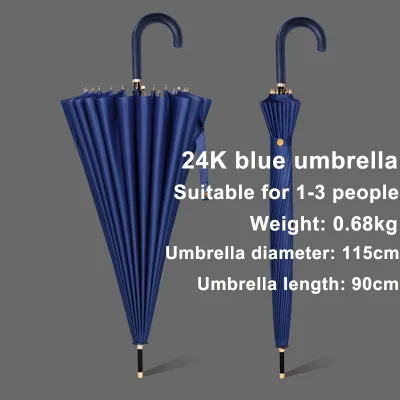
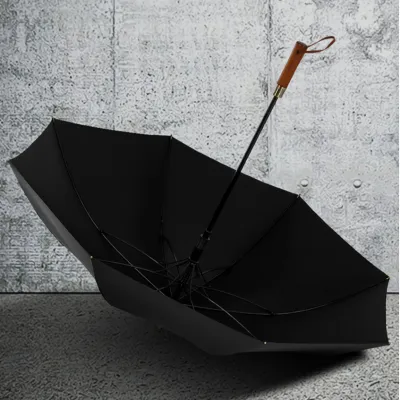
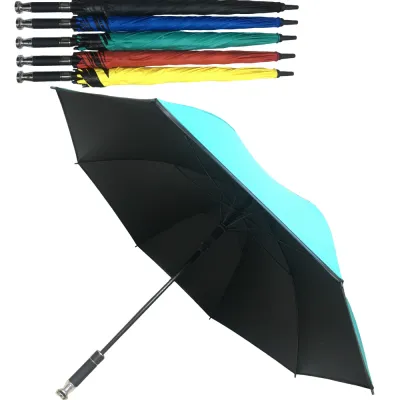
Prices are valid at publication and may change. Please refer to the product page for the latest price.
When managing these conditions, it is crucial to understand that protecting yourself is entirely different from protecting your gear. While a standard personal umbrella might keep your head and shoulders dry, it cannot offer the wide physical footprint needed to shield a bulky golf bag, a pushcart, and your spare towels. Furthermore, golf courses in Singapore are equipped with automated lightning detection systems. When the warning siren sounds, you must immediately stop play, lower your umbrella, and walk to the nearest designated storm shelter. Equipment can be replaced, but personal safety on an exposed course always comes first.
Standard vs. Golf Umbrellas: Specs and Features to Check
Understanding the structural differences between a standard everyday umbrella and a purpose-built golf umbrella is essential before making a purchase. Many golfers assume that any large umbrella will suffice, but the engineering requirements for open-field sports gear are far more demanding than those for urban rain protection. By checking specific technical features on the product label or manufacturer specifications, you can easily determine whether an umbrella is built to survive the golf course.

Canopy Size and Coverage
The most obvious difference lies in the canopy size, which you can verify by checking the arc diameter on the product packaging. Standard men’s umbrellas typically feature an arc diameter ranging from 38 to 44 inches (approximately 96 to 112 cm). This size is optimized for single-person use on city pavements, allowing you to navigate narrow spaces without bumping into others. However, this compact footprint is entirely inadequate for the golf course.
A dedicated golf umbrella features a much larger arc, typically ranging from 58 to 68 inches (approximately 147 to 172 cm). This massive canopy is designed to create a wide protective dome. This footprint is necessary because you must simultaneously shield yourself, your active club, and your entire golf bag. Trying to use a standard umbrella on a pushcart usually results in rain pouring directly onto your clubs, ruining your grips and soaking your gear. The trade-off for this superior coverage is physical bulk; a larger canopy is heavier to carry and requires more physical effort to control in a breeze.
Wind Resistance and Frame Materials
On an open fairway, wind is often a greater challenge than the rain itself. Standard umbrellas are commonly built with rigid metal or aluminum shafts and ribs. While these materials are lightweight and inexpensive, they lack flexibility. Under the sudden pressure of a tropical gust, a rigid metal frame is highly prone to bending permanently or snapping at the joints, rendering the umbrella useless.
To withstand open-field winds, a high-quality golf umbrella utilizes flexible fiberglass for both the shaft and the ribs. Fiberglass can bend significantly under pressure and snap back into its original shape without sustaining damage. Additionally, premium golf umbrellas feature a double-canopy, or vented, design. This construction incorporates two overlapping layers of fabric with built-in mesh vents. When a strong gust of wind hits the underside of the umbrella, the air passes harmlessly through the vents instead of catching the canopy like a sail. This design prevents the umbrella from inverting or pulling out of your hands.
Grip Design and Cart Compatibility
The handle of an umbrella dictates how comfortable and secure it is to use during a long round. Standard men’s umbrellas often feature curved handles made of polished wood, slick plastic, or leather. While stylish for city walks, these curved handles are incredibly difficult to hold securely when your hands are wet or sweaty from Singapore’s intense humidity. They also lack the ergonomic design needed to prevent wrist fatigue over several hours of use.
In contrast, golf umbrellas are designed with straight, cylindrical handles. These handles are typically crafted from non-slip materials such as textured rubber, dense EVA foam, or specialized polymers that retain their grip even when completely saturated with water. This ensures you can maintain a firm hold while walking between shots. Additionally, the straight handle is specifically engineered to slide securely into the universal umbrella holder attachments found on most golf pushcarts and electric trolleys. A curved handle will not fit into these holders, forcing you to carry the umbrella manually and leaving your cart completely exposed.
When a Standard Men's Umbrella is Sufficient
Despite the clear advantages of a golf-specific model, there are practical scenarios where a standard men’s umbrella is perfectly sufficient. If your golfing activities are primarily indoor-focused, such as practicing at a multi-tier covered driving range, you are already protected from the elements by the facility’s roof. In this case, a standard umbrella is all you need to make the brief walk from your car to the hitting bays.
Similarly, if you only play casual, short rounds on executive courses and immediately abandon the game to head to the clubhouse at the first sign of a drizzle, investing in a heavy-duty golf umbrella may be unnecessary. A standard, compact men’s umbrella is lightweight and highly portable. It can be easily tucked into the side pocket of a lightweight carry bag or stored in your car’s glove box without adding significant weight or taking up valuable space.
For golfers who strictly play in clear weather and only want a basic backup option for an unexpected light shower near the clubhouse, a standard umbrella is a practical choice. It avoids the extra cost of specialized sports gear and serves as a versatile tool that transitions easily from your daily office commute to the golf club. If your primary goal is simple personal protection during light rain without the need to shield a large golf bag, a standard umbrella is a sensible, lightweight solution.
When a Dedicated Golf Umbrella is Essential
If you are a committed golfer who plays full 18-hole rounds on exposed courses, a dedicated golf umbrella is an essential piece of equipment. When a sudden tropical downpour strikes while you are on the far side of the course, you may be far from the nearest shelter. In these situations, a standard umbrella will quickly fail, leaving both you and your equipment completely soaked.
Protecting high-value gear is the primary reason to carry a golf umbrella. Modern golfers carry expensive tools, including laser rangefinders, GPS watches, premium leather gloves, and high-end clubs with delicate leather or polymer grips. Once a club grip becomes thoroughly wet, it loses its traction, making it nearly impossible to swing safely and effectively. A golf umbrella’s massive canopy allows you to stand underneath it with your golf bag, providing a dry space where you can dry your hands, wipe your club face, and execute your shot without exposing your gear to the downpour.
There is also a critical safety aspect to consider. Cheap, standard umbrellas with metal frames can easily break in high winds, creating sharp, exposed metal ribs that pose a physical hazard. A sturdy, fiberglass-framed golf umbrella is engineered to remain stable and intact in severe weather, protecting you from flying debris and structural failure as you make your way to safety. However, remember that equipment cannot replace proper safety judgment. If the course’s automated lightning sirens sound, you must immediately lower your umbrella, step away from your clubs, and seek shelter in a designated lightning-safe structure.
Maintaining Your Umbrella in High Humidity
Singapore’s persistent high humidity poses a constant threat to the lifespan of your golf gear. If you do not care for your umbrella properly, it can quickly develop mold, mildew, and unpleasant odors, and the fabric can lose its water-resistant properties. Fortunately, basic maintenance is simple and highly effective at preserving your investment.
After any wet round, never collapse your wet umbrella and leave it stuffed inside your golf bag, car boot, or locker. This dark, damp environment is the perfect breeding ground for mold and mildew, which can degrade the canopy fabric and cause bad smells. Instead, always open the umbrella fully in a well-ventilated indoor space or a shaded outdoor area and allow it to air-dry completely before folding it away.
While the umbrella is drying, take a moment to wipe down the fiberglass or metal frame joints with a clean, dry microfiber cloth to remove any trapped moisture or dirt. You should also inspect the hook-and-loop (Velcro) tie straps. These straps frequently collect grass clippings, sand, and dirt from the course, which can reduce their stickiness over time. Gently brush out any debris to ensure the strap can hold the canopy tightly when folded.
Finally, periodically inspect the canopy fabric for signs of wear. Over time, exposure to intense UV rays and heavy rain can wear down the manufacturer’s durable water-repellent (DWR) coating. If you notice that water is soaking into the fabric rather than forming clean beads and rolling off, you can apply a specialized fabric waterproofing spray to restore its performance. Regular inspections ensure your umbrella remains fully functional and ready for the next sudden downpour.
Frequently Asked Questions (FAQ)
Can I use a golf umbrella for daily commuting in Singapore?
While a golf umbrella offers exceptional rain protection and wind resistance, it is generally impractical for daily urban commuting in Singapore. The large canopy and long, non-collapsible shaft make it heavy to carry and highly cumbersome on crowded MRT trains, public buses, or narrow, sheltered walkways in the city. You also run a high risk of accidentally bumping into or poking other pedestrians. For daily city commuting, a compact, folding standard umbrella is a much more practical and polite choice.
Are double-canopy umbrellas really necessary for golf?
While a double-canopy design is not strictly mandatory for a light, windless drizzle, it is highly recommended for playing golf in Singapore. The open landscape of golf courses makes them highly vulnerable to sudden, powerful wind gusts, especially during monsoon transitions. A single-canopy umbrella acts like a sail, catching the wind and easily flipping inside out, which can snap the frame. A double-canopy design allows wind to pass safely through the built-in vents, keeping the umbrella stable and making it significantly easier to hold in stormy conditions.
Community discussion
Share your experience or ask a question. Comments are reviewed before publication.