
Choosing the right kickboard depends on your swimming experience, shoulder mobility, and specific training objectives. While standard rectangular boards offer maximum buoyancy for beginners and pure leg endurance, hydrodynamic and alignment kickboards cater to intermediate and advanced swimmers focusing on speed, body position, and core engagement. Selecting the wrong design can lead to poor posture or unnecessary shoulder strain, making it essential to match the board’s physical profile to your personal fitness goals.
Comparing the Three Main Kickboard Designs
Kickboards are not one-size-fits-all tools; their physical shapes directly influence how you interact with the water. The design of a board dictates its buoyancy profile, the amount of drag it creates, and the alignment of your spine during kick sets. By examining standard, hydrodynamic, and alignment designs, you can identify how each shape alters your body position and matches your current skill level.
Standard Rectangular Kickboards
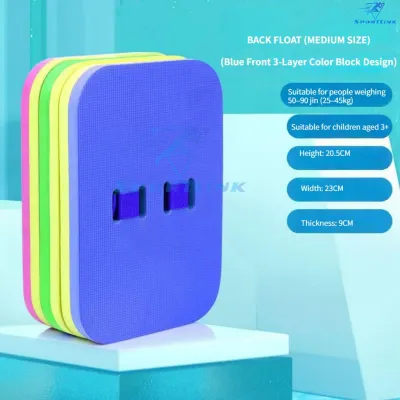
The standard rectangular kickboard is the most recognizable training aid in public pools, featuring a flat, broad surface with rounded top corners. This classic design provides high buoyancy, keeping your upper body elevated high above the water surface. This elevation makes it exceptionally stable, allowing swimmers to isolate their leg muscles completely without worrying about staying afloat. It is highly suitable for beginners learning basic kicking mechanics or swimmers recovering from lower-body injuries who need a reliable, high-buoyancy support.
Products mentioned in this guide
![[SG Stock] Swimming Kickboard Float Kids Adults Kick Board Learn To Swim Safety Pool Aid Plate Children](https://img.lazcdn.com/g/p/19e9b69ae94352f2a472a5e2355a4741.jpg_400x400q80.jpg_.webp)
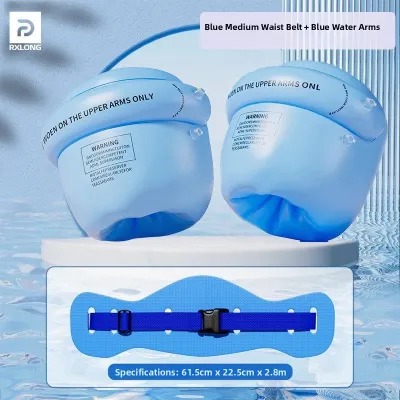
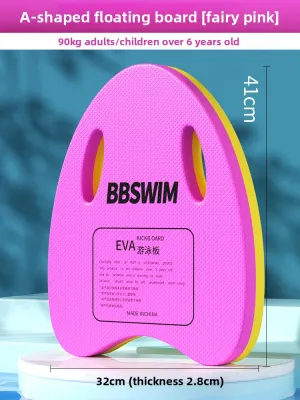
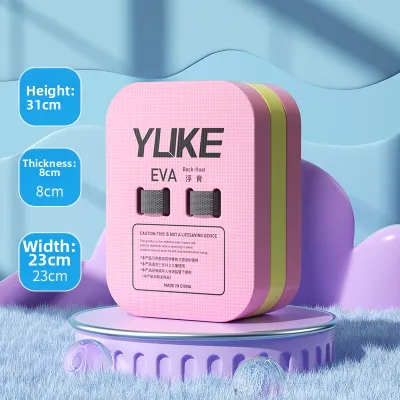
Prices are valid at publication and may change. Please refer to the product page for the latest price.
However, this high-riding position comes with distinct biomechanical trade-offs. Because the board sits flat against the water, it creates significant hydrodynamic drag, requiring more effort to push forward during intense sets. More importantly, keeping your head and chest elevated for extended periods can arch your lower back and place excessive strain on your shoulders and neck. Swimmers with pre-existing shoulder tightness or rotator cuff issues may find that the wide grip and elevated position aggravate their discomfort during long training sessions.
Hydrodynamic Kickboards
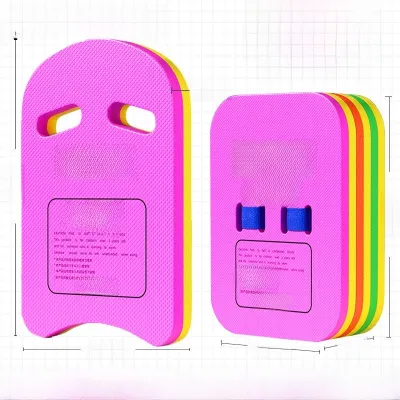
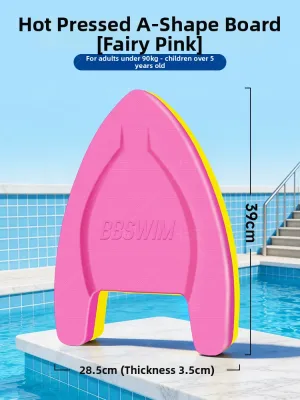
Hydrodynamic kickboards feature a streamlined, tapered profile, often resembling a teardrop, wedge, or V-shape. These boards are engineered to cut through the water with minimal resistance, making them ideal for high-tempo kick sets and sprint training. The curved edges and narrower front profile allow water to flow smoothly around the board rather than pushing directly against it. This reduction in drag enables advanced swimmers to maintain a realistic swimming speed even while isolating their legs.
Unlike standard boards, hydrodynamic designs typically offer lower buoyancy. They are designed to sit lower in the water column, which forces the swimmer to engage their core muscles to maintain a horizontal body line. This lower profile reduces the upward pressure on the shoulders, allowing for a more natural, relaxed arm extension. Because they require active core stabilization to keep the hips high, these boards are best suited for intermediate to advanced swimmers who already possess good body awareness and basic core strength.
Alignment Kickboards
Alignment kickboards, sometimes referred to as streamlined or snorkel-compatible boards, feature a highly specialized, compact shape. Many of these designs are center-mounted or feature a hand strap on the top, allowing you to hold the board with a single hand or in a tight streamline position. The primary purpose of an alignment board is to promote a neutral spine and a natural head-down position. Swimmers often use them in conjunction with a swim snorkel, allowing them to keep their face in the water while executing kick drills.
This design encourages proper body rotation and hip alignment, closely mimicking the posture of actual swimming. Some alignment models also feature a dual-use hybrid design, allowing them to double as a pull buoy when placed between the thighs. While highly effective for technique refinement and postural correction, alignment boards offer very little buoyancy and stability. Beginners may struggle to keep their hips from sinking, making these boards most valuable for competitive swimmers, triathletes, and those focused on technical precision.
Matching Board Shapes to Specific Training Goals
To select the right kickboard, you must align its physical characteristics with your specific training objectives in the pool. If your primary goal is to build basic leg endurance or recover from an injury, buoyancy should be your main priority. Standard rectangular boards provide the stable platform needed to focus entirely on quad, hamstring, and calf activation without the distraction of sinking hips. This high level of support is also beneficial in crowded public pools or ActiveSG facilities where maintaining a steady, predictable pace is more important than high-speed maneuvering.

For swimmers aiming to improve their sprint times or match their kicking tempo to their full-stroke speed, drag reduction is paramount. A hydrodynamic board allows you to train at higher velocities without the shoulder fatigue associated with pushing a flat wall of foam through the water. This design helps competitive swimmers transition their kick training directly into their main swim sets, as the muscular demands and joint angles closely mirror high-speed swimming.
If your training focus is technique, posture, and core engagement, an alignment board is the most effective tool. By allowing your head to remain down in a neutral position, these boards prevent the lower back arching that often ruins body alignment. This setup forces your abdominal and lower back muscles to work continuously to keep your hips near the surface, building the functional core strength required for an efficient freestyle or butterfly stroke. Triathletes, in particular, benefit from this design as it trains the body to maintain a streamlined profile, conserving energy for the bike and run legs.
Material, Size, and Grip Features to Verify
Before purchasing a kickboard from an online marketplace or local sporting goods store, you should verify several physical specifications on the product label or description. The primary material to look for is high-density Ethylene-Vinyl Acetate (EVA) foam. High-quality EVA foam features a closed-cell structure that resists water absorption, ensuring the board retains its buoyancy over time and does not become waterlogged. Check the product specifications for density indicators; a firmer, less pliable board generally offers better durability and resistance to the chlorine and UV exposure typical of outdoor pools in Singapore. While basic boards may cost as little as S$10, specialized alignment or hydrodynamic models can range from S$25 to S$50, making it important to verify these features before investing.
Grip features are another critical factor for comfort and safety. Look for boards with contoured hand grips, molded finger grooves, or undercut edges. These features allow you to maintain a secure hold without tightly squeezing the board, which helps prevent wrist fatigue and forearm cramping. Flat-edged boards require a stronger grip, which can translate to tension up the arm and into the shoulder joint.
Finally, verify the size and thickness of the board relative to your body size and carrying method. Adult swimmers generally require a standard size (typically around 40 to 45 centimeters in length) to provide adequate support, while youth swimmers or smaller-framed adults should look for junior sizes (around 35 centimeters) to avoid over-extending their shoulders. If you commute to the pool via public transport, consider how the board fits into your wet bag; compact alignment boards are much easier to pack into a standard backpack than bulky rectangular models.
Decision Framework: Which Kickboard Should You Get?
To make your final decision, evaluate your current swimming level, physical comfort, and training environment. If you are a beginner, focus on basic leg conditioning, or prefer a highly stable platform for casual lap swimming, choose a standard rectangular kickboard. This option provides the reliable buoyancy needed to build confidence and leg strength.
If you are an intermediate or advanced swimmer looking to minimize shoulder strain during high-intensity sets, select a hydrodynamic kickboard. Its tapered shape will allow you to maintain speed while keeping your shoulders in a more natural, relaxed position.
If your primary goal is to correct your body posture, engage your core, and practice swimming with a neutral spine, choose an alignment kickboard. This design is best paired with a swim snorkel to maximize its technical benefits.
Before purchasing any board, verify your personal physical limits. If you experience sharp shoulder pain or neck strain during kick sets, stop immediately and consult a professional coach or physiotherapist to adjust your posture or switch to a lower-buoyancy board. If you train under a coach, consult their specific gear requirements, as some training programs mandate specific board types for group drills.
Frequently Asked Questions (FAQ)
Can I use a standard kickboard for core training?
While you can use a standard kickboard for core training, its high buoyancy makes it less than ideal. The elevated position of a standard board pushes your chest up, which naturally causes your lower back to arch and relaxes your abdominal muscles. To engage your core effectively with a standard board, try holding it vertically in the water to increase resistance, or hold it at the bottom edge while keeping your face in the water to flatten your spine. For dedicated core work, however, a lower-buoyancy hydrodynamic or alignment board is generally more effective.
How do I clean and store my EVA foam kickboard?
To prolong the lifespan of your EVA foam kickboard, rinse it thoroughly with fresh, clean water after every pool session to remove chlorine, salt, and pool chemicals. Allow the board to air-dry completely in a shaded, well-ventilated area before packing it away. Avoid leaving your kickboard in direct sunlight, such as on a balcony or in a hot car, as UV rays and extreme heat can warp the foam and cause it to degrade. Never use harsh chemical cleaners or abrasive brushes, as these can damage the closed-cell structure and lead to water absorption.
Community discussion
Share your experience or ask a question. Comments are reviewed before publication.