
Using a stretching board—often referred to as a slant board—after a run is an exceptionally effective way to target the tight muscles of your lower legs, specifically the gastrocnemius, soleus, and Achilles tendon. By placing your feet on an angled surface, you can achieve a deeper, more consistent stretch than is typically possible on flat ground. This targeted tension helps alleviate the tightness that accumulates from repetitive impact, promoting better circulation and supporting overall lower-body flexibility.
To get the most out of this recovery tool without risking injury, you must approach it with a focus on controlled alignment and gradual progression. Post-run muscles are warm and pliable, making them highly receptive to static stretching, but they are also fatigued and vulnerable to overstretching. By setting up your equipment correctly, choosing a conservative incline, and maintaining proper posture, you can transform a simple piece of equipment into a cornerstone of your daily running recovery routine.
Preparing Your Space and Equipment
Before stepping onto a stretching board, a thorough safety inspection of both your equipment and your immediate environment is essential. Begin by examining the structural integrity of the board, paying close attention to the hinge mechanisms, adjustment slots, and locking pins. Ensure that the support bar sits securely in its designated groove and cannot slip out under pressure. The non-slip surface on the top of the board should be clean and free of debris, providing adequate traction for your running shoes or bare feet.
Products mentioned in this guide
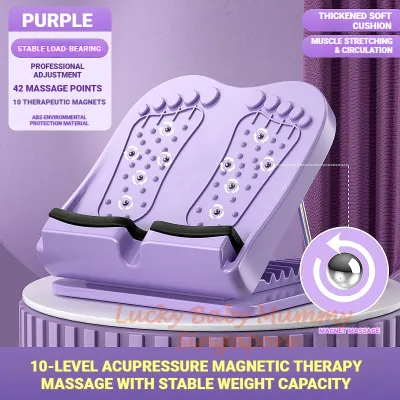
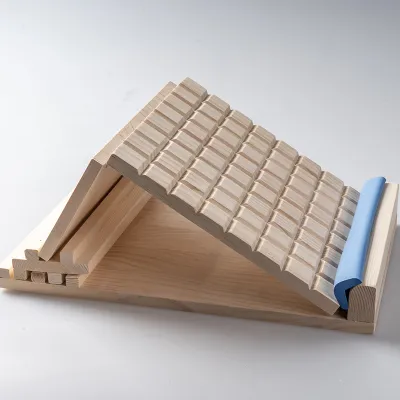
![[Metaverse] Portable Professional Wooden Slant Board Adjustable Foot Incline Board Calf Ankle Stretcher Home Gym](https://img.lazcdn.com/g/p/15635aceeefb6abcdbcf4c041f5f1a56.jpg_400x400q80.jpg_.webp)
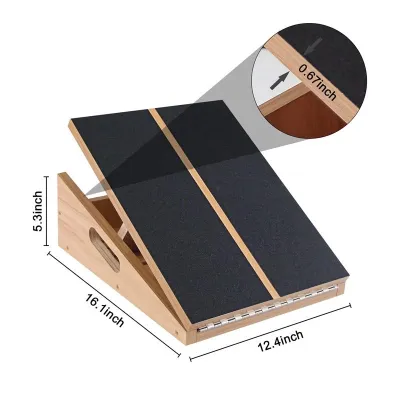
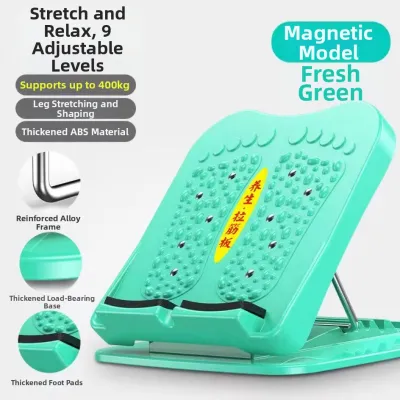

Prices are valid at publication and may change. Please refer to the product page for the latest price.
The placement of the board is equally critical for maintaining balance during your routine. Position the unit on a flat, level, and non-slip floor surface, such as a firm exercise mat or a low-pile carpet. Avoid placing it on loose rugs or highly polished wooden floors that might slide when you apply weight. Leave ample clearance around the board so you can easily step off in any direction, and position it within arm’s reach of a wall or a sturdy chair to assist with balance.
Finally, always review the manufacturer’s specifications regarding weight limits and maximum incline settings. Different materials, such as heavy-duty wood or molded plastic, have distinct load capacities that must be respected to prevent structural failure. If you are using a new board, familiarize yourself with its adjustment mechanism while it is unloaded, ensuring you understand how to lock each angle level securely before attempting to stand on it.
Step-by-Step Post-Run Stretching Routine
Transitioning from high-impact running to static stretching requires a deliberate shift in your physical state. Rather than stepping directly from a hard run onto the stretching board, allow your body to transition smoothly by completing a five-to-ten-minute cool-down walk. This gradual reduction in activity helps lower your heart rate and prevents blood pooling in your lower extremities, ensuring your muscles remain warm and receptive to stretching without being subjected to sudden, cold stress.

Once your heart rate has stabilized, approach the board with a focus on total-body alignment. Stand tall with your feet hip-width apart, roll your shoulders back and down, and gently engage your core muscles to support your spine. Maintaining an upright, neutral posture ensures that the stretch is directed precisely through your calves and hamstrings rather than being absorbed by an arched lower back or slumped shoulders.
For anyone new to using a slant board, or if you feel slightly unsteady after an exhausting run, always use an external support for balance. Place your hands lightly on a nearby wall or the back of a heavy chair. This support is not meant to bear your weight, but rather to stabilize your torso, allowing you to focus entirely on the sensation in your lower legs without the distraction of trying to balance on an incline.
Adjusting the Incline for Your Flexibility Level
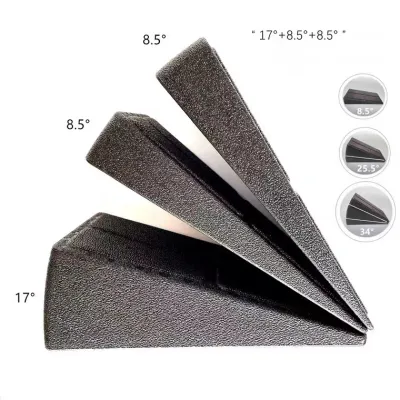
Selecting the correct angle on your stretching board is a balance between finding a productive stretch and avoiding acute tissue strain. Always begin your post-run session at the lowest incline setting, which is typically between 15 and 20 degrees. This conservative starting point allows you to assess your baseline tightness on that specific day, which can vary significantly depending on your running distance, terrain, and footwear.
As you stand on the board, pay close attention to the feedback from your muscles and joints. A productive stretch should feel like a deep, dull, and manageable pulling sensation throughout the belly of the calf muscle. If you experience sharp, shooting, or localized pain in your ankle joint, the back of your heel, or behind your knee, the angle is too steep. These sensations often indicate joint compression or nerve irritation rather than beneficial muscle elongation.
Only increase the incline of the board incrementally when you can comfortably maintain a relaxed, upright posture at the current level for several minutes without any discomfort. If you feel the need to lean forward at the hips or bend your knees excessively to tolerate the angle, the incline is too high. Lower the board back down to a manageable setting, as forcing a steep angle will only trigger protective muscle guarding and diminish the effectiveness of your recovery.
Performing the Core Calf and Achilles Stretches
To execute the primary calf stretches effectively, step onto the board ensuring full foot placement with your heels aligned near the bottom edge. Your weight should be distributed evenly across the entire surface of both feet, rather than concentrated solely on your heels or the balls of your feet. Keep your feet parallel to one another, pointing straight ahead, as turning your toes inward or outward alters the line of pull and reduces the targeted benefit to the posterior chain.
The key to targeting the two major muscles of the calf lies in the position of your knees. To stretch the gastrocnemius—the larger, outer calf muscle that crosses both the knee and ankle joints—keep your knees fully extended but not locked out. To shift the focus to the soleus—the deeper muscle that lies underneath the gastrocnemius—softly bend your knees while keeping your heels firmly planted on the board. Alternating between these two positions ensures comprehensive recovery for the entire lower-leg complex.
While performing these stretches, focus on deep, diaphragmatic breathing rather than watching a rigid timer. Inhale deeply through your nose, allowing your abdomen to expand, and exhale slowly through your mouth, consciously releasing tension in your lower legs with each breath. Aim to hold each position until you feel a noticeable release in the muscle tissue, which typically occurs within thirty to sixty seconds of relaxed, static holding.
Relieving Foot and Arch Tension
Many modern stretching boards feature textured surfaces, raised ridges, or integrated massage nodes designed to target the soles of your feet. This feature is highly beneficial for runners, as the plantar fascia and intrinsic foot muscles endure significant stress during every foot strike. By utilizing these textured elements, you can perform a gentle self-myofascial release that complements the deeper calf stretches.
To address arch tension, slowly shift your body weight from side to side, allowing the textured surface of the board to press into the arches of your feet. You can also gently slide your foot forward and backward over the ridges, applying light pressure to sensitive areas. This movement helps stimulate local blood flow and break up minor tissue adhesions along the bottom of the foot, promoting overall foot mobility.
It is vital to monitor the intensity of this pressure to avoid bruising or aggravating the delicate tissues of your arches. If a massage node feels excessively painful or sharp, immediately reduce the amount of weight you are transferring to that foot. Always alternate feet systematically, spending an equal amount of time on each side to ensure balanced recovery and prevent asymmetrical gait patterns during your next run.
Form Mistakes and Safety Stop Conditions
One of the most common mistakes when using a stretching board is bouncing or using rapid, jerky movements to force a deeper stretch. This ballistic action triggers the stretch reflex—an involuntary muscle contraction designed to protect the muscle from tearing—which actually causes the muscle to tighten rather than relax. All movements on the board must be slow, smooth, and controlled, allowing the nervous system to adapt and let the muscle fibers safely elongate.
Another frequent error is allowing your knees to hyperextend or your lower back to arch excessively in an attempt to compensate for limited ankle mobility. Hyperextending the knees places undue stress on the posterior joint capsule and ligaments, while arching the lower back shifts your center of gravity and can lead to lumbar strain. Keep your core engaged, your pelvis neutral, and a micro-bend in your knees to protect your joints throughout the routine.
Safety must always be your primary concern during post-run recovery. Stop using the stretching board immediately if you experience sharp pain, numbness, tingling, or a burning sensation in your feet, ankles, or calves. These symptoms can indicate nerve compression, acute tendon strain, or circulatory issues that require immediate rest.
If you experience persistent tightness that does not improve with regular stretching, noticeable asymmetry between your left and right legs, or any suspected injury, consult a qualified physiotherapist or medical professional. A professional can assess your biomechanics, identify underlying imbalances, and provide a tailored rehabilitation plan. Equipment like a stretching board is a valuable tool for maintenance, but it cannot replace professional medical evaluation or structured physical therapy.
Building a Consistent Post-Run Recovery Habit
Integrating the stretching board into your regular routine requires a balanced approach tailored to your training volume and intensity. For casual runners training two to three times a week, using the board for five to ten minutes after each run is often sufficient to maintain baseline flexibility. If you are engaging in high-mileage marathon training or intense speed workouts, you may benefit from daily sessions on the board, even on non-running days, to manage chronic tightness.
To maximize your recovery, combine your slant board routine with other low-risk recovery practices. For example, you can use a foam roller on your quadriceps, IT bands, and hamstrings before stepping onto the board to address tightness throughout the entire kinetic chain. Additionally, prioritize proper hydration and balanced nutrition immediately following your runs, as hydrated muscle tissue is significantly more pliable and resilient to stretching.
Keep a simple log of your progress, noting the incline level that feels comfortable and any changes in your overall lower-body mobility. Over several weeks, you may find that an angle which once felt challenging now feels easy, indicating an improvement in your ankle dorsiflexion and calf flexibility. Use these observations to adjust your incline settings safely and gradually, ensuring you continue to challenge your muscles without exceeding your safe physical limits.
Frequently Asked Questions (FAQ)
Can I use a stretching board if I have plantar fasciitis?
If you have active, inflamed plantar fasciitis, you must obtain professional medical clearance before using a stretching board. While gentle calf stretching is often a key component of managing this condition, an excessive incline or improper form can place too much tension on the plantar fascia, potentially worsening the inflammation. A medical professional can guide you on the exact angles and durations that are safe for your specific stage of recovery.
How long should I hold each stretch on the board?
Rather than adhering to a rigid, universal timer, prioritize consistent breathing and muscle relaxation. General flexibility guidelines suggest holding static stretches for 30 to 60 seconds per position to allow the muscle fibers to release. However, if you feel your muscles tensing up or if you cannot maintain a steady, relaxed breath, it is better to step off the board early, lower the incline, and try again.
Should I use the stretching board before or after my run?
The stretching board is best utilized after your run as part of your cool-down routine. Static stretching on an incline is designed to relax and elongate muscles, which can temporarily reduce muscle power if performed immediately before high-impact exercise. Before a run, focus on dynamic movements like leg swings and high knees to warm up your joints, and save the static slant board stretches for when your muscles are warm and ready to recover.
Community discussion
Share your experience or ask a question. Comments are reviewed before publication.