
A stretching board, commonly referred to as a slant board, is an invaluable tool for runners looking to optimize their lower-limb recovery, improve ankle mobility, and manage calf tightness. In Singapore, where many runners log high mileages on hard concrete pavements, park connectors, and asphalt roads, the repetitive impact can lead to significant muscle fatigue and tightness in the lower legs. Incorporating a dedicated incline board into your post-run routine provides a structured, repeatable, and biomechanically sound way to stretch the calf muscles and the Achilles tendon. Unlike traditional wall stretches or curb steps, a stretching board offers a stable, measurable angle that ensures your stretching is consistent and highly targeted.
Choosing the right stretching board requires understanding your specific training needs, your physical space, and the biomechanics of running recovery. Whether you are training for a local marathon or enjoying casual weekend jogs along East Coast Park, proper lower-leg recovery can make a substantial difference in your overall comfort and performance. By selecting a board that matches your flexibility level and body weight, you can establish a safe, progressive recovery routine that supports your long-term running goals.
Why Runners Need a Dedicated Stretching Board
Running places immense, repetitive stress on the lower legs, with the calf muscles and Achilles tendons absorbing several times your body weight with every stride. Over time, this continuous loading can lead to adaptive shortening of the muscle fibers, resulting in restricted ankle dorsiflexion and increased stiffness. A dedicated stretching board addresses this issue by providing a controlled incline that isolates the target tissues far more effectively than flat-ground stretching methods.
Products mentioned in this guide
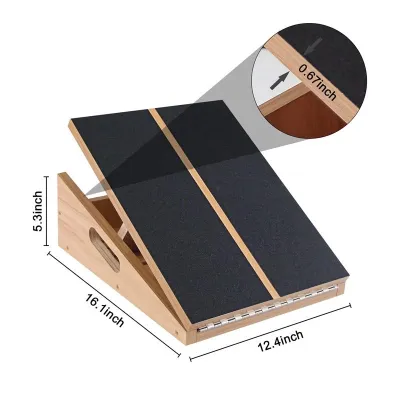
![[Metaverse] Portable Professional Wooden Slant Board Adjustable Foot Incline Board Calf Ankle Stretcher Home Gym](https://img.lazcdn.com/g/p/15635aceeefb6abcdbcf4c041f5f1a56.jpg_400x400q80.jpg_.webp)
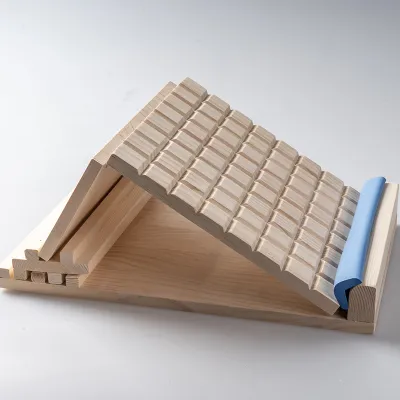
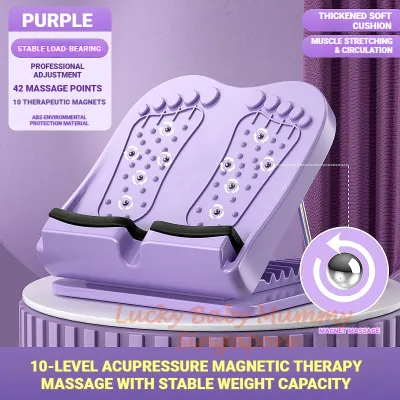
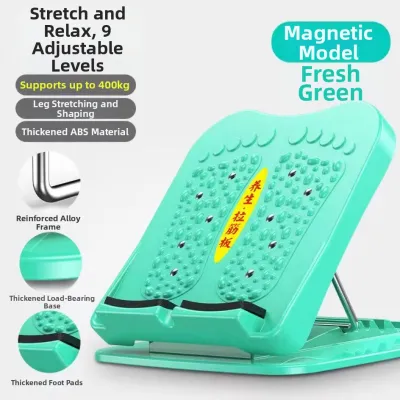
Prices are valid at publication and may change. Please refer to the product page for the latest price.
When you perform a standard calf stretch against a wall or on a flat floor, it is incredibly easy to unconsciously cheat the movement. To avoid the discomfort of a deep stretch, your body may naturally turn your foot outward, collapse your arch, or lift your heel slightly off the ground. These subtle postural compensations reduce the tension on the calf muscles and can place unwanted lateral stress on your ankle and knee joints. An incline board eliminates these compensations by locking your foot into a fixed, flat position, forcing your ankle into true dorsiflexion and ensuring that the stretch is delivered precisely where it is needed.
Furthermore, a stretching board allows for the targeted isolation of the two primary muscles that make up the calf: the gastrocnemius and the soleus. The gastrocnemius is the larger, outer muscle that crosses both the knee and ankle joints, meaning it is best stretched when the knee is fully extended. The soleus lies beneath the gastrocnemius and does not cross the knee, requiring a bent-knee position to isolate. By providing a stable, angled platform, a stretching board allows you to easily transition between straight-leg and bent-knee positions, ensuring both muscle groups receive comprehensive recovery.
Finally, managing the load on your Achilles tendon is critical for preventing overuse injuries. The Achilles tendon requires a gradual, progressive application of tension to maintain its elasticity and strength. Using a stretching board allows you to select a precise angle of incline, ensuring that you do not overstretch or shock fatigued tissues immediately after a hard run. This level of control is virtually impossible to achieve when bouncing on the edge of a curb or pushing haphazardly against a wall, making the board a much safer option for long-term tendon health.
Key Features to Look for in a Running Recovery Board
When shopping for a stretching board in Singapore, it is important to evaluate several key features to ensure the tool fits your training volume, body weight, and home environment. Not all boards are constructed the same way, and selecting one without considering these factors can lead to a frustrating user experience or even safety hazards during use.

First and foremost, consider the adjustability and angle range of the board. A high-quality recovery board should offer multiple incline settings, typically ranging from a gentle 15 degrees to a challenging 40 degrees or more. This adjustability is crucial because your flexibility will naturally fluctuate depending on your training volume, fatigue levels, and individual anatomy. Beginners or runners recovering from minor strains should start at a very low angle to avoid overstressing the tissues, while highly flexible runners can gradually increase the incline as their range of motion improves. Look for boards that offer clear, secure increment steps so you can track your progress over time.
Material durability and weight capacity are equally critical, especially if you plan to use the board daily or perform active exercises like calf raises on it. Stretching boards are generally constructed from wood, heavy-duty plastic, or steel. Wood and steel options typically offer the highest weight capacities and structural rigidity, making them ideal for heavier runners or those who want a completely solid feel underfoot. Always verify the manufacturer’s specified weight limit before purchasing, and ensure the board can comfortably support your full body weight without flexing or creaking.
Surface grip and foot placement design are vital safety features, particularly in Singapore’s warm and humid climate where sweat is a constant factor. A slippery board can lead to sudden falls or joint strains if your foot slides off during a deep stretch. Look for boards that feature high-friction grip tape, textured rubber pads, or molded non-slip ridges. Additionally, some boards include a raised heel lip or a curved bottom edge to help keep your foot securely positioned on the incline, which is especially helpful when stretching barefoot or in socks.
Lastly, consider the board’s portability and storage footprint. Many runners in Singapore live in apartments or HDB flats where living space is at a premium. A bulky, non-folding board can quickly become an eyesore or a tripping hazard if left out in the open. Opting for a model that folds completely flat allows you to easily slide the board under a sofa, bed, or television console when not in use. If you plan to bring your board to the track, gym, or on travels for overseas races, look for lightweight materials and integrated carrying handles that make transport hassle-free.
Stretching Board Categories for Runners: What to Look For
Stretching boards generally fall into three main categories, each offering distinct advantages depending on your recovery habits, budget, and space constraints. Understanding these categories will help you narrow down your choices and build a conditional shortlist that aligns with your lifestyle.
Before making a final purchase, always cross-reference product labels and user manuals for exact weight limits, material care instructions, and assembly requirements. Because different materials react differently to moisture and wear, choosing a category that fits your specific usage environment will ensure your recovery tool remains safe and functional for years to come.
Adjustable Multi-Angle Boards
Adjustable multi-angle boards are the most versatile option for runners, offering the ability to customize the incline to suit your daily flexibility levels. These boards typically feature a hinged design with a support bar that slots into various pre-cut grooves or pegs on the base, allowing you to quickly change the angle.
When evaluating an adjustable board, closely inspect the locking mechanism and support pegs for structural stability. The slots should be deep and secure enough to prevent the support bar from slipping out of place when you stand on the board. Wooden adjustable boards often feature robust, interlocking wooden teeth, while plastic or metal models may use steel pins or heavy-duty plastic slots.
These boards are ideal for runners who share their recovery gear with family members of varying flexibility levels, or for individuals who want to incrementally increase their stretch angle over a structured training cycle. Always verify the maximum weight capacity listed by the manufacturer to ensure the adjustable joints can safely handle your weight at the steepest settings.
Fixed-Incline Wooden or Foam Boards
Fixed-incline boards offer a simpler, no-fuss alternative to adjustable models. These boards are set at a single, permanent angle—typically between 20 and 25 degrees—and are often constructed from solid wood or high-density foam blocks.
If you are considering a fixed-incline board, it is essential to evaluate whether the pre-set angle matches your current level of calf flexibility. If the angle is too steep, you may find yourself unable to stand on the board comfortably without bending your knees or arching your back, which defeats the purpose of the stretch. Conversely, if the angle is too shallow, you may not feel an adequate stretch as your flexibility improves.
Foam wedges are particularly popular for their lightweight, soft texture, and quiet operation, making them excellent for apartment living where you want to avoid clattering heavy equipment on tiled floors. However, because foam can compress slightly under heavy loads, ensure you choose high-density foam that maintains its shape, and check if you need to add grip tape or wear shoes to prevent slipping on the smooth foam surface.
Compact and Foldable Travel Boards
For runners who travel frequently for races, commute to track sessions, or simply have very limited storage space, compact and foldable travel boards are an excellent solution. These boards are designed to fold down into an incredibly slim profile, often measuring just a few centimeters in thickness when fully collapsed.
When inspecting portable options, pay close attention to the durability of the hinges and the overall structural integrity when the board is fully deployed. Because these boards rely on folding joints to support your weight, the quality of the hardware is paramount. Look for rust-resistant metal hinges and reinforced plastic frames that can withstand the humid conditions of Singapore without degrading.
Ensure the folded footprint of the board fits comfortably within standard gym bags or luggage dimensions if you plan to travel with it. Keep in mind that compact models may have trade-offs, such as a slightly smaller foot platform, a lower maximum weight capacity, or fewer incline options compared to full-size, heavy-duty home models.
How to Use a Stretching Board Safely Post-Run
Using a stretching board is highly effective, but it must be done with proper technique and safety precautions to avoid straining your muscles or tendons. Because your tissues are highly fatigued immediately after a run, applying sudden or excessive force can lead to micro-tears and prolonged recovery times.
First, never step onto a steep incline board with completely cold or highly fatigued muscles without a brief transition period. Immediately after stopping your run, your muscles are warm, but they are also neurologically fatigued and may be prone to cramping or sudden spasms. Spend a few minutes walking to let your heart rate return to a near-normal state, or perform some light, active mobility exercises before stepping onto the board. If you are using the board on a non-running day, perform a quick five-minute warm-up, such as gentle bodyweight squats or walking, to increase blood flow to the lower legs before stretching.
Second, understand the difference between normal stretching discomfort and sharp, localized pain. A proper stretch should feel like a deep, dull pull throughout the belly of the calf muscle. It should never feel like a sharp, burning, or stabbing sensation, particularly near the heel or the back of the ankle where the Achilles tendon inserts. If you experience any sharp pain, numbness, or tingling in your feet or toes, step off the board immediately. Keep your stretch duration to a controlled 20 to 30 seconds per set, repeating 2 to 3 times, rather than standing on the board for extended, uninterrupted periods.
Finally, pay close attention to your foot placement and overall posture alignment. Stand tall on the board with your feet parallel and pointing straight ahead; turning your toes inward or outward alters the mechanics of the stretch and can strain your joints. Keep your hips pushed forward and your spine neutral, avoiding the temptation to lean backward or stick your glutes out to ease the stretch. To target the gastrocnemius, keep your knees fully locked and straight. To target the soleus, slightly bend your knees while keeping your heels firmly planted on the board. This simple adjustment ensures a comprehensive, safe recovery session.
Frequently Asked Questions (FAQ)
Can a stretching board help with plantar fasciitis?
Tightness in the calf muscles is a common contributing factor to plantar fasciitis. Because the calf muscles connect directly to the heel bone via the Achilles tendon, tight calves can pull on the heel, which in turn increases the tension and strain on the plantar fascia ligament under the foot. Using a stretching board to gently improve calf flexibility can help reduce this secondary tension on the bottom of your foot. However, if you are experiencing acute, sharp heel pain or suspect you have active plantar fasciitis, it is highly recommended to consult a physiotherapist or medical professional before using an incline board, as aggressive stretching can sometimes aggravate an inflamed fascia.
How long should I stand on a stretching board after a run?
For post-run recovery, it is generally recommended to perform static stretches holding for 20 to 30 seconds per set, repeating the stretch 2 to 3 times for each leg. Avoid standing on the board for long, continuous periods of several minutes, as this can overstretch the tissues and lead to temporary muscle weakness or joint instability. Always start with shorter intervals at a lower incline to see how your muscles respond, and gradually adjust based on your personal comfort limits. Always follow the manufacturer’s specific usage guidelines, and stop immediately if you experience any numbness, tingling, or sharp pain.
Should I use the stretching board with or without shoes?
Whether you use a stretching board with or without shoes depends largely on your personal comfort, hygiene preferences, and the board’s surface texture. Stretching barefoot or in socks allows for better natural foot mechanics, helps strengthen the intrinsic muscles of the foot, and provides a more direct stretch. However, if you choose this method, you must ensure the board has a highly secure, non-slip surface to prevent your feet from sliding. Wearing running shoes provides extra cushioning, structured arch support, and is often the preferred choice for hygiene when using a shared board in a public gym or fitness studio.
Community discussion
Share your experience or ask a question. Comments are reviewed before publication.