
If you wear glasses or contact lenses, seeing clearly in the pool can be a challenge. The term ‘degree’ on swimming goggles refers to their diopter (D), the unit measuring the optical power of a lens needed to correct your vision. For most swimmers, this means finding goggles that correct for myopia, or nearsightedness, allowing you to navigate the lane and see the pace clock without blur.
Unlike standard goggles, prescription versions have lenses designed to bend light just like your everyday glasses. Understanding how to choose the right degree is key to a comfortable and safe swim. Most off-the-shelf options use negative diopters (e.g., -2.0, -3.5) to address myopia, but simply matching your eyeglass prescription isn’t always the best approach.
What "Degree" Means for Swimming Goggles
When you see a ‘degree’ number on a pair of swimming goggles, it represents the lens’s corrective power, measured in diopters. A diopter is the standard unit used in optics to quantify how much a lens needs to bend light to bring an image into sharp focus on your retina. For swimmers, this technology means freedom from blurry underwater surroundings.
Products mentioned in this guide
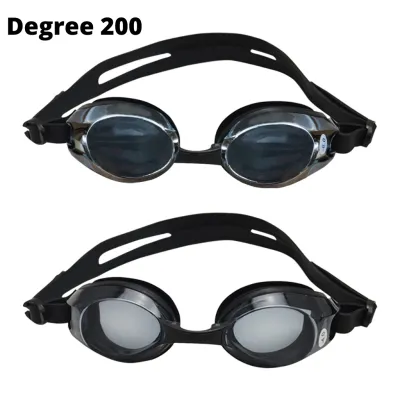
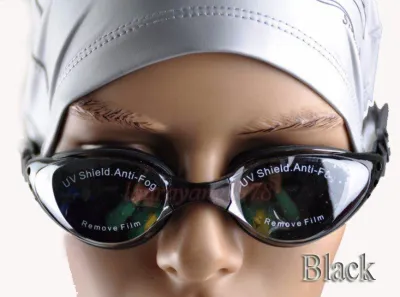
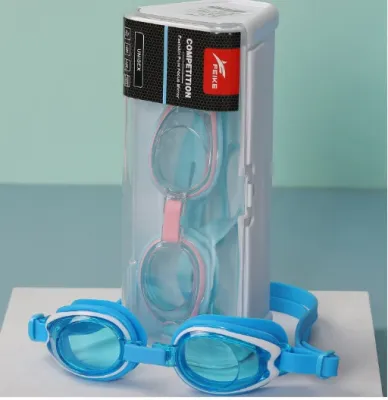
![[SG] Swimming Goggles Degree | Anti Fog + UV Shield | Adult & Children | Prescription Goggles](https://img.lazcdn.com/g/p/22798ce7f1849ad31e914f8712a501f1.jpg_400x400q80.jpg_.webp)
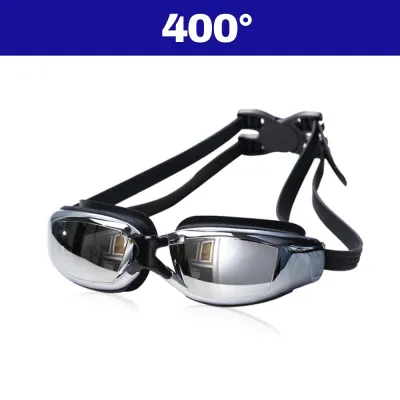
![[SG SELLER] ORIGINAL 361° BRAND Adult Swimming goggles high-definition myiopia degree waterproof anti-fog lenses swimming goggles](https://img.lazcdn.com/g/p/9d19d99f2ac96bcf991b22599e9a33b9.jpg_400x400q80.jpg_.webp)
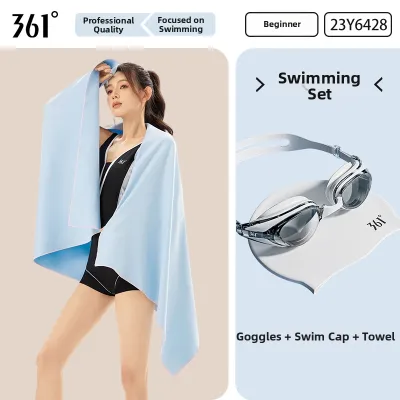
Prices are valid at publication and may change. Please refer to the product page for the latest price.
The majority of ready-made prescription goggles are designed to correct myopia (nearsightedness). These lenses have a negative diopter value, such as -2.5 D or -4.0 D, to help you see distant objects clearly. If you are farsighted (hyperopic) and need positive diopter lenses, you will likely need to look at custom options, as off-the-shelf choices are rare.
Vision underwater is also different from vision in the air. The water itself has a refractive index that slightly magnifies objects. Furthermore, the curved surface of a goggle lens can alter how light reaches your eye. This is why your exact eyeglass prescription may feel too strong underwater, and a slight adjustment is often necessary for optimal comfort and clarity.
Converting Your Eyeglass Prescription for the Pool
Choosing the right degree for your swimming goggles requires a bit more than just grabbing the number from your glasses prescription. To avoid eye strain, dizziness, or a feeling of being over-corrected, you need to account for how goggles work differently from your daily eyewear.

Two main factors come into play: vertex distance and water refraction. Goggles sit much closer to your eyes than regular glasses, which changes the effective power of the lens. Additionally, the water creates a natural magnifying effect. To compensate for both, the general rule of thumb for nearsighted swimmers is to choose a diopter that is 0.50 to 1.00 less than your actual glasses prescription. For example, if your glasses are -4.0, you would look for goggles between -3.0 and -3.5.
What about astigmatism? Most mass-market optical goggles only correct for spherical power (myopia or hyperopia). They do not have built-in correction for the cylindrical power associated with astigmatism. If you have a low level of astigmatism (typically under -1.0), you may find that a spherical-only goggle is sufficient for swimming. However, for those with significant astigmatism, vision may still be blurry. In this case, custom-made goggles are the best solution.
Finally, ready-made goggles come with a fixed pupillary distance (PD), the distance between the centers of your pupils. While this average sizing works for most people during the relaxed visual activity of swimming, users with a particularly narrow or wide PD might experience slight discomfort or imperfect optical alignment.
Ready-Made vs. Custom Prescription Options
When it’s time to buy, you’ll face a choice between convenient, off-the-shelf goggles and precisely tailored custom pairs. Your decision will depend on your vision needs, the complexity of your prescription, and your budget.
Ready-Made Optical Goggles These are the most common and affordable type. They come with pre-molded lenses in set diopter increments, usually ranging from -1.5 to -8.0 in steps of 0.5. They are an excellent choice for swimmers with simple, moderate myopia in both eyes. Some models also allow you to purchase lenses for the left and right eye separately, accommodating different prescriptions.
Custom Prescription Goggles For swimmers with high-power prescriptions, significant astigmatism, or farsightedness, custom goggles are the ideal solution. These involve sending your full prescription to a specialist lab that grinds lenses exactly to your specifications, including astigmatism correction and your precise pupillary distance. While more expensive, they offer the sharpest and most comfortable vision possible.
Modular Goggles A flexible middle ground is the modular goggle system. These kits allow you to buy a frame, nose pieces, and individual prescription lenses separately. This is perfect for users who have a different degree in each eye or who want to get a more personalized fit without the cost of a fully custom pair.
Fitting and Maintaining Optical Swim Goggles
Getting a proper fit is crucial for both comfort and visual clarity. A leaky goggle is distracting, and a poorly aligned lens won’t provide the sharp vision you paid for. Before you even attach the strap, perform a quick suction test. Press the goggle eyepieces firmly around your eyes. If they create a brief seal and stay in place for a few seconds on their own, you have a good fit. When sealed, check that the optical center of each lens feels naturally aligned with your pupils.
Proper care is essential to protect your investment, especially the delicate inner lens surface. Most prescription goggles come with a factory-applied anti-fog coating. To preserve it, never rub or wipe the inside of the lenses, especially when wet. Touching it can scratch the surface and will permanently strip away the anti-fog layer.
After every swim, your main task is to rinse your goggles thoroughly with cool, fresh water. This removes chlorine, salt, and other pool chemicals that can degrade the silicone seals and damage the lens coatings over time. Shake off the excess water and let them air dry completely in a well-ventilated area away from direct sunlight before storing them in their protective case.
Frequently Asked Questions (FAQ)
Can I wear contact lenses with regular swimming goggles instead?
While technically possible, wearing contact lenses while swimming is not recommended by eye care professionals. Pool, lake, and ocean water contain microorganisms, including the particularly dangerous Acanthamoeba, which can become trapped between the contact lens and your eye, leading to serious infections and potential vision loss. If you absolutely must wear contacts, using a fresh pair of daily disposables and discarding them immediately after your swim is the safest approach. However, a pair of properly fitted prescription swimming goggles remains the medically recommended and most reliable option for clear, safe underwater vision.
Do I need prescription goggles if my degree is very low?
Whether you need prescription goggles for a low degree depends on your activity and personal comfort. If your prescription is -1.50 or less, you may find that you can manage fine for casual swimming in a well-lit pool. The water’s natural magnification effect can help compensate for very mild nearsightedness. However, for activities that require sharp distance vision—like open-water swimming, triathlons, or competitive training where you need to spot buoys, read a pace clock, or see the wall clearly—even a low-power prescription goggle can provide a significant advantage in safety and performance.
Community discussion
Share your experience or ask a question. Comments are reviewed before publication.