
Finding the right prescription for your swimming goggles is essential for maintaining clear vision, safety, and comfort in the water. The term “degree” in swimming goggles refers to the optical diopter measurement used to correct refractive errors like nearsightedness or farsightedness. To choose the correct pair, you must translate your everyday land-based eyeglass prescription into an underwater equivalent, typically by rounding down slightly to account for the natural magnifying properties of water.
By understanding how light behaves underwater and how to read your optical prescription, you can confidently select off-the-shelf step-diopter goggles or determine when a custom-molded pair is necessary. Balancing this optical correction with a proper physical fit ensures your time in the water remains safe and enjoyable.
Understanding Degrees and Underwater Vision in Swim Goggles
In the context of eyewear, a “degree” is a colloquial term for a diopter, which is the standard unit of measurement for the refractive power of a lens. If you have nearsightedness (myopia), your prescription will feature a minus sign, whereas farsightedness (hyperopia) is indicated by a plus sign. The higher the absolute number of the diopter, the stronger the corrective power of the lens.
Products mentioned in this guide
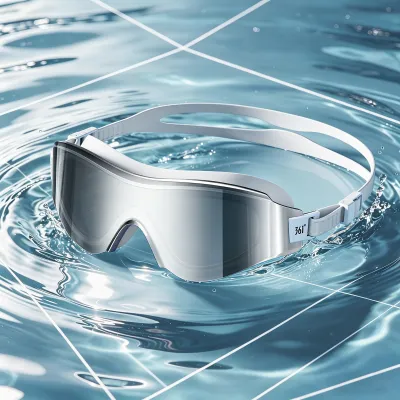
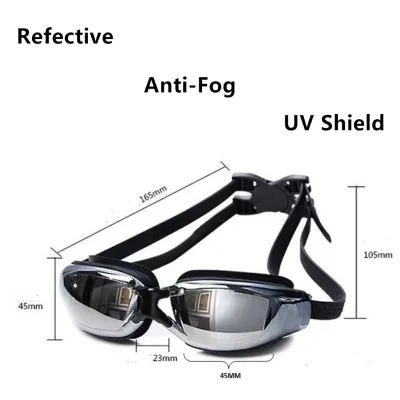
![[SG] Swimming Goggles Degree | Anti Fog + UV Shield | Adult & Children | Prescription Goggles](https://img.lazcdn.com/g/p/22798ce7f1849ad31e914f8712a501f1.jpg_400x400q80.jpg_.webp)
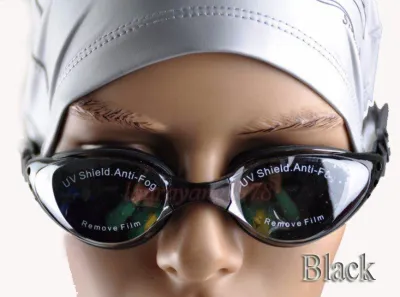
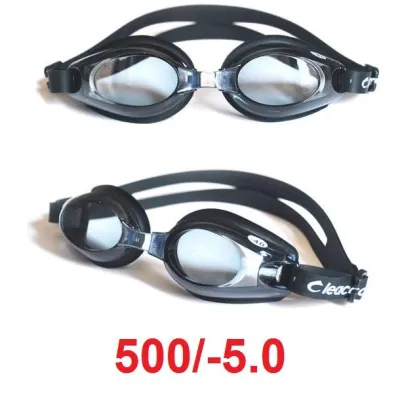
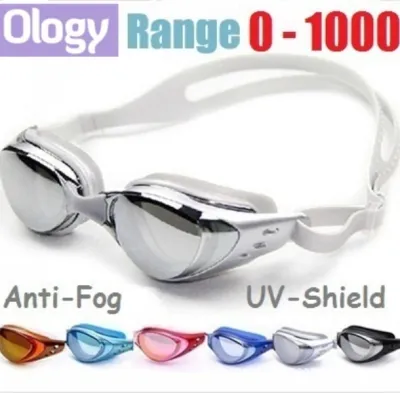
Prices are valid at publication and may change. Please refer to the product page for the latest price.
When you submerge yourself in water, the physics of vision change dramatically. Light travels at a different speed through water than it does through air, and because water has a higher refractive index, it acts as a natural magnifying medium. When looking through flat goggle lenses underwater, objects will naturally appear larger and closer than they actually are. This magnification effect means that your eyes do not require as much corrective power underwater as they do on land.
Because of this physical phenomenon, wearing your exact land-based prescription underwater can sometimes feel too strong, leading to eye strain, mild headaches, or a sensation of dizziness. To accommodate this, many swimmers find that choosing a goggle with a slightly lower diopter value provides a much more comfortable and natural visual experience.
When shopping for swim gear, you will generally encounter three main categories of lenses. Standard plano goggles feature flat, non-corrective lenses designed for individuals who do not require vision correction. Off-the-shelf step-diopter goggles are pre-made with standardized corrective lenses, usually available in half-diopter increments such as -1.5, -2.0, or -2.5. Finally, custom-molded prescription goggles are individually tailored to match your exact optical measurements, offering precise correction for complex visual needs.
How to Translate Your Eyeglass Prescription for Swimming
To find your ideal swimming goggle degree, you must first examine your current land-based eyeglass prescription. A standard prescription contains several key values, primarily the Sphere (SPH) and the Cylinder (CYL). The Sphere value represents the primary correction needed for nearsightedness or farsightedness, while the Cylinder value indicates the amount of correction required for astigmatism, which is caused by an irregularly shaped cornea.

The general principle for selecting off-the-shelf step-diopter goggles is to round down your prescription. Because water provides natural magnification, choosing a slightly weaker lens prevents your eyes from overworking. For example, if your land-based prescription is -3.25 diopters, rounding down to a -3.00 diopter goggle is typically the most comfortable choice. This slight reduction compensates for the underwater physics while keeping your vision sufficiently sharp.
Handling astigmatism in off-the-shelf goggles requires a specific calculation, as standard step-diopter lenses do not feature cylindrical correction. If your astigmatism is mild—generally considered to be a Cylinder value of less than -1.00—you can calculate what is known as the spherical equivalent. To do this, divide your Cylinder value by two, and then add that number to your Sphere value.
For instance, if your prescription shows a Sphere of -4.00 and a Cylinder of -0.50, you would divide the cylinder in half to get -0.25. Adding this to your sphere gives you a combined value of -4.25. Applying the rounding-down rule to account for water magnification, you would look for a step-diopter goggle close to -4.00. It is crucial to verify these calculations against the specific brand calculation charts provided by the manufacturer, as lens designs and recommendations can vary.
For swimmers with complex prescriptions, highly asymmetric vision between both eyes, or high levels of astigmatism, self-calculation can be difficult and inaccurate. In these cases, attempting to estimate your own goggle degrees can lead to poor spatial awareness and discomfort. Consulting an optical professional is the safest way to ensure your goggles provide accurate and comfortable vision.
Balancing Optical Clarity with Goggle Fit and Comfort
While finding the correct lens power is important, optical clarity is meaningless if your goggles do not fit your face properly. A watertight seal is the most critical factor in maintaining clear vision underwater. If water constantly leaks into your goggles, it will distort your view and irritate your eyes, completely neutralizing the benefits of your prescription lenses.
To ensure the optical center of the lenses aligns correctly with your pupils, pay close attention to the nose bridge of the goggles. The optical center is the point on the lens where light passes through without bending. If the lenses sit too close together or too far apart, you may experience visual distortion or double vision. Choosing goggles with adjustable or interchangeable nose bridges allows you to customize the fit to match your pupillary distance.
High-quality prescription goggles should also feature essential performance treatments to protect your eyes and maintain visibility. Look for models that come with factory-applied anti-fog coatings to prevent condensation from building up inside the lenses during your swim. Additionally, ultraviolet (UV) protection is highly recommended, especially if you plan to swim in outdoor pools or open water where sun exposure is a factor.
Before purchasing a pair of goggles, it is highly recommended to perform a dry-fit test to verify facial compatibility. Gently press the goggle lenses against your eye sockets without using the head strap. If the goggles create a brief suction effect and cling to your face for a few seconds on their own, the silicone gaskets are a good match for your facial structure. A proper fit ensures the goggles remain watertight and comfortable throughout your swim.
When to Consult an Optometrist for Custom Swim Goggles
While off-the-shelf step-diopter goggles are a convenient and cost-effective solution for many, they are not suitable for everyone. High-risk scenarios that require professional guidance include having a high degree of astigmatism, a significant prescription difference between your left and right eyes (known as anisometropia), or a history of recent eye surgery. In these situations, standard pre-made goggles cannot provide safe or adequate vision correction.
Wearing an incorrect or poorly calculated prescription underwater carries physical risks that can ruin your swimming experience. It can cause severe eye strain, persistent headaches, and spatial disorientation, which can be particularly dangerous when swimming in deep water or open environments. Accurate depth perception is vital for navigating lanes, avoiding obstacles, and judging distances safely.
If you find that standard step-diopter options do not provide comfortable or clear vision, you should bring your current, valid eyeglass prescription to a qualified optometrist. An optical professional can help you order custom-fitted swim goggles. These custom models can be crafted with different lens powers for each eye and precise astigmatism correction, ensuring optimal safety and visual performance in the water.
Frequently Asked Questions (FAQ)
Can I wear my daily contact lenses under regular swimming goggles?
Wearing daily contact lenses under non-prescription swimming goggles is highly discouraged by eye care professionals due to serious health risks. Even with a tight goggle seal, pool, lake, or ocean water can easily seep inside and come into contact with your eyes. Water contains various microorganisms, including harmful pathogens like Acanthamoeba, which can become trapped beneath a contact lens.
When these pathogens are trapped against the cornea, they can cause severe, rapid, and potentially sight-threatening infections. Additionally, contact lenses can absorb pool chemicals or swell and warp when exposed to water, leading to physical discomfort and corneal scratches. Choosing prescription swimming goggles is a medically safer and far more reliable alternative for water sports.
Do prescription swimming goggles come with anti-fog coatings?
Yes, most reputable sports brands equip their prescription swimming goggles with factory-applied anti-fog coatings on the inner surface of the lenses. This coating helps minimize condensation caused by the temperature difference between your face and the water.
To preserve this delicate coating, never touch, rub, or wipe the inside of the lenses with your fingers or a towel. After each swim, simply rinse the goggles gently with clean, cold fresh water and allow them to air dry completely in a shaded area before storing them.

Community discussion
Share your experience or ask a question. Comments are reviewed before publication.