
When purchasing table tennis balls, the array of stars stamped on the plastic can easily cause confusion. These star ratings, ranging from one to three, are not merely decorative; they serve as a primary guide to the ball’s quality, durability, and performance consistency. Understanding these ratings is essential for matching your equipment to your playing environment, budget, and skill level. Choosing the correct ball ensures a predictable bounce and helps you develop proper technique without unnecessary frustration.
What the 1-Star to 3-Star Rating System Actually Means
The commercial star rating system is a manufacturer-driven quality indicator rather than a strict international mandate. Manufacturers use these ratings to indicate how closely a batch of balls meets ideal production tolerances. During production, balls are sorted based on key metrics such as roundness, weight consistency, wall thickness, and overall durability. The fewer imperfections a ball has, the higher the star rating it receives.
1-Star Balls represent the entry-level tier. These balls prioritize basic durability and affordability over perfect physical consistency. They often feature a slightly softer feel and may exhibit minor variations in roundness. Because of these slight irregularities, their bounce can occasionally be unpredictable. They are highly practical for casual home recreation, school physical education classes, or absolute beginners learning basic strokes.
Products mentioned in this guide
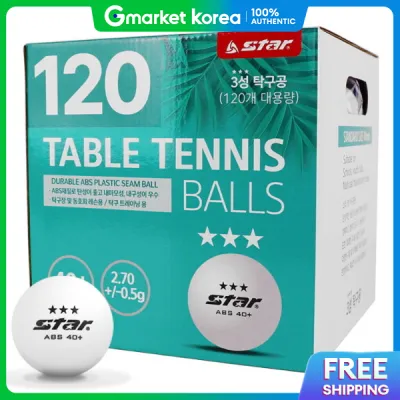
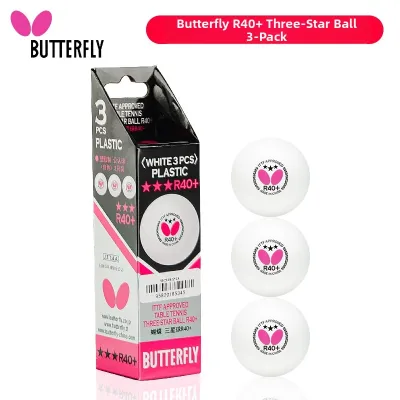
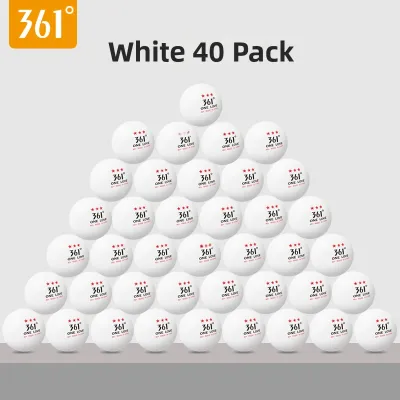
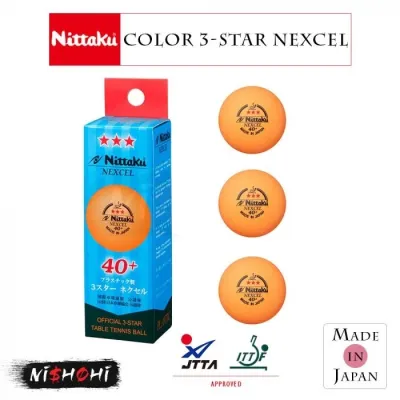
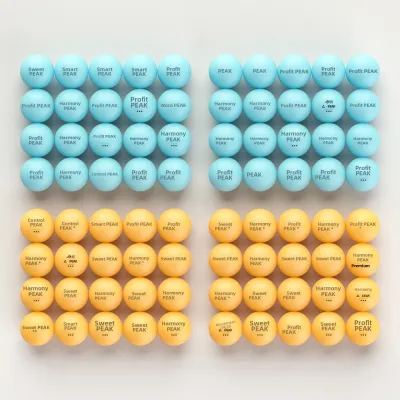
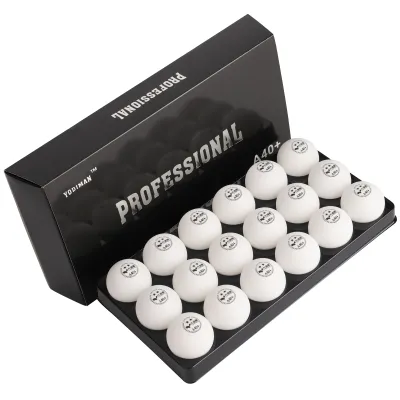
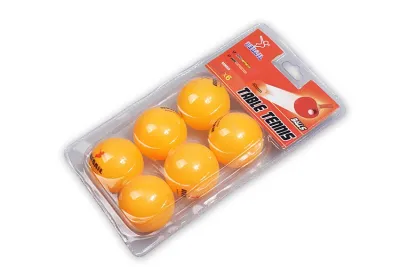
Prices are valid at publication and may change. Please refer to the product page for the latest price.
2-Star Balls offer a noticeable step up in both structural durability and flight consistency. They undergo stricter quality control, resulting in a more uniform shape and a reliable bounce. These balls are excellent for high-volume training sessions, such as multi-ball drills where a coach feeds dozens of balls in rapid succession. Intermediate club players frequently use 2-star balls because they provide a stable training platform without the high cost of top-tier tournament balls.
3-Star Balls occupy the highest commercial quality tier. These balls are subjected to the most rigorous manufacturing tolerances, ensuring near-perfect roundness, uniform weight distribution, and consistent hardness. This extreme precision translates to a highly predictable trajectory, accurate spin transmission, and a uniform bounce. For players focusing on competitive development, 3-star balls are indispensable.
Because the star rating system is managed individually by each brand, it is not a standardized cross-brand metric. A 3-star ball from a budget-focused brand might not match the structural integrity or performance of a 3-star ball from a premium manufacturer. Treat star ratings as a guide to a specific brand’s internal hierarchy rather than an absolute guarantee of identical performance across different brands.
ITTF Approval vs. Star Ratings: Understanding Official Standards
While commercial star ratings indicate a manufacturer’s internal quality tiers, the International Table Tennis Federation (ITTF) approval is the ultimate benchmark for official competition. To secure official ITTF approval, a ball must pass rigorous laboratory tests for exact weight, size, roundness, bounce height, and surface hardness under controlled conditions.

The relationship between star ratings and ITTF approval can sometimes confuse players. Most ITTF-approved balls are indeed labeled as 3-star balls, representing the manufacturer’s top-tier production line. However, not all 3-star balls are ITTF-approved. Some brands produce 3-star balls that are highly consistent but have not undergone the formal, costly certification process. Conversely, some premium manufacturers may bypass the star rating entirely, labeling their elite products simply as “ITTF Approved” or “Tournament” balls.
For players in Singapore preparing for local leagues, community tournaments, or sanctioned matches at ActiveSG sports halls, verifying the ball’s official status is critical. Official tournament rules strictly mandate the use of ITTF-approved balls. When purchasing equipment for competitive preparation, always look for the printed ITTF logo directly on the ball’s surface and the packaging, rather than assuming a 3-star label automatically qualifies the ball for match play.
Using non-approved balls during official tournament play is prohibited. Even if a high-quality 2-star or non-approved 3-star ball feels virtually identical during casual warm-ups, subtle differences in drag, weight, and spin response can affect game outcomes. Practicing with the exact certified equipment used in competition ensures your muscle memory and spin recognition align perfectly with match-day conditions.
Key Specifications: Material, Size, and the "40+" Standard
Modern table tennis balls have undergone significant technical evolutions. The most notable shift was the industry-wide transition from highly flammable celluloid to modern plastic materials, often referred to as poly or ABS (Acrylonitrile Butadiene Styrene). Modern ABS plastic balls are non-flammable, physically safer to produce, and offer improved structural durability.
This material shift directly influences how the ball behaves on the table. ABS plastic balls are slightly harder than their celluloid predecessors, resulting in a distinct, higher-pitched sound upon impact. They also tend to produce a slightly higher bounce but generate a fraction less spin. Players transitioning from older celluloid equipment will notice that they need to adjust their racket angles and stroke power slightly to achieve the same depth and rotation on their shots.
In terms of physical dimensions, the standard specifications for modern table tennis balls are strictly defined. A regulation ball must have a diameter of 40mm and a weight of exactly 2.7 grams. These specifications ensure a balanced playing experience where the ball is heavy enough to cut through minor air currents but light enough to respond dynamically to high-speed racket strokes.
The “40+” designation printed on almost all modern balls is a frequent source of confusion. The “+” symbol does not mean the ball is larger than 40mm or heavier than 2.7g. Instead, it indicates that the ball is made from the newer plastic material, conforming to the ITTF’s updated material standards introduced after the celluloid phase-out. When shopping, always look for this “40+” mark to ensure you are purchasing modern plastic balls rather than obsolete celluloid stock.
How to Choose the Right Ball for Your Skill Level and Playing Environment
Selecting the right table tennis ball requires balancing your playing objectives, skill level, and budget. For absolute beginners, recreational players, or families setting up a table at home, 1-star or unbranded plastic balls are the most logical choice. These balls are highly cost-effective, often priced well under S$1 per ball when purchased in bulk packs. Since beginners frequently lose balls or accidentally step on them during play, prioritizing budget and high-volume availability over perfect roundness is a practical approach.
Intermediate players and dedicated club members should focus on 2-star balls. At this stage of development, you are learning to read spin, execute consistent footwork, and refine your stroke mechanics. A 2-star ball provides the necessary bounce consistency to help you build reliable muscle memory. These balls represent an excellent middle ground, offering professional-grade durability and predictable physics at a fraction of the cost of competition-grade balls.
Advanced and competitive players should exclusively practice and compete with 3-star, ITTF-approved balls. High-level table tennis relies on extreme precision, where a fraction of a millimeter in bounce height or a minor deviation in spin can result in a missed shot. Using top-tier balls ensures that your training translates perfectly to tournament environments. These premium balls generally cost between S$2 and S$4 per ball, reflecting the rigorous quality control and testing they undergo.
Your playing environment also dictates your choice of equipment. Standard table tennis balls are engineered strictly for indoor use. Because they weigh only 2.7g, even the slightest draft from an open window or an air conditioning unit can drastically alter their flight path. Furthermore, the ABS plastic material is highly sensitive to temperature fluctuations and direct sunlight. Playing outdoors exposes the ball to wind, moisture, and UV rays, which can quickly degrade the plastic, make it brittle, and ruin its bounce. If you must play outdoors, look for specialized, heavier outdoor balls designed specifically to resist wind interference.
To maximize the lifespan of your table tennis balls, proper storage is essential, especially in Singapore’s hot and highly humid climate. Store your balls in a cool, dry place, such as a dedicated racket case or a sealed container, away from direct sunlight and heat sources. Avoid leaving them in hot cars or outdoor storage sheds, as extreme heat can warp the plastic shell, split the seams, and permanently compromise the ball’s roundness.
Frequently Asked Questions (FAQ)
How long do plastic table tennis balls last?
The lifespan of a plastic table tennis ball depends on several factors, including the intensity of your play, the power of your strokes, and the cleanliness of your table and racket. On average, a high-quality 3-star ball can last for several weeks of regular training, while a casual player might use the same ball for months. You should replace a ball immediately if you notice physical signs of degradation, such as a visible split along the center seam, a dull or hollow sound upon impact, a noticeable wobble during flight, or a significant loss of bounce height.
Can I use indoor table tennis balls for outdoor play?
Standard indoor table tennis balls are highly unsuitable for outdoor environments. Their lightweight 2.7g design makes them extremely vulnerable to even the mildest outdoor breezes, rendering controlled rallies nearly impossible. Additionally, exposure to outdoor elements like concrete surfaces, moisture, and direct sunlight accelerates the degradation of the ABS plastic. UV rays can make the material brittle, leading to rapid cracking, while moisture on the ball’s surface ruins the grip between the rubber racket and the ball, preventing spin generation. For outdoor tables, it is highly recommended to purchase specialized outdoor table tennis balls, which are manufactured with heavier, wind-resistant materials and durable shells designed to withstand rougher surfaces.
Community discussion
Share your experience or ask a question. Comments are reviewed before publication.