
Choosing the right table tennis table top thickness is the most critical decision you will make when setting up a home court. The thickness of the playing surface directly dictates how the ball behaves, how long the table lasts, and how much physical effort is required to move and store it. For the vast majority of homes in Singapore, an 18mm table top represents the ideal sweet spot, offering a near-professional bounce without the extreme weight and high cost of a tournament-grade model.
Why Table Top Thickness Matters
The thickness of a table tennis table top directly influences the consistency and height of the ball’s bounce. When a table tennis ball strikes a thin board, the energy of the impact is absorbed by the flexing wood, resulting in a low, unpredictable rebound often described by players as a “dead” bounce. Thicker tops, typically constructed from high-density fiberboard or medium-density fiberboard, provide a rigid, unyielding surface that returns energy efficiently to the ball, ensuring a uniform bounce across every square inch of the table.
Structural integrity is another major factor tied to thickness. Thinner boards are highly susceptible to warping, especially when exposed to the high humidity levels common in Singapore. Over time, moisture in the air can cause a thin, poorly supported wood composite top to sag or twist, permanently ruining the flat playing surface. A thicker top inherently resists this atmospheric warping, ensuring your investment remains perfectly flat and playable for years to come.
Products mentioned in this guide
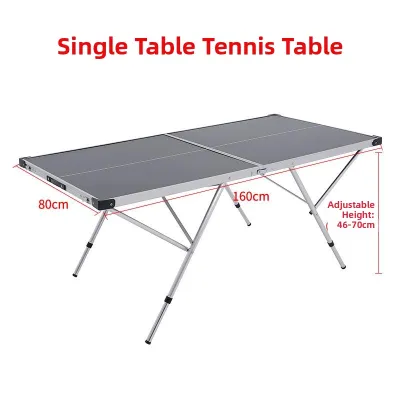
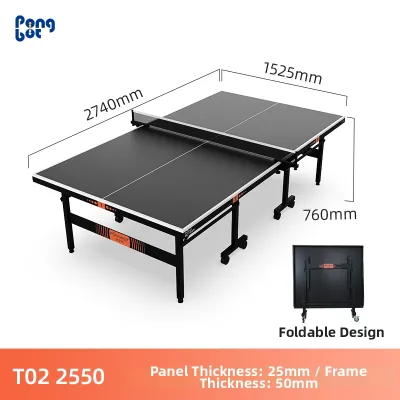
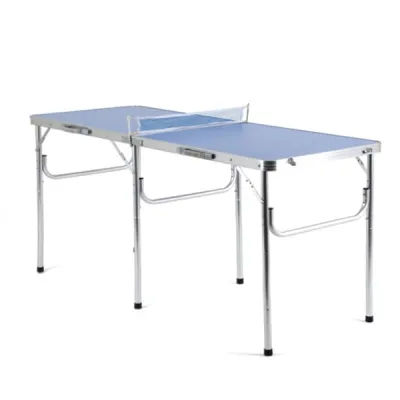
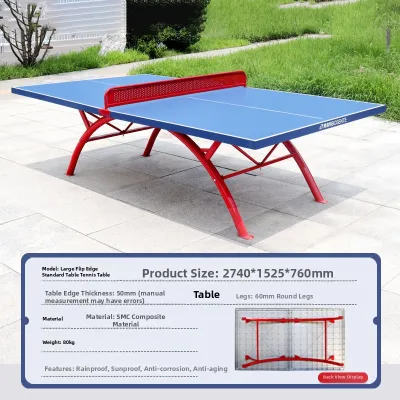
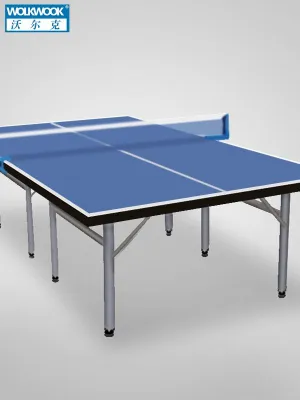
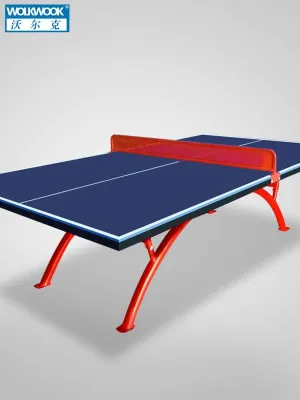
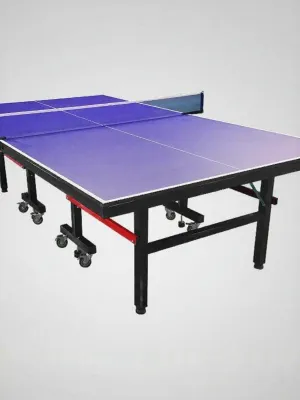
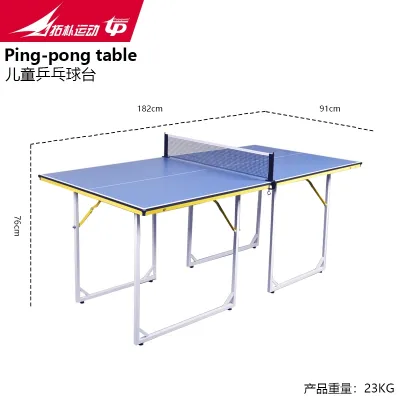
Prices are valid at publication and may change. Please refer to the product page for the latest price.
Matching Thickness to Your Playing Level
Table tennis tables generally fall into distinct thickness categories, each tailored to specific playing styles, budgets, and storage needs. Understanding where your household fits on this spectrum will help you avoid overspending on a heavy tournament table or frustrating your family with a subpar playing surface.

12mm to 15mm: Casual and Beginner Play
Table tops measuring between 12mm and 15mm are designed primarily for casual, recreational play and beginners. These tables are highly popular for families with young children who are just learning the basics of the game. Because these tops use less material, the tables are significantly lighter, making them exceptionally easy to fold, roll, and tuck away into a closet or corner when not in use.
However, intermediate and advancing players will quickly notice the limitations of a 12mm to 15mm surface. The ball bounce is noticeably lower and slower, which makes it difficult to practice advanced spin techniques or fast-paced rallies. If your primary goal is serious skill development or competitive practice, a thin table top may lead to inconsistent habits that do not translate well to standard club tables.
18mm: The Home Player's Sweet Spot
For dedicated enthusiasts and active families, an 18mm table top offers the ultimate balance of performance and practicality. This thickness provides a highly reliable, consistent bounce that closely mimics the feel of a professional club table. It allows players to practice topspin, backspin, and high-speed blocks with predictable ball behavior, making it the standard choice for serious home training.
While an 18mm table is heavier than beginner models, it remains manageable for home use. Most 18mm tables feature robust folding frames with caster wheels, allowing a single adult to safely roll the table into a storage area. It delivers a premium playing experience without requiring the massive structural support and premium price tag of a full-size competition table.
25mm: Advanced and Tournament-Style Play
A 25mm table top is the official standard for international competitions and professional training centers. If you are a competitive club player preparing for tournaments, this thickness is the only option that provides the exact speed, spin response, and high bounce consistency you will encounter in official matches. The solid, heavy surface completely eliminates dead spots and offers unmatched durability.
Despite these performance benefits, a 25mm table is rarely practical for a standard home setup unless you have a dedicated, permanent games room. These tables are incredibly heavy, often weighing well over 100 kilograms, which makes folding and moving them a strenuous two-person task. Additionally, the heavy-duty undercarriage required to support a 25mm top takes up a significant amount of storage space when folded.
Factoring in Space and Portability for Home Use
In Singapore, where residential space in apartments and condominiums is carefully optimized, physical dimensions and portability are just as important as playing performance. A standard table tennis table requires a footprint of 2.74 meters by 1.525 meters. Before purchasing, you must measure your room to ensure you have enough clearance to move comfortably around the table without colliding with walls, television consoles, or glass doors.
The weight of the table, which is directly determined by its thickness, heavily influences how often you will actually use it. If you must fold and store the table after every session to reclaim your living room space, a heavy 25mm table can quickly become a chore to set up, leading to it sitting unused. An 18mm or 15mm table offers a much more practical folding routine, allowing you to transition from storage to play in just a few minutes. Additionally, ensure your home’s flooring can handle the concentrated weight of a folded table resting on its caster wheels without leaving indentations.
How to Verify Table Quality Beyond Thickness
While thickness is a reliable indicator of quality, you should also inspect several structural components before making your purchase. First, examine the metal frame or apron running underneath the outer edge of the table top. A thick table top still requires a robust steel frame—ideally between 30mm and 50mm—to prevent the wood from sagging in the center over time.
Next, evaluate the surface finish of the table top. High-quality tables feature multi-layered, glare-resistant coatings that prevent overhead indoor lighting from reflecting off the surface and distracting players. Run your hand across the surface to check for a smooth, consistent texture that provides uniform friction for spin shots. Finally, verify the safety features of the folding mechanism, ensuring the table has secure locking systems to prevent it from accidentally unfolding during storage or transport.
Frequently Asked Questions (FAQ)
Can I use an outdoor table tennis table indoors?
Yes, you can use an outdoor table tennis table indoors, but the playing experience will differ. Outdoor tables are constructed with weather-resistant materials like melamine, aluminum, or resin laminates to withstand rain and sun, which produces a slightly different, often faster and lower bounce compared to indoor wood composite tops. If you plan to play exclusively indoors, an indoor wood table is highly recommended for a traditional feel, but an outdoor table is a versatile alternative if you want the option to play on a balcony or patio.
How much clearance space do I need around the table?
For comfortable recreational play at home, you should aim for a minimum clearance of 1.5 meters behind each endline and 1 meter of space on both sides of the table. While professional tournaments require much larger playing areas, these compact dimensions are sufficient for casual rallies and basic footwork. If you have tight space constraints in a Singapore apartment, prioritizing a foldable table that can be easily rolled away will help you maximize your living area when the game is over.
Community discussion
Share your experience or ask a question. Comments are reviewed before publication.