
Quick Answer: Which Taekwondo Gear Brand Fits Your Skill Level?
Selecting the right taekwondo gear set is not about finding a single “best” brand, but rather matching equipment specifications to your training frequency, competitive ambitions, and budget. The right gear ensures safety, complies with training rules, and supports your physical development in the martial art.
- Choose entry-level lines from Adidas or Kwon if you are a beginner. These brands offer durable, highly cushioned, and forgiving protection at an accessible price point, which is ideal for building confidence during your first year of sparring.
- Choose mid-tier lines from Mooto or standard Daedo if you are an intermediate student. These sets provide a refined balance of lighter weight, improved ventilation, and anatomical molding, allowing for faster kicking speeds during regular club sparring.
- Choose premium, World Taekwondo (WT) certified lines from Daedo or Mooto if you are an advanced competitor. These high-end options feature ultra-lightweight materials, specialized ergonomic designs, and compatibility with electronic scoring systems (PSS) required for sanctioned tournaments.
Ultimately, your choice should align with your instructor’s recommendations and the specific rules of your dojang. While beginners can focus on basic protection, competitive athletes must prioritize official certification and technical compatibility.
Key Comparison Factors for Taekwondo Gear Sets
To make an informed decision, you must understand the technical specifications that differentiate various taekwondo gear sets. Evaluating these factors helps you look past marketing claims and focus on material performance, safety, and longevity.
Products mentioned in this guide
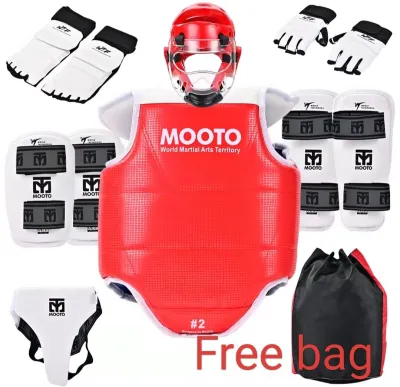
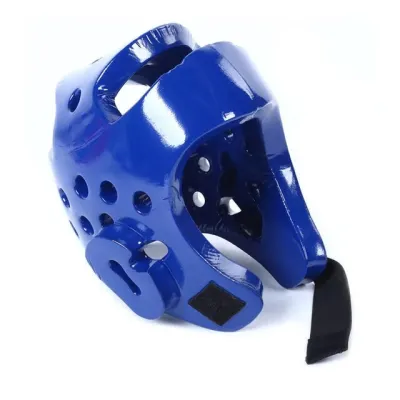
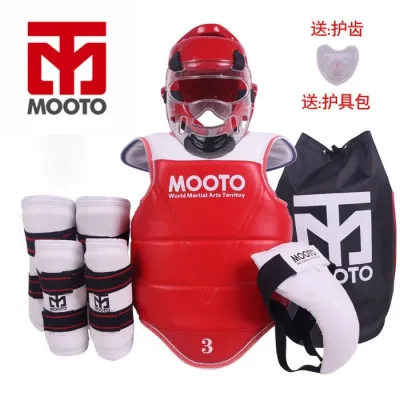
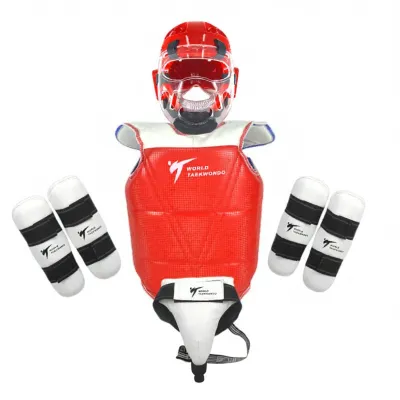
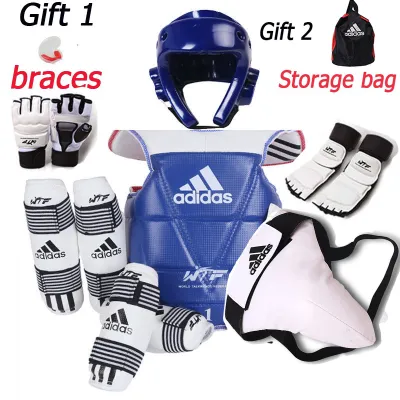
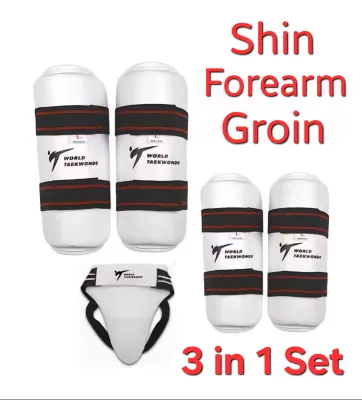
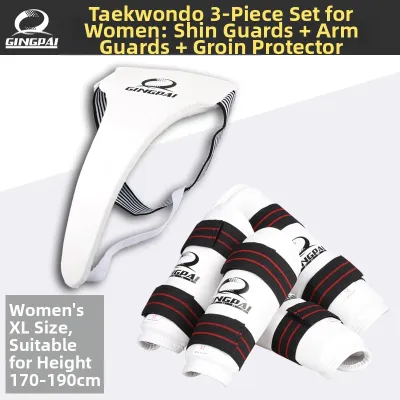
Prices are valid at publication and may change. Please refer to the product page for the latest price.

Outer Material Durability
The outer shell of sparring gear bears the brunt of repetitive high-velocity impacts. Most modern taekwondo gear sets utilize synthetic Polyurethane (PU) or engineered leather alternatives. High-grade PU is highly resistant to tearing, cracking, and moisture absorption, which is particularly important in hot, humid training environments where sweat can rapidly degrade lower-quality vinyl. Premium synthetic leathers offer even greater tensile strength and are typically found in professional-grade gear designed for daily high-impact use.
Inner Padding Density and Composition
The internal padding is responsible for shock absorption and force dispersion. Manufacturers generally use Ethylene-Vinyl Acetate (EVA) foam, polyurethane foam, or multi-layered composite foams.
- Soft, thick foam is excellent for beginners because it cushions impacts gently, reducing the sting of misplaced blocks or kicks.
- High-density, thin foam is preferred for advanced sparring. It provides superior shock dispersion by spreading the force of a blow across a wider surface area, allowing the gear to remain slim and lightweight without sacrificing safety.
Closure and Securing Systems
How gear attaches to your body dictates both safety and comfort. Look for wide, high-elasticity straps paired with industrial-grade hook-and-loop (Velcro) fasteners. Narrow straps can dig into the skin and restrict blood flow, while low-quality Velcro will quickly lose its grip when exposed to sweat and lint. For chest protectors (hogu), a secure tie-string or heavy-duty buckle system ensures the protector does not shift during rapid lateral movements.
World Taekwondo (WT) Certification
For anyone planning to compete, World Taekwondo (WT) certification is a critical requirement. Gear that is WT-approved has undergone standardized testing for impact attenuation, coverage area, and non-hazardous materials. Approved gear features a visible WT logo or hologram. If you use non-certified gear at a sanctioned tournament, you will not be allowed to step onto the mat. Always check product labels and manufacturer specifications to verify official certification before purchasing competition gear.
Best Taekwondo Gear Brands for Beginners
For novice practitioners, the primary goals are safety, impact dampening, and cost-effectiveness. Beginners are still developing their distance control, accuracy, and defensive blocking, which makes comprehensive, forgiving protection highly necessary.
Adidas (Entry-Level Lines)
Adidas is a globally recognized brand that offers highly reliable entry-level taekwondo gear sets, such as their basic foam headguards and standard reversible chest protectors. These products prioritize thick, shock-absorbing padding that helps build confidence in students who may be hesitant about full-contact sparring. The brand’s beginner gear is widely available and built to withstand the typical wear and tear of twice-a-week classes. It fits comfortably within an entry-level budget, with individual protective pieces generally costing under S$100.
Kwon (Evolution and Basic Series)
Kwon is another highly respected brand known for manufacturing robust, traditional martial arts equipment. Their beginner-focused lines, such as the Kwon Evolution series, are designed with a focus on maximum coverage and structural durability. The foam padding in Kwon’s beginner gear is slightly thicker and softer than competition-grade alternatives, offering excellent protection for the shins, forearms, and head. This extra cushioning is highly forgiving during accidental shin-to-shin or knee-to-shin clashes, which are common among beginners.
Beginner Selection Strategy
When buying your first taekwondo gear set, prioritize a complete bundle that includes a headguard, chest protector, forearm guards, shin-instep guards, and a groin guard. Focus on finding a comfortable, snug fit rather than looking for lightweight, high-performance features. At this stage, slightly heavier gear that offers maximum coverage is far more beneficial than ultra-lightweight competition gear that leaves more areas exposed. Always consult your dojang instructor before purchasing, as many clubs offer pre-approved beginner packages or have specific color requirements for training gear.
Best Taekwondo Gear Brands for Intermediate Students
As practitioners progress to intermediate levels (typically green belt through red belt), sparring sessions become faster, more frequent, and more intense. Intermediate students require gear that transitions from pure impact cushioning to a balance of protection, mobility, and heat management.
Mooto (MTX and Standard Lines)
Mooto is highly regarded for its focus on research and development, particularly in ergonomics and material science. For intermediate students, Mooto’s standard lines, such as the MTX series, offer a significant upgrade in fit and mobility. This gear is anatomically molded to contour closely to the limbs and torso, reducing bulk and allowing students to execute rapid turning and spinning kicks without feeling restricted. The reduction in bulk helps intermediate players focus on improving their kicking technique and speed.
Daedo (Standard and Training Lines)
Daedo’s mid-range training gear is designed for regular, intensive use. It features denser, thinner foam padding that provides excellent shock dispersion while keeping the overall weight of the gear set low. This lightweight profile helps reduce fatigue during long sparring drills. Additionally, Daedo incorporates durable, moisture-resistant outer coverings that withstand the friction of continuous movement, ensuring the gear lasts through years of preparation for black belt grading.
Managing Heat and Sweat
In tropical climates like Singapore, training in a non-air-conditioned dojang can lead to extreme heat buildup and heavy sweating. Intermediate gear brands address this by utilizing perforated foam padding, mesh ventilation panels, and moisture-wicking inner linings. These features allow air to circulate, helping to keep the body cool and preventing sweat from pooling inside shin and forearm guards. Proper ventilation also allows the gear to dry faster after class, reducing the buildup of bacteria and unpleasant odors.
Best Taekwondo Gear Brands for Advanced Competitors
Advanced competitors and black belts training for sanctioned tournaments operate under strict regulatory environments. For these athletes, gear must meet precise international standards, facilitate high-performance movement, and integrate with modern electronic scoring technologies.
Daedo (Premium and PSS Electronic Lines)
Daedo is the undisputed industry leader in electronic sparring equipment. Their Protector and Scoring System (PSS) is used in major international tournaments worldwide, including continental championships and Olympic selection events. Daedo’s premium WT-approved hogus feature integrated electronic sensors that register valid points when struck by sensor-equipped foot protectors. For advanced competitors, training with a Daedo PSS-compatible gear set is essential for learning how to strike with the correct technique and force threshold required to score points in modern competition.
Mooto (Extreme and Exera Series)
Mooto’s premium lines, such as the Mooto Extreme or Exera series, represent the pinnacle of non-electronic high-performance gear. These sets are engineered with ultra-lightweight, high-impact composite foams that minimize weight to help athletes maximize their kicking speed. The exterior fabrics utilize advanced microfibers that are incredibly tough yet flexible, allowing the gear to stretch and move naturally with the athlete’s body. The ergonomic design ensures that headguards and chest protectors remain perfectly in place, even during high-velocity aerial maneuvers.
The Cost of Competition-Grade Gear
Premium, WT-certified gear sets command a significant financial investment, often ranging from S$300 to over S$600 for a complete setup, especially when electronic foot sensors are included. This equipment is designed specifically for high-level performance and tournament compliance. If you do not plan to compete in sanctioned events, the high cost of electronic-compatible gear is rarely justified. For daily club training, standard high-quality non-electronic gear remains the more practical and cost-effective choice.
How to Verify Gear Quality and Sizing Before Buying
Investing in a taekwondo gear set requires careful verification to ensure you receive authentic, safe, and properly fitting equipment. Poorly fitting gear not only hinders your performance but can also lead to serious injury.
Verifying Authenticity and WT Approval
When purchasing premium brands like Daedo or Mooto, look for official World Taekwondo approved labels, stamps, or holographic stickers. These are typically located on the collar of the chest protector, the rear of the headguard, or the straps of the shin and forearm guards. Be cautious of counterfeit products sold at unusually low prices on online marketplaces. To guarantee authenticity, buy directly from authorized local martial arts distributors or reputable specialty retailers.
Measuring for the Correct Fit
Never guess your size based on general clothing sizes, as martial arts gear sizing is highly specific and varies by brand. Refer to the manufacturer’s official sizing chart, which is usually based on height and weight.
- For Chest Protectors (Hogu): Measure your height and chest circumference. A properly fitting hogu should cover your collarbone down to just above your hip bones, allowing you to bend forward and raise your knees without the guard pushing up into your throat.
- For Headgear: Use a flexible measuring tape to measure the circumference of your head just above your eyebrows. The headgear must fit snugly without pinching, and it should not rotate or slip down over your eyes when you move your head rapidly.
- For Shin and Forearm Guards: Measure the length of your shin (from just below the knee to the ankle) and forearm (from elbow to wrist). The guards should cover the bone completely without overlapping your joint lines, which would restrict your movement.
Post-Delivery Inspection
Once your gear set arrives, inspect it thoroughly before removing any tags or using it in class. Check all stitching along high-stress areas, such as where straps attach to the guards, to ensure there are no loose threads or weak seams. Test the elasticity of all straps and ensure the Velcro grips tightly. Press down on the foam padding across different sections of each guard; the padding should feel firm, uniform, and resilient, with no thin spots, hollow gaps, or permanent indentations.
Frequently Asked Questions (FAQ)
Do I need a World Taekwondo (WT) certified gear set for local club sparring?
No, WT certification is generally not mandatory for casual, in-club sparring sessions. Most local martial arts schools allow students to train using high-quality, non-certified gear, provided it offers adequate protection and meets basic safety standards. However, some clubs may have strict internal policies requiring specific brands or uniform colors for safety and consistency. Always consult your head instructor or dojang manager to confirm their specific gear rules before making a purchase.
Can I mix and match different brands for my taekwondo gear set?
Yes, mixing and matching different brands within your gear set is completely acceptable and common among practitioners. You can easily pair an Adidas headguard with Mooto shin guards and a Daedo chest protector. This approach allows you to customize your gear set to fit your unique body proportions, comfort preferences, and budget. The only exception is during high-level sanctioned tournaments, where specific electronic scoring systems (like Daedo PSS) require you to use matching, compatible electronic gear components.
Community discussion
Share your experience or ask a question. Comments are reviewed before publication.