
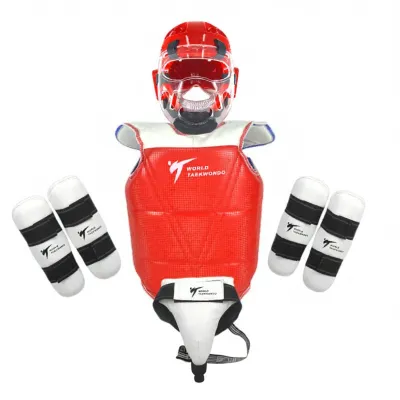
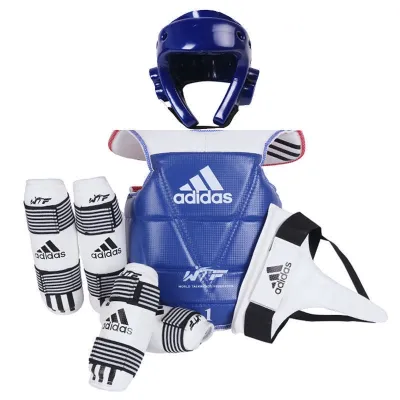
Selecting the most reliable taekwondo helmet in Singapore requires looking beyond brand names to focus on certified safety standards, structural design, and a precise fit. While several prominent manufacturers produce protective headgear, the ideal option is the one that matches your specific sparring intensity, fits your head shape without shifting, and carries the necessary regulatory approvals for your training environment. A high-quality helmet is not an isolated purchase; it functions as a critical component of your overall taekwondo gear set, working in tandem with your trunk protector, mouthguard, and other guards to shield you from high-impact kicks.
In Singapore’s active martial arts community, practitioners must navigate various training environments, from local community club classes to high-intensity dojang sparring and national tournaments. Because head contact rules vary significantly by age, skill level, and competition class, your choice of headgear must align with the specific safety mandates of your training space. By understanding how to evaluate structural features and certification labels, you can make an informed decision that prioritizes safety and performance.
Safety Standards and Certifications to Verify Before Buying
The first and most critical step in choosing a taekwondo helmet is verifying its safety certifications. For competitive sparring, the gold standard is World Taekwondo (WT) approval. Helmets that meet this standard feature a physically printed or embossed WT logo on the outer shell or a stitched label on the strap. This certification ensures the helmet has undergone rigorous testing for impact absorption, strap retention, and field of vision, making it mandatory for any tournament sanctioned by the Singapore Taekwondo Federation or international governing bodies.
Products mentioned in this guide
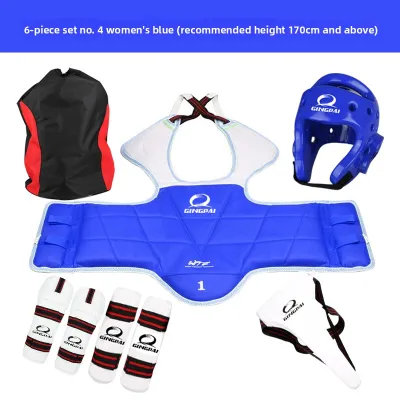
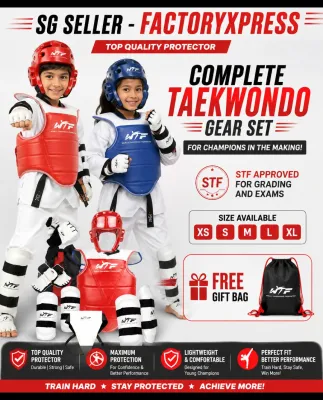
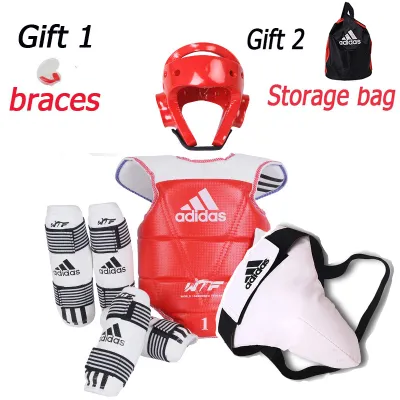
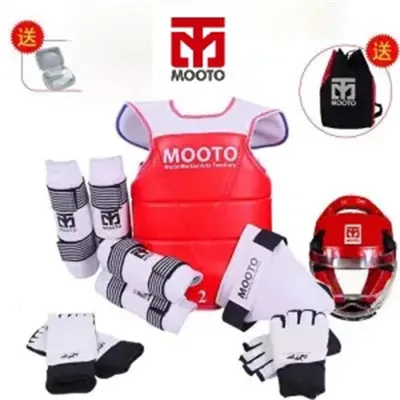
Prices are valid at publication and may change. Please refer to the product page for the latest price.
Beyond official logos, you must evaluate the structural materials specified by the manufacturer. Most high-quality taekwondo helmets are constructed from high-density dipped foam, typically utilizing Nitrile Butadiene Rubber (NBR) or Ethylene-Vinyl Acetate (EVA) foam coated in a durable polyurethane skin. This material is lightweight yet highly effective at dispersing the kinetic energy of a kick across a wider surface area, reducing localized impact force. When reviewing product specifications, look for high-density foam ratings that offer resilient shock absorption without adding excessive weight to your neck.
Coverage area is another vital safety metric that must not be overlooked. A properly designed helmet must provide comprehensive coverage for the most vulnerable areas of the head, including the forehead, temples, crown, and the occipital region at the back of the skull. Ensure the helmet’s design does not leave wide gaps around the temples or the base of the skull, as these areas are highly susceptible to injury during spinning kicks or accidental clashes of heads.
Comparing Helmet Designs for Sparring Protection
Taekwondo helmets generally fall into three design categories, each tailored to different sparring intensities and rulesets. The classic open-face helmet is the most common style seen in WT-style Olympic sparring. This design features an open front that provides maximum peripheral vision, allowing you to spot incoming high roundhouse or spinning hook kicks from extreme angles. Additionally, the open-face design offers excellent heat dissipation, which is a significant advantage in Singapore’s warm and humid training halls.

For younger practitioners, beginners, or those engaging in heavy-contact sparring, full-face helmets with integrated face guards offer a higher level of facial protection. These helmets feature a clear, high-impact plastic shield—usually made of polycarbonate—attached to the front of the headgear. This shield protects the nose, eyes, and teeth from direct impact while still allowing reasonable visibility. While they offer superior facial protection, they can trap heat and slightly reduce ventilation, making regular cleaning essential.
Helmets with detachable chin and cheek guards offer a versatile middle ground for practitioners who transition between different training modalities. These hybrid models allow you to attach a face shield during intense, full-contact sparring sessions and remove it for light technical drilling or point-sparring. When evaluating these models, inspect the attachment mechanisms, such as heavy-duty hook-and-loop straps or snap buttons, to ensure the guard remains completely secure under impact.
Evaluating Fit and Comfort for Active Sparring
No matter how advanced a helmet’s safety technology is, it cannot protect you effectively if it does not fit correctly. To find your size, use a flexible measuring tape to measure the circumference of your head approximately 2.5 centimeters above your eyebrows. Always compare this measurement directly to the specific brand’s sizing chart, as sizing standards vary significantly between manufacturers. Do not rely on generic small, medium, or large designations, as a loose helmet can rotate during a match, blocking your vision and exposing vulnerable areas.
When trying on a helmet, pay close attention to pressure points around your temples and forehead. The helmet should feel snug and secure, applying even pressure around the entire head without causing discomfort or headaches. Check the ear guards to ensure they align properly with your ears; they should feature ventilation holes that prevent pressure buildup upon impact while allowing you to hear your coach’s instructions clearly during a match.
The retention system is the final piece of the fit puzzle. Most taekwondo helmets utilize a chin strap with a hook-and-loop closure system, though some models feature adjustable buckles or rear adjustment dials. Test the stability of the helmet by securing the strap and shaking your head vigorously side-to-side and up-and-down. If the helmet slides forward over your eyes or shifts backward to expose your forehead, you need to adjust the straps or try a smaller size.
Integrating the Helmet into a Complete Taekwondo Gear Set
Your helmet does not function in a vacuum; it must integrate seamlessly with the rest of your taekwondo gear set to provide comprehensive protection. When putting on your gear, check the interface between the lower edge of the helmet and the collar of your trunk protector (hogu). There should be enough clearance to allow you to tilt your head back and turn it side-to-side without the helmet pushing against the hogu, which can restrict your movement and compromise your stance.
Compatibility with your mouthguard is another critical factor. The helmet’s chin strap must secure tightly under your jaw without forcing your mouth into an unnatural position that causes your mouthguard to shift or restrict your breathing. When testing a new helmet, always wear your mouthguard to ensure that the combination of the two protective pieces allows you to breathe comfortably and speak clearly during active training.
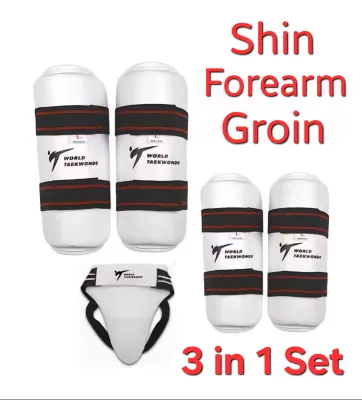
While it is possible to mix and match protective gear from different brands, purchasing a unified taekwondo gear set from a single manufacturer often provides distinct advantages. A complete set ensures consistent material durability, matching safety certifications, and uniform strap mechanisms. This consistency makes it easier to put on and adjust your gear quickly during fast-paced training sessions or tight competition schedules in Singapore.
Decision Framework: Choosing the Right Helmet for Your Training
To finalize your choice, use a structured decision framework based on your specific training goals and environment. If your primary focus is competitive Olympic-style sparring under WT rules, prioritize lightweight, open-face designs from WT-approved brands. These models offer the high peripheral vision and ventilation required for fast-paced, point-based competition, and they are mandatory for official tournaments in Singapore.
If you are a junior practitioner, a beginner, or someone training in a dojang that emphasizes heavy-contact sparring, a full-face helmet with a clear polycarbonate shield is the safer choice. This design minimizes the risk of facial cuts, nose injuries, and dental damage, allowing you to build confidence in your sparring techniques without fear of direct facial impacts. Ensure the shield is scratch-resistant and easy to clean to maintain clear visibility.
Before making any purchase, always consult with your dojang’s head instructor or check the specific competition guidelines for your upcoming tournament. Some local clubs and tournament organizers mandate specific brands, colors (typically red, blue, or white), or certification levels for safety and uniformity. Verifying these requirements beforehand prevents costly mistakes and ensures your new helmet is fully compliant with local training and competition standards.
Frequently Asked Questions (FAQ)
How often should a taekwondo helmet be replaced?
A taekwondo helmet should be inspected regularly and replaced immediately if it shows signs of structural degradation. Over time, repeated impacts, sweat absorption, and exposure to Singapore’s humid climate will break down the inner foam, reducing its ability to absorb shock. Look for visible cracks in the foam, deep scratches or tears in the outer polyurethane coating, or straps that have lost their elasticity and no longer hold the helmet securely.
Even in the absence of visible damage, most manufacturers recommend replacing protective headgear every two to three years of regular use due to the natural degradation of synthetic materials. Furthermore, if you experience a severe, high-impact blow to the head during sparring, the helmet must be retired immediately. The foam is designed to compress to absorb impact, and once compressed, it cannot provide the same level of protection against subsequent hits.
Can I use a martial arts helmet from another discipline for taekwondo?
Using a helmet designed for another martial art, such as boxing, Muay Thai, or MMA, is highly discouraged and often prohibited in taekwondo training and competition. Taekwondo helmets are specifically engineered to protect against high-velocity, blunt-force kicks coming from high angles, featuring thicker foam distribution on the crown and the back of the head. Boxing headgear, by contrast, is designed to protect against punches and often features thick cheek pads that severely limit the lower peripheral vision needed to spot incoming kicks.
Additionally, non-taekwondo headgear will lack the official WT approval required for competitive sparring. Using non-compliant gear can lead to immediate disqualification from official tournaments in Singapore. To ensure maximum safety and compliance with the rules of the sport, always invest in headgear specifically designed and certified for taekwondo sparring.
Community discussion
Share your experience or ask a question. Comments are reviewed before publication.