
Choosing between a telescopic and a fixed-length golf ball picker comes down to a trade-off between compact storage and instant, rigid simplicity. For most beginners, a telescopic golf ball picker is the more practical choice because it collapses to fit neatly inside a standard golf bag pocket, keeping your gear organized. However, if you prefer a highly durable tool with zero moving parts and have ample vertical space in your bag, a fixed-length picker remains a reliable alternative.
Design and Portability: Bag Space vs. Simplicity
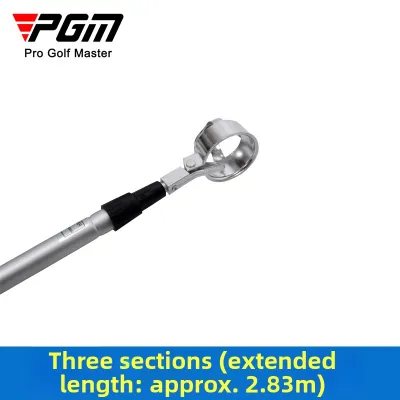
Telescopic pickers feature a collapsible design that saves vertical bag space. These tools utilize concentric shaft segments that slide into one another, allowing a tool that extends up to several meters to collapse down to the size of a standard club. This compact form factor means it can slide into the side apparel pocket of a stand bag or cart bag, completely out of sight when not in use.
However, this portability requires a few seconds of setup before use. When you spot a ball in a hazard, you must retrieve the tool, unlock the segments—often by twisting each section or releasing a series of clips—and extend it to the desired length. This process requires two hands and a brief moment of focus, which can temporarily disrupt your rhythm if you are trying to maintain a steady pace of play.
Products mentioned in this guide
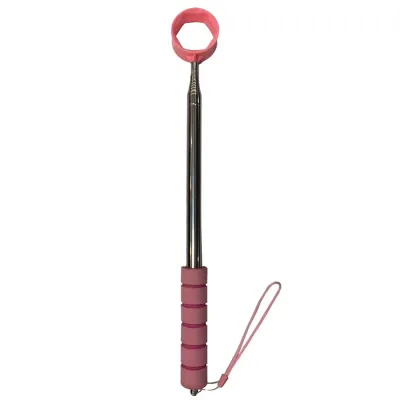
![[SG 🚚] Telescopic Golf Ball Retriever Stainless Extendable Telescopic Golf Ball Picker Claw Sucker Tool Non-Slip Handle Golf Ball Pick](https://img.lazcdn.com/g/p/398c9ac254a19a70a810e3430cfc27ff.jpg_400x400q80.jpg_.webp)
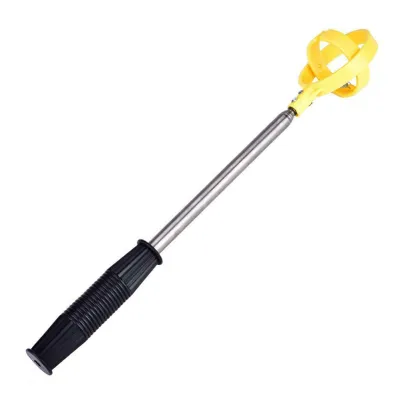
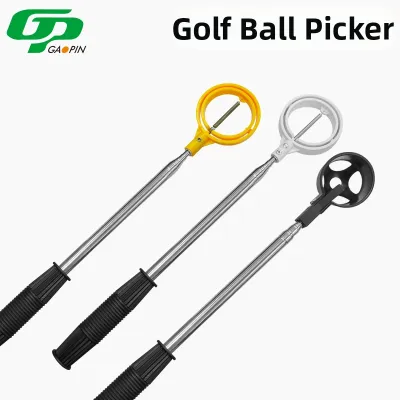
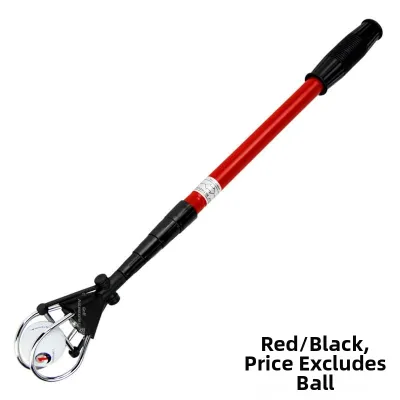
Prices are valid at publication and may change. Please refer to the product page for the latest price.
In contrast, fixed-length pickers have a rigid, single-piece or permanently joined build that remains instantly ready for retrieval. There are no joints to unlock or sections to extend; you simply pull the tool from your bag and reach for the ball. This immediate readiness is highly convenient when you want to quickly snag a ball near the hazard line without delaying your group.
The trade-off is that fixed-length models take up significantly more vertical space. Because they do not collapse, they must be stored in the golf bag just like an extra-long club, often sticking out higher than a driver. This can interfere with rain hoods, make the bag top-heavy, or crowd your club dividers. Beginners should measure the available tube, umbrella pocket, or side compartment space in their current golf bag before committing to a specific length.
Reach, Ergonomics, and On-Course Usability
Telescopic models allow users to adjust the reach for varying distances. If a ball is resting just a few feet away in shallow mud, you can extend only the first few sections. If it has rolled deep into a water hazard, you can fully extend the shaft to its maximum limit. This adaptability also makes the tool highly shareable, allowing players of different heights to adjust the length to their comfort levels.

However, fully extended telescopic shafts can feel unwieldy. As you extend the picker to its maximum length, the leverage changes, making the retrieval head feel significantly heavier. Additionally, the thinner upper sections of a telescopic shaft can flex or bow under the weight of the head, making precise targeting more difficult when trying to scoop a ball out of moving water or thick silt.
Fixed-length models offer a consistent, predictable reach without the need to manage locking mechanisms during a round. Because the shaft is uniform and lacks internal joints, there is no unexpected flexing or bowing when you reach for a ball. You quickly develop muscle memory for how the tool balances in your hands, allowing for highly accurate placement and retrieval on the first attempt.
Ergonomic checks should include evaluating grip comfort, overall weight distribution, and the physical effort required to extend, retract, or maneuver the tool over uneven terrain. Managing twist-locks on a telescopic model requires hand strength and dexterity, which can be challenging in cold or wet weather when hands are slippery. Over-tightening can jam the mechanism, while under-tightening can cause the shaft to collapse unexpectedly mid-retrieval.
When choosing a picker, look for a textured rubber or ergonomic foam handle that provides a secure hold even when wet. Assess the overall weight of the tool; a heavy steel shaft will quickly fatigue your arms if you are reaching over a steep bank. Opting for lightweight materials like anodized aluminum or fiberglass offers a good balance of strength and low weight, reducing physical strain during use.
Durability and Maintenance Checks
For telescopic mechanisms, inspect the locking joints, twist-locks, or push-buttons for wobble, debris accumulation, and smooth operation after repeated use. When retrieving balls from muddy hazards or sandy bunkers, fine grit and debris can easily get trapped inside the sliding segments. If not cleaned promptly, this grit acts as an abrasive, scratching the shaft and jamming the locking collars.
To maintain smooth operation, get into the habit of fully extending the telescopic picker after a wet round and wiping down each section with a clean, damp cloth. Allow the shaft to dry completely before collapsing it back down for storage. This simple step prevents moisture from being trapped inside the enclosed segments, which can lead to corrosion or mold growth over time.
For fixed-length shafts, check the material rigidity, joint integrity, and resistance to bending when applying lateral stress to dislodge a stuck ball. When attempting to retrieve a ball wedged under a tree root or deep in heavy rough, you may need to apply lateral leverage. High-quality fiberglass or thick-walled aluminum should resist permanent bending, but you should avoid applying excessive side-to-side force to prevent cracking.
Evaluate the retrieval head design—such as prong tension, suction cup condition, or claw mechanism—to ensure secure ball retention on various grass types and slopes. Inspect the tension of any metal prongs or plastic claws regularly; if they lose their spring tension, they will fail to grip the ball securely. For rubber suction cups, check for signs of dry rot or cracking, which can prevent the cup from forming a proper seal.
A head design that works perfectly on a flat green may struggle on a steep, rocky slope or in thick, tangled rough. Spring-loaded claws are excellent for grabbing balls nestled deep in grass because they physically wrap around the ball. Suction cups, on the other hand, require a flat, clean surface to work effectively and are best suited for shallow, clear water or smooth mud where you can press directly down on the ball.
Decision Framework: Choosing the Right Picker for Your Game
Choose a telescopic picker if your bag space is limited, you frequently retrieve balls from highly varied distances, or you need an adjustable tool to share with playing partners. Its ability to shrink down and hide away in a side pocket makes it incredibly convenient for golfers who prioritize a clean, uncluttered bag setup. It offers the versatility needed to handle unpredictable hazard distances without taking up valuable club space.
Choose a fixed-length picker if you prefer a grab-and-go tool with no moving parts, prioritize maximum structural rigidity, and have ample vertical storage in your bag. This option appeals to golfers who value simplicity and durability above all else. With no joints to clean, twist, or lock, you can grab the tool and retrieve your ball in a single, fluid motion, confident that the shaft will not flex or collapse under pressure.
Verify first if you have specific physical mobility constraints that require a highly customized, non-standard reach length not covered by standard retail options. For beginners with lower back pain, limited bending mobility, or joint stiffness, a golf ball picker is a vital tool for maintaining comfort on the course. If standard retail lengths do not provide enough reach to prevent you from bending over entirely, you may need to look for specialized extra-long telescopic models.
Before making a final decision, weigh these factors against your typical playing environment. If the courses you play have deep, steep-banked water hazards, a longer telescopic model is almost always necessary. If you mostly play dry courses with occasional shallow ditches, a shorter, simpler fixed-length model will serve you well. By matching the tool to your bag, your body, and your local course layout, you will ensure a more enjoyable and pain-free introduction to the game.
Frequently Asked Questions (FAQ)
Can I attach a golf ball picker to my existing putter or club?
Check the club manufacturer’s guidelines regarding aftermarket attachments to avoid voiding warranties. Many manufacturers offer small, screw-in suction cups or claw attachments designed to fit onto the grip end of your putter. While these are convenient for retrieving balls from the cup without bending down, installing them can sometimes damage the grip cap or void the club’s warranty.
Additionally, consider the risks of scratching club shafts, damaging grips, or altering the swing weight of your primary clubs. Attaching a heavy or bulky accessory to your putter can alter its balance, potentially affecting your putting stroke. For retrieving balls from deep hazards or rough, a dedicated standalone picker is always safer than risking damage to an expensive club.
Do I need a specific picker head for wet or muddy conditions?
Yes, the design of the retrieval head plays a crucial role in wet or muddy environments. Suction cups often lose their seal on wet, muddy, or heavily grass-covered golf balls, leading to dropped retrievals. When a golf ball is covered in wet mud, algae, or thick grass, the suction cup cannot form a proper seal, causing the ball to slip off repeatedly.
In contrast, mechanical prongs or claw mechanisms generally provide a more secure, physical grip in damp conditions where suction fails. These mechanisms physically cradle or lock around the ball, using mechanical tension rather than suction. This ensures a secure grip even when the ball is slick with water or coated in mud, allowing you to lift it successfully from the hazard on your first attempt.
Community discussion
Share your experience or ask a question. Comments are reviewed before publication.