
Selecting your first tennis ball machine, such as a Tenniix machine or another entry-level feeder, is a practical investment in your athletic development. For beginners, the primary goal of a ball machine is to build muscle memory through consistent, repeatable feeds. However, manufacturers often highlight high-end technical specifications that drive up the price without offering real value to someone still mastering basic groundstrokes. To make a smart purchase, you must distinguish between the essential features that accelerate your learning curve and the advanced options you can safely skip.
Essential Specs for Beginner Skill Development
Beginners do not need extreme ball speeds to improve. Instead, focus on a machine that offers a manageable speed range, typically starting around 30 to 60 km/h, which allows you to focus on your swing path and footwork. A highly adjustable feed rate is far more critical than raw velocity. Look for an interval setting that can be adjusted between 2 and 10 seconds, giving you ample time to reset your stance and prepare for the next shot without feeling rushed.
Ball capacity is another critical balance to strike. A hopper capacity of 70 to 150 balls is generally the sweet spot for novice players. While a larger hopper reduces the frequency of refills, it also adds significant physical weight and bulk to the machine. A 100-ball capacity provides plenty of continuous hits for a solid technical workout while keeping the unit manageable to lift and transport.
Products mentioned in this guide
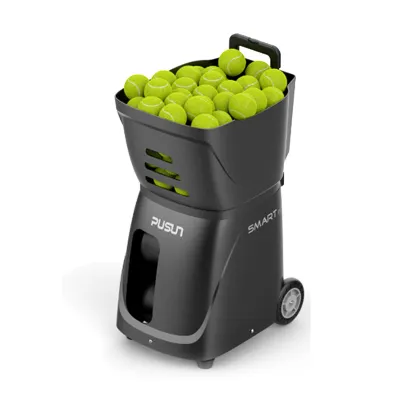
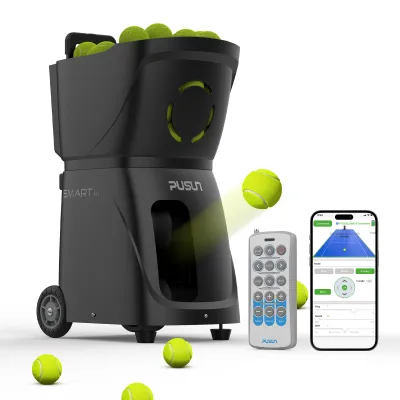
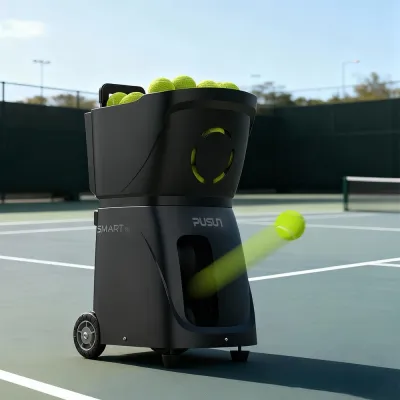
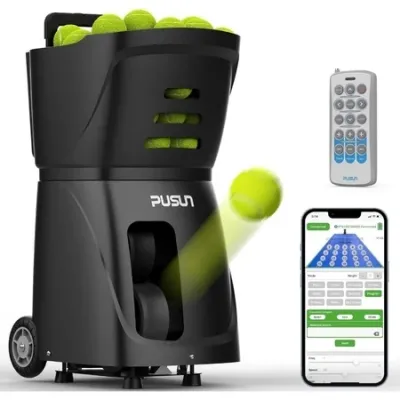
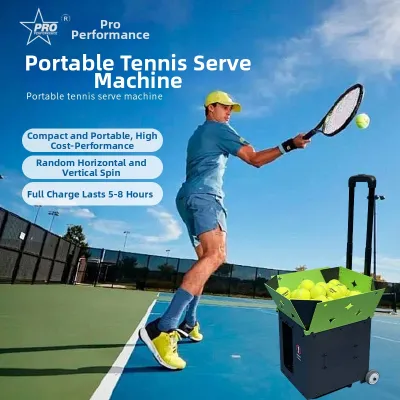
Prices are valid at publication and may change. Please refer to the product page for the latest price.
To practice different shots like deep baseline drives or short volleys, the machine must adjust its launch angle. Manual elevation adjustment, usually controlled by a physical knob on the side of the machine, is highly reliable and keeps the purchase price down. Motorized elevation, which lets you change the angle via a control panel, is a luxury that is convenient but not strictly necessary for basic stroke repetition.
Portability and Power: Matching the Machine to Your Routine
If you play on public courts in Singapore, you will likely need to transport the machine in a standard car boot or taxi. Check the folded dimensions of the machine before buying to ensure a proper fit. A weight of under 20 kg is highly recommended for easy lifting. Look for robust, built-in transport wheels and an extendable towing handle, as dragging a heavy machine across hot asphalt or concrete paths can quickly become exhausting.

Most public tennis courts do not have accessible power outlets near the baseline, making a battery-powered machine almost always necessary for outdoor play. Verify the rated battery runtime in the manufacturer’s specifications; a realistic 2 to 4 hours of continuous use is standard for most entry-level units. Check the charging instructions carefully, as some lead-acid batteries require immediate recharging after every use to prevent capacity degradation, while lithium-ion alternatives offer lighter weight but at a higher price point.
Singapore’s humid climate and sudden rain showers demand careful equipment maintenance. No standard tennis ball machine is fully waterproof. Always check the manufacturer’s guidelines regarding moisture exposure and outdoor storage. Store the machine indoors in a dry, dust-free environment, and wipe down the throwing wheels after use to remove felt debris and moisture, which can cause slipping and inconsistent feeding.
Advanced Features Beginners Can Safely Ignore
High-end machines often feature complex oscillation patterns, including random, vertical, and multi-line sweeping designed to simulate real match play. For a beginner, this is often counterproductive. Your primary task is to isolate your swing and build a clean contact point. Simple horizontal sweeping (feeding balls left and right) is the maximum variation you need early on, while fixed-point feeding is even more valuable for isolating specific technical flaws.
Advanced spin control is another feature that beginners can safely skip. While the ability to generate heavy topspin or backspin is useful for intermediate and advanced players, novices should focus on hitting flat, clean shots. Learning to handle heavy spin before you can consistently return a flat ball can lead to poor habits and frustration.
Many modern machines feature smartphone apps or wireless remotes. While convenient for starting and stopping the feed from across the net, they add a significant premium to the retail price. A simple delay feature on the machine itself—giving you 10 to 15 seconds to walk to the other side of the net before the first ball launches—is a highly cost-effective alternative.
How to Verify Specs and Conditions Before Purchase
When reading product manuals, look closely at how specifications are measured. For instance, the maximum ball speed is often tested under ideal conditions with a fully charged battery and brand-new, pressurized balls. Real-world performance with older practice balls may be lower, so treat peak values as theoretical limits rather than everyday performance standards.
Check the fine print of the warranty before finalizing your purchase. The throwing wheels (the rubber wheels that grip and propel the ball) and the internal battery are high-wear components. Some manufacturers exclude these parts from the standard warranty or offer a much shorter coverage period for them, so verify these terms beforehand.
Not all machines handle all ball types equally. Pressureless tennis balls are highly recommended for machine use because they do not lose their bounce over time, but they are heavier and stiffer than standard pressurized balls. Verify that the machine’s motor and throwing wheels are rated to handle pressureless balls without jamming or overheating.
Frequently Asked Questions (FAQ)
Can I use regular used tennis balls in a ball machine?
Yes, but with caveats. Worn, wet, or heavily felted balls will cause inconsistent feeding speeds and frequent jams. The throwing wheels rely on consistent friction; if one ball is bald and the next is highly fuzzy, they will land in completely different spots. Inspect your balls regularly, discard any that are soft or split, and keep them dry to protect the machine’s internal mechanics.
How should a beginner allocate their budget for a tennis ball machine?
Prioritize mechanical reliability, battery quality, and portability over digital features. Allocate the bulk of your budget to a sturdy chassis, a reliable motor, and a high-quality battery system. A basic, durable machine that consistently feeds balls to a single spot for several seasons is infinitely more valuable to a beginner than a feature-rich, fragile unit that breaks down after a few months.
Community discussion
Share your experience or ask a question. Comments are reviewed before publication.