
Investing in a tennis ball machine can transform your game, but navigating the technical spec sheets can be overwhelming. To get the most out of your training, you need to look past the marketing hype and focus on the parameters that directly impact your court sessions. The most critical specifications are feed frequency, spin capabilities, oscillation, and physical portability, while maximum ball speed is often a secondary concern. By matching these key features to your current skill level and training environment, you can avoid overpaying for complex settings you will never use.
Ball Speed and Feed Frequency: Matching Your Skill Level
When comparing machines, it is easy to get distracted by top-end speed ratings. However, maximum ball speed is rarely the most critical factor for developing a reliable, clean stroke. Most intermediate players benefit far more from consistent, mid-range speeds—typically between 40 and 70 km/h—which allow you to focus on preparation, footwork, and clean contact. Unless you are an elite competitive player training for heavy, pro-level serves, paying a premium for a machine that clocks over 110 km/h is unnecessary.
Feed frequency, or the interval between ball deliveries, is a far more impactful specification for your daily rhythm. Measured in seconds or balls per minute, this setting dictates the intensity of your drills and your recovery footwork. A slower feed rate of 6 to 10 seconds is ideal for beginners focusing on single-shot mechanics and recovery steps. Intermediate and advanced players will want a machine capable of feeding every 2 to 4 seconds to simulate the rapid pace of real rallies and build cardiovascular endurance.
Products mentioned in this guide
![SG [In Stock]PUSUN PT-Smart Tennis Ball Machine - 100% Genuine Automatic Launcher with 3-Year Warranty & Lifelong Maintenance Portable for Tennis Training & Games](https://img.lazcdn.com/g/p/2ec99476661dd32c9412c8f267272116.jpg_400x400q80.jpg_.webp)
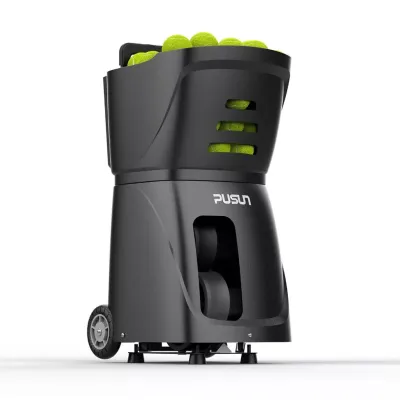
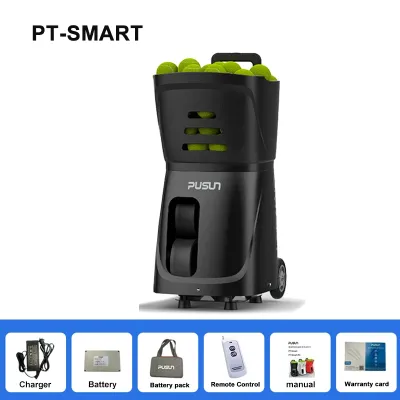
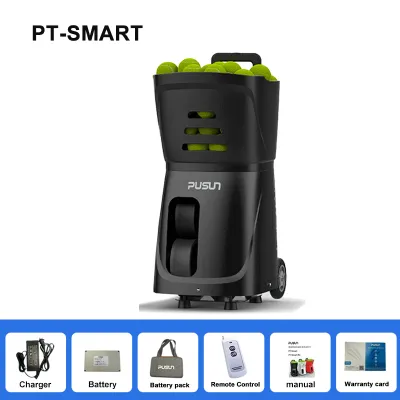
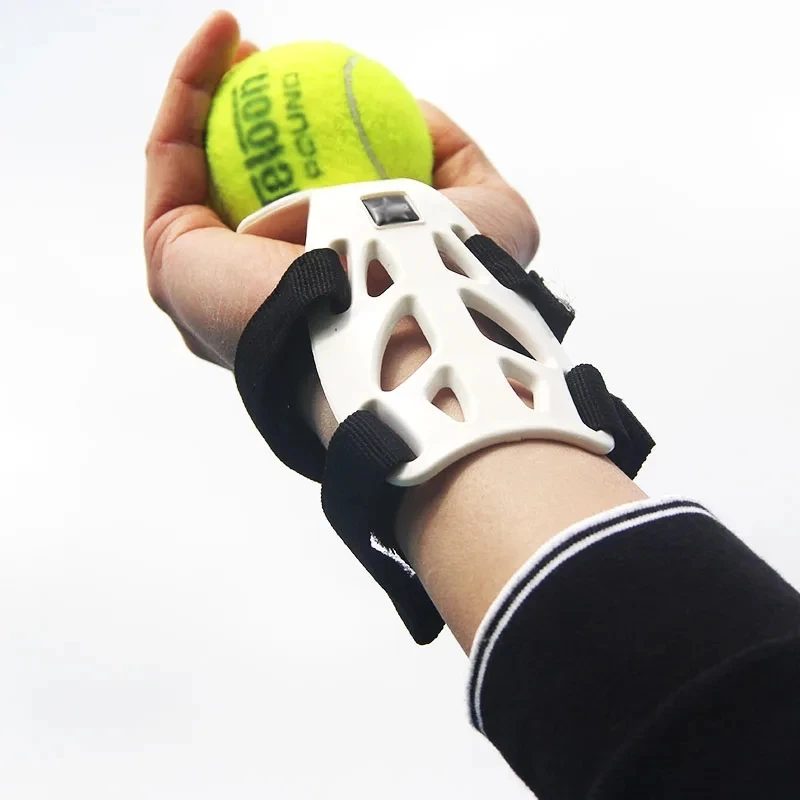
Prices are valid at publication and may change. Please refer to the product page for the latest price.
To select the right balance, evaluate your current skill level against these specifications:
- Beginners: Look for a speed range of 20 to 50 km/h and a minimum feed interval of 6 seconds. This allows ample time to reset your stance and prepare your racket.
- Intermediate Players: Seek a machine offering 40 to 80 km/h speeds and a feed rate adjustable down to 3 seconds, which supports active footwork drills.
- Advanced Players: Prioritize machines reaching up to 100 km/h with highly customizable feed intervals down to 1.5 or 2 seconds to test quick-reaction volleys and intense physical conditioning.
Spin Capabilities: Topspin, Backspin, and Sidespin
A tennis ball machine that only shoots flat balls will quickly limit your progress. To transition your practice to real-world match play, you must train against the varying trajectories and bounces created by spin. Topspin forces you to prepare early and hit the ball at a higher contact point, simulating the heavy groundstrokes common in modern baseline play. Backspin, or slice, is crucial for practicing low volleys and learning how to bend your knees to lift low-skidding balls over the net.

Advanced players should also consider whether they need sidespin capabilities. While less common on entry-level machines, sidespin allows you to practice returning tricky slice serves or dealing with angled, fading shots. This feature requires more complex dual-wheel throwing mechanisms, which naturally increases the machine’s price point.
If you are focused on foundational stroke mechanics, a basic model that offers flat delivery or adjustable single-spin (topspin only) is often sufficient and highly cost-effective. However, if your goal is to compete in local club leagues, investing in a multi-spin machine with independent wheel speed controls is a worthy upgrade. This setup lets you fine-tune the exact ratio of topspin or backspin to replicate the diverse spin profiles you will face across the net.
Oscillation and Random Modes: Simulating Real Match Play
Repetitive, single-spot feeding is excellent for “grooving” a stroke, but it does not teach you how to move on the court. This is where oscillation specifications become vital. Basic horizontal oscillation sweeps the machine side-to-side, delivering balls across the width of the court. This forces you to run, recover to the center, and hit on the move, which is essential for building match-specific fitness and footwork.
Vertical oscillation takes training a step further by changing the depth of the feed, mixing deep baseline lobs with short, shallow approach balls. When a machine combines both horizontal and vertical movement, it features “dual” or “multi-axis” oscillation. This dual movement prevents you from anticipating the next shot, forcing you to read the ball’s flight path dynamically just as you would in a live match.
For the ultimate match simulation, look for machines with true random oscillation modes. Rather than sweeping predictably from left to right, these models randomly vary the speed, spin, depth, and direction of each ball. Use fixed-feed settings when you are adjusting your grip or learning a new swing pathway. Once your mechanics are stable, switch to random oscillation to challenge your reaction time, decision-making, and court coverage.
Hopper Capacity, Battery Life, and Portability
The physical and logistical specifications of a tennis ball machine dictate how often you will actually use it. Hopper capacity—the number of balls the machine can hold—directly affects the flow of your practice. A capacity of 70 to 100 balls is standard for compact, highly portable machines, providing about five to seven minutes of continuous drilling before you need to collect balls. Larger hoppers holding 150 or more balls offer longer, uninterrupted sessions but make the machine significantly heavier and bulkier to transport.
Battery life is another critical factor, especially if you play on public outdoor courts in Singapore where power outlets are unavailable. Most battery-powered models claim between two to four hours of runtime. However, running the machine at maximum speed, high spin levels, and wide oscillation will drain the battery much faster. If you plan on long training sessions, look for machines that support external battery packs or offer hybrid AC/DC power options so you can plug into a court outlet when available.
Portability features should never be overlooked, particularly if you need to load the machine into a car boot or navigate condo lifts and pathways. Pay close attention to:
- Folded Dimensions: Ensure the machine fits comfortably inside your vehicle's boot alongside your rackets and gear.
- Wheel Type: Large, heavy-duty wheels are much easier to roll across grass, gravel, or uneven court pathways than small, hard plastic wheels.
- Handle Design: An ergonomic, extendable towing handle makes transporting a 20kg machine feel like pulling a lightweight suitcase.
Specs You Can Safely Deprioritize When Comparing Models
When comparing models, it is easy to overspend on high-tech specifications that offer little practical return on your investment. Extreme top speed claims are the most common marketing trap. While a machine capable of firing balls at 130 km/h sounds impressive, the vast majority of recreational players and club competitors rarely need to practice against speeds exceeding 80 km/h. High-speed settings also accelerate wear on the machine’s internal wheels and deplete the battery rapidly.
Overly complex app connectivity is another feature you can often deprioritize. While smartphone integration and custom drill-programming apps are convenient, they can sometimes introduce software glitches or connectivity issues on the court. A simple, physical remote control or a straightforward manual control panel is often more reliable, faster to set up, and keeps your focus entirely on your training rather than troubleshooting a Bluetooth connection.
Finally, be cautious of any machine that hints at requiring specialized or proprietary balls. To maintain long-term affordability, choose a versatile model designed to work with standard pressurized or pressureless tennis balls. This ensures you can easily source replacement balls from any local sports retailer or online marketplace without worrying about compatibility issues or voiding your machine’s warranty. Always refer to the manufacturer’s user manual for specific ball compatibility and maintenance guidelines before operating your machine.
Frequently Asked Questions (FAQ)
Do I need a tennis ball machine with a remote control?
While not strictly mandatory, a remote control is highly recommended for solo practice. It allows you to pause the feed from across the court to adjust your position, catch your breath, or clear balls from the net without having to walk back and forth. If you choose a model without a remote, look for one that features a start-delay timer, giving you ample time to walk to your baseline before the first ball is launched.
Can I use regular tennis balls in any machine?
Most standard tennis ball machines are compatible with regular pressurized and pressureless tennis balls. However, mixing balls of different brands, wear levels, or wetness can cause inconsistent launches and frequent jams. For the best performance and longevity of your machine’s throwing wheels, use a dedicated set of pressureless balls, keep them dry, and avoid mixing heavily worn, bald balls with newer ones. Always consult your machine’s manufacturer guidelines for specific ball recommendations.
Community discussion
Share your experience or ask a question. Comments are reviewed before publication.