
When selecting an outdoor tent, technical specifications can quickly become overwhelming. Among the various numbers listed on product descriptions, the waterproof rating—expressed in millimeters (such as 1,500mm or 3,000mm)—is one of the most critical factors determining your comfort and safety. This rating, known as the hydrostatic head measurement, directly indicates how much water pressure the fabric can withstand before it begins to leak. Understanding how to interpret these numbers allows you to select a shelter that matches your specific camping environment without carrying unnecessary weight or overspending.
What the "mm" Hydrostatic Head Rating Actually Measures
The millimeter rating on an outdoor tent refers to its Hydrostatic Head (HH) rating, which is a standardized scientific measurement of fabric water resistance. In a laboratory setting, technicians clamp a tube over a piece of taut tent fabric. They gradually fill this tube with water, increasing the pressure exerted on the material. The height of the water column at the exact moment three drops of water penetrate the fabric determines the rating. For example, a fabric rated at 2,000mm can successfully resist the pressure of a 2,000-millimeter (two-meter) vertical column of water before leaking.
It is important to recognize that this test measures static water pressure rather than the volume of rainfall or the duration of a storm. In the real world, rain does not sit statically on your tent. Wind-driven rain strikes the fabric with significant kinetic energy, which drastically increases the localized pressure on the material. Furthermore, physical contact—such as a tree branch brushing against the rainfly, or your sleeping bag pressing against the interior wall—creates mechanical pressure that can force water through a fabric that would otherwise pass a static lab test. Consequently, a rating that seems high in a controlled laboratory environment may perform differently under turbulent outdoor conditions.
Products mentioned in this guide
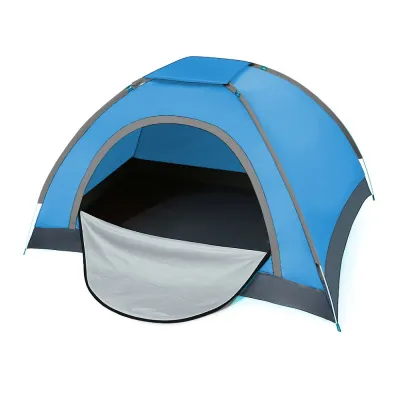
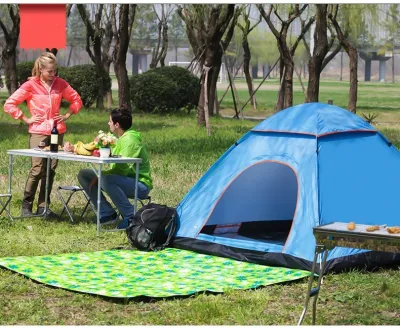
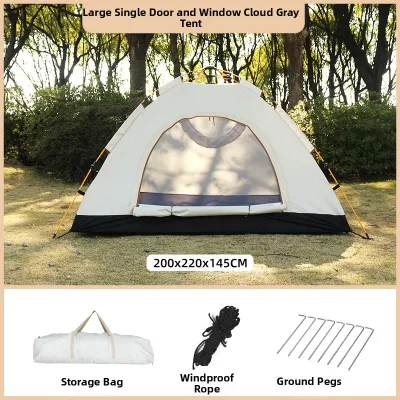

![[SG Seller] Gazebo Tent 2m*2m (GreenRedBlue)](https://img.lazcdn.com/g/p/e326d0f46f861e9f9638594b36f39252.png_400x400q80.png_.webp)
Prices are valid at publication and may change. Please refer to the product page for the latest price.
Decoding Common Waterproof Ratings for Outdoor Tents
To make an informed decision, you must translate these abstract laboratory numbers into real-world weather scenarios. Manufacturers apply different coatings to achieve specific performance tiers, each suited for distinct environmental conditions:

- 1,000mm to 1,500mm: This range represents the baseline for basic water resistance. Tents in this category are suitable for mild weather, light summer drizzles, or short weekend trips where heavy rain is not forecasted. However, under sustained downpours or moderate winds, these fabrics are highly susceptible to "wetting out," a condition where the fabric becomes saturated and allows moisture to mist or seep through.
- 2,000mm to 3,000mm: This is the standard benchmark for a reliable 3-season outdoor tent. A rainfly with this rating can comfortably handle steady, prolonged rain and moderate wind gusts without leaking. It offers a dependable balance of weather protection and weight, making it the go-to choice for most recreational campers and backpackers.
- 3,000mm and above: These heavy-duty ratings are engineered for severe weather, monsoon conditions, or high-altitude expeditions. Fabrics in this tier feature thick polyurethane coatings or advanced composite laminates designed to withstand high-velocity wind-driven rain over extended periods.
While a rainfly performs well with a 2,000mm rating, the tent floor requires a significantly higher specification, often ranging from 5,000mm to 10,000mm or more. This discrepancy exists because of the immense localized pressure exerted on the ground. When you kneel, sit, or sleep inside your tent, your body weight concentrates pressure on a small surface area. If the ground is saturated, this mechanical force easily pushes groundwater up through a lower-rated fabric. A high floor rating ensures that your gear and bedding remain dry even when pitched on soggy, waterlogged soil.
Why a Higher mm Rating Isn't Always the Best Choice
When comparing outdoor tent specifications, it is easy to fall into the trap of assuming that a higher waterproof rating is always superior. However, chasing the highest possible number introduces several practical trade-offs that can compromise your overall camping experience.
First, there is a distinct weight penalty associated with high waterproof ratings. To achieve a rating of 4,000mm or more, manufacturers must apply multiple thick layers of polyurethane (PU) coating or use heavier, denser fabrics. For backpackers and hikers who must carry their shelter over long distances, this extra weight can quickly become a physical burden.
Second, heavy waterproof coatings severely restrict fabric breathability. In warm, humid environments, a highly coated rainfly traps the moisture generated by your breath and perspiration inside the tent. This lack of airflow leads to heavy condensation on the interior walls, making the inside of your shelter feel damp and clammy, even if not a single drop of rain has penetrated from the outside.
Finally, excessively thick PU coatings are highly vulnerable to chemical degradation over time. In warm and humid climates, polyurethane is susceptible to hydrolysis—a process where moisture in the air breaks down the chemical bonds of the coating. This results in a sticky, peeling, and foul-smelling waterproof layer that permanently ruins the tent’s effectiveness.
Critical Waterproof Features Beyond the Fabric Rating
An outdoor tent is only as dry as its weakest point. Relying solely on the hydrostatic head rating of the fabric can lead to unexpected leaks if other construction elements are neglected.
- Seam Construction: Every seam in a tent represents thousands of needle punctures. Even a fabric rated at 10,000mm will leak rapidly if these holes are left exposed. High-quality tents feature factory-taped or welded seams, where a waterproof tape is thermally applied over the stitching to seal the entry points. Always verify that a tent has fully taped seams before purchasing.
- Tent Geometry: The physical shape of your shelter plays a major role in shedding water. Steeply sloped walls allow rainwater to run off quickly, minimizing the time water sits on the fabric. Conversely, flat roof sections or poorly tensioned panels allow water to pool, which increases localized hydrostatic pressure and eventually forces water through the material.
- Zippers and Vents: Zippers are notorious entry points for water. Look for tents equipped with wide storm flaps that fold over the zipper tracks, or models that utilize water-resistant polyurethane-coated zippers. Additionally, rainproof vents should have stiffened hoods to keep rain out while allowing humid air to escape.
- Bathtub Floor Design: A bathtub floor uses a continuous piece of waterproof material that wraps several inches up the sides of the tent before meeting the wall fabric. This design ensures that ground runoff and splashing mud cannot seep through the lower seams of your shelter during heavy downpours.
Matching the Rating to Singapore's Climate and Your Activity
Selecting the ideal outdoor tent requires matching these technical specifications to your local environment and camping style. In Singapore, the tropical climate presents a unique challenge: frequent, intense thunderstorms paired with consistently high humidity and warm temperatures. Safe camping in these conditions relies on proper gear preparation, site selection, and understanding your equipment’s limits.
For casual camping at local campgrounds, such as East Coast Park, ventilation is just as critical as waterproofing. A rainfly with a 2,000mm rating provides ample protection against sudden tropical downpours, while large inner mesh panels are essential to facilitate cross-ventilation and manage interior humidity. Because you do not need to carry the tent over long distances, a slightly heavier model with robust ventilation ports is highly suitable.
If you are planning multi-day backpacking treks where weight is a primary concern, look for tents utilizing silicone-coated nylon (silnylon) with a rating of 1,500mm to 2,000mm. Silnylon is incredibly lightweight, highly durable, and naturally slippery, allowing water to slide off effortlessly when pitched tautly.
Regardless of the rating you choose, proper maintenance is essential to preserve your tent’s waterproof integrity. After every trip in a humid climate, always check the manufacturer’s care instructions. Ensure the tent is completely clean and dry before packing it away in a cool, well-ventilated space. Storing a damp tent in a humid environment will accelerate hydrolysis, destroying the protective coating long before the fabric itself wears out.
Frequently Asked Questions (FAQ)
Does a higher waterproof rating mean the tent will last longer?
No, a higher hydrostatic head rating does not guarantee a longer lifespan. The millimeter rating only measures the fabric’s resistance to water pressure when new. Overall durability depends on the fabric’s denier (thickness), tear strength, UV resistance, and the chemical stability of the coating. A lower-rated tent made with high-quality materials and stored properly will often outlast a cheap, high-rating tent that suffers from coating peeling or fabric degradation.
Why is my tent wet inside even with a high mm rating?
If you notice moisture inside a highly waterproof tent, the cause is almost always condensation rather than a leak. When you sleep, your breath releases moisture into the air. In a sealed tent, this warm, humid air hits the cooler fabric of the rainfly and condenses into water droplets. To prevent this, maximize cross-ventilation by opening vents and mesh windows, use a footprint to block ground moisture from rising, and ensure the rainfly is pitched tautly so it does not touch the inner tent body.
Community discussion
Share your experience or ask a question. Comments are reviewed before publication.