
Finding the thickest yoga mat brands for joint protection requires looking beyond generic marketing labels and focusing on exact millimeter specifications and foam density. While many brands in Singapore advertise “ultra-thick” or “maximum comfort” options, the actual level of joint protection depends heavily on the material composition and how the foam behaves under load. This guide provides a comprehensive framework to compare thick exercise foam options available in Singapore, helping you evaluate material density, stability trade-offs, and verification methods to find the ideal support for your knees, wrists, and spine.
Understanding Thickness and Joint Protection
Yoga mats generally fall into three thickness categories: thin travel mats (1mm to 3mm), standard mats (4mm to 5mm), and extra-thick mats (6mm to 15mm or more). Standard mats provide a basic barrier against hard floors but often fail to cushion sensitive joints during weight-bearing poses like low lunges, table-tops, or side planks. Extra-thick mats are specifically engineered to distribute body weight over a larger surface area, reducing localized pressure on bony prominences.
However, physical thickness is only half of the equation when it comes to joint protection. Foam density determines how much the mat compresses under your body weight. A very thick mat made of low-density foam will bottom out, meaning your knees press straight through the foam to the hard floor beneath. Conversely, a slightly thinner mat made of high-density foam will resist complete compression, keeping your joints suspended and cushioned throughout your practice.
Products mentioned in this guide
![[OKLIFE. SG]EVA Comfort Foam yoga matt for Exercise Yoga mat Yoga Mat Anti-skid Sports Fitness Mat Thick](https://img.lazcdn.com/g/p/0893df0561df4aa56b96d122a3df2f64.jpg_400x400q80.jpg_.webp)
Prices are valid at publication and may change. Please refer to the product page for the latest price.
While maximum cushioning sounds ideal, it introduces a significant trade-off regarding stability. When standing on a thick, soft foam surface, your feet sink into the material, which compromises your balance in poses like Tree Pose or Warrior III. This sinking effect forces the small stabilizing muscles in your ankles and feet to work much harder to keep you upright, which can lead to premature fatigue or joint strain if you are not accustomed to the instability.
To balance joint protection with safety, you must match the mat’s thickness and density to your specific style of exercise. Dynamic practices that involve rapid transitions and standing balances require a firmer, moderately thick mat. Gentle, restorative, or floor-based routines can safely utilize much thicker, softer foam options since the risk of losing balance and falling is minimal.
Key Dimensions for Comparing Thick Foam Brands
When comparing brands that offer thick exercise foam, the material composition is the most critical factor to analyze. The most common materials used for thick mats are Nitrile Butadiene Rubber (NBR), Thermoplastic Elastomer (TPE), Polyvinyl Chloride (PVC), and Natural Rubber. Each material offers a distinct balance of cushioning, weight, durability, and environmental impact.

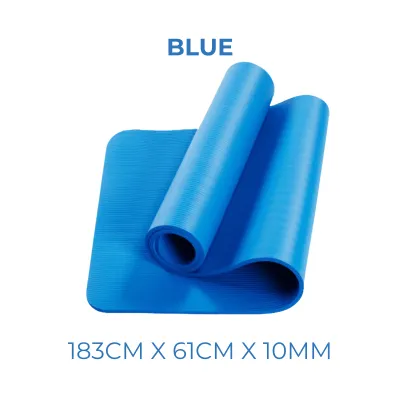
NBR is the material most commonly used for ultra-thick mats, typically ranging from 10mm to 15mm. It is incredibly soft, highly cushioned, and very lightweight, making it comfortable for floor-based exercises and Pilates. However, NBR has low density and low tensile strength, meaning it stretches easily under horizontal force and does not provide the stable grip required for active yoga flows.
TPE is a popular mid-range option, often available in thicknesses of 6mm to 8mm. It is lighter than PVC and natural rubber, offers moderate density, and is generally free from harmful phthalates. TPE provides a closed-cell surface, which prevents sweat from soaking into the mat, but it may offer less grip when wet and can wear down faster under heavy daily use.
High-density PVC is the industry standard for professional-grade joint protection, often manufactured at a solid 6mm thickness. While PVC is a synthetic material that is heavier than TPE and NBR, its dense structure provides unmatched shock absorption without bottoming out. It offers a highly stable platform for standing poses while still shielding the knees and joints from hard studio floors.
Natural rubber and Polyurethane (PU) mats are highly dense and typically max out at 5mm to 6mm in thickness. These mats are very heavy but offer exceptional, immediate grip and firm, supportive cushioning. They are highly durable and environmentally friendly, though they require more maintenance and can carry a distinct rubber scent when new.
Beyond material, surface texture and grip are vital when evaluating a thicker mat. As thickness increases, any slight slip can cause a sudden loss of balance, putting sudden, acute stress on your joints. Look for brands that feature textured non-slip patterns on both the top surface for your hands and feet, and the bottom surface to prevent the mat from sliding across slick studio tiles or wooden floors.
Portability is another essential dimension to consider, especially in an urban environment like Singapore. A 15mm NBR mat rolls up into a very bulky cylinder that can be awkward to carry on public transport during peak hours. High-density 6mm PVC or natural rubber mats do not roll as tightly and can weigh upwards of three kilograms, making a dedicated carrying strap or backpack style bag necessary for commuting to local studios.
How to Verify Brand Specifications and Claims
Because marketing terms like “extra-thick,” “cloud-like,” or “orthopedic” are not standardized, you must learn to verify product specifications independently. Always look for the exact millimeter measurement on the manufacturer’s label or product listing. If a brand does not clearly state the exact thickness in millimeters, it is best to avoid the product in favor of a brand that provides transparent technical specifications.
To assess the density of a thick foam mat before purchasing, look closely at user reviews and independent feedback. Search specifically for terms like “bottoming out,” “knee pain,” or “compression.” If multiple users of a similar body weight report that their knees or hips press completely through the mat to the floor during floor exercises, the foam density is likely too low for effective joint protection.
Another practical verification method is the rebound test, which measures how quickly the foam recovers its shape after compression. High-quality, high-density foam will spring back almost instantly when you press your thumb firmly into the surface. If the indentation remains visible for several seconds, the foam may degrade quickly under regular use, leading to permanent flat spots where you place your knees and hands.
Finally, take advantage of local retail return policies and physical showrooms in Singapore. Visiting a physical sporting goods store or specialty yoga boutique allows you to feel the foam density firsthand and test its resistance to compression. If purchasing online, verify that the retailer offers a flexible return or exchange policy so you can inspect the mat’s thickness and density in your own home before committing to keeping it.
Decision Framework: Choosing the Right Thick Mat
To select the ideal thick exercise foam mat for your needs, you can use a simple, condition-based decision framework. Start by analyzing the primary style of your physical practice. If your routine consists almost entirely of floor-based exercises, Yin yoga, restorative stretching, or Pilates, prioritize maximum cushioning by choosing a 10mm to 15mm NBR or TPE mat.
If your practice is dynamic, involving Vinyasa flows, Ashtanga, or frequent standing balance poses, opt for a high-density 6mm PVC, TPE, or natural rubber mat. This thickness provides a safe middle ground, offering sufficient joint protection during floor work while maintaining the firm, stable foundation required to prevent ankle wobbling and loss of balance during standing sequences.
For those who practice a hybrid of both styles, a high-density 6mm to 8mm TPE mat offers an excellent compromise. It provides more cushioning than a standard mat without the extreme bulk and instability of a 15mm utility mat. This versatile option is easy to transport to local Singapore studios while still delivering reliable joint relief.
If you have pre-existing medical joint conditions, chronic knee pain, or are recovering from an injury, do not rely solely on a thicker mat to solve the issue. Consult a physical therapist or healthcare professional to determine if you require specific supportive props, such as yoga blocks, knee pads, or tailored exercise modifications, to protect your joints safely during physical activity.
Frequently Asked Questions (FAQ)
Can I use a thick foam mat for hot yoga?
Thick foam mats are generally not recommended for hot yoga unless they are specifically designed with a closed-cell, high-density structure and paired with a non-slip towel. Softer, low-density foams like NBR absorb sweat like a sponge, making them heavy, difficult to clean, and prone to harboring bacteria in Singapore’s humid climate. Furthermore, when these soft surfaces become wet, they lose their grip entirely, creating a slippery surface that increases the risk of joint slips and muscle strains.
If you prefer a thicker mat for hot yoga, look for a 6mm high-density PVC or natural rubber mat with a closed-cell surface. These materials do not absorb moisture, allowing you to easily wipe away sweat during class. Always use a specialized microfiber yoga towel over the mat to absorb perspiration and maintain a secure grip during sweaty, high-temperature sessions.
Does a thicker yoga mat mean it will last longer?
Thickness does not directly correlate with durability. The lifespan of a yoga mat is determined by its material quality and density rather than its physical depth. For example, a cheap 15mm NBR foam mat may begin to tear, stretch, or develop permanent flat spots within a few months of regular use because the low-density foam lacks structural integrity.
In contrast, a high-density 6mm PVC or natural rubber mat from a reputable manufacturer can last for several years of daily practice. These dense materials resist compression set, meaning they retain their original thickness and cushioning properties even after years of supporting your body weight. When prioritizing longevity, invest in high-density materials rather than simply choosing the thickest option available.
Are thick exercise foam mats suitable for travel?
Thick exercise foam mats are generally poorly suited for travel due to their bulk and weight. A standard 10mm to 15mm foam mat rolls up into a very wide cylinder that is difficult to pack into standard luggage or carry comfortably on flights. Additionally, high-density thick mats can weigh over three kilograms, quickly eating into your travel baggage allowance.
If you travel frequently but still require joint protection, consider purchasing a thin, foldable travel mat (1mm to 2mm) that you can layer on top of a rental mat at your destination studio or hotel gym. Alternatively, you can pack lightweight, dedicated foam knee pads or a small travel-sized foam pad to place under your knees and joints only when performing floor-based poses, saving valuable luggage space.

Community discussion
Share your experience or ask a question. Comments are reviewed before publication.