
Selecting the right overgrip is a critical yet often overlooked decision that directly impacts your control, power, and confidence on the badminton court. The ideal Tourna Grip variant for your racket depends entirely on your personal hand sweat levels, tactile preferences, and how much direct feedback you want to feel from the racket handle’s bevels. While the Tourna brand is highly regarded for its moisture-management properties, the different models in its lineup cater to distinct playing styles and physical needs. Tourna Original is designed for players who prioritize a dry, paper-like texture and maximum racket feel, whereas Tourna Mega variants focus on providing a thicker, more cushioned barrier with enhanced shock absorption. Before making a purchase, you should always verify the specific thickness, length, and material composition printed on the product packaging to ensure it matches your racket’s handle size.
Assessing Your Badminton Grip Requirements
To find the perfect match, you must first evaluate your own physical and environmental playing conditions. Hand sweat is the primary factor to analyze. You can categorize your sweat level by observing your hands during a typical session: dry hands rarely lose traction, normal hands experience mild moisture during intense rallies, and heavy sweat results in visible wetness that can cause the racket to twist or slip out of your hand during a smash.
Playing intensity and rally duration also play a significant role in how quickly a grip degrades. High-intensity singles players who constantly shift their grip between offensive and defensive positions put immense friction on the overgrip, leading to rapid wear. In contrast, doubles players who engage in short, explosive rallies may experience less overall wear but still require a secure grip for fast flat exchanges and drives.
Products mentioned in this guide
![Tourna Grip XL 3-IN-1 Original Dry Feel Tennis Grip [TG-1-XL]](https://img.lazcdn.com/g/p/de8f0fa9722e0c4848b28ac3d78793d3.jpg_400x400q80.jpg_.webp)
![Tourna Tac XL Overgrip - Black [TAC-XL-BK]](https://img.lazcdn.com/g/p/7ba519b66bd47c683df56f7b24f3f5d5.jpg_400x400q80.jpg_.webp)
![[3 COLOURS] Tourna Tac 3-in-1 Tennis Overgrip [TG-2-XL]](https://img.lazcdn.com/g/p/d9336173ad5a1cdf55c436ecadc7ece9.png_400x400q80.png_.webp)
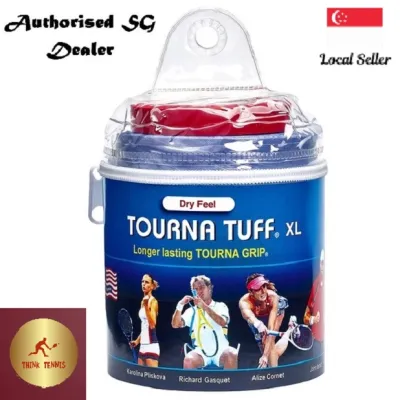
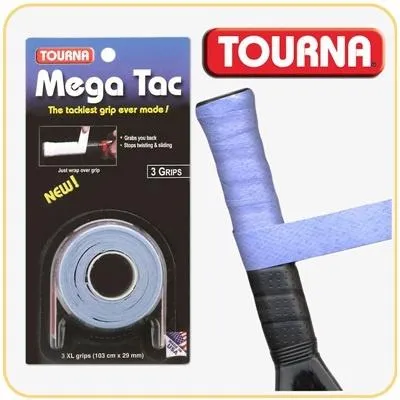
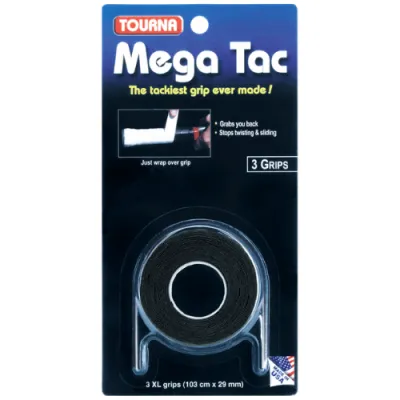
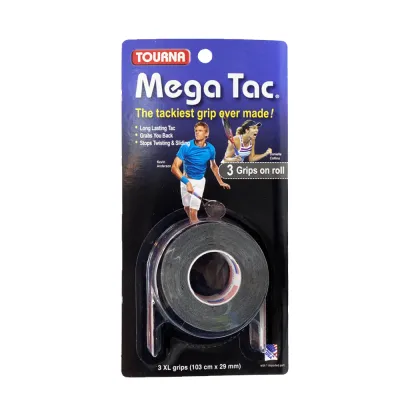
Prices are valid at publication and may change. Please refer to the product page for the latest price.
Environmental factors are equally critical, especially when playing in tropical climates like Singapore. The high humidity and ambient heat in local indoor sports halls accelerate sweating and prevent moisture from evaporating naturally from the grip surface. This humid environment means that an overgrip must not only absorb sweat but also maintain its structural integrity and traction when saturated. Understanding these variables establishes a clear baseline for selecting a grip that keeps your racket secure.
Evaluating Key Tourna Grip Variants
The Tourna product line is characterized by distinct physical profiles, textures, and intended performance characteristics. When browsing these options, it is essential to look past marketing buzzwords and focus on observable traits such as thickness, surface texture, and material composition. Checking the product label for the exact thickness in millimeters is a reliable way to gauge how much a grip will alter your racket’s handle size.

Remember that material names and brand-specific claims are not independent evidence of superior performance. A grip labeled as “ultra-absorbent” or “maximum tack” must still be verified through your own on-court testing and by checking the specifications on the packaging. Different variants use distinct manufacturing processes to achieve either a dry, fabric-like feel or a sticky, polyurethane-coated surface, each behaving differently under wet conditions.
Tourna Original: Thin Profile and Dry Feel
The Tourna Original overgrip is easily recognized by its signature light blue color and its dry, suede-like texture. Physically, it features a very thin profile, which is designed to wrap tightly around the handle without significantly increasing the grip size. This thinness allows you to feel the bevels of the wooden handle clearly, which is vital for precise finger adjustments during delicate net shots and quick defensive blocks.
According to the manufacturer’s packaging, this variant is intended for players who experience moderate to heavy hand sweat and prefer a dry feel over a sticky one. The material is engineered to absorb moisture directly into its fibers, actually becoming grippier as it gets slightly damp.
However, there are several limitations you must verify during play. Because of its thin profile and high absorption rate, Tourna Original tends to wear out faster than thicker, synthetic grips. Heavy sweaters may find that the grip becomes completely saturated during long sessions, requiring frequent replacements to prevent slipping and to maintain a hygienic playing surface.
Tourna Mega: Cushioning and Sweat Absorption
The Tourna Mega variant offers a noticeably different physical profile, featuring a thicker, softer, and more cushioned texture. This model is designed for players who want to reduce the impact shock transmitted to their hand and arm during heavy hitting. The added thickness provides a comfortable, plush feel that can help reduce hand fatigue during extended training sessions or multi-match tournaments.
On the packaging, Tourna Mega is positioned as a solution for players who require enhanced shock absorption alongside reliable sweat management. The thicker material acts as a larger reservoir for moisture, making it suitable for long-lasting play without immediate saturation.
A key limitation to verify with the Mega variant is its impact on racket feedback. The extra cushioning can round out the sharp bevels of your racket handle, making it more difficult to instinctively feel the angle of the racket face. Additionally, the added thickness will increase the overall grip size, which may not be suitable for players with smaller hands or those who prefer a slim handle profile.
Condition-Based Selection Framework
To simplify your decision, you can apply a conditional framework based on your physical needs and playing style.
Choose Tourna Original if you prefer a thin grip profile that preserves the natural shape of your racket handle, have normal to heavy hand sweat, and prioritize precise tactile feedback over cushioning. This option is highly suited for advanced players who rely on subtle finger movements and quick grip transitions, and who do not mind replacing their overgrip regularly to maintain peak performance.
Choose Tourna Mega if you experience high-intensity matches that cause significant hand fatigue, prefer a softer and more cushioned feel, and want to minimize vibration from off-center hits. This variant is ideal for power-focused players who execute frequent smashes and require a secure, comfortable hold that reduces strain on the wrist and forearm.
Verify first if you have specific hand or wrist injuries, such as tennis elbow or tendonitis, which might require a custom handle build-up. In such cases, a thicker grip like the Mega can provide necessary dampening, but you should consult a sports professional or coach to ensure your grip size is anatomically correct. If you are entirely unsure of your sweat level or tactile preference, it is highly recommended to purchase a single pack of each variant to test them back-to-back in your typical playing environment before committing to a larger multi-pack.
Wrapping, Maintenance, and Replacement
Proper application is essential to get the most out of your chosen Tourna grip. To wrap your badminton racket correctly, start at the butt cap, securing the end of the grip with a slight overlap. Pull the grip with consistent, moderate tension as you wrap diagonally up the handle toward the cone. Ensure each turn overlaps the previous one by about one to two millimeters to prevent gaps from forming when the grip stretches during play. Once you reach the cone, cut the excess grip at an angle and secure it firmly with the provided finishing tape.
You should regularly inspect your overgrip for observable signs of degradation. A grip needs immediate replacement when you notice a significant loss of texture, visible fraying, color fading, or if it begins to feel slippery even when dry. An accumulation of dirt, sweat, and oils can also lead to unpleasant odors and bacterial growth, making regular replacement a matter of hygiene as well as performance.
To maximize the lifespan of your unused overgrips, store them in a cool, dry place away from direct sunlight and extreme heat. Leaving your racket bag in a hot car or near a window can dry out the grip materials, causing them to lose their elasticity and absorption properties before they are even applied to your racket. Keeping unused grips sealed in their original packaging or an airtight bag is an excellent way to preserve their quality.
Frequently Asked Questions (FAQ)
Can I use grip powder or rosin with Tourna overgrips?
Yes, you can use grip powder or rosin, but you should follow the manufacturer’s guidelines and monitor the observable effects on your grip. Grip powder is designed to absorb excess moisture, which can complement the dry feel of Tourna Original. However, applying too much powder can clog the fibers of the grip, leading to a caked, slippery surface that reduces traction. If you notice the grip material becoming stiff, crusty, or losing its natural absorption, you should stop using the powder, remove the old grip, and apply a fresh one.
How often should I replace my badminton overgrip?
There is no universal timeframe for replacing an overgrip, as it depends on your playing frequency, sweat level, and environmental conditions. Instead, look for visual and physical indicators of wear. If the grip shows visible thinning, tearing, or discoloration in the areas where your fingers rest, it is time for a change. A loss of tackiness or absorption, resulting in the racket twisting during hits, is a clear sign that the material has degraded. For hygiene reasons, if the grip develops a persistent odor or feels stiff from dried sweat, it should be replaced immediately.
Community discussion
Share your experience or ask a question. Comments are reviewed before publication.