
When stepping onto a tennis court, the connection between your hand and your racket determines your control over every shot. While players often spend hours analyzing racket frames, string patterns, and tension, the overgrip is the critical contact point that translates physical movement into ball control. Among the myriad of choices available, the legendary tourna grip stands out as one of the most recognizable and widely used wraps in the history of racket sports.
Unlike conventional overgrips that prioritize a sticky, rubbery surface, this iconic light-blue wrap relies on a specialized dry, non-woven fiber structure. This deliberate material design directly addresses the challenges of moisture control, making it a staple for competitive players who struggle with sweaty palms or play in tropical environments. Understanding the physical properties of this grip, how it behaves under stress, and how it compares to standard alternatives is essential for optimizing your equipment setup.
The Material Divide: Dry Absorbent Fiber vs. Tacky Polyurethane
To understand what sets this grip apart, you must look at the underlying material science. Conventional overgrips are typically manufactured using polyurethane (PU) laminated over a thin, closed-cell foam backing. This construction creates a smooth, sealed surface that feels immediately sticky or “tacky” straight out of the packaging. The PU material relies on surface adhesion to keep the racket secure in your hand, mimicking the feel of a fresh adhesive strip. While this provides an immediate sense of security when your hands are dry, it does not allow moisture to penetrate the surface.
Products mentioned in this guide
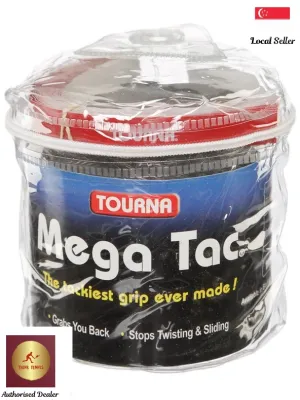
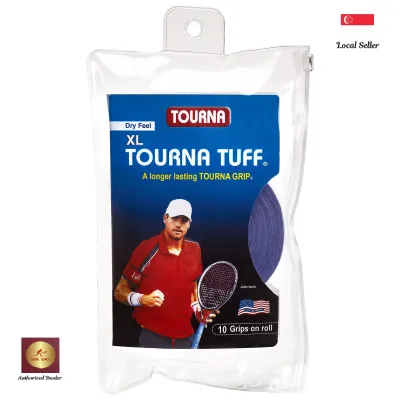
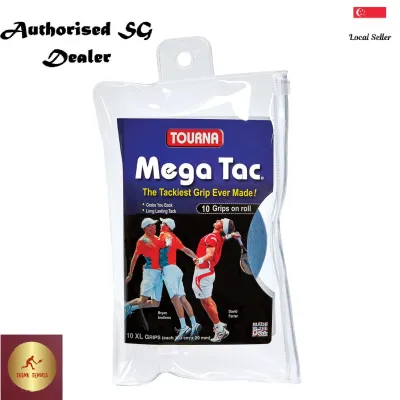
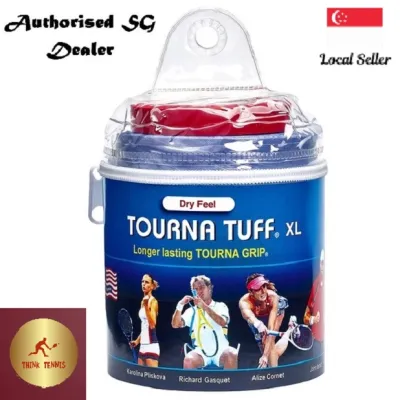
Prices are valid at publication and may change. Please refer to the product page for the latest price.
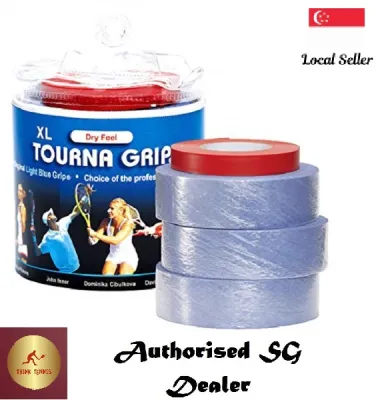
In contrast, the classic blue grip is made from a proprietary non-woven synthetic fiber. Instead of a smooth, sealed plastic layer, its texture is open, matte, and slightly papery to the touch. This fiber matrix is designed to function like a high-performance sponge rather than an adhesive tape. When you first wrap your racket with it, you will notice a complete lack of stickiness. This dry tactile feedback is intentional, prioritizing rapid moisture absorption and breathability over initial surface tack. By choosing a fibrous structure over a laminated polymer, the design ensures that sweat can be drawn deep into the grip’s core rather than pooling on the surface.
Sweat and Humidity: Why Tourna Grip Gets Tackier When Wet
The true performance divergence occurs once you begin to sweat during intense rallies. Under normal playing conditions, standard PU overgrips perform well until moisture is introduced. Once sweat from your palm or high ambient humidity coats the non-porous PU surface, a thin barrier of liquid forms between your skin and the grip. This creates a hydroplaning effect, causing the racket to twist in your hand during off-center hits or slide during high-velocity serves. To combat this, players using standard grips must constantly wipe their hands and rackets between points.

This dry fiber grip utilizes capillary action to pull sweat away from your skin. As moisture contacts the dry fiber matrix, it is drawn inward, distributing the liquid throughout the depth of the wrap. Remarkably, as the fibers absorb this moisture, they expand slightly and soften, which actually increases the friction and grip level. Instead of becoming slick, the grip feels more secure and slightly tackier the wetter it gets. This unique physical reaction is why the grip is widely preferred by competitive players who generate high racket-head speeds and cannot afford any slippage.
This moisture-wicking capability is highly relevant for players in tropical regions like Singapore. With average relative humidity levels often exceeding 80% and year-round high temperatures, outdoor courts demand equipment that can handle extreme sweat. Standard PU grips can become saturated and unusable within a single set under these conditions. By utilizing a dry fiber overgrip, players can maintain a consistent hold on their racket throughout long, humid training sessions or intense matches at local clubs without needing to change grips mid-game.
The Durability Trade-Off: Wear Patterns and Replacement Frequency
While the open fiber structure offers excellent moisture management, it introduces a clear trade-off in terms of longevity. Standard PU overgrips are relatively thick and resilient, often lasting several weeks or even months for recreational players before the synthetic leather begins to crack or lose its tack. The closed surface resists friction well, making it highly durable under repeated grip adjustments and heavy topspin strokes.
This specialized dry grip, by design, has a much faster wear rate. Because the non-woven fibers are soft, highly porous, and thin, they are highly susceptible to mechanical friction. As you shift your hands between eastern, semi-western, and continental grips, your palm and fingers rub against the delicate fibers. Over time, you will observe distinct wear signals. The grip will first lose its signature light-blue color, turning a darker, saturated shade. Soon after, the material will begin to pill, flake, and fray along the edges of the racket bevels. In high-wear areas, such as where the heel of your hand rests, the grip may thin out entirely, exposing the base grip underneath.
This rapid degradation means that competitive players may need to replace their overgrip every few matches, or even after a single intense session in hot weather. When budgeting for your tennis gear, it is important to factor in this higher replacement frequency. A pack of overgrips will be consumed much faster if you choose this dry fiber option, which can increase your seasonal maintenance costs. Regularly inspecting your grip for structural failure—such as tearing near the bevels or a complete loss of cushioning—is essential to prevent sudden racket slippage, which can lead to frame damage or wrist strain.
Decision Guide: Matching Overgrip Material to Your Sweat and Style
Choosing the right overgrip material comes down to analyzing three primary variables: your personal sweat rate, your typical playing environment, and your tactile preferences. There is no single universal overgrip that suits every player, and selecting the wrong type can severely impact your playability and confidence on court.
The Ideal Candidate for Dry Fiber Grips
- Heavy Sweating: Players who experience moderate to heavy hand sweating (hyperhidrosis) or those who play long matches in high heat.
- Humid Environments: Anyone playing on outdoor, non-air-conditioned courts in tropical climates where humidity prevents sweat from evaporating naturally.
- Active Grip Shifters: Players who constantly adjust their grip position for volleys, slices, and topspin groundstrokes and prefer a smooth slide over a sticky drag.
The Ideal Candidate for Standard Tacky PU Grips
- Dry Hands: Players who naturally produce very little hand moisture or those playing in cool, dry, or indoor air-conditioned environments.
- Locked-In Preference: Players who prefer a highly secure, sticky sensation where the hand feels almost glued to the handle from the very first point.
- Low Maintenance: Budget-conscious players who want a grip that lasts for weeks without flaking, peeling, or requiring frequent replacement.
Application Tips: Wrapping and Securing Tourna Grip Properly
Because of its unique material composition, applying this dry fiber grip requires a slightly different approach than wrapping a standard PU grip. Standard overgrips often feature a wide adhesive backing along the entire length of the tape, which helps hold the grip in place as you wrap. This dry grip typically lacks this full adhesive backing, featuring only a tiny adhesive strip at one end to start the wrap. This means you must rely entirely on manual tension to keep the grip secure.
Before applying a new overgrip, always check your racket manufacturer instructions and ensure the underlying base grip is clean, dry, and structurally sound. To wrap the racket correctly, start at the butt cap and secure the adhesive starting tab. As you begin to wrap upward, maintain a firm, consistent tension on the tape. You want to stretch the material slightly as you overlap each turn by approximately one-sixteenth of an inch. Stretching the fiber matrix ensures that it conforms tightly to the octagonal shape of the handle, preserving the sharp feel of the bevels. If you do not apply enough tension, the dry material will bunch up, creating bulky ridges that can cause blisters and reduce your control over the racket angle.
Once you reach the top of the handle, cut the excess grip at an angle to create a clean, flat finish. Because the dry fiber material has zero natural stickiness, it will not hold itself down. You must immediately secure the top using the included finishing tape or a high-quality, flexible electrical tape. Ensure the finishing tape is wrapped tightly around both the edge of the overgrip and the plastic collar of the racket to prevent any unraveling during play.
Frequently Asked Questions (FAQ)
Is Tourna Grip suitable for players with dry hands?
No, it is generally not recommended for players with dry hands. Because the material relies on moisture to activate its grip properties and soften its fibers, players who do not sweat much will likely find the material dry, papery, and slippery. If your hands remain dry during play, a standard polyurethane (PU) overgrip with high initial tack will provide a much more secure and comfortable connection to your racket.
Does Tourna Grip alter the grip size or bevel feel of my racket?
This dry grip is exceptionally thin and compresses easily under hand pressure. Consequently, it does not noticeably increase the overall grip size of your racket. Advanced players often prefer this because it preserves the sharp, distinct feel of the underlying handle bevels, allowing for precise feedback and quick grip transitions during fast-paced rallies.
Can I use Tourna Grip for sports other than tennis?
Yes, you can easily use this grip on handles and paddles for other sports, including badminton, squash, and pickleball. The moisture-wicking properties of the dry fiber material are highly beneficial in any fast-paced sport where hand sweat can cause the handle to slip, particularly when playing in warm, enclosed indoor courts or humid outdoor environments.
Community discussion
Share your experience or ask a question. Comments are reviewed before publication.