
Living in a Housing & Development Board (HDB) flat in Singapore requires a smart approach to space planning and neighborly consideration. When setting up a home gym, deciding whether to purchase a folding thread mill or a low-impact elliptical trainer is one of the most significant choices you will make. Both machines offer excellent cardiovascular benefits, but they interact very differently with the physical limits of HDB apartments, where floor space is premium and concrete walls easily transmit sound.
If your primary constraint is keeping the peace with your downstairs neighbors, the elliptical is the clear winner because its smooth, gliding motion eliminates the heavy footfalls that cause structural vibration. However, if your floor area is highly restricted and you need a machine that can be tucked away after use, a folding treadmill offers superior space-saving storage. The ideal choice ultimately depends on your flat’s specific layout, your ceiling height, and your willingness to invest in high-quality noise mitigation accessories.
Before making a final decision, you must evaluate how each machine’s physical footprint, acoustic profile, and maintenance requirements align with your lifestyle. Balancing these practical factors ensures you can maintain a consistent home workout routine without compromising your living space or your relationship with your neighbors.
Products mentioned in this guide
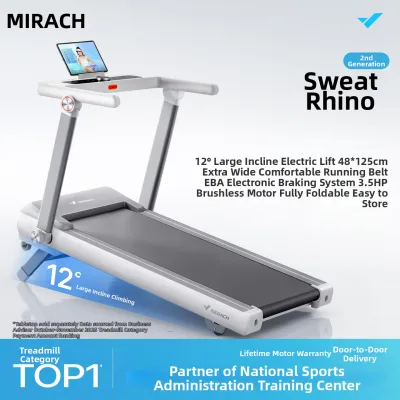
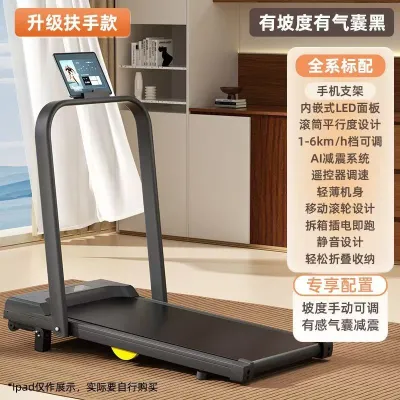
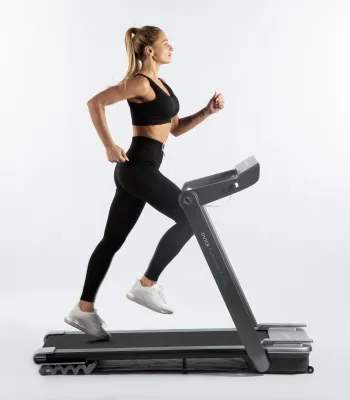
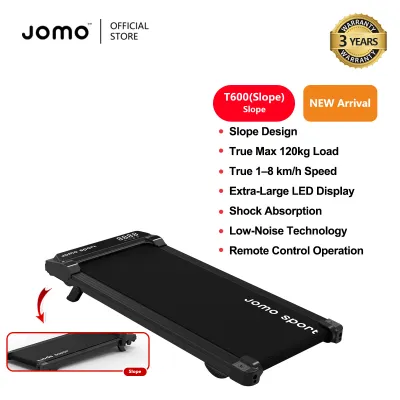
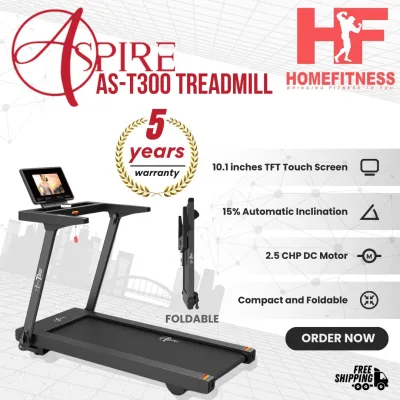
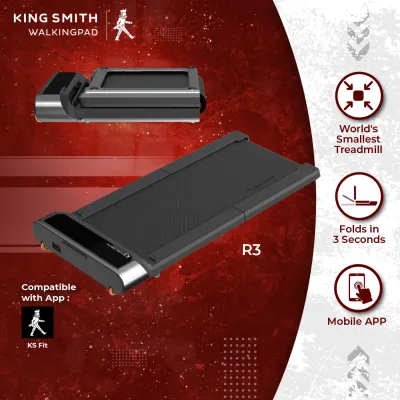
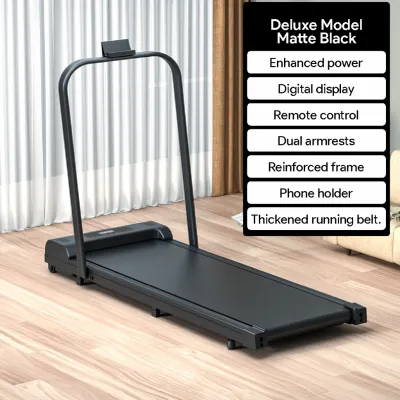
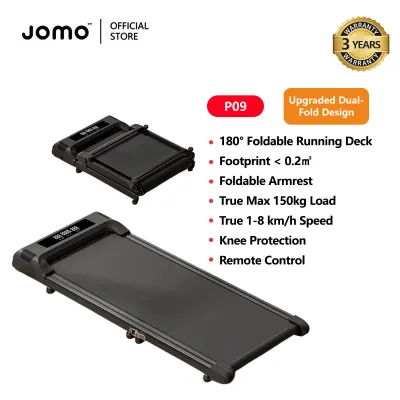
Prices are valid at publication and may change. Please refer to the product page for the latest price.
Floor Space and Storage: Measuring the Real Footprint
Treadmill Footprint and Folding Mechanisms
A standard, non-folding treadmill requires a permanent floor footprint of approximately 1.6 to 2 meters in length and 70 to 90 centimeters in width. In a typical HDB bedroom of 9 to 12 square meters, this permanent footprint can severely restrict movement and limit your layout options. For safety reasons, you must also maintain at least 1.5 meters of clear, unobstructed space behind the running belt to prevent injuries in case of slips or falls, along with 50 centimeters of clearance on both sides.
Folding treadmills address these spatial constraints by allowing the running deck to pivot upward when not in use, reducing the horizontal footprint by up to 60 percent. Some ultra-compact models fold completely flat, enabling you to slide them under a bed or stand them upright against a wall. While these folding mechanisms are highly convenient, they do introduce trade-offs in structural stability. Lightweight, flat-folding models often feature shorter running decks and lower weight capacities, which may not accommodate taller users or high-speed runners who require a longer, sturdier stride.
Additionally, the process of folding and unfolding a heavy machine daily can become a physical chore. If a treadmill is difficult to deploy, you may find yourself leaving it unfolded permanently, defeating the purpose of the folding mechanism. When selecting a folding model, look for gas-assist shocks that help lower the deck safely and reduce the physical effort required to store the machine.
Elliptical Dimensions and Ceiling Clearance
Unlike treadmills, the vast majority of home ellipticals feature a rigid, non-folding frame that requires a permanent horizontal footprint of roughly 1.5 to 2 meters in length and 60 to 80 centimeters in width. Because your feet remain fixed to the pedals, you do not need as much rear safety clearance as a treadmill, but the machine cannot be easily hidden away. This permanent footprint means you must have a dedicated, permanent spot in your living room or study to accommodate the machine’s full dimensions.
Ceiling clearance is a critical, yet frequently overlooked, spatial limit in HDB flats, where standard ceiling heights typically range between 2.6 and 2.8 meters. During the peak of an elliptical stride, your body is elevated by the maximum height of the pedals, which can be 30 to 50 centimeters off the floor. If you have a false ceiling installed or a ceiling fan spinning overhead, this elevation can pose a serious safety hazard.
To ensure safe operation, calculate your required clearance by adding your own height to the machine’s maximum pedal height, then add a safety margin of at least 20 centimeters. If this total exceeds your room’s ceiling height, you risk head injuries or will be forced to exercise with a hunched posture, which compromises your workout form and joint alignment.
Noise and Vibration: Managing Impact for Downstairs Neighbours
Impact Noise and Motor Hum from a Thread Mill
The repetitive heel strikes of running on a thread mill generate substantial low-frequency structural vibrations. This impact energy travels directly through the machine’s frame and into the HDB concrete floor slab, which acts like a giant speaker diaphragm. Because concrete is highly efficient at transmitting low-frequency sound, these vibrations travel downward and are heard by your neighbors below as a loud, continuous thudding noise.

Beyond structural vibrations, treadmills produce airborne noise from two main sources: the electric motor and the friction of the running belt. A typical treadmill motor operates between 60 and 70 decibels, which is equivalent to the volume of a normal conversation or background office noise. However, during high-speed runs, the combination of motor whine, belt friction, and heavy footfalls can easily exceed 80 decibels, making early morning or late-night workouts highly disruptive to your household and neighbors.
To minimize this disturbance, you must look for treadmills equipped with high-quality deck cushioning systems, such as elastomeric shock absorbers, which help dissipate impact energy before it reaches the floor. Choosing a brushless DC motor can also reduce high-frequency airborne whine, though it will not eliminate the structural impact of your running stride.
Elliptical Glide and Mechanical Sounds
An elliptical trainer operates on a closed-chain kinetic system, meaning your feet never leave the pedals during your workout. This continuous, gliding motion completely eliminates the impact noise associated with running, preventing low-frequency structural vibrations from transferring into the building’s concrete frame. For multi-story HDB living, this makes the elliptical an exceptionally quiet and neighbor-friendly option.
While ellipticals are virtually silent in terms of structural impact, they do produce some airborne mechanical sounds. These sounds typically include the quiet hum of the magnetic flywheel and the friction of the rollers sliding along the metal tracks. High-quality ellipticals utilize magnetic resistance systems, which are significantly quieter and smoother than friction-based resistance pads.
Airborne sounds from an elliptical rarely exceed 50 decibels, which is easily masked by a television or contained within a room by closing the door. If you live in a household with light sleepers or have highly noise-sensitive neighbors, the elliptical’s acoustic profile offers a level of peace that a treadmill simply cannot match.
Noise Mitigation Strategies
Regardless of which machine you choose, implementing targeted noise mitigation strategies is essential for maintaining harmonious neighborly relations in an HDB estate.
- High-Density Rubber Mats: Place a professional-grade, high-density rubber or polyurethane mat beneath your machine. These mats should be at least 10mm to 15mm thick to effectively absorb low-frequency vibrations and prevent the machine from slipping or scratching your flooring.
- Strategic Placement: Position your cardio equipment away from shared party walls and bedrooms. Placing the machine close to load-bearing columns or structural beams can also help minimize floor deflection and reduce sound transmission.
- Dynamic Load Verification: HDB floors are designed to support a structural load of 150 kg per square meter. Ensure that the combined weight of the machine and the user, especially under the dynamic forces of running, does not exceed safe structural limits.
Workout Quality and Joint Impact: Balancing Fitness and Comfort
Calorie Burn and Cardio Intensity
Both machines provide excellent cardiovascular conditioning, but they engage your body in different ways. Running on a treadmill is a weight-bearing exercise that requires your muscles to actively lift your entire body weight with every stride. This high energy demand generally results in a slightly higher peak calorie burn per minute compared to an elliptical, making the treadmill highly efficient for weight loss and athletic conditioning.
Treadmills also offer precise control over your training variables, allowing you to set exact speeds in increments of 0.1 km/h and adjust motorized incline levels to simulate outdoor terrain. This precision is particularly beneficial if you are training for outdoor running events or follow structured interval programs.
An elliptical, on the other hand, offers a full-body workout by incorporating dual-action handlebars that engage your upper body, including your chest, back, shoulders, and arms. By actively pushing and pulling the handles, you can distribute the physical workload across multiple muscle groups, which can make high-intensity workouts feel less exhausting. While budget ellipticals may lack motorized incline adjustments, you can easily vary your intensity by increasing the magnetic resistance levels or pedaling at a faster stride rate.
Joint Stress and Injury Prevention
For many fitness enthusiasts, joint health is the deciding factor when choosing home cardio equipment. The repetitive impact of running on a treadmill places significant stress on your ankles, knees, hips, and lower back, with impact forces reaching up to three times your body weight. If you have a history of joint pain, shin splints, or are recovering from an injury, daily treadmill workouts can exacerbate these conditions.
In contrast, the elliptical’s guided, oval path supports your feet throughout the entire movement, providing a low-impact workout that protects your joints from harsh landing forces. This low-impact nature makes the elliptical an ideal choice for active recovery, older adults, or individuals carrying excess weight who want to build cardiovascular endurance safely.
Furthermore, exercising in a confined home space can sometimes lead to compromised form due to fatigue or spatial distractions. On a treadmill, a momentary loss of focus can lead to a dangerous misstep or fall on a moving belt. The guided, closed-chain movement of an elliptical inherently reduces the risk of accidental slips, making it a safer option when working out alone at home.
Upkeep and Durability: Keeping Your Machine Quiet Over Time
Treadmill Maintenance Steps
To prevent your treadmill from becoming noisier and wearing out prematurely, you must perform regular maintenance. Over time, the running belt can stretch or shift off-center, leading to loud squeaking noises and uneven wear.
- Belt Alignment: Inspect the belt alignment weekly. If the belt drifts to one side, use the adjustment bolts at the rear of the deck to center it according to the manufacturer's instructions.
- Deck Lubrication: Apply a 100% silicone lubricant beneath the running belt every 3 to 6 months, or after every 150 kilometers of use. Proper lubrication reduces friction between the belt and the deck, lowering motor temperatures and dampening operational noise.
- Motor Hood Cleaning: Unplug the machine and remove the motor cover every six months to vacuum away accumulated dust and pet hair. This prevents static buildup and keeps the motor cooling fans operating efficiently.
Elliptical Maintenance Steps
Ellipticals have multiple moving joints and pivot points that require routine care to prevent grinding noises and mechanical friction.
- Pivot Joint Lubrication: Regularly inspect the pivot points and hinge bolts. Apply a manufacturer-approved lithium or silicone grease to these joints to prevent squeaks and ensure a smooth, silent glide.
- Track and Roller Cleaning: Wipe down the pedal rails and rollers weekly with a damp microfiber cloth. Sweat, dust, and hair can accumulate on the tracks, causing a bumpy stride and loud clicking sounds.
- Hardware Inspection: Check and tighten all structural bolts, handlebar connections, and pedal attachments monthly, as the multi-directional forces of an elliptical workout can naturally loosen hardware over time.
Warranty and Support Considerations
Before purchasing any heavy fitness equipment, carefully review the manufacturer’s warranty terms. Ensure that the warranty explicitly covers home use within Singapore and includes on-site service, as transporting a heavy machine to a repair center is incredibly difficult.
Verify that the brand has an authorized local distributor and a dedicated team of technicians in Singapore. Having access to local spare parts, such as replacement belts, flywheels, or electronic consoles, is crucial for resolving mechanical issues quickly and extending the lifespan of your investment.
Final Verdict: How to Choose the Right Machine for Your Flat
- Choose a Treadmill if: You are training for outdoor running events, prefer authentic running mechanics, have a dedicated room that can accommodate a folding mechanism, and are fully committed to using heavy-duty vibration mats and restricting your workouts to daytime hours to respect your neighbors.
- Choose an Elliptical if: Your top priority is near-silent operation to avoid any noise disputes with downstairs neighbors, you have sufficient permanent floor space but limited ceiling height, and you require a low-impact, full-body workout that protects your joints.
- Verify first if: You have measured your doorways, corridors, and ceiling heights to ensure the machine can be safely delivered and operated. You must also confirm that the combined dynamic weight of the machine and the heaviest user does not exceed the structural limits of your HDB flooring.
Frequently Asked Questions (FAQ)
Do I need an anti-vibration mat for my HDB flat?
Yes, a high-density rubber or polyurethane mat is highly recommended for any home cardio machine in an HDB flat. These specialized mats absorb the low-frequency vibrations that travel through concrete floors, protect your floor tiles or vinyl planks from mechanical damage, and prevent the machine from shifting during intense workouts.
Can I place a treadmill or elliptical on an HDB balcony?
It is highly discouraged to place electronic fitness equipment on an open HDB balcony. Singapore’s tropical climate features high humidity, intense direct sunlight, and frequent heavy rain, which can rapidly corrode internal metal parts, degrade lubricants, and damage sensitive electronic consoles. Unless your balcony is fully enclosed, insulated, and climate-controlled, keep your machine indoors.
Are under-desk ellipticals a practical alternative for small rooms?
Under-desk ellipticals are excellent space-saving options for active sitting, improving circulation, and burning a modest number of calories while working. However, they cannot replace the full-body cardiovascular workout, aerobic intensity, and high-calorie burn of a standard upright elliptical or treadmill, as they lack upper-body engagement and have a much shorter stride length.
Community discussion
Share your experience or ask a question. Comments are reviewed before publication.