
Quick Answer: Which Picker Fits Your Drills?
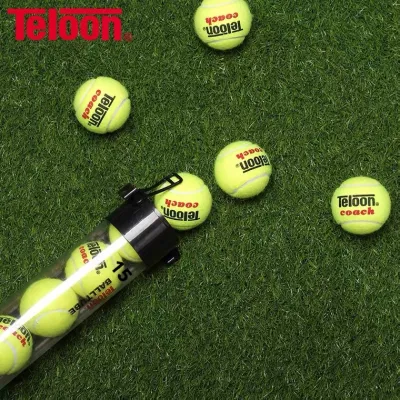
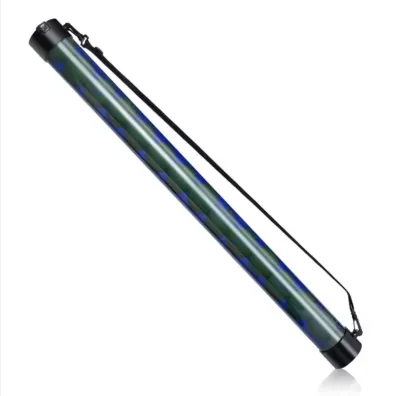
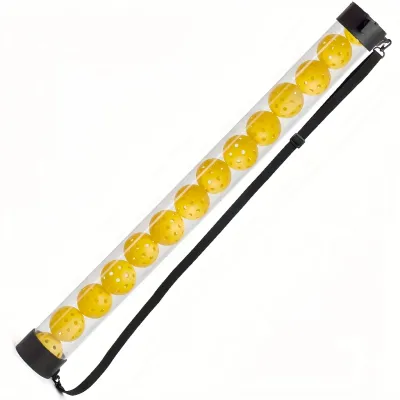
If your practice routine consists of rapid, solo serving practice or high-mobility drills where you move across multiple courts, a tube-style tennis ball picker is generally the most efficient choice. These lightweight, cylindrical tools allow you to collect balls quickly by walking and pressing the tube end over each ball without bending down.
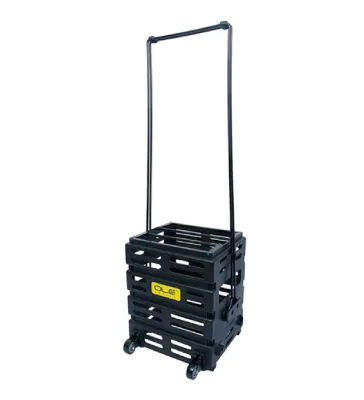
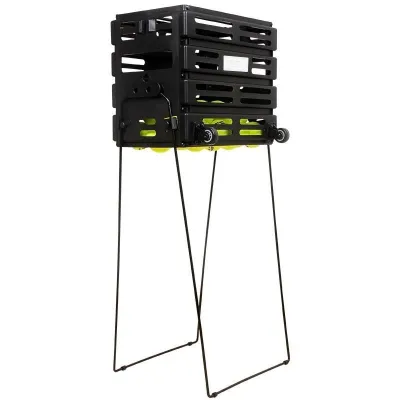
Conversely, if your routine involves structured coaching sessions, stationary feeding drills, or multi-ball hitting practice where you need a steady supply of balls at waist height, a basket-style picker is more suitable. Many basket designs feature convertible handles that flip down to serve as a standing tripod, keeping the balls easily accessible without requiring you to reach down to the ground level repeatedly.
Ultimately, selecting the right tool requires balancing your typical practice volume, how much court space you have for storage, and whether you prioritize hands-free portability over a high-capacity stationary stand.
Products mentioned in this guide
![[Local Stock]Pickleball Ball Picker Tennis Ball Retriever Holder Cricket Ball Collector 14 Ball Storage Tube Lightweight](https://img.lazcdn.com/g/p/dcf46e0ff286206c5cca068d732c27ba.png_400x400q80.png_.webp)
Prices are valid at publication and may change. Please refer to the product page for the latest price.
Capacity and Design: Matching Volume to Your Drills
The physical architecture of a tennis ball picker dictates not only how many balls you can collect before emptying but also how the weight distributes during transport. Tube-style pickers feature a streamlined, cylindrical body made of lightweight plastic or thin aluminum. Because of this narrow profile, their capacity is naturally limited by the length of the tube, meaning they are best suited for smaller batches of balls. When evaluating these products, check the manufacturer’s specifications for the maximum ball count and the empty weight of the tube to ensure it remains comfortable to carry when fully loaded.

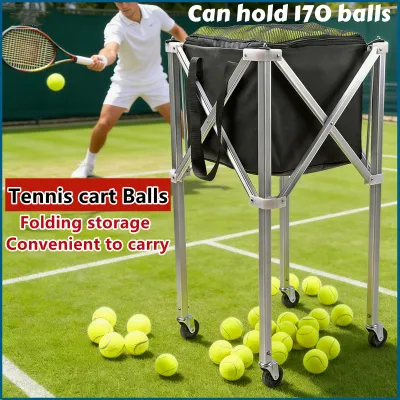
Basket-style pickers utilize a wider, box-like wire or heavy-duty plastic mesh frame. This design allows balls to stack horizontally and vertically, significantly increasing the overall volume compared to a single tube. The broader base of a basket provides excellent structural stability, preventing the unit from tipping over when placed on the court surface. However, this larger volume means a fully loaded basket can become quite heavy, so it is essential to verify the structural weight limits and handle reinforcement details on the product label before purchasing.
To match a picker to your drills, calculate your average ball usage per set. If you practice with a large volume of balls, a single tube will require multiple trips to clear the court, which can interrupt the flow of your practice. For high-volume training, a large basket or multiple tubes may be necessary. Always inspect the product packaging for certified capacity ratings, as overloading a picker beyond its recommended limit can stretch the tension wires or crack plastic components.
Portability and Court-Side Storage
Transporting your equipment to and from the court can be a hassle, especially if you are already carrying multiple rackets, water bottles, and personal items. Tube-style pickers excel in portability due to their slender shape. Most models come equipped with an adjustable shoulder strap, allowing for hands-free carrying. This design leaves your hands free to carry other gear and takes up minimal space in a car trunk or public transport. On the court, a tube can be leaned against a net post or fence, occupying a very small footprint.
Basket-style pickers present a different set of transport dynamics. They are typically carried by a central top handle, which requires one hand to be fully occupied. While the wider base provides excellent stability on uneven court surfaces—such as slightly weathered outdoor public courts—it also means the basket takes up more physical space during transport and storage. If you have limited storage space at home or drive a compact vehicle, a standard rigid wire basket can be awkward to pack.
To address these spatial challenges, some manufacturers offer folding or collapsible basket designs. These models feature hinges that allow the wire walls to fold flat, or handles that slide down to reduce the overall height. Before choosing a collapsible model, carefully measure your tennis bag or vehicle trunk and compare these measurements against the product’s official collapsed dimensions. Additionally, inspect the locking mechanisms on folding models to ensure they secure tightly, preventing accidental collapsing during transport.
Pickup Mechanics and On-Court Efficiency
The physical effort required to collect balls is a major factor in maintaining your energy levels during a long practice session. Tube-style pickers operate on a simple rolling or pressing mechanic. You position the bottom end of the tube over a ball and press down gently; a rubber cap or flexible plastic teeth yield to let the ball in and then spring back to secure it. This rolling motion allows you to collect balls at a walking pace, making it highly efficient for clearing a wide area of the court quickly.
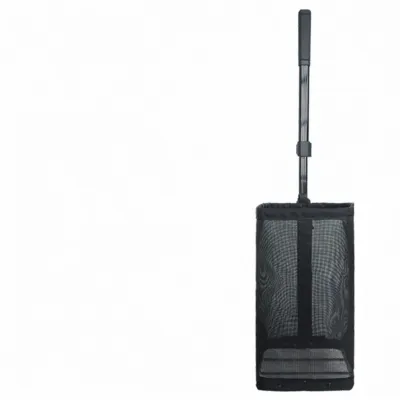
Basket-style pickers collect balls through a bottom-press system. The bottom of the basket features parallel metal wires with specific spacing. When you press the basket down over a ball, the wires flex outward to let the ball pass into the basket and then snap back into place. While this method is highly effective for clearing dense clusters of balls, it requires a vertical downward pushing force that can feel more strenuous over time compared to the lighter, sweeping motion of a tube.
Dispensing the collected balls also differs significantly between the two designs. To empty a tube, you typically flip it upside down and pour the balls out into a hopper, or release a top cap to let them slide out. This requires you to have a secondary container ready if you want to keep them organized. A basket-style picker, particularly one with convertible legs, stands on its own at waist height. This allows you to reach directly into the open top to grab balls as you feed them into a drill, eliminating the need to bend down or transfer the balls to another basket.
From an ergonomic perspective, repetitive ball collection can strain your back, shoulders, and wrists. Tube-style pickers are generally longer, allowing taller players to collect balls with minimal bending. However, the repetitive downward tapping motion can transmit vibrations to your wrist. Basket-style pickers require less vertical tapping but demand more lifting force when full. Look for models with padded grips or ergonomic handle angles to minimize physical strain during extended practice sessions.
Decision Framework: Choose the Right Picker for Your Routine
To finalize your decision, evaluate your typical practice environment and physical preferences against this structured framework:
- Choose a tube-style picker if:
- You primarily practice solo serving or high-mobility drills where balls are scattered widely across the court.
- You travel to the courts via public transport, walk, or have limited vehicle storage space.
- You prefer a lightweight, hands-free carrying option with a shoulder strap.
- You want to minimize bending down entirely during the pickup phase.
- Choose a basket-style picker if:
- You conduct structured coaching sessions or stationary feeding drills where you need immediate, waist-height access to balls.
- You practice with a high volume of balls and want to avoid frequent emptying.
- You require a stable, self-standing unit that will not tip over on windy outdoor courts.
- You want a multi-purpose container that can also hold training markers, targets, or extra gear.
- Before making a purchase, verify these critical specifications:
- Handle Ergonomics: Check if the handle height matches your physical stature to prevent back strain.
- Material Durability: Look for weather-resistant coatings on wire baskets or UV-resistant plastics on tubes, especially if you play on outdoor courts exposed to intense sunlight and humidity.
- Storage Dimensions: Measure your storage locker, car boot, or gear bag to ensure the picker fits comfortably when not in use.
Frequently Asked Questions (FAQ)
Do tube and basket pickers work with all tennis ball sizes?
Standard tennis ball pickers are engineered specifically for the dimensions of regular, yellow tennis balls. If you train with oversized balls, transition balls (such as red, orange, or green dot junior balls), or low-compression balls, you must verify compatibility before purchasing. Red junior balls, for example, are larger and softer than standard balls; they may get wedged tightly inside a standard tube or fail to pass through the bottom wires of a standard basket. Check the product label for wire spacing or tube diameter specifications to ensure compatibility with your specific training balls.
How do I clean and maintain a wire ball picker?
Regular maintenance is essential to prevent rust and ensure the smooth operation of your picker, particularly in humid climates or when playing on dusty clay courts. After each session, wipe down the metal frame and bottom wires with a clean, dry microfiber cloth to remove court dust, moisture, and debris. Periodically inspect the bottom wires for any bending or misalignment, as bent wires can damage the felt of your tennis balls or allow them to slip out prematurely. Store your picker in a dry, indoor environment rather than leaving it in a damp car trunk or outdoor shed to protect the protective coating from degrading.
Community discussion
Share your experience or ask a question. Comments are reviewed before publication.