
To find a tumbler boot that fits your sports water bottle in Singapore, you must match the exact base diameter of your bottle to the inner diameter of the boot. There is no single universal boot size because popular sports bottle brands design their vessels with varying base dimensions, shapes, and materials. Even within a single brand, different capacities often feature completely different base widths. To avoid the hassle of trial and error, the most reliable method is to measure your bottle’s base with precision and cross-reference those dimensions with the manufacturer’s or third-party seller’s specifications before making a purchase.
In Singapore’s warm climate, staying hydrated is a daily necessity, whether you are commuting on the MRT, working out at an ActiveSG gym, or hiking through MacRitchie Reservoir. Premium vacuum-insulated sports bottles have become a staple accessory for keeping drinks ice-cold throughout the day. However, these bottles are prone to unsightly dents, scratches, and paint chips when placed on rough concrete benches, outdoor tables, or gym floors. A high-quality silicone tumbler boot acts as a protective shield, absorbing impacts, preventing slips, and eliminating the loud clanging noise whenever you set your bottle down.
Choosing the right boot requires understanding that compatibility is entirely a matter of millimeters. A boot that is slightly too small will be incredibly difficult to stretch over the base, potentially warping the silicone or slipping off under tension. Conversely, a boot that is even slightly too large will fail to grip the bottle, trapping water underneath and sliding off whenever you lift the bottle to take a drink. By taking a few minutes to understand base variations and measure your bottle accurately, you can find a perfect fit that protects your investment for years to come.
Products mentioned in this guide
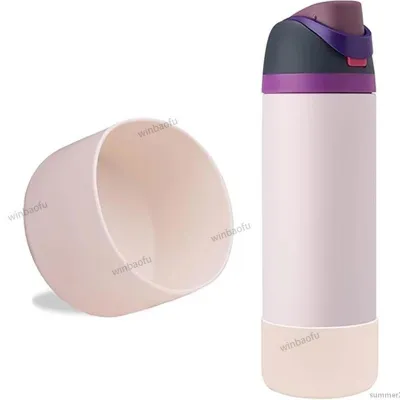
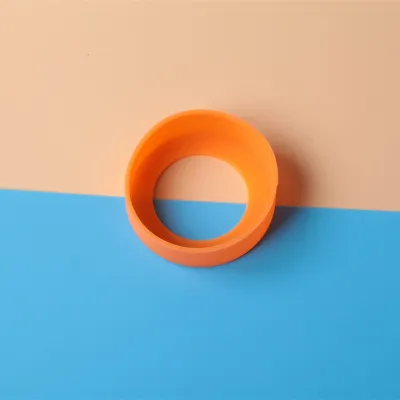
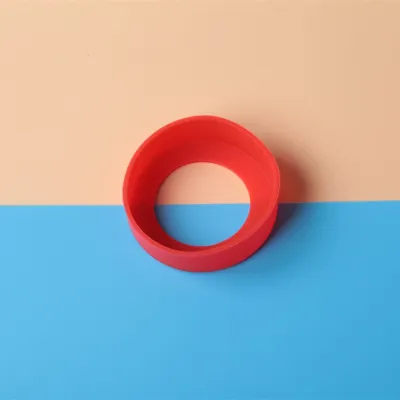
Prices are valid at publication and may change. Please refer to the product page for the latest price.
Why "One-Size-Fits-All" Tumbler Boots Rarely Work
The primary reason a single, universal tumbler boot does not exist is the sheer diversity in sports bottle designs. While many consumers assume that all bottles of a certain capacity—such as 32 ounces or 40 ounces—share the same base dimensions, manufacturers actually use widely different design blueprints. One brand may prioritize a sleek, tapered base that fits easily into standard car cup holders, while another brand may opt for a wide, stable base designed to prevent tipping during outdoor activities. These design choices result in base diameters that can vary by several millimeters across brands, even for bottles that hold the exact same volume of liquid.
Beyond diameter, the physical shape of the bottle’s base plays a critical role in compatibility. Some sports bottles feature a perfectly flat bottom, which requires a boot with a flat interior surface to ensure stability. Other bottles are designed with a recessed center, a slightly rounded bottom edge, or a pronounced bottom rim. If you attempt to force a flat-bottomed boot onto a bottle with a recessed base, you may trap air inside, creating a suction effect that makes the bottle wobble or causes the boot to bulge outward. A proper fit must account for these subtle structural contours to ensure the bottle remains stable when placed on a flat surface.
Material thickness and elasticity also vary significantly among different boots, affecting how they fit onto various bottle bases. High-quality food-grade silicone possesses a natural elasticity that allows it to stretch slightly, but this stretch capacity is limited by the thickness of the wall. A thin, highly flexible boot might stretch to accommodate a slightly larger bottle base, but this constant tension can cause the silicone to tear, warp, or lose its grip over time. Conversely, a thick, heavy-duty protective boot offers superior impact resistance but has almost zero stretch, meaning it requires an absolute, millimeter-perfect match to the bottle’s base to function correctly.
Finally, environmental factors in Singapore can influence how different materials behave. The high humidity and ambient temperatures can cause low-quality silicone or rubber boots to degrade faster, becoming sticky or losing their structural integrity. When a boot stretches beyond its intended limit to fit an incompatible bottle, the material is put under constant stress, accelerating this degradation process. Ensuring a precise, unstrained fit from the beginning is essential for maintaining the longevity of both the protective boot and the water bottle itself.
How to Measure Your Bottle for a Perfect Fit
Achieving a perfect fit starts with precise measurement, and relying on visual estimates or standard plastic rulers can easily lead to purchasing the wrong size. To get an accurate reading of your bottle’s base diameter, it is best to use a pair of digital calipers if you have them available. Calipers allow you to measure the exact outer diameter of the base without any parallax error. Simply open the caliper jaws, place them flat against the widest part of the bottle’s bottom edge, and record the measurement in millimeters.

If you do not own digital calipers, you can easily obtain an accurate measurement using a flexible sewing measuring tape or a simple piece of string and a standard ruler. Wrap the measuring tape or string tightly around the very bottom circumference of the bottle, ensuring it sits flat against the metal surface without twisting. Mark the exact point where the tape or string overlaps to find the circumference. Once you have the circumference in millimeters, divide that number by pi (approximately 3.14159) to calculate the precise outer diameter of your bottle’s base.
Another highly reliable method is the paper tracing technique, which helps account for any subtle curves or flared edges at the bottom of the bottle. Place your water bottle flat on a blank sheet of paper on a hard, level surface. Using a sharp pencil held completely vertical, carefully trace the outline of the bottle’s base. Remove the bottle and use a ruler to measure the widest distance across the traced circle, passing directly through the center point. Measuring in millimeters is crucial, as most accessory manufacturers list their boot dimensions in millimeters rather than inches.
When measuring, you must also account for any existing design elements on the bottom of your bottle. Some premium sports bottles come with pre-installed rubber pads, raised embossed logos, or structural ridges designed to improve stability. These elements add to the overall outer diameter and can prevent a standard boot from sliding on smoothly. Be sure to measure across the widest points of these ridges or pads rather than the metal body alone, as even a 1mm to 2mm difference can determine whether a boot will slide on easily or refuse to fit.
Official Brand Boots vs. Third-Party Alternatives
When shopping for a tumbler boot in Singapore, you will generally choose between official accessories made by the bottle manufacturer and third-party alternatives sold on online marketplaces. Official brand boots offer the primary advantage of a guaranteed, seamless fit. Because they are designed by the same engineers who created the bottle, these boots match the exact dimensions, curves, and tolerances of your specific model. They also feature color palettes designed to complement or match the bottle’s original powder-coated finish, and they often carry the brand’s official logo for a cohesive, premium look.
However, official accessories come with a notable price premium. In Singapore, an official silicone boot can cost anywhere from S$15 to S$30, which is a significant investment for a simple protective sleeve. Additionally, official color options can be limited, and popular shades frequently sell out, leaving you with fewer choices for personalizing your gear. If you own multiple bottles or like to change your style frequently, purchasing multiple official boots can quickly become expensive.
Third-party boots, widely available on local ecommerce platforms, present a highly cost-effective alternative, often priced between S$3 and S$10. These budget-friendly options allow you to purchase multiple colors or styles without breaking the bank. They also offer a massive variety of designs, including pastel shades, glitter finishes, glow-in-the-dark materials, and taller protective sleeves that cover more of the bottle’s body. This variety makes third-party boots incredibly popular for those who want to customize their bottles to match their personal style or workout gear.
The trade-off with third-party alternatives is the risk of inconsistent sizing and variable material quality. Some low-cost boots are made from cheap rubber or low-grade silicone that emits a strong chemical odor, attracts dust and lint easily, or stretches out of shape after just a few weeks of use. To mitigate this risk, you must carefully evaluate product descriptions. Avoid listings that make vague compatibility claims like “fits all sports bottles” and instead look for sellers who provide explicit inner diameter measurements, material certifications, and detailed customer feedback regarding specific bottle models.
Pre-Purchase Compatibility Checklist
To minimize the risk of buying an incompatible tumbler boot online and having to deal with returns, follow this concrete verification checklist before making your purchase:
First, verify the inner diameter of the boot against your measured bottle base. The ideal boot should have an inner diameter that is equal to or up to 1mm to 2mm smaller than your bottle’s base diameter. Because high-quality silicone is flexible, a slightly smaller boot will stretch to provide a snug, secure grip that will not slip off. Never buy a boot with an inner diameter that is larger than your bottle’s base, as it will remain loose, collect dirt, and fall off easily.
Second, check the boot for an air release vent. A high-quality silicone boot should feature a tiny hole at the center of its base. This vent hole is essential because it allows trapped air to escape as you slide the boot onto the bottle. Without an air release hole, an air pocket can become trapped inside, creating a cushion that makes the boot difficult to install, causes it to slide off gradually, or prevents the bottle from standing completely flat on a table.
Third, evaluate the thickness and texture of the silicone material. If you frequently use your bottle for outdoor sports, hiking, or gym workouts, look for a boot with a thickened bottom pad (around 2mm to 3mm thick) to provide adequate shock absorption against drops on hard surfaces. A textured or ribbed exterior grip can also make the bottle easier to hold when your hands are sweaty or wet.
Fourth, read through recent user reviews on the ecommerce platform, specifically searching for mentions of your exact bottle brand and capacity. Other buyers in Singapore often share valuable real-world feedback, confirming whether a specific third-party boot fits their bottle snugly or if they encountered issues with sizing. This community feedback is often the most reliable indicator of actual compatibility.
Finally, verify the seller’s return and exchange policies. Since silicone boots are relatively low-cost items, some international sellers may not offer free returns for incorrect size choices, or the return shipping cost might exceed the value of the boot itself. Choosing local Singapore-based sellers who offer straightforward exchanges or clear customer support can save you money and frustration if the boot does not fit as expected.
Frequently Asked Questions (FAQ)
Can I use a tumbler boot meant for a 32 oz bottle on a 40 oz bottle of the same brand?
In most cases, you cannot assume that a boot designed for a 32 oz bottle will fit a 40 oz bottle, even within the same brand lineup. While some brands maintain a uniform base diameter across their larger sizes—simply increasing the height of the bottle to accommodate the extra volume—other brands increase both the height and the diameter of the vessel as capacity grows. Always check the manufacturer’s specifications for each specific capacity. If the base diameters differ by even a few millimeters, you will need to purchase a different boot size to ensure a secure fit and proper protection.
Do tumbler boots affect the insulation performance of my water bottle?
No, adding a silicone or rubber tumbler boot does not affect the thermal insulation performance of your double-walled vacuum-insulated water bottle. The vacuum insulation layer is sealed inside the stainless steel walls of the bottle, and covering the exterior base with a thin layer of silicone will not interfere with this vacuum barrier. However, a boot will slightly increase the overall outer diameter and height of the bottle’s base. This minor change in dimensions can sometimes prevent the bottle from fitting smoothly into standard car cup holders, bicycle bottle cages, or the side pockets of tight backpacks, which is an important practical consideration for daily commuting in Singapore.
Community discussion
Share your experience or ask a question. Comments are reviewed before publication.