
Navigating Singapore’s extensive Park Connector Network (PCN) and urban commuter routes is one of the most rewarding ways to experience the city. However, whether you are stopping for a quick bite at a hawker centre, commuting to work, or parking your bicycle at an MRT station transit hub, keeping your bike secure is a constant priority. Choosing the right bicycle lock requires balancing security, portability, and convenience to match your specific riding habits.
Every cyclist faces a fundamental compromise: a lock that is incredibly difficult to cut is often heavy and cumbersome to carry, while a highly portable lock may offer only minimal protection. Understanding how U-locks, chain locks, and cable locks perform under different conditions allows you to select the best defense for your bicycle without adding unnecessary hassle to your daily ride.
Core Trade-Offs: Security vs. Portability vs. Convenience
Selecting a bicycle lock is an exercise in managing trade-offs. The level of security a lock provides is directly related to its physical mass and material composition. To resist heavy-duty cutting tools, manufacturers must use thicker, denser metals, which naturally increases the weight of the lock. Carrying a heavy lock on long rides along the PCN can affect your bicycle’s handling and increase your physical exertion, meaning you must decide how much weight you are willing to transport on a daily basis.
Products mentioned in this guide
![Bicycle Cable Lock with mounting bracket accessories High Security 5 Digit Combination Coiling Bike Cable locklong 1.2m cable for outdoor convenience [Local Seller. Ready Stock]](https://img.lazcdn.com/g/p/267a2958bea32e83a697cb6ef9eed928.jpg_400x400q80.jpg_.webp)
Prices are valid at publication and may change. Please refer to the product page for the latest price.
Material hardness is the primary defense against physical attacks. Hardened steel alloys are engineered to resist manual hand tools like hacksaws and standard bolt cutters. However, even the toughest steel can eventually be compromised by power tools if a thief has enough time and space. The goal of a high-quality lock is not to be completely indestructible, but rather to make the process of stealing the bicycle so time-consuming and noisy that it deters opportunistic thieves entirely.
Beyond the physical strength of the shackle or chain, the internal locking mechanism plays a critical role in overall security. Advanced locking cylinders, such as disc detainer systems, are highly resistant to picking and physical manipulation. A lock with a robust outer body is of little use if the keyway can be easily bypassed with basic picking tools. When evaluating locks, look for designs that lock on both sides of the shackle, requiring a thief to make two distinct cuts to free the bicycle.
U-Locks: High Security for High-Risk Parking
U-locks, also known as D-locks, are widely considered the benchmark for high-security bicycle protection. These locks feature a rigid metal shackle that loops into a solid locking bar, creating a compact and sturdy deterrent. The primary strength of a U-lock lies in its thick, hardened steel construction, which resists leverage attacks and manual cutting tools. Because of their solid, inflexible shape, they leave very little space for a thief to insert a crowbar or bottle jack to pop the lock open.

While the rigid design of a U-lock provides excellent security, it also introduces clear limitations regarding where and how you can park. The fixed shape means you can only secure your bicycle to narrow anchor points, such as standard bicycle racks or thin metal railings. Attempting to lock your frame to a thick concrete pillar, a wide lamppost, or multiple bicycle frames simultaneously is often impossible with a standard-sized U-lock. Cyclists must carefully plan where they intend to park to ensure a compatible anchor point is available.
Transporting a rigid U-lock requires a practical carrying strategy. Many models come with mounting brackets that attach directly to your bicycle frame, though you must verify that your frame geometry has enough clearance to accommodate the lock without interfering with your water bottle cages or pedaling motion. Alternatively, many commuters choose to carry their U-lock in a backpack or pannier bag, or even slip it through a sturdy belt loop while riding. Finding a comfortable carrying method is essential to ensure you never leave your lock behind.
Chain Locks: Flexible Coverage for Fixed Racks
Chain locks offer a versatile alternative for cyclists who require robust security but need more flexibility than a rigid U-lock can provide. Consisting of a series of hardened steel links covered by a protective sleeve, these locks can be wrapped around a wide variety of anchor points. The individual links are designed to be difficult for bolt cutters to grip, especially if the links have a square or hexagonal profile rather than a round one, which distributes the cutting force less effectively.
To protect your bicycle’s paintwork and frame from scratches, high-quality chain locks feature a durable fabric or nylon sleeve. This sleeve also helps prevent moisture from sitting directly on the metal links, which is particularly important in humid environments. The main drawback of a chain lock is its significant weight penalty. A chain long enough to secure both your frame and front wheel to a fixed object can easily weigh several kilograms, making it a noticeable burden during climbs or long-distance rides.
Despite the weight, the flexibility of a chain lock makes it highly practical for securing heavier transport options like e-bikes or cargo bicycles, where the added weight of the lock is less critical due to motor assistance. They are also ideal for locking your bicycle to wide street furniture, thick wooden posts, or crowded parking racks where a U-lock cannot reach. For riders who park in consistent locations, such as an office basement or a designated residential parking area, leaving a heavy chain lock permanently secured to the rack can eliminate the need to carry it during your daily commute.
Cable Locks: Lightweight Deterrence for Quick Stops
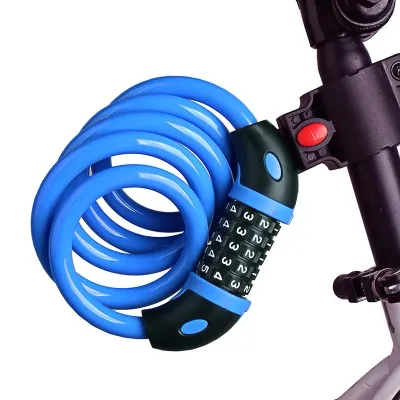
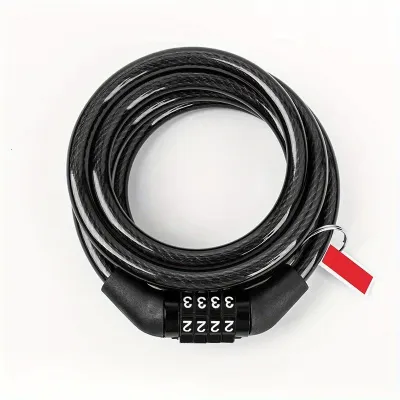
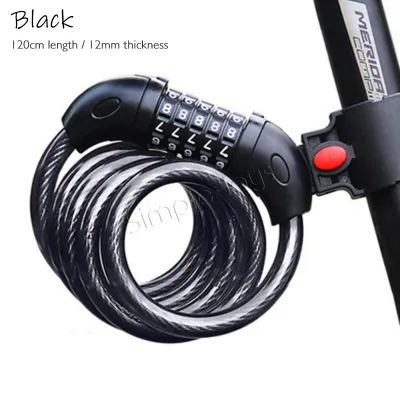
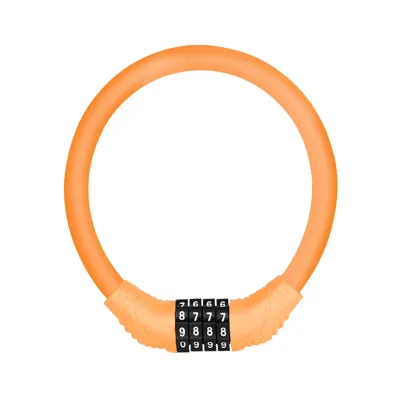
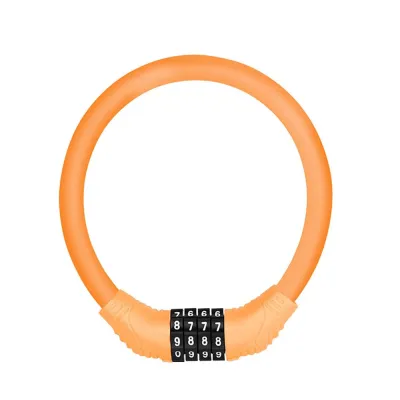
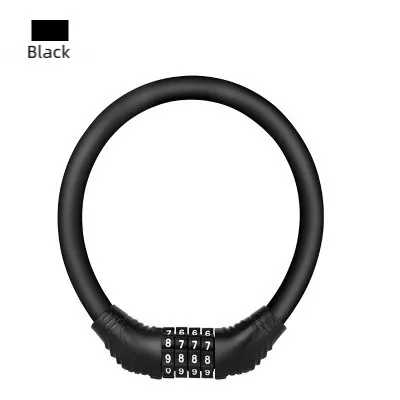
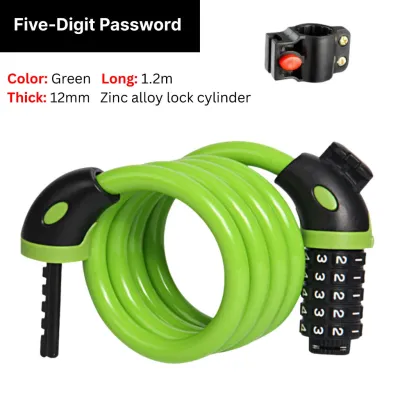
Cable locks are constructed from braided steel wires encased in a protective plastic coating. They are highly flexible, lightweight, and easy to coil into a compact shape, making them incredibly convenient to transport. Many cable locks feature integrated combination dials, removing the need to carry a physical key. However, this convenience comes at a significant cost to security, as even thick-looking cable locks can be severed in seconds using basic, easily concealed hand tools.
Because of their inherent vulnerability to quick, silent cutting attacks, cable locks should never be relied upon as the sole method of security for high-value bicycles or long-term parking. Leaving a bicycle secured only with a cable lock at an unmonitored MRT station or in a quiet residential void deck presents an easy target for opportunistic theft. Instead, cable locks are best reserved for low-risk scenarios where the bicycle remains within your line of sight, such as a brief stop at a convenience store along the PCN.
An excellent way to utilize a cable lock is as a secondary security measure in tandem with a more robust primary lock. You can use a heavy-duty U-lock to secure your bicycle frame and rear wheel directly to an immovable rack, while threading a lightweight cable lock through your front wheel and saddle to deter the theft of easily removable quick-release components. This dual-lock strategy forces a potential thief to carry multiple types of cutting tools, significantly increasing the difficulty of the theft.
Decision Framework: Which Lock Fits Your Routine?
To determine the best lock for your daily routine, evaluate your typical parking environments, the duration of your stops, and the value of your bicycle. If you regularly leave your bicycle unattended for several hours in high-traffic, public areas—such as shopping mall parking bays or transit stations—a high-quality U-lock is the most appropriate choice. The high level of physical deterrence is essential for peace of mind during extended absences.
If your daily routes require you to lock your bicycle to non-standard anchor points, or if you ride an e-bike and need to secure multiple parts of the frame to a wide pillar, a heavy-duty chain lock provides the necessary reach and flexibility. While you will need to manage the extra weight during your commute, the adaptability of a chain lock ensures you can secure your bicycle almost anywhere you find a solid structure.
For those who only participate in organized group rides, make brief stops where the bicycle is never more than a few meters away, or need to secure low-value accessories, a lightweight cable lock offers sufficient convenience. Additionally, before purchasing any locking system, verify if your bicycle insurance policy mandates a specific lock type or security certification. Some insurers require proof of a certified lock to validate a theft claim, making this an essential step in your decision-making process.
Key Specifications to Check on the Product Label
When shopping for a bicycle lock, look beyond marketing claims and focus on verifiable specifications on the product packaging. Rather than relying on a manufacturer’s internal security scale, which can vary wildly between brands, look for independent security ratings from recognized testing organizations. Certifications from bodies such as Sold Secure (which rates locks as Bronze, Silver, Gold, or Diamond) provide an objective assessment of a lock’s resistance to real-world attack methods.
Next, verify the physical dimensions of the locking elements. For U-locks, check the shackle diameter; a diameter of 13mm or greater is generally recommended to resist manual bolt cutters. For chain locks, look for a link thickness of at least 8mm made from hardened steel alloys. Ensure the product label explicitly states that the steel has been hardened or heat-treated, as standard untempered steel can be cut with relative ease using basic hand tools.
Finally, consider the environmental durability of the lock. Singapore’s tropical climate, characterized by high humidity and sudden, heavy downpours, can quickly cause internal locking mechanisms to rust and seize if they are not properly protected. Check the product label for weather-resistant features, such as a sliding dust cover that seals the keyway against water entry, rust-resistant coatings on the metal components, and weather-sealed locking cylinders that ensure smooth operation over years of exposure to the elements.
Frequently Asked Questions (FAQ)
How should I maintain my bicycle lock in a humid climate?
To prevent internal corrosion and jamming in a humid environment, periodically flush the keyway with a dry, non-sticky lubricant, such as a Teflon-based or graphite spray. Avoid using heavy, wet oils or multi-purpose lubricants that can attract dirt, dust, and grit, which will eventually clog the delicate internal pins. Additionally, regularly wipe down the exterior of the lock and check any fabric or nylon sleeves for moisture retention. If a sleeve becomes soaked during a heavy downpour, allow it to dry completely in a well-ventilated area to prevent trapped water from causing rust on the lock links or your bicycle frame.
Can I use two different types of locks together for better security?
Using two different types of locks is a highly effective security strategy. By combining a primary U-lock with a secondary cable or chain lock, you create a multi-layered defense that requires different tools and techniques to bypass. Always use your strongest lock, such as the U-lock, to secure the most valuable parts of the bicycle—specifically the frame and the rear wheel—directly to an immovable, solid metal anchor point. You can then use the secondary cable or chain lock to secure the front wheel and any quick-release components back to the frame, significantly reducing the likelihood of opportunistic component theft.
Community discussion
Share your experience or ask a question. Comments are reviewed before publication.