
Securing a bicycle in Singapore requires a realistic assessment of where you ride, how long you leave your bike unattended, and the physical effort you are willing to spend carrying a lock. There is no single lock that serves as a universal solution for every cyclist. Instead, finding the right option is a matter of balancing security, weight, and convenience to match your daily routine.
To simplify the choice, the three primary types of cycle locks serve distinct purposes. U-locks offer maximum security for high-risk areas where your bike is left unattended for long periods. Chain locks provide flexible anchoring options for thick poles and irregular structures, making them highly versatile but heavy. Cable locks deliver lightweight convenience and act as a visual deterrent for low-risk, quick stops when your bike remains nearby. Understanding these core differences allows you to choose a lock that protects your investment without making your ride unnecessarily burdensome.
This comparison focuses on how these three lock types perform in everyday cycling scenarios across Singapore, from daily commutes to MRT stations to recreational rides along the Park Connector Network (PCN). By evaluating the physical design, limitations, and practical carrying methods of each lock, you can make an informed decision that keeps your bicycle secure.
Products mentioned in this guide
Prices are valid at publication and may change. Please refer to the product page for the latest price.
The Core Trade-offs: Balancing Security, Weight, and Convenience
The fundamental physics of cycle locks dictate that thicker, harder materials increase security but add significant weight to your ride. To make a lock highly resistant to cutting tools, manufacturers must use hardened steel alloys that are dense and heavy. Attempting to find a lock that is completely indestructible, incredibly light, and highly flexible is a physical impossibility. You must decide which factors to prioritize based on your specific parking situations.
When evaluating different locks, three main dimensions define their performance:
- Security Level: This refers to the lock's physical resistance to common hand tools, such as cable snips, hacksaws, and bolt cutters, as well as power tools like angle grinders.
- Weight and Portability: This measures how heavy the lock is and how it affects your riding comfort. It dictates whether you can mount the lock directly to your bike frame, carry it in a backpack, or if it requires a dedicated cargo bag.
- Anchoring Flexibility: This is the lock's ability to secure the bike frame and wheels to various types of street furniture, ranging from standard thin metal bike racks to thick lampposts, railings, or concrete pillars.
To help you visualize these trade-offs, the table below summarizes how U-locks, chain locks, and cable locks compare across these three dimensions using relative terms:
| Lock Type | Security Level | Weight & Portability | Anchoring Flexibility | Primary Vulnerability |
|---|---|---|---|---|
| U-Lock | High | Medium | Low | Rigid shape limits anchor options |
| Chain Lock | High to Medium | Low | High | Heavy weight and bulk to transport |
| Cable Lock | Low | High | High | Easily cut with basic hand tools |
By understanding these trade-offs, you can avoid the mistake of buying a lock that is either too heavy to carry on your daily rides or too weak to protect your bike in high-risk areas.
U-Locks: Rigid Protection for High-Risk Parking
U-locks, also known as D-locks, are characterized by their rigid, heavy-duty metal shackles shaped like the letter “U” that lock into a straight crossbar. This design is widely considered the standard for high-security bicycle protection. Because the shackle is made of solid hardened steel, it leaves very little space for thieves to insert leverage tools like crowbars or car jacks, provided you choose a size that fits snugly around your bike and the anchor.

The solid construction of a quality U-lock offers excellent resistance against manual cutting tools. Standard bolt cutters, which are the tool of choice for opportunistic thieves, struggle to grip and cut through a thick, hardened steel shackle. Furthermore, many high-quality U-locks feature a double-bolting mechanism, meaning the shackle locks into the crossbar on both sides. This requires a thief to make two distinct cuts to remove the lock, doubling the time and effort required to steal the bike.
However, the rigid shape of a U-lock is also its primary limitation. Because the shackle cannot bend or stretch, you are strictly limited in what you can lock your bicycle to. Standard bicycle racks and thin metal railings work perfectly, but you will not be able to secure your bike to thick lampposts, wide utility poles, or large trees. This rigidity requires you to position your bike very close to the anchor point, which can sometimes be difficult in crowded parking areas.
In terms of portability, U-locks are dense but relatively compact. Because they do not sprawl or dangle, they are easier to transport than long chain locks. Many U-locks come with a frame-mounting bracket that allows you to clip the lock directly to your bicycle’s frame tubes while riding. Alternatively, their flat profile makes them easy to slide into a backpack, a pannier bag, or even tuck through a belt loop.
This combination of high security and compact size makes U-locks the ideal choice for long-term parking in public spaces. If you routinely leave your bike at MRT station racks, public Housing & Development Board (HDB) void decks, or high-foot-traffic commercial shopping districts for hours at a time, a sturdy U-lock provides the physical barrier needed to deter motivated thieves.
Chain Locks: Flexible Anchoring for Heavy-Duty Use
Chain locks consist of a series of hardened steel links covered by a heavy-duty fabric or nylon sleeve, secured by an integrated locking head or a separate padlock. The defining characteristic of a chain lock is its combination of high-level physical security and structural flexibility. The individual links are designed to resist cutting and sawing, while the flexible nature of the chain allows you to wrap it around a wide variety of objects.
The physical security of a chain lock depends heavily on the thickness of its links. High-security chains use links made of hardened steel alloys that are specifically shaped (such as hexagonal or square profiles) to prevent bolt cutters from getting a clean grip. The outer fabric sleeve is not just for aesthetics; it protects your bike’s paintwork from scratches and makes the chain much harder to cut with manual saws, as the loose fabric clogs the teeth of the blade.
The major trade-off with chain locks is their substantial weight penalty. A chain that is thick enough to resist heavy-duty bolt cutters is incredibly heavy. For casual riders or those commuting long distances, carrying a three-to-five-kilogram chain lock can make riding feel sluggish and exhausting. While lighter, thinner chains exist, they offer significantly less protection and can be cut with medium-sized hand tools.
Portability is a constant challenge for chain lock owners. Unlike U-locks, chain locks rarely come with practical frame-mounting brackets because their weight and shifting movement can damage the bike frame or throw off your balance. Instead, riders must carry them inside a backpack, drape them inside a pannier, or wrap them tightly around the seat post. If you wrap the chain around your seat post, you must ensure the fabric sleeve is in good condition to prevent the metal links from clattering against the frame and causing structural wear.
Despite these carrying challenges, chain locks are highly valuable for specific riding setups. They are excellent for securing heavier e-bikes (physically assisted bicycles or PABs) and cargo bikes, where the weight of the lock is less of a concern relative to the overall weight of the motorized vehicle. They are also highly practical for riders who frequent the Park Connector Network (PCN) and need to secure their bikes to wide, non-standard anchors like thick wooden posts, park benches, or large railings where a rigid U-lock simply will not fit.
Cable Locks: Lightweight Deterrence for Quick Stops
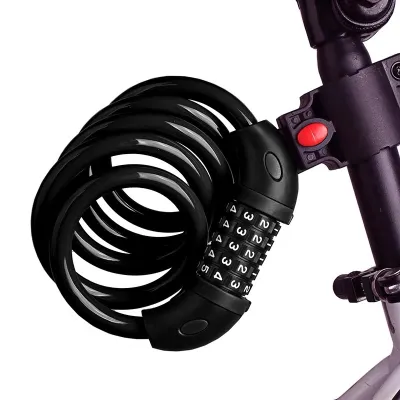
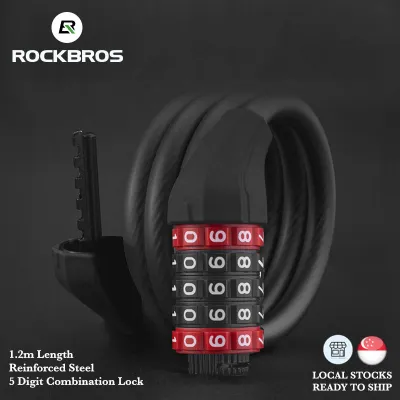
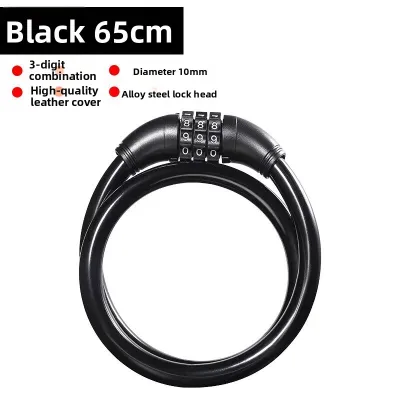
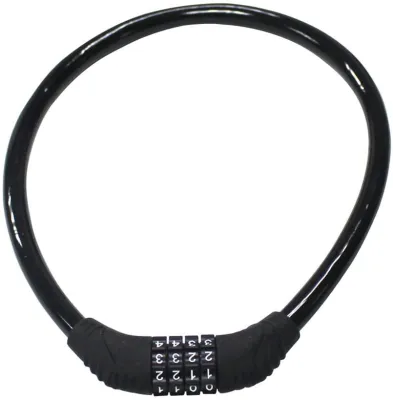
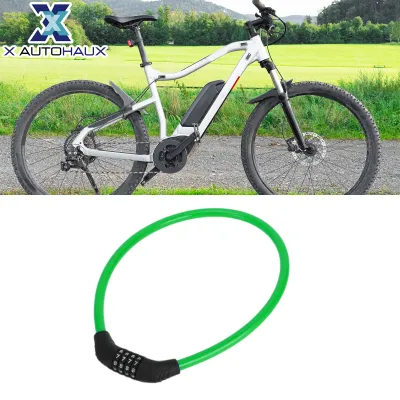
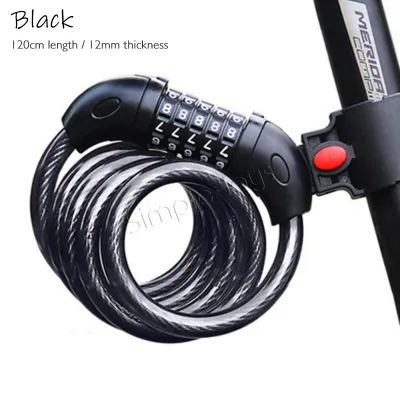
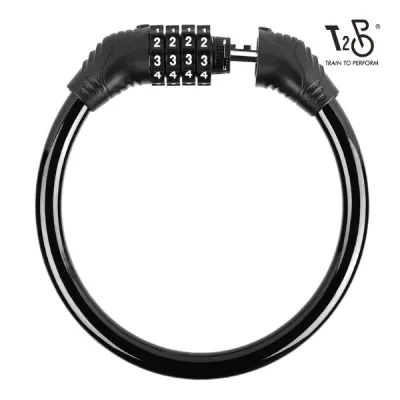
Cable locks are made of braided steel wires encased in a protective plastic or vinyl sheath. They are highly flexible, lightweight, and often come with integrated combination dials or key-operated locks. Because they can be coiled tightly and stretched to impressive lengths, they are highly convenient to handle and transport.
However, it is critical to understand that cable locks offer minimal physical security. The braided steel wires inside a cable lock, regardless of how thick the outer plastic sheath makes them look, can be severed in seconds using basic, pocket-sized cable snips or small bolt cutters. The plastic casing provides no resistance to cutting tools and is easily sliced open. Because of this, cable locks should be viewed strictly as a visual deterrent to prevent opportunistic “ride-away” theft, rather than a physical barrier against a determined tool-equipped thief.
You should never use a cable lock as your primary security measure if you plan to leave your bike unattended, out of sight, or in a high-risk area. Relying solely on a cable lock at an MRT station or an HDB void deck is highly risky, as it takes very little time and effort for someone to cut the cable and walk away with your bicycle.
Where cable locks excel is in their extreme convenience and portability. They are incredibly light and can be coiled tightly to fit inside a small saddlebag, a jersey pocket, or wrapped neatly around your handlebars without affecting your steering or adding noticeable weight. This makes them highly popular among recreational road cyclists and mountain bikers who prioritize speed and minimal weight.
Cable locks are best used for quick, short-duration stops where your bicycle remains within your direct line of sight, such as outside a cafe or convenience store during a group ride. They are also highly effective when used as a secondary lock to secure easily removable components, like your front wheel or saddle, in tandem with a heavy-duty primary lock that secures the frame.
Decision Framework: Matching the Lock to Your Riding Routine
Choosing the right lock requires analyzing your specific cycling habits, your bicycle type, and the local infrastructure where you plan to park. By identifying your primary riding scenarios, you can select the lock type that offers the best balance of security and convenience for your routine.
To help guide your decision, consider the following condition-based recommendations tailored to local cycling contexts:
- Choose a U-Lock if: You use your bicycle for daily commuting to public transit hubs, park your bike at public HDB void deck racks for extended periods, or leave it unattended in high-traffic commercial shopping districts. In these scenarios, the high physical security of a U-lock is essential to withstand targeted theft attempts.
- Choose a Chain Lock if: You ride a heavy e-bike, utility bike, or cargo bike where the weight of the lock is easily managed, and you frequently need to secure your bike to thick railings, wide posts, or irregular structures along the PCN where a rigid lock cannot reach.
- Choose a Cable Lock if: You only need a lock for quick, short-duration stops where your bike remains within your line of sight, such as grabbing a quick drink during a leisure ride, or if you need a lightweight secondary lock to secure accessories and quick-release wheels.
For high-value bicycles, relying on a single lock is often insufficient. A highly recommended practice is the two-lock strategy, which combines two different lock types to maximize security. For example, you can use a heavy-duty U-lock to secure the frame and rear wheel to a solid anchor, while threading a flexible cable lock through the front wheel and back to the U-lock.
This two-lock approach forces a potential thief to carry and use two entirely different types of tools—such as bolt cutters for the U-lock and cable snips for the cable—which significantly increases the time, noise, and effort required to steal the bike. This added complexity makes your bicycle a much less appealing target compared to nearby bikes secured with only a single, simple lock.
Essential Specifications to Verify on the Product Label
Before purchasing a cycle lock, you should carefully examine the specifications on the product label to ensure it meets your security and durability requirements. Do not rely solely on the manufacturer’s internal marketing claims, which often use arbitrary security scales that make comparison difficult.
When evaluating a lock on the shelf or online, verify these key specifications:
- Material Thickness: For U-locks, look for a hardened steel shackle diameter of at least 13mm to resist manual bolt cutters. For chain locks, aim for a link thickness of 8mm or greater. For cable locks, remember that a thicker outer plastic sleeve does not mean a thicker steel core; check the actual steel cable diameter on the specification list.
- Locking Mechanism: Opt for locks that utilize high-quality cylinder designs, such as disc detainer cylinders, which are highly resistant to picking and bumping. Avoid cheap spring-loaded pin tumbler locks that can be easily bypassed. Additionally, check if the manufacturer offers a key replacement program, which allows you to order duplicate keys using a registered key code if you lose the originals.
- Weather Resistance: Singapore's tropical climate, characterized by high humidity and frequent, heavy downpours, can quickly cause internal locking mechanisms to rust and seize. Verify that the lock features rust-proof internal components, a protective vinyl or rubber coating on the shackle to prevent water ingress, and a sliding dust cover over the keyway to keep rain and debris out of the cylinder.
- Independent Security Ratings: Look for recognized independent security certifications printed on the packaging, such as Sold Secure (which rates locks as Bronze, Silver, Gold, or Diamond based on rigorous physical testing). A lock with a certified independent rating provides verified proof of its defensive capabilities, giving you greater peace of mind when securing your bicycle.
Community discussion
Share your experience or ask a question. Comments are reviewed before publication.