
When choosing tennis strings, the numbers on the packaging can feel like a foreign language. For beginners, finding the right balance of string gauge (thickness) and tension is key to developing consistent strokes and preventing arm discomfort.
Understanding these specifications allows you to set up your racket to match your current skill level. This helps you control the ball and build confidence while you learn the fundamentals of the game.
What Tennis String Gauge Numbers Mean
Tennis string gauge refers to the thickness of the string, which directly impacts how the racket feels when making contact with the ball. Manufacturers display this thickness using two different systems: standard gauge numbers (typically ranging from 15 to 19) or direct measurements in millimeters (usually between 1.10 mm and 1.40 mm).
Products mentioned in this guide
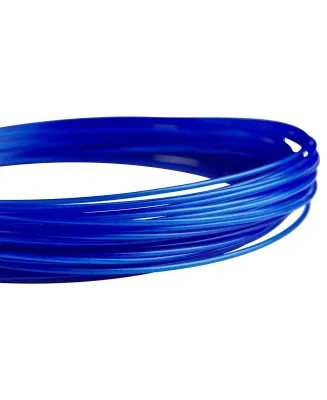


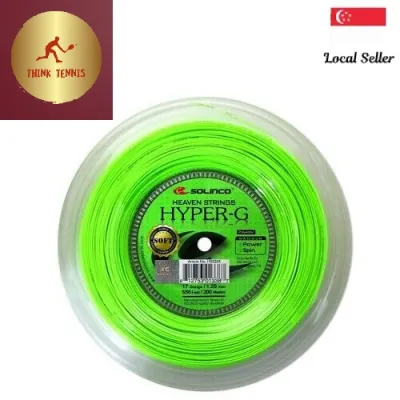




Prices are valid at publication and may change. Please refer to the product page for the latest price.
The most important rule to remember is the inverse relationship of gauge numbers: the higher the gauge number, the thinner the string. For example, a 17-gauge string is thinner than a 15-gauge string. Conversely, millimeter measurements are direct, meaning a 1.30 mm string is thicker than a 1.20 mm string.
Some brands also use a “L” after the gauge number, such as 16L, which stands for “light” and indicates a thickness that falls between 16 and 17 gauge. This letter helps players find intermediate thicknesses that offer a compromise between two standard sizes.
String thickness influences three main areas of playability: durability, spin, and comfort. Thicker strings (lower gauge numbers, like 15 or 16) offer greater durability because there is more material to wear down before the string snaps. Thinner strings (higher gauge numbers, like 17 or 18) stretch more easily upon impact, which generally provides a softer feel, more comfort, and slightly more grip on the ball to help generate spin.
How String Tension Affects Playability
String tension refers to how tightly the strings are pulled when installed in your racket frame. Tension is measured in pounds (lbs) or kilograms (kg), and most recreational rackets have a recommended tension range printed directly on the frame, typically between 50 and 60 pounds (approximately 23 to 27 kilograms).

Lowering the tension of your strings creates a looser string bed that acts like a trampoline. When the ball hits a looser string bed, the strings deflect deeper and return more energy to the ball, resulting in more depth and power with less physical effort.
This larger sweet spot also absorbs more vibration, which can help reduce arm strain for players still developing their technique. It is a practical option for beginners who need help getting the ball over the net.
Raising the tension creates a stiffer, flatter surface. A tighter string bed deforms less upon impact, which reduces the rebound energy and gives you more control over the direction and depth of your shots.
However, this setup requires you to supply more of your own physical power and increases the shock transmitted to your wrist and elbow. The actual feel of any tension setting will also depend on your racket’s head size, your swing speed, and whether you use stiff polyester or flexible nylon strings.
Choosing the Right Gauge and Tension for Beginners
For players just starting out, the goal is to find a balanced setup that minimizes arm fatigue while providing enough consistency to learn proper swing mechanics. A mid-range thickness is highly recommended for your first string purchase.
Opting for a 16-gauge (around 1.30 mm) or 17-gauge (around 1.25 mm) synthetic gut or multifilament string provides an excellent starting point that balances durability with a comfortable feel.
When it comes to tension, a reliable strategy is to start exactly in the middle of your racket’s recommended tension range. If your racket recommends 50 to 60 pounds, ask your stringer to tension the racket at 55 pounds.
This baseline allows you to evaluate your play style over several sessions before making adjustments in either direction. It removes the guesswork from your initial games.
Pay close attention to how your arm and shots feel during play to guide your next restringing decision. If you find that your shots are consistently flying past the baseline even with a controlled swing, you may want to increase the tension by two pounds on your next visit.
If your arm feels sore after playing or you struggle to get the ball deep into the opponent’s court, lowering the tension by two to three pounds can provide the extra comfort and depth you need.
Reading String Packaging and Racket Specifications
Before purchasing new strings or visiting a local pro shop in Singapore, you can easily verify your equipment’s baseline specifications. Look at the inside of your racket’s throat or along the inner rim of the frame.
Manufacturers almost always print the recommended tension range, string pattern (such as 16×19), and head size in these areas. These numbers serve as your primary guide when selecting strings.
When looking at string packaging, check the front label for the gauge number and its millimeter equivalent. The packaging will also list the material type—such as synthetic gut, multifilament, or co-polyester—and sometimes a maximum tension limit.
Beginners should generally avoid stiff polyester strings, which are designed for advanced players with fast swings, and instead look for packages labeled “synthetic gut” or “multifilament” for better comfort.
If the printed specifications on your racket frame have worn off or are missing, do not guess the tension. Consult a qualified local stringer or check the manufacturer’s official website for your specific racket model to find the approved tension limits.
Exceeding the recommended maximum tension can warp or crack your racket frame, while stringing too far below the minimum can lead to an unstable string bed.
Frequently Asked Questions (FAQ)
Should beginners use thick or thin tennis strings?
Beginners generally benefit most from mid-to-thick strings, such as 16-gauge (1.30 mm). New players frequently hit the ball off-center or near the frame, which puts uneven stress on the strings and can cause thin strings to snap prematurely. A slightly thicker string provides the durability needed to withstand these early mishits while you work on centering your contact point.
How do I know when it is time to restring my racket?
Instead of waiting for a string to snap, look for physical and visual signs of degradation. Inspect your string bed for deep notches where the vertical and horizontal strings intersect, or look for fraying if you use multifilament strings. You should also consider restringing if the strings feel dead, slide around constantly without returning to their original position, or if you notice a sudden loss of control and a hollow sound during hits.
Community discussion
Share your experience or ask a question. Comments are reviewed before publication.