
Choosing between the Victor GR233, GR262, and Super GE badminton grips depends on your specific preferences for tackiness, thickness, and moisture management. These three popular overgrips serve different player profiles, ranging from those who need a highly tacky surface for maximum control to players who require superior moisture absorption in humid playing conditions. By examining their material compositions, thickness ratings, and tactile feedback, you can select the grip that best matches your playstyle and hand conditions.
Your grip is the only point of contact between your hand and the racket, making it a critical component of performance, shot accuracy, and comfort. A grip that is too slippery can cause the racket to twist during high-speed clears or smashes, while a grip that is too thick can limit your finger power and maneuverability. Understanding how Victor designs each of these models allows you to make an informed decision that enhances your connection to the racket.
Understanding the Core Design of Each Model
To identify the baseline design intent of each Victor grip model, you should first check the official packaging or product labels for the exact material composition. Victor typically utilizes specific polyurethane (PU) blends, synthetic textures, or specialized backing materials to achieve distinct tactile profiles. These material choices directly influence how the grip behaves when wrapped tightly around your racket handle.
Products mentioned in this guide
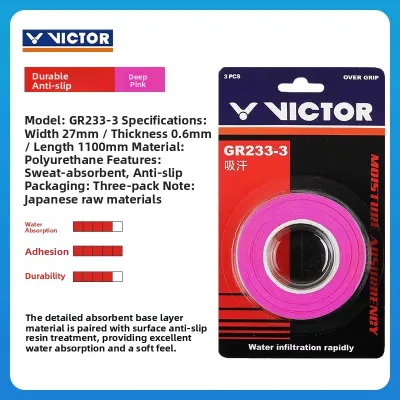
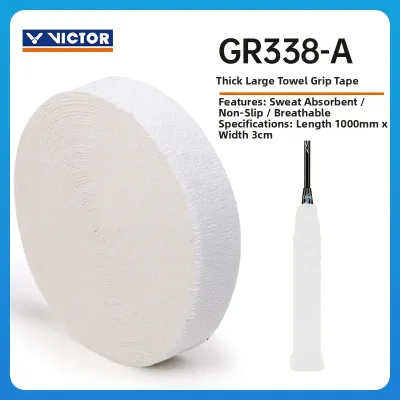
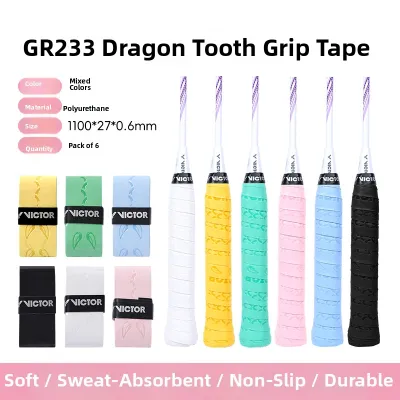
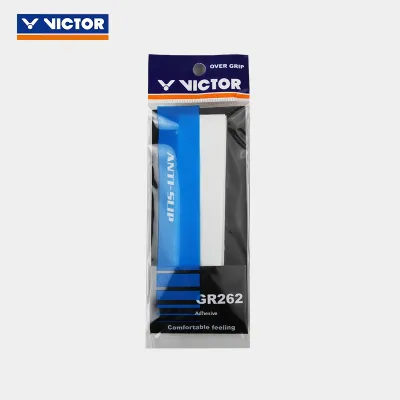
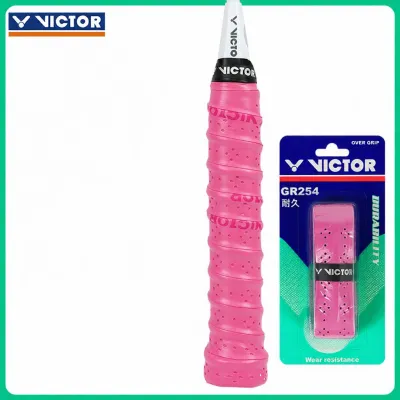
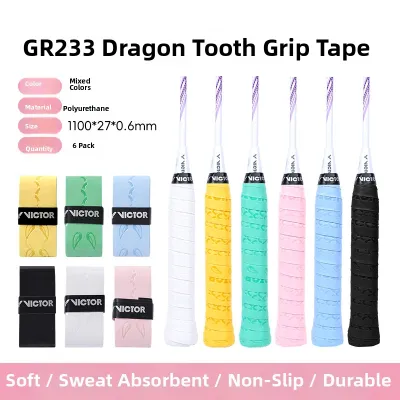
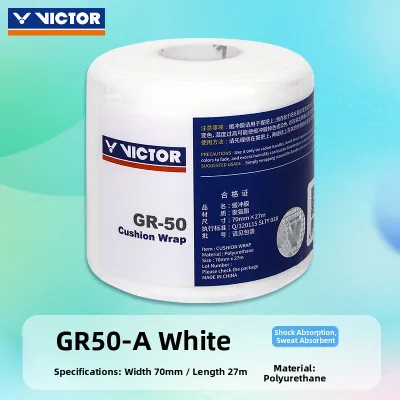
Prices are valid at publication and may change. Please refer to the product page for the latest price.
When inspecting the GR233 right out of the wrapper, you will notice a smooth, highly elastic surface. The manufacturer designs this model primarily for players who prefer a traditional, snug wrap with a high degree of initial surface stickiness. The material is formulated to stretch evenly, allowing you to customize the overlap density during installation to suit your hand size.
In contrast, the GR262 often features observable visual and textural differences, such as embossed patterns, surface lines, or ventilation structures. This design target is aimed at players who want a more structured feel under their fingers, which can assist with consistent racket orientation. The physical ridges created by the embossed pattern offer distinct tactile reference points for your thumb and index finger.
The Super GE is positioned as a premium option within Victor’s lineup, focusing on a balanced material profile that bridges the gap between high tackiness and long-term comfort. When handling the Super GE, the texture feels supple yet firm, indicating a dense polyurethane structure designed to resist compression over time. Checking the product specifications on the packaging will help you verify if this model includes any specialized anti-slip coatings or reinforced base layers.
Comparing Tackiness and Moisture Management
Matching your grip’s surface feel to your personal sweat levels is essential, especially when playing in hot and humid environments like Singapore’s indoor sports halls. High humidity accelerates sweat production, which can quickly compromise a grip’s surface integrity. Evaluating how each model manages moisture will prevent the frustrating experience of a slipping racket during intense rallies.

The GR233 is designed with a high-tack surface that excels in dry to moderately damp conditions. This tacky-feel surface provides an immediate, secure bond with your palm, requiring less hand pressure to maintain a firm hold on the racket. However, if you experience heavy palm sweat, a smooth tacky grip like the GR233 can sometimes struggle to disperse moisture, leading to a temporary loss of friction unless wiped down regularly.
For players who struggle with heavy perspiration, the GR262 offers a different approach to moisture management. The textured or perforated surface of this model is designed to channel sweat away from the direct contact points of your hand. This structure helps maintain a dry-feel sensation longer than completely smooth grips, as the moisture has physical pathways to escape or evaporate during play.
The Super GE utilizes a specialized polyurethane blend that aims to maintain its tackiness even when exposed to light moisture. Rather than relying solely on physical textures, the material itself is engineered to absorb a baseline level of sweat without immediately becoming slick. You can perform an easy observable check by applying a few drops of water to the grip surface and executing a few test swings to see how quickly the material loses its slip resistance.
Evaluating Thickness and Racket Feedback
Before purchasing, always verify the exact thickness specifications printed on the product packaging, as even a fraction of a millimeter can dramatically alter your racket’s handle size. Most Victor overgrips range from approximately 0.5 mm to 0.75 mm in thickness. Choosing the right thickness requires balancing the need for shock absorption with the desire for direct racket handle feedback.
Thicker grips, or overgrips wrapped with a heavy overlap, provide excellent joint cushioning and vibration dampening. This is particularly beneficial for players who suffer from elbow or wrist strain, as the material absorbs a portion of the impact force from off-center hits. However, the trade-off is a rounder handle profile that softens the feel of the wooden handle’s bevels, making precise finger placement for backhand transitions more difficult.
Thinner grips, such as a standard application of the GR233 or Super GE, keep your fingers closer to the wooden handle. This proximity allows you to feel the distinct edges of the racket handle, which is crucial for executing deceptive shots and rapid grip changes. The downside is that thinner wraps offer minimal cushioning, transferring more raw impact vibration directly into your hand and arm.
If you find that your preferred overgrip model makes the handle feel slightly too thick or too thin, you can easily adjust the underlying base grip tape. Removing the factory-installed grip and replacing it with a thinner cushion wrap before applying your Victor overgrip allows you to customize the overall handle diameter. This customization ensures you get the exact tactile feedback you need without sacrificing the surface properties of your chosen overgrip.
Assessing Durability and Wear Patterns
Establishing realistic expectations for your grip’s lifespan prevents unexpected slipping and maintains consistent playability. Synthetic grip materials naturally degrade over time due to friction, pressure, and exposure to body oils and sweat. Recognizing the early signs of wear will help you schedule timely replacements before your performance suffers.
Observable signs of wear include edge peeling along the wrapped seams, a noticeable loss of surface tackiness, material tearing near the butt cap, or a hardening of the polyurethane layer. When a grip hardens, it loses its elastic properties and shock absorption, making the racket feel harsh during contact. If you notice the grip turning a darker, discolored shade or emitting an odor, it is time for a fresh wrap.
Your playing frequency, grip tightness, and storage conditions heavily dictate the degradation rate of these synthetic materials. Players who hold the racket with a tense, tight grip will wear down the polyurethane surface much faster than those who maintain a relaxed hold. Additionally, storing your racket in a damp, unventilated bag can accelerate the breakdown of the grip’s adhesive backing and surface coatings.
To prevent premature drying or material breakdown, store your rackets in a cool, dry place away from direct sunlight. Avoid leaving your racket bag in the trunk of a car, as extreme heat can cause the synthetic compounds in the grip to melt, become sticky, or peel away from the handle. Taking a few moments to dry your grip with a towel after a session can also extend its usable lifespan.
Decision Framework: Which Victor Grip Should You Buy?
To finalize your purchasing decision, you must match your verified playing needs with the specific design profiles of these three models. There is no universal winner, as the ideal grip depends entirely on your hand size, sweat levels, and tactile preferences. Using a structured decision framework will guide you to the correct choice.
Choose the Victor GR233 if you prioritize a classic, highly tacky surface feel and prefer a smooth texture that molds closely to the racket handle. This model is highly suitable for players who do not sweat excessively and want a secure, locked-in feel that requires minimal hand tension to hold. It is an excellent choice for precise control and quick front-court play.
Choose the Victor GR262 if you require enhanced moisture management or prefer a distinct physical texture under your fingers. The embossed or patterned design of this model is ideal for players who need clear tactile reference points on the handle bevels and those who play in humid conditions where sweat accumulation is a constant challenge.
Choose the Victor Super GE if you are looking for a premium, durable option that offers a balanced blend of moderate tackiness and consistent cushioning. This model is well-suited for all-around players who want a reliable grip that maintains its structural integrity and surface feel over multiple long sessions without wearing down prematurely.
Before completing your purchase, verify if you have any specific skin sensitivities to synthetic polyurethane blends, as some players may prefer alternative materials like cotton towel grips. Additionally, confirm whether you require a specific wrapping direction, as left-handed players often benefit from wrapping the grip in the opposite direction to prevent the edges from peeling up. Finally, double-check the packaging to ensure you are purchasing the correct product type for your intended application.
Frequently Asked Questions (FAQ)
Can I use these Victor grips as replacement grips or only as overgrips?
The Victor GR233, GR262, and Super GE are primarily designed as overgrips, meaning they are thin and intended to be wrapped over an existing base grip. They do not have the thick foam backing or heavy adhesive layer required to protect your hand directly from the raw wooden handle. If you wrap them directly onto the wood, you will likely experience insufficient cushioning and potential damage to the wood from sweat penetration. Always verify the product label to confirm if a model is classified as an overgrip or a full replacement grip.
How often should I change my badminton grip?
You should change your badminton grip as soon as you observe physical signs of degradation, such as slipping during swings, visible tearing, edge peeling, or a complete loss of surface tackiness. For regular players who train two to three times a week, replacing the overgrip every three to four weeks is a common practice to maintain hygiene and control. Casual players may extend this duration, but you should always replace the grip if it begins to smell, feels hard and dry, or no longer provides a secure hold on your racket.
Community discussion
Share your experience or ask a question. Comments are reviewed before publication.