
Selecting the right waist support gear depends entirely on the physical demands of your workout, as heavy weightlifting and cardiovascular exercises require fundamentally opposite mechanical functions. Heavy lifting demands extreme rigidity to maximize intra-abdominal pressure and stabilize your spine under load. Conversely, cardio workouts require maximum flexibility, breathability, and unrestricted movement to support sustained breathing and natural body mechanics.
When performing heavy squats or deadlifts, your primary goal is to create a solid, unyielding wall around your midsection. A rigid belt provides a surface for your abdominal muscles to brace against, which increases pressure inside your abdominal cavity and keeps your spine aligned.
Cardio workouts like running, rowing, or high-intensity interval training (HIIT) serve a different purpose. Here, waist support provides mild compression, thermal warmth, and proprioceptive feedback—a physical reminder to maintain posture as you fatigue. The gear must allow your lungs to expand fully and your hips to flex freely.
Products mentioned in this guide
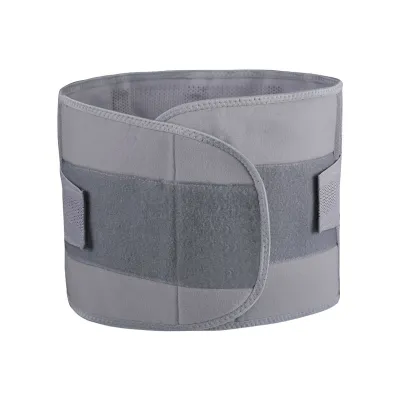
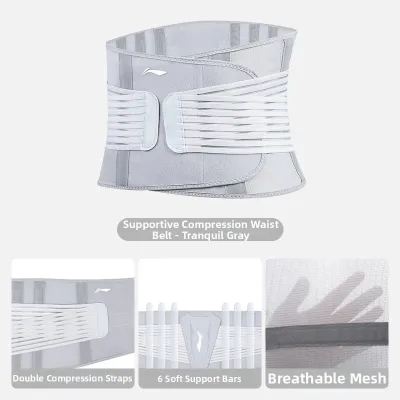
Prices are valid at publication and may change. Please refer to the product page for the latest price.
Using the wrong gear for your activity can hinder your performance and increase your risk of injury. Wearing a rigid, thick leather belt during a run will restrict your breathing, bruise your hips, and alter your natural running stride. On the other hand, relying on a soft neoprene sleeve or sweat band while attempting a heavy lift provides zero structural support, giving you a false sense of security that can lead to severe spinal strain.
Heavy Weightlifting: Choosing Rigid Belts for Maximum Intra-Abdominal Pressure
When your training involves lifting heavy weights—such as squats, deadlifts, overhead presses, or Olympic lifts—your waist support gear must prioritize structural rigidity. This rigidity is what allows you to generate maximum intra-abdominal pressure (IAP), which acts like an internal airbag to protect your lower back.
Lever Belts vs. Prong Belts
The two primary fastening systems for rigid lifting belts are levers and prongs. Lever belts use a metal buckle that locks to an exact tightness instantly and releases with a simple flick of the wrist. This is highly convenient for powerlifters who want maximum tightness during a set but need immediate relief afterward. However, adjusting a lever belt’s sizing requires a screwdriver, making it less convenient if your body weight fluctuates. Prong belts utilize a traditional buckle design with a single or double prong. Single-prong belts are highly adjustable on the fly and easy to secure, whereas double-prong belts can be unnecessarily difficult to thread and tighten without offering extra structural benefit.
Material and Thickness
For genuine structural support, heavy-duty leather is the industry standard. Leather belts do not stretch or compress under load, ensuring that the pressure you exert outward is met with equal resistance. Most rigid belts measure 10mm or 13mm in thickness with a standard width of 4 inches (approximately 10 cm). A 10mm leather belt is highly supportive yet relatively pliable, making it the ideal choice for most recreational lifters. A 13mm belt offers extreme stiffness, favored by competitive powerlifters lifting near-maximal loads. Ensure you verify these specifications against your local competition guidelines, such as those of the Singapore Powerlifting Alliance, if you plan to compete.
Fit and Positioning
To use a rigid belt correctly, position it around your waist so that it sits just above your hip bones and directly over your belly button. It should be tight enough that you can feel it resting against your skin, but not so tight that you cannot draw a full breath. When preparing to lift, take a deep diaphragmatic breath into your belly—not your chest—and actively push your abdominal wall outward against the belt. This bracing action is what stabilizes your core.
Limitations and Safety Boundaries
Rigid belts are specialized tools meant for heavy, compound lifts where the spine is under direct load. They are not intended to be worn during your entire workout, nor should they be used during light warm-up sets. Most importantly, a belt cannot compensate for poor lifting form or a weak core. If you cannot perform a squat with proper mechanics without a belt, adding one will not make the movement safe.
Cardio Workouts: Selecting Flexible Sleeves for Mobility and Breathability
Cardiovascular workouts demand constant movement, high respiratory rates, and rapid changes of direction. Rigid, unyielding gear has no place here; instead, you need flexible waist support that prioritizes mobility, comfort, and temperature regulation.

Neoprene Sleeves and Elastic Wraps
Flexible support gear typically comes as pull-on neoprene sleeves or adjustable elastic wraps. Rather than acting as a rigid brace, these sleeves provide mild compression that supports the surrounding musculature without locking your joints or spine in place. They also retain therapeutic heat, keeping your lower back muscles warm and pliable to help prevent muscle stiffness during outdoor runs or dynamic workouts.
Breathability and Moisture Management
In Singapore’s warm, humid climate, heat and sweat buildup are major considerations. Standard, solid neoprene wraps can trap sweat against your skin, leading to chafing, heat rashes, and discomfort during prolonged sessions. When selecting gear for cardio, look for advanced materials featuring perforated neoprene, moisture-wicking synthetic fabrics, or integrated mesh panels. These features promote airflow and help sweat evaporate quickly, keeping your skin dry whether you are running along East Coast Park or training in a fitness space.
Unrestricted Range of Motion
Cardio activities like rowing, cycling, and running require deep hip flexion and continuous rotation of the torso. Your waist support must be flexible enough to bend with your body. If a support sleeve pinches your thighs when you sit on a rowing machine, or if it restricts your chest from expanding fully during a sprint, it is too restrictive. The ideal cardio sleeve should feel like a second skin, providing support without you actively noticing its presence.
The Role of Proprioception
Unlike lifting belts that mechanically brace your body, cardio sleeves work primarily through proprioception. The gentle, consistent pressure of the sleeve against your skin acts as a sensory reminder to keep your core lightly engaged and your posture upright. As fatigue sets in during a long run or a high-repetition HIIT circuit, your posture naturally begins to slump. The physical feedback from a flexible sleeve helps you recognize this slouching and prompts you to correct your alignment, reducing fatigue-induced lower back strain.
The Hybrid Compromise: Can One Waist Support Cover Both Activities?
For many fitness enthusiasts in Singapore, workouts are rarely purely strength-based or purely cardio-focused. If your routine combines both, you might wonder if a single, versatile waist support can handle everything.
Velcro and Nylon Weightlifting Belts
The closest thing to a hybrid option is the nylon weightlifting belt, which typically secures with a heavy-duty Velcro strap. These belts are much lighter and more flexible than leather belts, and they often feature a tapered design that is wider at the back and narrower at the sides to allow better hip movement. They are highly popular in functional fitness circles because they can be tightened quickly for a lift and loosened instantly for a cardio interval.
The "Jack of All Trades" Trade-off
While nylon Velcro belts are highly convenient, they represent a significant compromise. A belt flexible enough to wear comfortably during a short run or a rowing segment will never provide the absolute rigidity required to safely brace for a near-maximal deadlift. Conversely, if you tighten a heavy-duty nylon belt enough to support a heavy squat, it will still restrict your breathing and chafe your skin if you try to run.
Decision Framework
To determine whether you need a hybrid belt or two dedicated supports, evaluate your primary training style:
- Invest in Two Supports: If you follow a structured program with dedicated heavy lifting sessions (like powerlifting) and separate, dedicated cardio days (like running or cycling), you should buy both a rigid leather belt and a breathable, flexible sleeve. A basic neoprene sleeve may cost between S$20 and S$50, while a high-quality leather belt can range from S$80 to over S$200, making this a worthwhile investment in your safety and performance.
- Choose a Hybrid Nylon Belt: If you primarily engage in mixed-modality workouts, light circuit training, or functional fitness classes where you never lift close to your maximum capacity, a single adjustable nylon Velcro belt is a highly practical, cost-effective solution.
Safe Usage, Sizing, and When to Skip the Gear
Using waist support gear correctly is just as important as choosing the right type. Misusing these tools can lead to a false sense of security, poor mechanics, or even acute injury.
The "One Finger" Rule
When fitting a rigid lifting belt, a common mistake is pulling it as tight as physically possible. This actually prevents you from taking a deep breath and expanding your abdominal wall to brace. To find the correct tightness, buckle the belt and attempt to slide one finger between the belt and your stomach. If you can slide a finger in with slight resistance, the tightness is correct. It should feel snug and secure, but still allow room for your muscles to push outward.
Gear vs. Core Strength
Always remember that waist support gear is an accessory to enhance performance, not a replacement for a strong core. Relying entirely on a belt to keep your spine stable can lead to weakness in your deep stabilizing muscles, such as the transverse abdominis. Ensure your training program includes plenty of direct core work, such as planks, bird-dogs, and carry variations, to build natural stability.
Medical Boundaries and Stop Conditions
If you experience sharp pain, radiating numbness, or tingling in your lower back or legs, stop your workout immediately and remove the gear. Waist supports are designed to assist healthy joints and muscles under stress; they cannot heal, treat, or safely bypass an active spinal injury or hernia. If you have chronic back pain, consult a registered physiotherapist or medical professional in Singapore to address the root cause before using any support gear.
Frequently Asked Questions (FAQ)
Does wearing a waist support weaken your core muscles?
No, when used correctly for heavy lifts, research indicates that a lifting belt actually increases core muscle activation by providing a physical surface for your abs to push against. However, if you wear a belt or support sleeve constantly throughout your entire workout—including light warm-ups and non-bracing exercises—your core muscles can become reliant on the external support, which may lead to a lack of independent stabilization over time. Use support gear selectively during your hardest sets.
How tight should a weightlifting belt be?
A weightlifting belt should be tight enough to feel highly secure when you actively brace your abdomen against it, but not so tight that it restricts your ability to take a full, deep diaphragmatic breath. If you find yourself breathing shallowly or if the belt pinches your skin excessively before you even begin your movement, loosen it by one notch. The optimal tightness may vary slightly depending on the exercise; many lifters prefer a slightly looser fit for deadlifts to help them get into a deep starting position, and a tighter fit for squats.
Can I wear a cardio waist trimmer for heavy weightlifting?
No, you should never wear a cardio waist trimmer or sweat belt for heavy weightlifting. These items are made of soft, highly flexible neoprene designed solely for heat retention and mild compression. They have zero structural integrity and cannot resist the immense forces generated during heavy spinal loading. Relying on them for heavy lifts creates a dangerous illusion of support, which can encourage you to lift heavy weights with compromised form, significantly increasing your risk of a severe lower back injury.
Community discussion
Share your experience or ask a question. Comments are reviewed before publication.