
Fitting a dedicated strength-training setup into a compact Singapore HDB flat requires balancing structural safety with daily living space. The ideal solution is a wall-mounted pull-up bar, which provides a highly stable platform for bodyweight exercises without taking up valuable floor space. However, because HDB layouts feature specific wall compositions and limited square footage, selecting the right size and style is crucial to avoid structural damage or a cramped home environment.
To find the right fit, you must evaluate your flat’s wall types, calculate precise clearance dimensions, and choose between a fixed or foldable design. A well-planned installation ensures you can perform full-range-of-motion exercises safely while keeping your walkways clear and your home functional.
Assessing Your Space and Wall Conditions
Before purchasing any equipment, you must identify the structural characteristics of your HDB flat. Modern HDB flats are constructed using a mix of precast concrete panels, structural columns, and lightweight partition walls. Mounting a pull-up bar requires a solid, load-bearing surface that can withstand both your static body weight and the dynamic forces generated during exercise.
Products mentioned in this guide
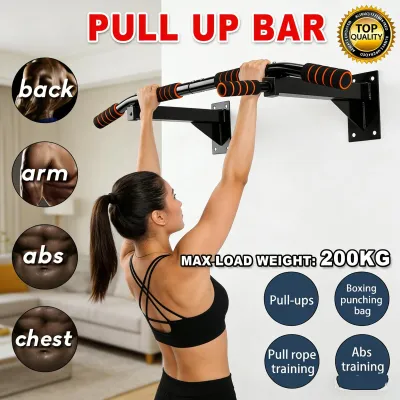
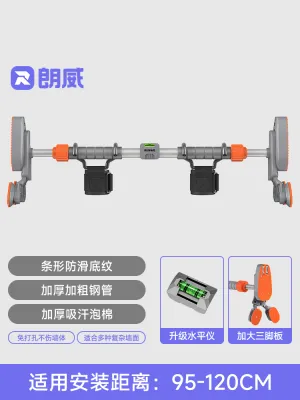
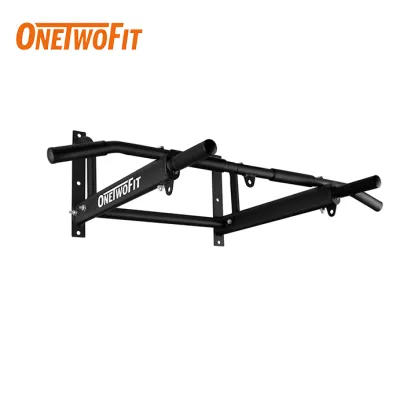
![[Ready Stock] UltimateSup Wall Mounted Pull Up Bars Portable Home Chin Up Fitness Equipment Pull Up Bar No Drilling Load Bearing](https://img.lazcdn.com/g/p/9e3a5040799705b35dace88921b6ab7b.png_400x400q80.png_.webp)
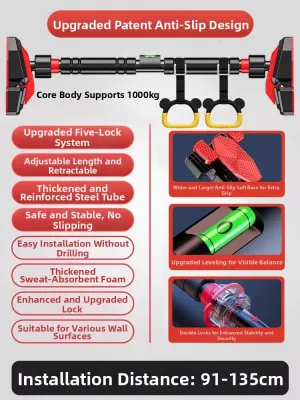
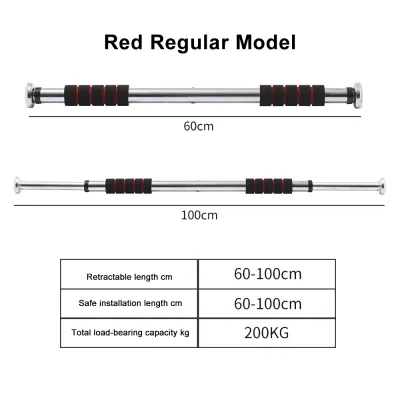
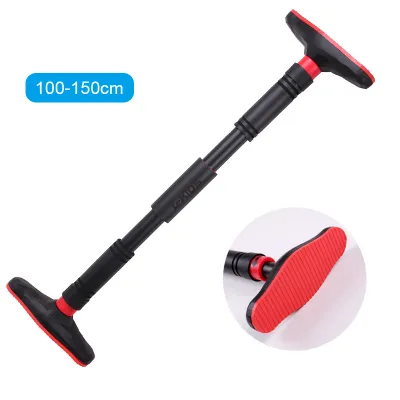
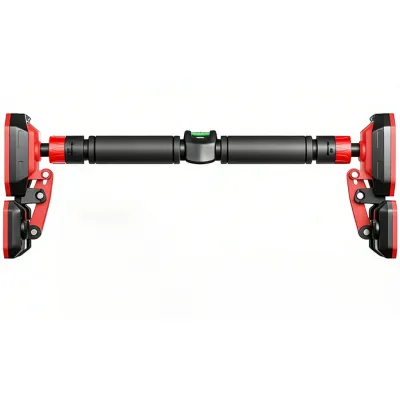
Prices are valid at publication and may change. Please refer to the product page for the latest price.
First, locate your structural concrete walls. These are typically found along the perimeter of the flat, between units, or as structural columns within the layout. Household shelter (bomb shelter) walls are also solid concrete, but HDB regulations strictly prohibit drilling into the core structural walls of these shelters to preserve their emergency protective capabilities. Always consult official HDB renovation guidelines or your building’s floor plan to identify approved drilling zones.
Second, distinguish concrete from non-load-bearing partition walls. Partition walls, often found dividing bedrooms or forming newer drywall layouts, are made of plasterboard or lightweight concrete blocks. They lack the density to hold heavy expansion bolts and will fail under dynamic loads. You can verify your wall type by tapping on it; a hollow sound indicates a partition wall or drywall, while a dull, solid thud indicates concrete. Alternatively, drilling a tiny pilot hole can confirm the material: fine grey dust indicates concrete, while white chalky dust indicates plasterboard.
Finally, scan the chosen wall area for hidden utilities. HDB walls house electrical conduits and water pipes, particularly near light switches, power outlets, bathrooms, and kitchens. Use a reliable multi-scanner or stud finder with wire-detection capabilities to map out the wall before drilling. Ensure the mounting zone is completely clear of any internal wiring or plumbing to prevent costly damage and safety hazards.
Choosing the Right Style for Limited Spaces
Space is a premium commodity in small HDB flats, making the style of your pull-up bar a major decision factor. The two primary options are foldable and fixed wall-mounted bars, each offering distinct spatial trade-offs.

Foldable wall-mounted bars are highly suitable for multi-purpose rooms, narrow corridors, or shared living spaces. These designs feature heavy-duty hinges and locking pins that allow the bar to swing flat against the wall when your workout is complete. A typical foldable bar projects about 40 to 50 cm from the wall during use, but folds down to a profile of less than 10 cm. This space-saving mechanism ensures that the bar does not obstruct daily foot traffic or interfere with nearby wardrobe doors. When choosing a foldable model, verify that the locking pins are robust and easy to engage, as they bear a significant portion of the structural stress during use.
Fixed wall-mounted bars offer maximum rigidity and stability because they lack moving parts or joints. This makes them the preferred choice for advanced trainees performing high-intensity or dynamic movements, such as kipping or weighted pull-ups. However, a fixed bar has a permanent footprint. It will constantly project into your room, which can make a small bedroom feel cramped or disrupt the visual flow of your living area. If you opt for a fixed bar, select a low-profile design with a shorter projection distance, provided it still allows enough room for your knees and chest to clear the wall.
Another key consideration is the grip design. Straight bars are compact and have a minimal lateral footprint, making them easy to fit into tight corners. Multi-grip bars feature angled, parallel, and wide-grip handles that extend outward and sideways. While multi-grip bars offer excellent exercise variety, their wider lateral extensions can easily collide with adjacent furniture, curtains, or door frames. Measure the total width of the multi-grip assembly to ensure it fits comfortably within your designated wall space without restricting your movement.
Calculating Dimensions and Clearance Requirements
To exercise safely and comfortably, you must calculate the precise physical clearances required for your body size and movement path. Standard HDB ceilings are approximately 2.6 meters high, which imposes strict vertical limits on your setup.
Begin by calculating head clearance. You require a minimum of 30 to 40 cm of open space between the top of the pull-up bar and the ceiling. This gap ensures that when you pull your chin above the bar, your head and neck have sufficient room to clear the bar without striking the ceiling. If your ceiling is exceptionally low or if you have installed a false ceiling, you may need to mount the bar lower, which in turn affects your leg clearance.
Next, determine the optimal mounting height based on your physical height and reach. Ideally, the bar should be positioned so that you can grasp it with your arms fully extended while your feet are clear of the floor, or with only a slight bend at the knees. To find this height, stand flat on the floor, reach straight up, and measure from the floor to your wrists. For most users in an HDB setting, mounting the bar between 2.1 and 2.3 meters from the floor provides a comfortable compromise between ceiling clearance and hanging room.
Do not overlook lateral and floor clearance. You need at least 50 cm of clear space on both the left and right sides of the bar to accommodate your arm span and elbow flare during wide-grip pull-ups. On the floor, maintain a clear landing zone of at least 1 meter by 1 meter directly beneath the bar. Ensure this area is free of furniture, toys, or storage boxes. Placing a high-density rubber gym mat in this zone helps protect your home’s flooring from impact and provides a slip-resistant surface for safe dismounts.
Ensuring Installation Safety and Wall Compatibility
Installing a wall-mounted pull-up bar is a high-load structural modification that requires strict adherence to safety protocols. Equipment failure during a pull-up can lead to severe joint, neck, or spinal injuries.
First, verify the manufacturer’s specified weight capacity. This rating must accommodate your body weight plus any additional load, such as weighted vests or belts. Keep in mind that dynamic movements—such as a rapid pull or a sudden drop—exert forces that far exceed your static body weight. Choose a bar with a rated capacity that offers a generous safety margin, typically at least 150 kg to 200 kg, and ensure your wall anchors match this rating.
Second, use the correct mounting hardware. Standard plastic wall plugs are entirely inadequate for this application. You must use heavy-duty steel sleeve anchors or concrete expansion bolts. These anchors work by expanding against the internal walls of the drilled concrete hole as the bolt is tightened, creating an incredibly strong friction lock. Ensure you drill to the exact depth and diameter specified by the anchor manufacturer, and use a rotary hammer drill to create clean, precise holes in the tough HDB concrete.
If you lack experience with heavy-duty drilling, or if you are unsure about the structural integrity of your chosen wall, hire a qualified professional handyman. A professional installation typically costs around S$80 to S$150, which is a worthwhile investment to ensure the bar is perfectly level and secure.
Finally, establish a strict inspection routine. Over time, the vibrations and dynamic forces of your workouts can cause bolts to loosen. Every month, check the tightness of all wall anchors and frame bolts. For foldable models, inspect the hinge pins, brackets, and locking mechanisms for any signs of wear, metal fatigue, or hairline cracks. If you observe any play, wobbling, or cracking in the wall plaster around the brackets, stop using the bar immediately and inspect the anchors.
Frequently Asked Questions (FAQ)
Can I install a wall-mounted pull-up bar on an HDB partition wall?
No, you should not install a wall-mounted pull-up bar on an HDB partition wall or drywall. These walls are constructed from lightweight materials, such as plasterboard or precast lightweight concrete blocks, which lack the structural density and strength to support dynamic hanging loads. Attempting to mount a bar on these surfaces will cause the expansion anchors to pull out under your weight, leading to severe wall damage and potential physical injury. If your flat only has partition walls available in your desired workout area, consider alternative options such as a free-standing pull-up tower or a heavy-duty doorway pull-up bar that distributes weight across a solid timber door frame.
Will a foldable pull-up bar hold my weight safely?
Yes, a foldable pull-up bar can hold your weight safely, provided it is rated for your weight class and installed correctly into a solid concrete wall. The safety of a foldable design relies heavily on the quality of its locking pins and hinge joints. When shopping, look for models made from thick-gauge steel with robust, positive-locking safety pins that prevent the frame from moving during exercise. Always verify that the manufacturer’s dynamic weight limit accommodates your body weight with a safe margin. Regularly inspect the hinges and locking mechanisms for any signs of wear, and ensure the wall anchors remain tightly seated in the concrete.
Community discussion
Share your experience or ask a question. Comments are reviewed before publication.