
Yes, a water rowing machine can absolutely fit in a typical Singapore HDB flat, provided you plan carefully for its physical footprint and vertical storage capabilities. While these machines are longer than most standard home cardio equipment, their unique ability to store upright makes them exceptionally compatible with compact high-rise apartments. By understanding the spatial requirements both during a workout and when stored away, you can enjoy a premium, full-body cardiovascular workout without sacrificing your living space.
Investing in home gym equipment in Singapore requires balancing fitness goals with real estate constraints. Modern HDB flats, especially newer Build-To-Order (BTO) layouts, feature highly optimized floor plans where every square meter counts. Fortunately, the design of a water rowing machine allows it to coexist beautifully with your home decor, offering a realistic paddling experience and a soothing water sound right in your living room or study.
Typical Dimensions and Space Footprint of Water Rowers
Before measuring your home, it is essential to understand the baseline physical dimensions of a standard water rowing machine. A typical full-sized water rower measures between 210 cm and 225 cm in length. To put this into perspective, this length is longer than a standard Singapore queen-sized bed (190 cm) and even a king-sized bed (198 cm). Consequently, when laid flat on the floor, the machine will occupy a significant stretch of floor space.
Products mentioned in this guide
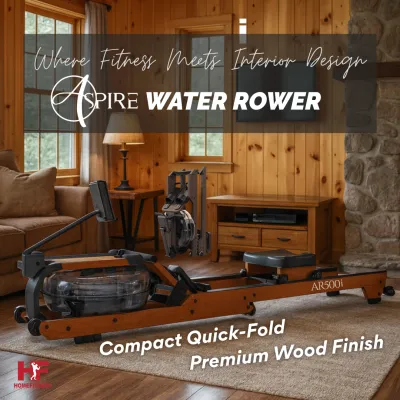
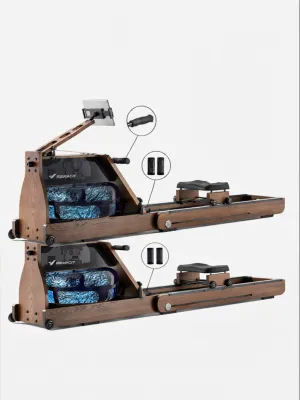
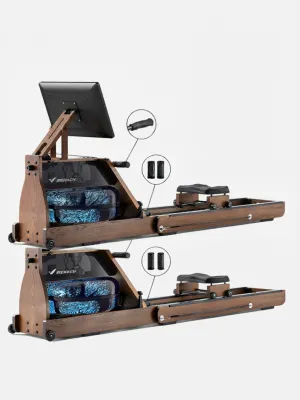
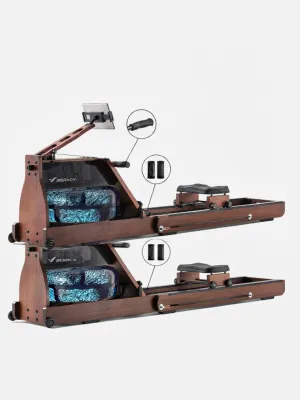
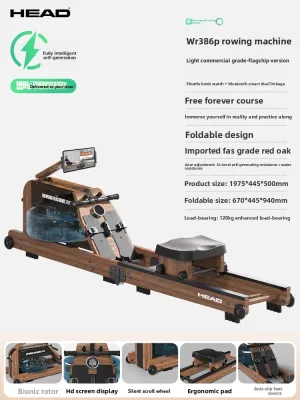
Prices are valid at publication and may change. Please refer to the product page for the latest price.
The width of the machine is primarily dictated by the diameter of the circular water tank located at the front. This tank typically ranges from 50 cm to 57 cm in diameter. While the rest of the machine—specifically the wooden or metal rails—is much narrower (often only 15 cm to 30 cm wide), the overall width footprint of the machine remains bound by the widest point of the tank.
Because rail lengths and tank designs vary significantly across different brands and models, you should always check the manufacturer’s exact specifications rather than relying on generic estimates. Some compact or space-saving models feature shorter rails designed for smaller homes, but these can limit the stroke length for taller users. The circular tank diameter also determines the exact base size required for upright storage, typically requiring a neat floor space of roughly 55 cm by 55 cm.
How to Measure Your HDB Layout for Rowing Clearance
A common mistake when purchasing home fitness equipment is only measuring the static storage size and forgetting the dynamic clearance required during an active workout. When you are rowing, your body is in constant motion, and the machine’s actual “in-use” footprint is larger than its physical frame.

During the “finish” phase of the rowing stroke, your torso reclines slightly backward, and your head and shoulders will extend past the rear end of the seat rail. To prevent your head from bumping into a wall or furniture, you must budget an extra 15 cm to 20 cm of clearance behind the rail. Furthermore, proper rowing technique involves flaring your elbows slightly outward during the pull. To ensure you do not scrape your knuckles or elbows against adjacent walls, television consoles, or cabinets, aim for a total lateral clearance of at least 90 cm to 100 cm.
Navigating the spatial constraints of an HDB flat also requires planning the transit route of the machine. While standard bedroom and study doors in BTO flats are typically 80 cm to 85 cm wide—which easily accommodates the 57 cm width of a rower—maneuvering a 2.2-meter-long frame around tight 90-degree corridor corners can be incredibly challenging.
Before committing to a purchase, use this practical spatial checklist:
- Workout Zone: Identify a clear floor area of at least 240 cm in length and 100 cm in width.
- Ceiling Height: Ensure your ceiling is clear of low-hanging light fixtures or ceiling fans along the path where the machine will be lifted vertically. Standard HDB ceilings are 2.6 meters high, which easily accommodates a 2.2-meter rower stood upright.
- Transit Path: Measure the turning clearance in your hallways, especially if you plan to store the machine in a bedroom or household shelter and roll it into the living room for workouts.
Upright and Compact Storage Solutions for HDB Living
The primary design advantage of a water rowing machine is its ability to stand completely upright when not in use. Unlike bulky treadmills that require complex folding decks, a water rower balances vertically on its water tank base. When stood upright, the machine’s footprint shrinks dramatically to about the size of a standard dining chair, allowing you to tuck it neatly into a corner of your living room, study, or dining area.
While upright storage is incredibly space-efficient, safety must be your top priority, particularly in households with young children, active pets, or robotic vacuum cleaners. A fully loaded water rower is heavy; the water tank typically holds 15 to 19 liters of water, adding 15 to 19 kg of fluid weight to a dry machine weight of 30 kg to 35 kg. Although the weight of the water stabilizes the base and keeps the center of gravity low, a heavy machine stored vertically still poses a tipping hazard if bumped hard.
To secure the machine safely:
- Low-Traffic Placement: Position the upright rower in a corner away from main walkways, play areas, or drafty doors.
- Wall Anchor Straps: Utilize a simple wall-mounted safety strap or bungee cord anchored to a solid concrete wall or stud to prevent the rail from tipping forward.
- Flat Ground: Always ensure the floor surface is perfectly level so the storage feet on the tank base make full, even contact with the ground.
To facilitate easy movement around your flat, look for models equipped with built-in transport wheels on the front base. When you finish your workout, you simply lift the lightweight rear end of the rail and roll the machine to its storage spot like a wheelbarrow.
Some alternative rowing machine designs feature folding frames with a hinge in the middle of the rail. While folding might seem appealing, you must verify if a specific model’s hinge design compromises the water tank’s integrity or the frame’s overall structural rigidity. For water rowers, solid, non-folding frames are generally preferred because they eliminate weak points that could lead to structural creaking or water seal stress over time.
Managing Noise and Floor Vibration in High-Rise Flats
Living in a high-density HDB estate means your acoustic footprint matters just as much as your physical footprint. Fortunately, water rowing machines have a very gentle acoustic profile compared to other cardio equipment. Instead of the loud, high-pitched whine of air resistance rowers or the mechanical hum of low-end magnetic options, water rowers produce a rhythmic, organic “whoosh” of rushing water that most users find incredibly soothing.
However, while the sound of water is pleasant, the physical action of rowing can generate low-frequency vibrations. As the seat rollers glide back and forth along the rails under your body weight, vibrations can transmit through the frame directly into the concrete floor slabs of your HDB flat. This low-frequency thrum can easily travel downstairs, potentially disturbing your neighbors during early morning or late-night exercise sessions.
To mitigate this, always place a high-density equipment mat beneath your water rower. A quality rubber or PVC mat of 6 mm to 10 mm thickness serves multiple essential functions:
- Vibration Dampening: It absorbs the kinetic energy and rollers' movement, preventing sound from traveling through the floor.
- Floor Protection: It protects your HDB flooring—whether homogeneous tiles, luxury vinyl tiles (LVT), parquet, or polished concrete—from scratches and indentations caused by the machine shifting during intense workouts.
- Moisture Barrier: It catches sweat and accidental water droplets during tank maintenance, protecting sensitive wood or laminate floors from water damage.
Key Features to Look for in Space-Saving Rowing Models
When shopping for a water rowing machine suitable for an HDB flat, evaluating specific design elements will help you find a model that is easy to manage and fits your aesthetic preferences.
The material of the frame plays a massive role in both weight and sound absorption. Solid wood frames (such as ash, oak, cherry, or walnut) are highly popular because they naturally absorb sound and vibration much better than metal or composite frames, making them inherently quieter. Additionally, wooden rowers look like premium furniture, blending seamlessly into popular Singaporean interior design styles like Japandi, Scandinavian, or minimalist. However, wood frames can be slightly heavier to lift upright and may require occasional bolt tightening as the natural wood adjusts to Singapore’s ambient humidity. Metal or aluminum frames are incredibly durable, lightweight, and require virtually no frame maintenance, but they lack the natural dampening qualities of wood.
You should also consider the trade-offs of smaller water tanks. Some compact rowing models feature smaller, shallower tanks to save space and reduce weight. While this makes the machine easier to maneuver and lift, it alters the resistance dynamics. Water resistance is naturally dynamic—the harder and faster you pull, the more resistance you generate. A smaller tank holds less water mass, meaning you may need to maintain a significantly higher stroke rate to achieve the same level of resistance as a standard-sized tank.
Before making a final purchase, always verify the manufacturer’s official storage dimensions and maximum user weight limits to ensure the machine aligns perfectly with your physical needs and your home’s layout.
Frequently Asked Questions (FAQ)
Do I need to drain the water before storing the machine upright?
No, you do not need to drain the water before storing a water rowing machine upright. Quality water rowers are engineered with sealed, heavy-duty polycarbonate tanks designed to prevent leaks regardless of whether the machine is flat or vertical. However, you should always consult your specific manufacturer’s manual to verify their storage instructions. To maintain water clarity and prevent the growth of algae or bacteria without draining the tank, use water purification tablets (typically chlorine-based or sodium dichloroisocyanurate) every six months as recommended by the manufacturer.
Is it safe to keep a water rowing machine in an HDB service yard or balcony?
It is highly discouraged to store or use a water rowing machine in semi-outdoor spaces like an HDB service yard or balcony. Singapore’s tropical climate exposes these areas to intense direct sunlight, high humidity, and extreme temperature fluctuations. Direct sunlight and UV rays will rapidly degrade the polycarbonate water tank, causing it to become brittle, prone to cracking, and highly susceptible to rapid algae growth. Furthermore, high humidity can cause wooden frames to warp, mold, or rot, and can lead to rust on metal components. To protect your investment and ensure long-term safety, always store and use your water rowing machine indoors in a shaded, dry, and well-ventilated area.
Community discussion
Share your experience or ask a question. Comments are reviewed before publication.