
Quick Answer: Evaluating Inflatable Tent Waterproofing
When selecting a camping tent inflatable design for wet or humid conditions, reliable waterproofing does not depend on brand reputation alone. Instead, it requires a systematic evaluation of fabric hydrostatic head ratings, seam construction, and the structural integrity of the airbeam sleeves. For campers planning trips in climates prone to sudden, heavy downpours or high humidity, understanding these technical elements is the key to staying dry.
While premium brands generally offer higher baseline specifications, the final decision must be based on matching the tent’s technical specifications to your expected weather environment. A tent engineered for light weekend use will perform very differently from one designed to withstand sustained tropical storms. By focusing on verifiable material standards rather than generic marketing claims, you can select an inflatable tent that provides robust, long-term protection against the elements.
Core Waterproof Specifications for a Camping Tent Inflatable
To objectively compare different inflatable tent brands, you must look past promotional labels and analyze the technical specifications listed on product sheets. The most critical indicators of waterproof performance are the fabric’s hydrostatic head rating, its thickness, and how the seams are constructed and protected.
Products mentioned in this guide
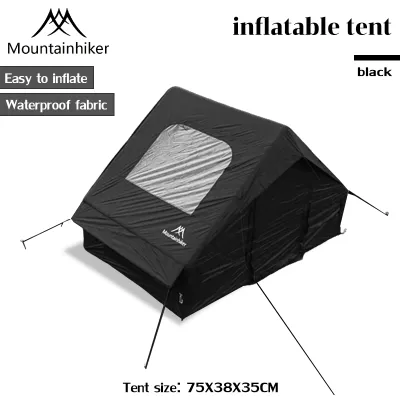
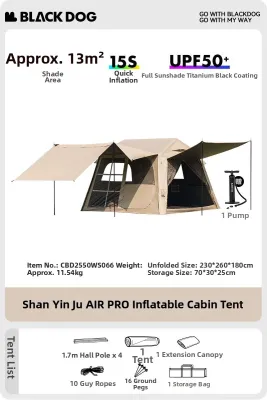
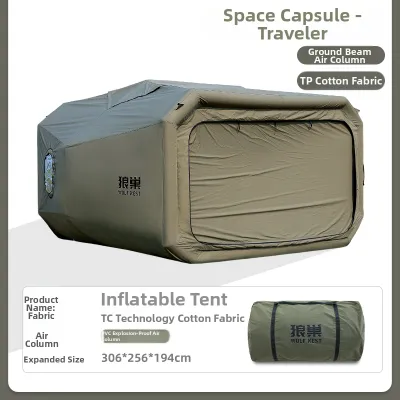
Prices are valid at publication and may change. Please refer to the product page for the latest price.

Hydrostatic Head (HH) Ratings and Fabric Denier
The Hydrostatic Head (HH) rating, measured in millimeters (mm), indicates the level of water pressure a fabric can withstand before moisture penetrates. For example, a 1,500mm HH rating means the fabric can support a 1,500mm tall column of water resting on its surface before leaking. When comparing brands, use these general benchmarks to match your camping environment:
- 1,500mm to 2,000mm HH: Suitable for light, occasional showers and short weekend trips in mild weather.
- 3,000mm to 4,000mm HH: The standard for reliable three-season performance, capable of resisting moderate, prolonged rainfall.
- 5,000mm HH and above: Engineered for heavy, sustained downpours, high-altitude camping, and severe weather conditions.
Fabric denier (D) measures the density and thickness of the individual threads in the fabric weave. A higher denier (such as 150D or 300D Oxford polyester) indicates a thicker, more durable material. While a higher denier does not automatically increase the waterproof rating, it provides a more stable and puncture-resistant substrate for waterproof coatings. Thicker fabrics are less prone to stretching under the weight of pooling water, which helps preserve the integrity of the polyurethane (PU) or silicone coatings applied to the fabric’s underside.
Seam Construction and Taping Methods
Even the highest-rated waterproof fabric will leak if the seams are not properly sealed. Every line of stitching creates thousands of microscopic needle holes that must be protected. When evaluating inflatable tents, pay close attention to how the manufacturer seals these joints:
- Factory-Taped Seams: This is the industry standard for polyester and nylon tents. A thin, flexible polyurethane tape is heat-applied to the interior seams under high pressure, completely covering the stitching and needle holes.
- Heat-Welded Joints: Found on premium thermoplastic polyurethane (TPU) airbeams and some high-end outer shells, this method uses heat and pressure to fuse the fabric pieces together, creating a seamless, molecular bond that is entirely waterproof.
- Untreated Stitched Seams: Typically found on low-cost models or specific poly-cotton tents that rely on thread expansion to seal. These require manual application of seam sealer before use in wet conditions.
Inflatable tents have unique high-stress areas that demand extra reinforcement. The sleeves housing the airbeams experience significant tension when inflated to their recommended pressure (typically 4 to 9 PSI). This structural tension pulls on the surrounding stitching, making the seams around airbeam sleeves and entry grommets highly vulnerable to water ingress. Premium brands reinforce these high-flex areas with double-stitching and heavy-duty, multi-layered seam tape to prevent water from seeping into the sleeve compartments and eventually migrating into the living space.
To ensure your tent is free from manufacturing defects, perform a visual inspection of the interior seam tape as soon as you pitch the tent for the first time. Check for:
- Bubbling or Lifting: The tape should lie completely flat against the fabric without any air pockets.
- Dry Spots or Fraying: The edges of the tape must be fully adhered, with no loose threads or unsealed gaps visible near the stitching lines.
- Incomplete Coverage: Ensure the tape extends fully into the corners and overlaps adjacent taped sections by at least 15 to 20 millimeters.
How Leading Inflatable Tent Brands Approach Waterproof Design
Different manufacturers target different camping demographics, resulting in distinct design philosophies and material choices. Understanding these brand categories helps you narrow down which structural approach aligns with your specific weather requirements.
Premium European Brands (e.g., Outwell, Vango)
Established European brands design their inflatable tents to withstand the cool, wet, and windy conditions typical of northern Europe. Their product lines focus heavily on high-specification synthetic materials and robust weatherproofing systems.
These brands typically utilize high-HH polyester fabrics (often ranging from 3,000mm to 6,000mm HH) treated with advanced polyurethane coatings. Their designs feature fully integrated, sewn-in groundsheets (often called bathtub groundsheets) that prevent ground water from entering the tent. Every major seam, including those around the airbeam structures, is meticulously factory-taped.
Because highly coated polyester fabrics do not breathe, these tents are prone to internal moisture buildup. To address this, premium European manufacturers integrate complex, multi-point ventilation systems. These include low-level vents that draw in cool air and protected high-level mesh panels that allow warm, moist air to escape. While these systems are highly effective at blocking external water, campers in hot, humid climates must actively manage these vents to prevent internal condensation.
Boutique and Design-Focused Brands (e.g., Heimplanet, Zempire)
Boutique and design-focused manufacturers often take a more specialized approach to water management, utilizing advanced geometry and alternative fabric blends.
Brands like Heimplanet employ unique geodesic airframes, such as their Inflatable Diamond Grid. This structural design distributes wind and rain forces evenly across the entire tent body. The steep, multi-faceted angles of these tents prevent water from pooling on the roof, encouraging immediate runoff even during torrential downpours. These brands often use high-tenacity ripstop nylon or polyester fabrics, which offer exceptional tear strength and hold waterproof coatings securely under structural tension.
Other premium brands, such as Zempire, offer models constructed from poly-cotton (often referred to as technical cotton) blends. Poly-cotton manages water differently than pure synthetics. Instead of relying on thick polyurethane coatings, poly-cotton relies on the natural properties of cotton fibers. When exposed to rain, the cotton fibers swell, closing the gaps in the fabric weave to create a highly water-resistant barrier.
While poly-cotton offers superior breathability and temperature regulation—making it highly comfortable in humid environments—it has a lower initial HH rating (typically around 1,000mm to 1,500mm). It also requires a process called “weathering” before its first use. This involves thoroughly soaking the tent with a hose and letting it dry completely, allowing the cotton threads to expand, shrink, and lock the stitching holes. For immediate, out-of-the-box performance in heavy rain without preparation, pure synthetic fabrics remain the more straightforward choice.
Lab Ratings vs. Real-World Weather Performance
Laboratory tests provide a standardized metric for comparing fabrics, but they do not fully replicate the dynamic forces a tent experiences during a storm. Real-world waterproof performance depends heavily on how the tent’s structure and components react to wind, gravity, and humidity.
Under laboratory conditions, hydrostatic head is tested on flat, stationary fabric. In the field, wind-driven rain exerts lateral kinetic pressure against the tent walls. A strong gust of wind can push water against the fabric with force that exceeds its nominal HH rating. If the tent is not pitched tightly or if the airbeams are under-inflated, the fabric will flap and sag, allowing water to force its way through microscopic pores in the coating or around the stitching.
Water pooling is another major challenge for inflatable tents. Unlike traditional tents with rigid steel or fiberglass poles, inflatable airbeams are flexible. If a flat-roofed inflatable tent is subjected to heavy, continuous rain, the weight of the water can cause the roof panels to sag. This creates a depression where water pools, increasing the localized hydrostatic pressure and eventually forcing water through the fabric. Quality brands mitigate this risk by designing pre-bent airbeams (such as Gothic arches) that create steep roof pitches, and by providing robust guyline attachment points to maintain high fabric tension.
Furthermore, the physical inflation valves and pump connection points represent critical vulnerability zones. Because these components require openings in the outer weather protective layer, they must be shielded by heavy-duty storm flaps. If these flaps lack secure hook-and-loop closures or are positioned in a way that allows water to funnel toward the valve, rain can seep into the airbeam sleeves, leading to internal dampness.
Finally, campers frequently mistake internal condensation for a roof leak. In warm, humid regions, the air inside a tent quickly becomes saturated with moisture from respiration and perspiration. When the temperature outside drops, the outer tent fabric cools. The warm, moist air inside hits this cold surface and condenses into water droplets, which then drip down onto the occupants. Proper ventilation is the only way to minimize this phenomenon; a high HH rating will not prevent condensation and can actually worsen it if airflow is restricted.
Decision Framework: Choosing the Right Inflatable Tent for Wet Conditions
To select the most effective inflatable tent for your specific camping scenarios, use the following conditional decision framework to match your environment with the correct material and design specifications.
- Choose high-HH polyester models with fully taped seams if:
- You expect prolonged, heavy rain and prioritize absolute water blockage over fabric breathability.
- You camp in areas with high wind exposure, where lateral rain pressure requires a robust, coated synthetic barrier (minimum 3,000mm to 5,000mm HH).
- You prefer a low-maintenance tent that is ready to use straight out of the bag without initial weathering or specialized prep work.
- Choose poly-cotton or technical blend models if:
- You camp primarily in hot, humid environments where managing internal condensation and temperature is just as critical as rain protection.
- You are willing to perform the initial weathering process (wetting and drying the tent) before your first trip to seal the stitching.
- You prefer a highly durable fabric that resists UV degradation better than standard polyester over long-term exposure.
- Choose geometric, steep-walled designs if:
- You frequently camp in regions characterized by sudden, torrential downpours where flat-roof water pooling is a major structural risk.
- You require a aerodynamically stable structure that sheds wind and rain efficiently from all directions, minimizing stress on individual airbeams.
- Verify first if:
- The tent's airbeam sleeves, valve access ports, and entry zippers are protected by dedicated, double-layered storm flaps.
- The manufacturer provides a clear PSI recommendation for the airbeams, as proper inflation pressure is essential to maintain the structural tension required to shed water effectively.
Maintaining Waterproof Integrity in Inflatable Tents
To preserve the waterproof coatings and structural seals of your inflatable tent over its lifespan, you must perform regular, low-risk maintenance. Improper care can quickly degrade polyurethane coatings and cause seam tape to delaminate.
When cleaning your tent, always use lukewarm water, a soft sponge, and a mild, non-detergent soap formulated specifically for outdoor gear. Strictly avoid harsh household detergents, bleach, or washing machines. The mechanical agitation of a washing machine and the chemical surfactants in standard detergents will strip away the durable water repellent (DWR) coating on the exterior and can dissolve the polyurethane coating on the interior.
Before packing your tent away, ensure it is completely dry. Storing a damp tent—even for a few days—initiates a chemical process called hydrolysis. Hydrolysis permanently breaks down polyurethane coatings, turning them sticky, causing them to flake off, and releasing a distinct, sour odor. If you must pack up your tent in the rain, pitch it or hang it up in a well-ventilated, dry area within 24 hours to dry completely.
After each camping trip, inspect the interior seam tape for any signs of peeling, lifting, or cracking. If you notice minor peeling, you can repair the section using a specialized tent seam sealer.
Safety Boundary: Always consult the specific manufacturer’s care guidelines and fabric specifications before applying any aftermarket waterproofing sprays, DWR restorers, or seam sealers. Incompatible chemical solvents can permanently damage or dissolve specialized synthetic fabrics, polyurethane coatings, and the delicate TPU bladders inside your tent’s airbeams. Always test any approved care product on a small, inconspicuous area of the tent flysheet before applying it widely.
Community discussion
Share your experience or ask a question. Comments are reviewed before publication.