
Dunlop coaching balls are specialized, low-compression tennis balls designed to slow down the pace of play, giving beginners the critical window of time needed to develop proper swing mechanics. Unlike standard pressurized tennis balls that bounce rapidly and unpredictably for a novice, these training balls feature modified internal pressures, specific felt textures, and sometimes larger diameters. This combination makes tracking, positioning, and striking the ball much more manageable for those who are new to the sport.
Starting your tennis journey on the hard courts common across Singapore’s community sports centers can be challenging if you are using standard equipment. The fast rebound off concrete or acrylic surfaces often cuts rallies short, leading to frustration rather than skill acquisition. By choosing a ball engineered specifically for training, you create a more forgiving environment that supports steady, incremental improvement.
Decoding the Specs: What Makes Dunlop Coaching Balls Different?
Standard tennis balls are highly pressurized, which gives them their characteristic speed and lively bounce. Dunlop coaching balls, however, are engineered with a lower internal pressure or a completely pressureless core. This structural difference directly reduces the ball’s rebound velocity and flight speed, transforming how the ball behaves when it makes contact with both the court and your racket.
Products mentioned in this guide
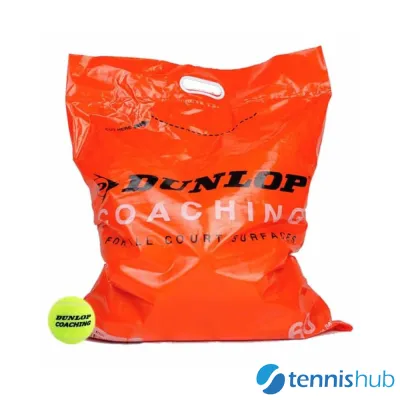
![Dunlop Coaching Tennis Ball [ Twin/ Triple pack]](https://img.lazcdn.com/g/p/0eba43252e56fdde1591603952fb422f.jpg_400x400q80.jpg_.webp)
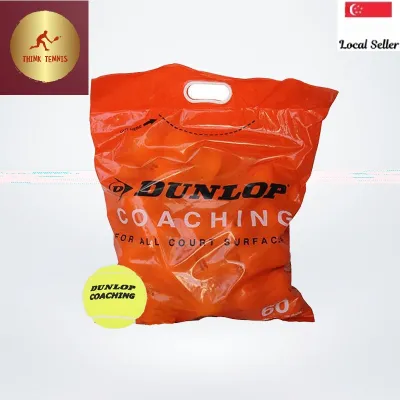
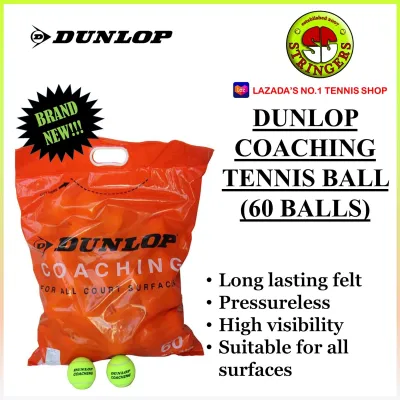
![[12 Balls] Dunlop Coaching Tennis Balls](https://img.lazcdn.com/g/p/161d618e7a1b590d037534229d282b00.jpg_400x400q80.jpg_.webp)
Prices are valid at publication and may change. Please refer to the product page for the latest price.
Size and weight variations also play a significant role in how these balls perform. Some training models are physically larger than standard tennis balls. This increased diameter creates more aerodynamic drag as the ball travels through the air, slowing it down further and presenting a larger, more approachable target for a developing player to track and hit.
The felt covering on coaching balls is specifically selected to modify performance. It is often fluffier or woven differently than tournament felt, which increases air resistance to keep the ball from flying too fast. Many coaching balls feature high-visibility, dual-color designs—such as bright yellow paired with red or orange—which helps players visually track the spin and trajectory of the ball more effectively.
Because exact physical dimensions, weights, and compression levels can vary between specific product lines and manufacturing batches, you should always check the product packaging for detailed specifications. Look for official compliance marks, such as International Tennis Federation (ITF) approval, to ensure the balls meet the recognized training standards for your specific development level.
How These Design Choices Accelerate Beginner Skill Development
Slower Ball Speed and Lower Bounce By reducing the speed of the ball and the height of its bounce, coaching balls grant you valuable extra split seconds during a rally. Instead of rushing your stroke or hitting the ball late, you have the time to read the trajectory, adjust your footwork, and execute a clean, unhurried swing. This extra time is essential for building a mechanically sound stroke from the very beginning.

Increased Dwell Time and Control The softer compression of a coaching ball allows it to deform more when it impacts your racket strings. This physical deformation increases what coaches call “dwell time”—the brief millisecond the ball remains in contact with the string bed. For a beginner, this translates to a much clearer sensory feedback or “feel” for the shot, helping you understand how racket face adjustments affect the ball’s direction.
Reduced Impact Shock Playing tennis on hard courts can transmit significant vibration up your arm, especially when using stiff, pressurized tournament balls. The lower compression of coaching balls acts as a shock absorber, cushioning the impact on your wrist, elbow, and shoulder joints. This reduction in physical strain is highly beneficial for young children with developing joints, as well as adult beginners looking to avoid common injuries like tennis elbow.
Confidence Building When rallies consistently end after one or two shots, learning tennis can feel discouraging. Because coaching balls are easier to control and keep within court boundaries, they facilitate longer, more consistent rallies. Keeping the ball in play allows you to build physical conditioning, establish rhythm, and develop the muscle memory that makes the game highly rewarding.
Matching the Right Ball to the Player's Development Stage
To help players progress systematically, modern tennis utilizes the globally recognized ITF “Play and Stay” framework. This system divides early player development into three distinct, color-coded stages, each requiring a specific type of low-compression ball. Dunlop aligns its coaching lines with these standards to make selection straightforward.
Red Stage (Typically Ages 5-8) Red coaching balls are the largest, softest, and slowest options available, designed to travel about 75% slower than a standard tennis ball. Often constructed from high-density foam or lightweight low-compression felt, these balls are optimized for small-format courts and short, junior rackets. They allow young children to play active, realistic tennis points right from their very first lesson.
Orange Stage (Typically Ages 8-10) Orange balls represent the intermediate step in development, featuring a standard size but only 50% of the compression of a regular ball. This design makes them travel approximately 50% slower than tournament balls. They are intended for use on a modified court that is slightly shorter and narrower than a standard court, helping players learn to construct points and move dynamically.
Green Stage (Typically Ages 10+) Green dot balls are the final stepping stone before standard play. They are standard in size and weight but feature 25% less compression than regular balls, making them about 25% slower. Played on a full-sized court, green balls allow advancing beginners to practice advanced tactics, spin, and court coverage without being overwhelmed by excessive bounce height.
Actionable Advice When selecting balls, always verify the stage color, recommended age range, and court dimensions printed on the Dunlop packaging. Naming conventions and exact compression properties can vary depending on the specific product line and region, so checking the manufacturer’s guidelines ensures you choose the correct match for your training environment.
Knowing When to Transition to Standard Tennis Balls
Moving to standard pressurized tennis balls too quickly is a common mistake that can disrupt a beginner’s technical development. To ensure a smooth progression, look for consistent, observable signs of readiness. A player is generally ready to transition when they can comfortably maintain a 10-to-15 shot rally, control the depth of their shots, and execute proper footwork without appearing rushed.
Transitioning prematurely introduces several risks to your game. When forced to handle a ball that bounces faster and heavier, beginners often shorten their swing paths, freeze their movement, or resort to defensive “pushing” motions just to keep the ball in play. This not only stalls skill development but also increases physical strain on the arm due to the sudden increase in impact shock.
To make the change safely, employ a gradual transition strategy. Try mixing a few standard pressurized balls into your practice basket, or use them exclusively during low-intensity drills before attempting full-court match play. Moving systematically through the color-coded stages—such as transitioning from Orange to Green before jumping directly to standard yellow balls—ensures your technique remains stable.
Frequently Asked Questions (FAQ)
Can Adult Beginners Use Dunlop Coaching Balls?
Yes, adult beginners can benefit immensely from using Dunlop coaching balls, particularly the orange and green dot models. While the age recommendations on the packaging are often geared toward children, the physical advantages of a slower ball apply to players of any age. Adults can use the extra time provided by lower compression to focus on complex mechanics, such as hip rotation and weight transfer, without being rushed by a fast bounce. Because of their greater physical strength, adults typically progress through the stages faster than children, but starting with coaching balls helps prevent early frustration and reduces joint strain.
Do Coaching Balls Wear Out Faster Than Regular Balls?
Coaching balls wear out differently than standard pressurized balls. Because many coaching models rely on low-pressure or pressureless cores, they do not lose their bounce as quickly as standard pressurized balls, which naturally go flat over time. However, the softer felt on coaching balls can wear down, pill, or absorb moisture, particularly when used on abrasive outdoor hard courts in humid climates. You should regularly inspect your training balls; if you notice bald patches on the felt, physical deformation, or a significant drop in bounce height, it is time to replace them to ensure a consistent and productive practice session.
Community discussion
Share your experience or ask a question. Comments are reviewed before publication.