
Quick Answer: Core Criteria for Your First Pilates Ring
Choosing your first Pilates ring—historically known as the magic circle—is a straightforward process once you understand that this tool is designed for tactile feedback and alignment rather than heavy resistance training. For most beginners, the ideal Pilates ring features a standard diameter of 35 to 38 centimeters (14 to 15 inches), which comfortably matches the average shoulder and hip width of most adults. This size allows you to perform both upper- and lower-body exercises without forcing your joints into awkward, unaligned positions.
When evaluating materials, look for a flexible fiberglass core paired with dual-sided, padded handles made of high-density, closed-cell EVA foam. Fiberglass provides a progressive, moderate tension that is highly forgiving as you learn to coordinate your breath with deep muscle engagement. Avoid overly stiff metal rings or cheap plastic alternatives that either resist too harshly or lose their shape permanently. A quality beginner ring should feel springy, comfortable against your skin, and lightweight enough to hold overhead without causing immediate shoulder fatigue.
Choosing the Right Size and Diameter
Pilates rings generally come in three primary sizes: 30 centimeters (12 inches), 35 centimeters (14 inches), and 38 centimeters (15 inches). Selecting the correct diameter is not a matter of skill level, but rather a reflection of your unique skeletal proportions and body frame. The ring acts as a spacer and a resistance bridge between your hands, ankles, or thighs, meaning the correct size must allow your limbs to remain parallel and aligned during foundational movements.
Products mentioned in this guide
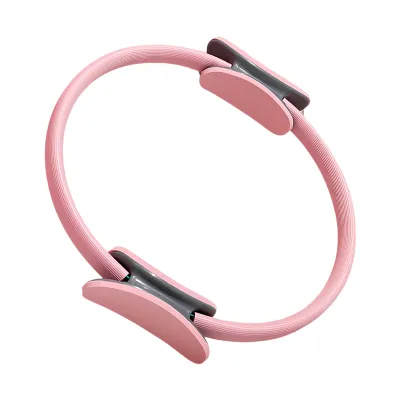
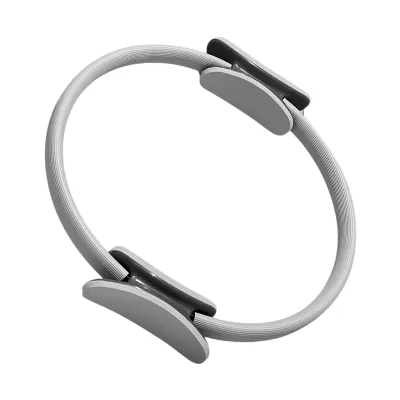
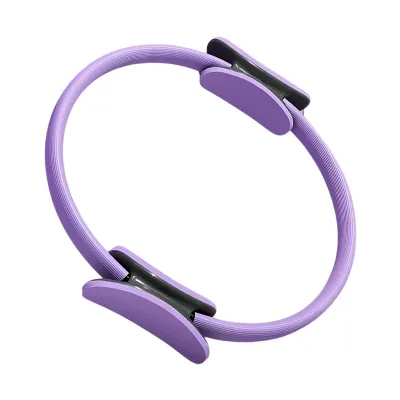
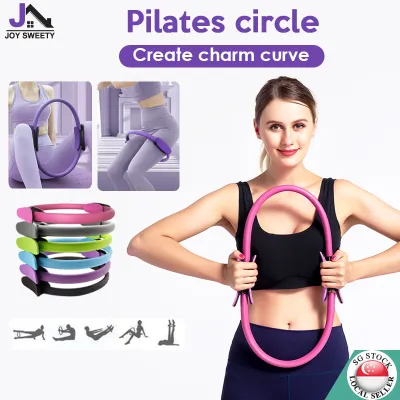
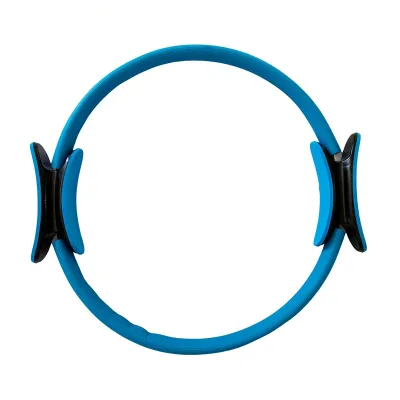
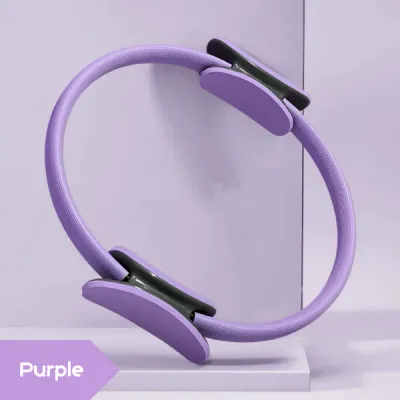
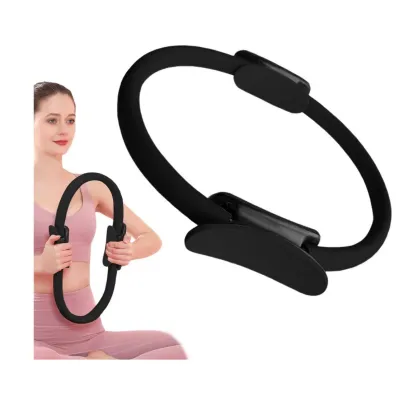
Prices are valid at publication and may change. Please refer to the product page for the latest price.

For the vast majority of adult beginners, the 35-centimeter or 38-centimeter ring is the standard recommendation. These sizes align naturally with average hip and shoulder widths, ensuring that when you place the ring between your inner thighs or hold it between your palms, your joints are not forced too far inward or outward. If you have a smaller body frame, narrow shoulders, or are under 160 centimeters in height, a 30-centimeter ring may offer a more comfortable fit, preventing you from overstretching your joints to keep the ring in place.
To verify the fit at home before making a purchase, you can perform a simple self-measurement. Stand naturally and measure the distance between the outer points of your shoulder joints, as well as the width across your hip bones. If your shoulder width is significantly narrower than 35 centimeters, a smaller ring will help you maintain a neutral chest and shoulder posture during pressing exercises. Conversely, using a ring that is too small for a broader frame will cause your arms or legs to collapse inward before you even begin to apply pressure, leading to poor form and potential joint strain.
Using an incorrectly sized ring introduces distinct trade-offs that can hinder your progress. An oversized ring requires a wider stance or grip, which can strain the lateral stabilizer muscles of the hips and shoulders, making it difficult to focus on core activation. An undersized ring limits your range of motion, making inner-thigh squeezes less effective and increasing the likelihood of the ring slipping out of place mid-exercise. Prioritizing a size that matches your natural skeletal alignment ensures a safer, more effective workout.
Evaluating Resistance Levels for Foundational Movements
In Pilates, the goal of using a ring is to find your deep stabilizing muscles, not to build bulk through high-resistance squeezing. Beginners often make the mistake of choosing a ring with high tension, assuming that more resistance yields faster results. In practice, excessive resistance forces your body to recruit larger, superficial muscles—such as the neck, jaw, and outer thighs—to compensate, which completely defeats the purpose of the exercise.
When browsing product specifications, pay close attention to how manufacturers describe the tension. Look for terms like “moderate,” “flexible,” or “light-to-medium” resistance. Fiberglass cores naturally offer a progressive resistance curve, meaning the ring yields gently at first and gradually becomes firmer the more you compress it. This progressive feedback is ideal for beginners because it allows you to consciously engage your pelvic floor and deep abdominal muscles before the resistance becomes too challenging.
Spring steel cores, on the other hand, tend to offer a much stiffer, immediate resistance. While durable, steel rings require a high level of foundational strength to compress safely and can snap back quickly if your grip slips, posing a safety risk. For your first ring, a fiberglass core is almost always the safer and more effective choice, providing a smooth, predictable response that supports proper breathing and alignment.
During your initial workouts, you can easily observe whether your ring’s resistance is appropriate for your current strength level. If you experience uncontrollable shaking, find yourself holding your breath, or notice your lower back arching off the mat during a squeeze, the resistance is too high. A well-matched ring should allow you to compress the sides smoothly by roughly 20% to 30% while maintaining a neutral spine, relaxed shoulders, and steady, controlled breathing.
Assessing Grip, Padding, and Material Comfort
Because a Pilates ring is held between your hands, pressed against your ankles, or squeezed between your inner thighs, the design of the handles directly dictates your comfort and safety. High-quality rings feature dual-sided, molded pads that curve slightly to match the contours of your body. These curved pads distribute pressure evenly across a larger surface area, preventing the ring from digging painfully into your inner thigh bones or the palms of your hands.
When evaluating handle materials, prioritize high-density, closed-cell EVA foam or neoprene padding. In warm or humid environments, such as a home workout space in Singapore, sweat resistance is a critical factor. Closed-cell foam does not absorb moisture, meaning it will not become waterlogged, slippery, or prone to harboring bacteria over time. Avoid cheap, open-cell foam pads, which act like sponges, degrade rapidly under friction, and can slide off the ring’s frame during dynamic movements.
Beyond the padding, the structural integrity of the inner core and its connection points must be carefully inspected. The core should possess excellent “shape memory,” meaning it returns to a perfect circle immediately after being compressed. High-quality fiberglass cores excel at retaining their shape over years of consistent use, whereas low-grade plastics can warp, flatten into an oval, or develop micro-fractures that compromise the ring’s structural safety.
Finally, examine the joints where the handle pads attach to the main ring. Look for seamless, molded connections rather than parts held together by exposed metal screws, staples, or thin layers of glue. Loose or poorly constructed joints are a common failure point; they can pinch your skin, snag your workout clothing, or fail entirely under pressure. A secure, integrated handle design ensures that the ring remains stable and safe throughout its lifespan.
Building Your Beginner Shortlist and Pre-Purchase Checks
Before finalizing your purchase from an online marketplace or a local fitness retailer, it is essential to run through a practical verification process. This ensures the ring you select matches your physical needs and safety requirements, saving you the hassle of returning an unsuitable product. Use the following step-by-step checklist to evaluate your options:
- Confirm the Diameter: Double-check that the product listing explicitly states the diameter (ideally 35 cm or 38 cm for average frames, or 30 cm for smaller frames) rather than using vague terms like "one size fits all."
- Verify the Core Material: Ensure the product description specifies a "fiberglass" core. Avoid listings that only mention "plastic" or "composite" without clarifying the exact material.
- Check for Dual-Sided Padding: Verify that the ring has molded pads on both the inside and the outside of the circle, allowing for both inward and outward resistance exercises.
- Assess the Weight: Look for a lightweight design, typically weighing between 300 and 400 grams. Heavier rings can strain your wrists and shoulders during overhead movements.
- Review the Return Policy: Because you cannot physically test the ring's tension online, ensure the retailer offers a clear return or exchange window in case the resistance feels too stiff or soft upon arrival.
Be highly skeptical of product descriptions that feature red flags, such as unrealistic weight-loss claims, unverified weight limits, or instructions suggesting you can stand on the ring. A Pilates ring is an unstable, flexible apparatus designed solely for compression and expansion exercises using your limbs. It is not built to support your full body weight, and attempting to stand on it can cause the ring to slip or snap, leading to serious injury.
Expect to spend anywhere from S$15 to S$40 for a durable, high-quality beginner Pilates ring. Investing in a well-constructed ring with a fiberglass core and closed-cell foam padding ensures that your first steps into Pilates are comfortable, safe, and aligned with proper classical techniques.
Frequently Asked Questions (FAQ)
How do I clean and maintain a Pilates ring after use?
To keep your Pilates ring hygienic and prolong the life of its materials, perform a quick visual inspection after every workout to check for sweat residue, dust, or any signs of wear on the padding. Clean the ring by wiping down the foam handles and the outer frame with a soft microfiber cloth slightly dampened with water and a drop of mild, diluted dish soap. Avoid using harsh chemical cleaners, bleach, alcohol-based sanitizers, or abrasive scrubbing pads, as these substances will dry out the EVA foam, dissolve the adhesives holding the pads in place, and cause the materials to crumble.
Never submerge the entire Pilates ring in water or place it under a running tap, as moisture can seep into the joints and degrade the inner core. Once wiped clean, allow the ring to air-dry completely in a cool, well-ventilated indoor area away from direct sunlight. Store the ring flat on a shelf or in a closet; hanging it from a hook or storing it under heavy objects can warp the core over time, causing it to lose its perfect circular shape.
Can a Pilates ring be used for physical rehabilitation?
While a Pilates ring is an excellent tool for gentle muscle activation, joint alignment, and low-impact conditioning, it is designed primarily as a general fitness accessory rather than a medical device. If you are recovering from an injury, surgery, or managing a chronic joint condition, you must consult a qualified physiotherapist or medical professional before incorporating a Pilates ring into your recovery routine. A professional can guide you on the exact angles, repetitions, and tension levels that are safe for your specific stage of healing.
If you receive professional clearance to use the ring, always prioritize control over force. Immediately stop using the equipment if you experience any sharp joint pain, pinching, swelling, or unusual discomfort during a movement. A Pilates ring should only be used to provide light, supportive feedback to help you rebuild stability, and it should never replace prescribed clinical rehabilitation exercises or professional medical guidance.
Community discussion
Share your experience or ask a question. Comments are reviewed before publication.